Jonathan van den Berg · May 9, 2026
How the Iran Conflict Could Reshape Global Oil Flows and Energy Prices for Years
U.S. strikes on Qeshm Island and other Iranian targets have already tightened oil supplies through the Strait of Hormuz, pushing Brent crude above $95 per barrel and forcing Asian buyers to scramble for alternative cargoes.
Could a few precision strikes on an Iranian island actually change the price you pay for gasoline for the rest of the decade?
The recent U.S. attacks on Qeshm Island and other Iranian targets have done exactly that. Within days of the strikes, Brent crude climbed above $95 a barrel. Asian refiners began rerouting tankers. Insurance rates for ships passing through the Strait of Hormuz spiked. And governments from India to Europe started dusting off emergency energy plans they hoped they would never need again.
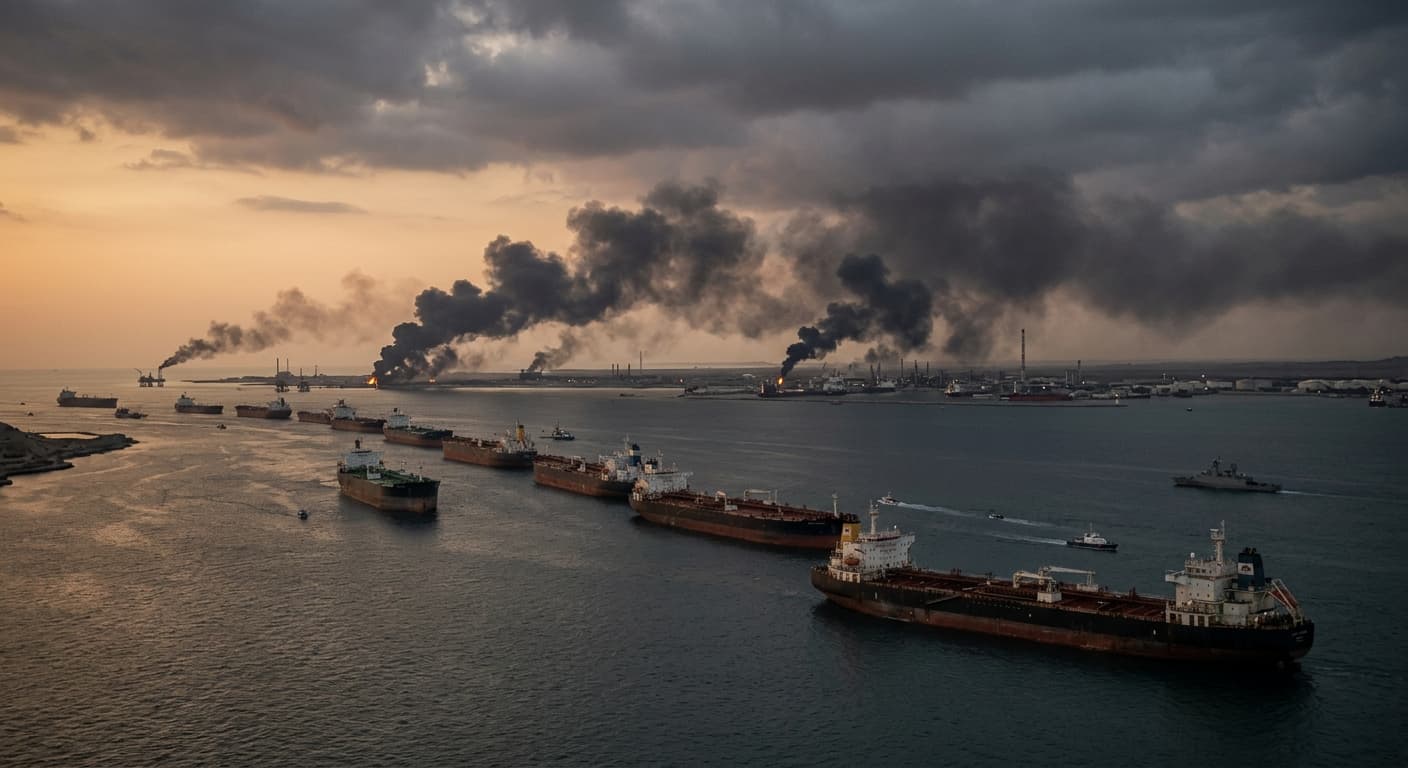
This is not abstract geopolitics. It is a live stress test of the world's energy system. Roughly 21 million barrels of oil pass through the Strait of Hormuz every single day. That is about one-fifth of global petroleum consumption. When that flow is threatened, the effects ripple outward fast.
The Immediate Trigger: Strikes on Iranian Territory
According to multiple reports, U.S. forces struck Iranian facilities on Qeshm Island, a strategic outpost near the mouth of the Strait. The island sits close to key shipping lanes and has been used by Iran's Revolutionary Guard to monitor tanker traffic. The strikes were part of a larger series of actions that also targeted sites linked to Iran's missile program and proxy networks.
Iran responded with missile launches toward U.S. assets and Israeli positions, followed by threats to close the Strait entirely. A fragile ceasefire was announced, but few analysts believe it will hold without a broader diplomatic agreement. The damage to Iranian infrastructure, even if limited, has already reduced its oil export capacity in the short term.
Before the latest flare-up, Iran was producing roughly 3.2 million barrels per day and exporting about 1.5 million of those, mostly to China. Those exports now face higher risks, higher insurance costs, and greater political pressure. Chinese buyers, who had become Iran's largest customer under sanctions workarounds, are suddenly looking at Malaysian, Russian, and Brazilian barrels instead.
Why the Strait of Hormuz Matters So Much
Think of the Strait as the narrowest part of a very long pipeline. At its tightest point, the shipping channel is only about two miles wide in each direction. Tankers from Saudi Arabia, Iraq, Kuwait, the UAE, and Qatar all funnel through it. Any serious disruption here cannot be quickly replaced by pipelines or rail.
The U.S. strikes on Iranian ports have heightened exactly these fears. Even the threat of mines, drone swarms, or naval harassment is enough to drive shipping costs higher. Lloyd's of London has already raised war-risk premiums for vessels in the region by more than 30 percent in the past week.
Saudi Arabia and the UAE have some spare capacity through the East-West Pipeline and other routes, but those are limited. The global spare capacity cushion that existed in early 2025 has been steadily shrinking. OPEC+ production cuts, combined with strong demand recovery in Asia, left the market tighter than many expected heading into 2026.
Oil Market Reaction and Price Volatility
Oil traders hate uncertainty more than high prices. The initial jump in Brent prices reflected that fear. West Texas Intermediate followed closely. Gasoline futures in New York rose sharply, signaling higher costs at the pump by this summer.
Yet the market is also watching for signs of how long this lasts. If the ceasefire holds and Iranian exports return within weeks, the price spike could fade. If Iran manages to disrupt even 2 to 3 million barrels per day for several months, prices could test $110 or higher.
The International Energy Agency warned in its latest assessment that a prolonged closure of the Strait could remove up to 18 million barrels per day from the market. That is more than the entire spare capacity currently available from all producers combined. Strategic petroleum reserves in the United States, Japan, South Korea, and Europe would be drawn down fast.
Sanctions, Workarounds, and the Petrodollar Question
Iran has spent years building sanctions-evasion networks. These include ship-to-ship transfers in the South China Sea, use of phantom tankers with disabled tracking systems, and settlement of oil trades in Chinese yuan or other non-dollar currencies.
The current conflict puts those workarounds under new pressure. U.S. secondary sanctions are likely to tighten again. Banks and shipping firms that previously looked the other way may now face clearer legal risks. This matters because every barrel not sold in dollars chips away at the cryptocurrency trading and the erosion of the petrodollar system that has dominated global energy trade since the 1970s.
Some analysts point to rising cryptocurrency and gold settlements in certain bilateral deals as evidence that alternatives are gaining ground. Others argue the dollar's dominance remains intact because no other currency offers the same depth of financial markets or rule of law. The current Iran crisis is testing both views in real time.
Impacts Beyond Oil: Shipping, Inflation, and Global Growth
Higher energy prices do not stay contained. They feed into fertilizer costs, transportation expenses, and manufacturing. Countries that import nearly all their energy, such as India, Pakistan, and much of Europe, feel the pain first.
India's new political landscape adds another layer. Suvendu Adhikari's elevation to a senior role in West Bengal comes at a moment when the country must balance growing energy demand with careful diplomacy between the United States, Israel, and the Gulf states. Disruptions in oil supply could complicate India's efforts to keep inflation under control ahead of key state elections.
Europe, still recovering from the energy shock of the Russia-Ukraine war, faces renewed pressure on natural gas prices as well. Although the current crisis is centered on oil, any instability in the Middle East tends to lift prices across all fossil fuels. Liquefied natural gas cargoes originally headed to Asia are already being diverted toward European terminals.
The Role of Regional Players and Proxy Networks
Iran's influence extends beyond its own territory through groups like the Houthis in Yemen, Hezbollah in Lebanon, and various militias in Iraq and Syria. These networks have already demonstrated their ability to target shipping in the Red Sea and attack energy infrastructure. Explosions in Damascus and Middle East strikes reshaping Syria's future, global oil markets, and energy politics
The Houthis' earlier campaigns showed how even limited attacks can force shipping companies to reroute around Africa, adding weeks and thousands of dollars to each voyage. A similar pattern in the Strait of Hormuz would be far more damaging because there is no easy alternative route.
Saudi Arabia and the UAE have improved their air defenses and diversified export routes since the 2019 attacks on Abqaiq. But they remain vulnerable. Israel has signaled it will not tolerate Iranian nuclear advances. The United States finds itself balancing support for Israel with the need to keep global energy markets from spinning out of control.
What This Means for Everyday People
If oil stays above $90 for the rest of 2026, expect higher prices at the gas station, elevated airline fares, and increased costs for goods moved by truck or ship. Farmers will pay more for diesel and fertilizer. Manufacturers will see rising input costs. Central banks may face harder choices between fighting inflation and supporting growth.
Lower-income households in both developed and developing countries feel these changes most acutely. A sustained $20 increase in the price of a barrel of oil can add hundreds of dollars per year to an average family's energy and food bill. In countries without strong social safety nets, that difference can mean choosing between heating, cooling, or putting food on the table.
Businesses that locked in fuel contracts earlier may have some protection. Those that did not are already hedging or passing costs on to customers. Airlines, shipping companies, and chemical producers are especially exposed.
Longer-Term Shifts in Energy Politics
This crisis accelerates trends that were already underway. Countries are racing to diversify both supply sources and energy types. Investments in renewables, nuclear power, and domestic oil and gas production all look more attractive when Middle East stability is in doubt. Travel Vaccine Requirements 2026 and how health crises reshape global trade, energy politics, and economic security
Yet the transition is not fast enough to replace oil in the next few years. Electric vehicles are growing rapidly, but they still represent a small share of the global fleet. Heavy industry, aviation, and shipping will rely on liquid fuels for decades. That reality gives oil producers, especially those in the Gulf, continued strategic importance.
The stock market volatility we have seen in recent weeks partly reflects these cross-currents. Energy company shares have rallied while airline and consumer discretionary stocks have struggled. Investors are trying to price in both short-term disruption and longer-term strategic realignment. Iran nuclear optimism and Middle East tensions driving global stock market volatility in 2026
Diplomatic Off-ramps and Risks Ahead
The announced ceasefire offers a momentary pause. But the underlying issues, Iran's nuclear program, regional proxy conflicts, and deep mutual distrust between Tehran, Washington, and Jerusalem, remain unresolved. Any spark could restart the cycle. US Israel intelligence tensions escalate and threaten alliance
China has quietly positioned itself as a potential mediator while continuing to buy discounted Iranian oil when possible. Russia, facing its own sanctions, has aligned itself with Iran in some military and technical areas. These relationships complicate Western efforts to isolate Tehran economically.
India, under its current leadership configuration, is likely to prioritize energy security and affordable fuel prices. That may mean continued purchases from multiple sources, including Russia and Iran, even as it deepens defense ties with Israel and the United States. The Nifty 50 Crash 2026: Why Indian Stocks Plunged Below 23,100 Amid Oil Spike and Global Risk-Off
Conclusion: A System Under Strain
The strikes on Qeshm Island and the broader Iran conflict have reminded the world how fragile our energy arteries remain. Modern economies run on predictable, affordable oil and gas flows. When those flows are threatened, prices rise, alliances shift, and political pressures mount at home. Qatar Iran War 2026 and Strait of Hormuz risks
Whether this episode leads to a lasting diplomatic breakthrough or simply another chapter in a long cycle of tension will shape energy markets for years. In the meantime, every driver filling up their tank, every factory manager watching energy bills, and every policymaker balancing budgets is living with the consequences of decisions made thousands of miles away in the waters off Iran.
The lesson is simple. Energy security is not optional. It is the foundation on which everything else, from economic growth to political stability, is built. When that foundation shakes, the tremors reach every corner of the globe.
Share This Article