Jonathan van den Berg · June 15, 2026
Travel Vaccine Requirements 2026: How Health Crises Reshape Global Trade, Energy Politics, and Economic Security
Outbreaks of Ebola, measles, and new threats like the world screwworm are forcing stricter travel vaccine requirements in 2026, disrupting global supply chains, energy routes, and economic security.
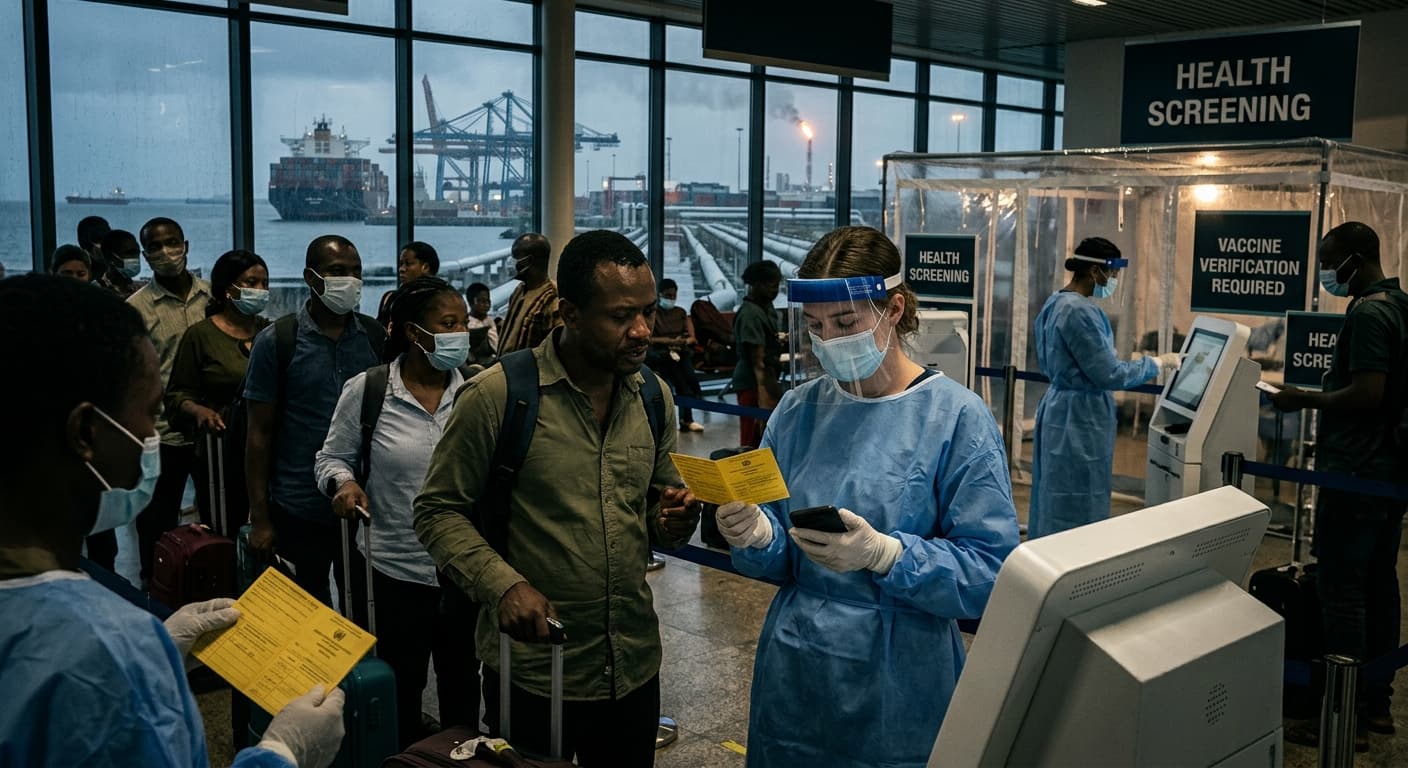
Travel vaccine requirements tightened sharply in 2026 as governments respond to simultaneous outbreaks of Ebola, measles, hantavirus, and the invasive New World screwworm parasite. Airlines, energy firms, and multinational corporations now face mandatory health documentation that directly affects cross-border movement of people and goods.
These rules create immediate friction in global trade lanes, slow energy project staffing in high-risk regions, and raise costs for companies reliant on international talent and supply chains. Nations hosting major events like the FIFA World Cup face particular pressure to balance public health with economic openness.
Key Takeaways
- Multiple concurrent health threats have led to expanded travel vaccine requirements for entry into dozens of countries in 2026.
- Ebola and measles outbreaks are disrupting labor mobility in critical energy and mining sectors across Africa and Latin America.
- World Cup 2026 hosts are imposing enhanced screening that affects tourism revenue and regional trade flows.
- Businesses can reduce delays by maintaining up-to-date vaccination records and using digital health certificates.
- Long-term policy shifts risk fragmenting global labor markets and increasing costs in geopolitically sensitive supply chains.
Current Travel Vaccine Requirements Landscape in 2026
Health authorities now require proof of vaccination or negative tests for more diseases than at any point since the COVID-19 pandemic. Ebola remains the highest-profile concern, with several African nations demanding vaccination evidence or quarantine periods for travelers arriving from affected zones.
Measles has resurged in Europe and parts of North America, prompting destination countries to request proof of MMR vaccination. The New World screwworm outbreak, which affects both livestock and occasionally humans, has led agricultural exporters in Central America to impose new sanitary certificates tied to traveler health declarations.
Digital tools such as the WHO's International Certificate of Vaccination or Prophylaxis (ICVP) have become standard. Many countries now cross-reference these records against blockchain-based systems to prevent forgery, adding another layer of verification that can delay business travel by days.
Health Crises Driving Policy Changes
The convergence of several outbreaks created a perfect storm for policymakers. Ebola flare-ups in Central Africa coincided with measles spikes linked to declining childhood immunization rates in several developed nations. At the same time, the spread of the New World screwworm beyond its traditional range raised biosecurity fears for livestock-dependent economies.
These threats triggered coordinated responses from the World Health Organization and national health ministries. Travel vaccine requirements expanded to include optional but strongly recommended shots for hantavirus in parts of South America, particularly for those attending the World Cup.
Public health experts argue the measures are proportionate given modern travel speeds. A single infected traveler can spread disease across continents within 24 hours, making preemptive vaccination checks a rational defense for interconnected economies.
Ebola and Its Ripple Effects on African Energy Projects
Ebola outbreaks continue to threaten staffing at oil, gas, and mining operations across West and Central Africa. Major energy companies report delays in rotating expatriate workers because many now require proof of Ebola vaccination or recent negative PCR tests before boarding flights.
This friction raises project costs and slows development timelines in regions already strained by geopolitical competition for resources. Countries dependent on energy exports face reduced foreign investment when executives cannot travel freely.
The situation echoes patterns seen in earlier outbreaks, where health restrictions compounded existing supply chain vulnerabilities. Energy firms have responded by increasing local hiring and investing in on-site medical infrastructure, but these adaptations take time and capital.
Impact on Global Trade and Supply Chains
Travel vaccine requirements function as non-tariff barriers that affect the movement of both people and products. Companies in logistics, consulting, and technical services report longer lead times for deploying personnel to client sites. Manufacturing plants dependent on foreign engineers face production bottlenecks when key specialists cannot clear health screenings quickly.
Retail operations also feel the pressure. Trader Joe's lawsuit settlement highlighted how fragile global supply chains have become when external shocks—whether regulatory, health-related, or geopolitical—disrupt normal operations.
Smaller exporters in developing nations suffer most. They lack the resources to maintain dedicated travel compliance teams, meaning a single rejected visa due to missing vaccination records can result in lost contracts and damaged commercial relationships.
Energy Politics and Labor Mobility
Energy markets demonstrate particular sensitivity to health-driven travel restrictions. Oil majors operating in regions with active disease transmission must now budget for extended quarantine periods or higher insurance premiums for international staff.
This dynamic intersects with broader geopolitical tensions. Kuwait tensions and Middle East oil politics already drive price volatility, and added health barriers further complicate efforts to maintain stable production and shipping schedules.
Countries competing for foreign energy investment find themselves in a difficult position. They must implement strict health measures to protect their populations while avoiding the perception of being unwelcoming to the skilled workers needed to develop their resources.
Economic Security Implications
Health-related travel barriers affect more than immediate business trips. They influence long-term decisions about where companies locate regional headquarters, research facilities, and training centers. Nations perceived as high-risk for disease outbreaks lose ground in the competition for talent and capital.
Financial markets have begun pricing in this new reality. Insurance products covering travel disruption due to health regulations have seen increased demand, while certain emerging market bonds now carry explicit risk premiums related to public health governance.
The situation also accelerates adoption of remote work technologies and automation in sectors previously reliant on frequent physical presence. This shift carries its own geopolitical dimensions as countries compete to set standards for digital identity and health data sharing.
How Businesses and Travelers Can Navigate Requirements
- Check official government sources for destination-specific rules at least 60 days before travel, as requirements can change rapidly with outbreak developments.
- Maintain a centralized digital record of all vaccinations using WHO-compliant platforms that allow quick sharing with border authorities.
- Schedule vaccinations well in advance—some required shots need multiple doses spaced weeks apart.
- Build buffer time into project schedules to account for potential quarantine or additional testing upon arrival.
- Consult with specialized travel health clinics that understand both medical and commercial implications of current regulations.
- Consider contractual clauses that address delays caused by evolving health entry requirements.
Larger corporations have created internal "health mobility teams" that track changing rules across operating countries and coordinate with embassies when issues arise. This proactive approach has proven more effective than reacting to last-minute surprises at airports.
Common Mistakes That Trigger Delays or Denials
- Relying solely on personal memory instead of official documentation for vaccination history.
- Assuming that a vaccine required last year remains sufficient without checking current validity periods.
- Booking travel before confirming entry requirements, leading to non-refundable losses when rules change.
- Using outdated health apps or paper records that border systems no longer accept.
- Failing to disclose recent travel to outbreak zones, which can result in extended quarantine even with proper vaccinations.
These errors prove expensive. A single executive denied entry can delay a multimillion-dollar deal or critical infrastructure inspection by weeks.
Best Practices for Compliance and Risk Management
Forward-looking organizations treat health compliance as a strategic function rather than an administrative burden. They integrate travel vaccine requirements into enterprise risk management frameworks alongside traditional geopolitical and market risks.
Regular scenario planning helps companies prepare for sudden changes. Running simulations of major disease outbreaks allows logistics teams to identify vulnerable routes and develop alternative staffing strategies before crises hit.
Partnerships with specialized medical providers and technology firms offering real-time regulatory updates give organizations an edge. Those who treat health mobility as seriously as they treat sanctions compliance or tariff navigation position themselves better in an increasingly complex global environment.
The most successful firms also invest in local capacity building. By training and certifying domestic talent to international standards, they reduce dependence on frequent international rotations while still meeting project requirements.
FAQ
What vaccines are most commonly required for international travel in 2026?
Yellow fever, polio, measles (MMR), and Ebola vaccinations top most lists, with hepatitis A and typhoid also frequently requested depending on destination. Requirements vary significantly by country and current outbreak status.
How do travel vaccine requirements affect business travel and global trade?
They add time, cost, and uncertainty to deploying international teams. This particularly impacts energy, mining, construction, and professional services sectors where on-site expertise remains essential despite advances in remote technology.
Are there exemptions for certain travelers or business purposes?
Some countries offer limited diplomatic or emergency medical exemptions, but these are narrowly applied. Critical infrastructure workers sometimes receive expedited processing, though documentation requirements remain strict.
How might health-related travel restrictions influence energy prices?
By slowing project timelines and increasing operational costs in key producing regions, these restrictions can contribute to tighter supply conditions that support higher prices. The effect compounds when combined with existing geopolitical tensions in oil-producing areas.
Will travel vaccine requirements become permanent features of international travel?
Most experts expect some level of enhanced health screening to remain even after current outbreaks subside. The precedent established during the COVID period has normalized health documentation as a standard entry requirement alongside passports and visas.
Conclusion
Travel vaccine requirements in 2026 represent more than a public health measure. They have become a structural feature of global economic activity that influences trade patterns, energy development, labor markets, and investment decisions. Organizations that integrate health compliance into their core operational strategy will navigate this environment more successfully than those treating it as a temporary inconvenience.
Staying informed through official channels, maintaining meticulous records, and building flexibility into international operations offers the best defense against disruption. In an era where health security increasingly intersects with economic security, preparation provides competitive advantage.
For deeper analysis of how health crises interact with financial markets, read our examination of global economic pressures amid energy volatility.
Share This Article