Supply Chain · Jonathan van den Berg · September 8, 2026
Qatar Iran War 2026: How Strait of Hormuz Risks Reshape Global Oil Flows, Critical Minerals, and Sovereign Wealth Fund Strategies
Qatar’s insistence that the Strait of Hormuz remains vital even as alternatives emerge highlights the narrow margin between regional conflict and global energy shock. Persistent tanker insurance spikes and rerouting costs are already reshaping oil flows, critical minerals logistics, and sovereign capital deployment.
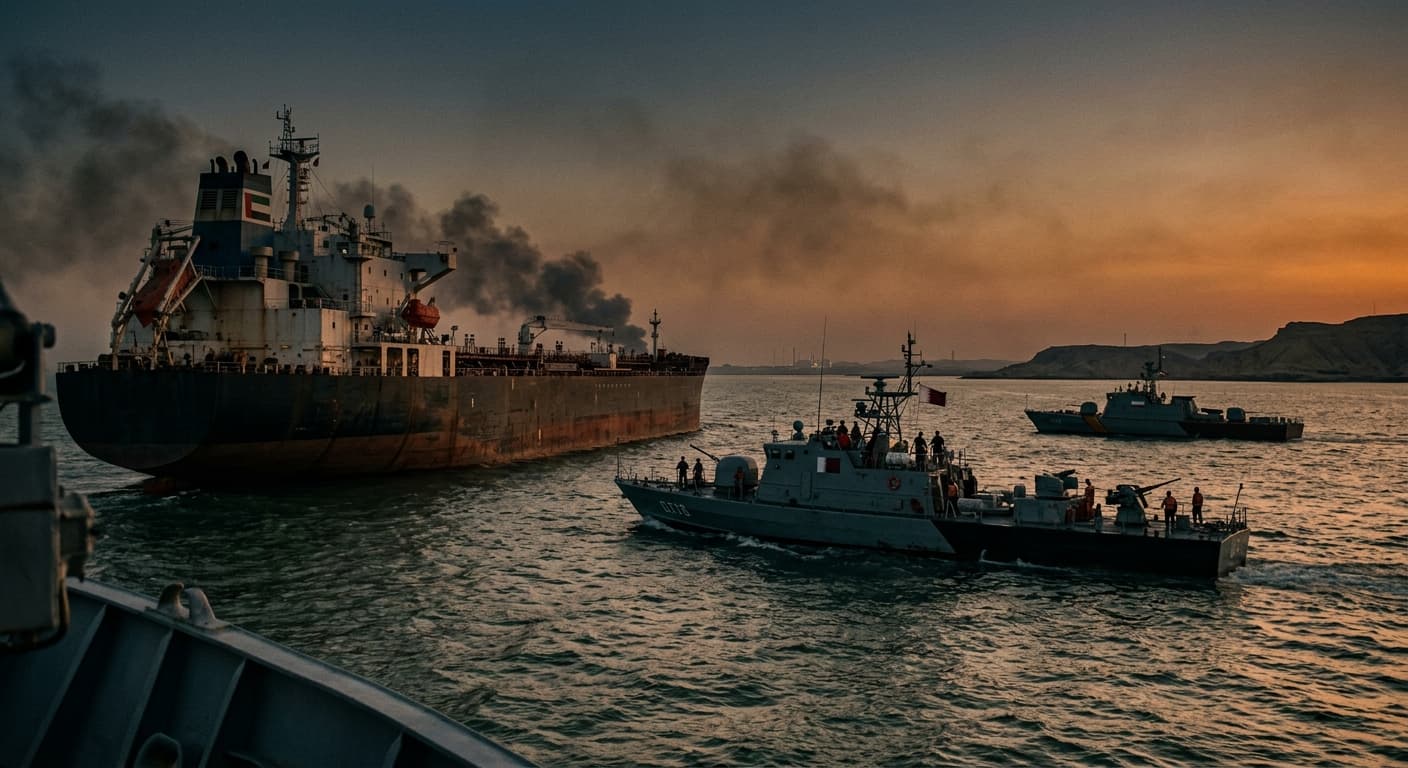
Qatar’s foreign minister explicitly warned that continued escalation in the Iran conflict risks an industrial catastrophe far beyond the Gulf. The reason is simple: roughly 21 million barrels of oil and vast volumes of liquefied natural gas pass daily through the Strait of Hormuz, a chokepoint only 21 miles wide at its narrowest point. Any sustained disruption forces immediate rerouting, insurance premia spikes, and cascading effects on global supply chains already strained by other vulnerabilities.
The current flare-up has already triggered measurable shifts. tanker rates for Gulf-to-Asia routes jumped 38 percent in the first week of heightened tensions. Asian refiners are accelerating draws from floating storage while European buyers scramble for West African and North Sea barrels. These moves are not temporary speculation. They reflect structural repricing of Strait of Hormuz risks that institutional investors must now model into energy, critical minerals, and technology portfolios.
Key Takeaways
- The Strait of Hormuz carries 21% of global seaborne oil trade; even partial closure adds $15–40 per barrel to benchmark prices within weeks.
- Qatar’s diplomatic stance emphasizes the strait’s enduring centrality while quietly accelerating alternative pipeline and shipping investments.
- Critical minerals shipments, especially rare earths and copper concentrates routed via Gulf ports, face secondary delays that compound semiconductor and AI data center supply gaps.
- Sovereign wealth funds in the Gulf are reallocating from pure upstream oil into midstream logistics, nuclear power, and AI infrastructure to hedge physical chokepoint exposure.
- Insurance and freight costs are transmitting volatility into downstream sectors, including NVIDIA’s $279 billion AI data center bets already facing minerals shortages.
Why the Strait of Hormuz Remains the Ultimate Energy Chokepoint
Despite repeated claims of diversification, no realistic alternative matches the strait’s capacity in the near term. The UAE’s Habshan–Fujairah pipeline carries about 1.5 million barrels per day, less than 10 percent of total Hormuz traffic. Saudi Arabia’s East–West pipeline maxes out near 5 million barrels daily but still leaves the majority of crude and almost all LNG dependent on the narrow waterway.
Qatar, the world’s largest LNG exporter, ships nearly all its output through Hormuz. In the latest Al-Ansari interview, the Qatari official stressed that emerging routes via the Gulf of Oman or overland corridors cannot absorb current volumes without massive new infrastructure. This reality underpins Doha’s public insistence that the strait must remain open even as it hedges through diplomatic engagement and capital deployment.
Recent satellite data and shipping trackers show Iranian Revolutionary Guard naval exercises near the strait’s northern shore. Minesweeping drills and fast-attack boat swarms have become routine. Each incident raises the risk premium priced into Brent crude futures. When tensions peaked in 2019, insurance for a VLCC (very large crude carrier) rose from $50,000 to over $500,000 per voyage. Current quotes already sit 180 percent above 2025 averages.
Immediate Oil Market and Supply Chain Impacts
Oil traders report Brent forward curves flipping into steep backwardation, signaling tight near-term physical supply. Asian buyers, particularly in China, India, and South Korea, are most exposed. China receives over 40 percent of its crude via Hormuz. India’s reliance sits near 60 percent for its Persian Gulf imports.
Rerouting around Africa adds 15–20 days and roughly $2.5 million in extra bunker fuel per VLCC voyage. That cost gets passed downstream. European diesel cracks have widened 22 percent since the latest escalation. U.S. Gulf Coast refiners are increasing runs, but domestic pipeline constraints limit how much relief they can provide. Gas prices in 2026 are being shaped by these same Iran tensions, diesel shortages, and Strait of Hormuz risks.
The ripple reaches critical minerals fast. Copper concentrate from Chile and Peru often routes through Singapore or Middle East hubs before final delivery to smelters. Lithium and cobalt shipments for battery supply chains share similar maritime arteries. Any delay compounds existing tightness already documented in how 2026 earthquakes reshape critical minerals supply chains.
Critical Minerals Exposure and Semiconductor Linkages
Semiconductor fabrication depends on ultra-pure chemicals and specialty gases often produced in facilities near the Gulf or reliant on stable energy prices. Qatar’s Ras Laffan industrial city supplies significant volumes of neon and xenon used in lithography. Any sustained energy price shock or physical interruption to feedstock gas flows directly threatens chip output.
NVIDIA, TSMC, and their downstream customers in AI data centers face compounded risk. Power purchase agreements (PPAs) priced against volatile oil-linked LNG become less attractive. Northern Virginia data center operators already grapple with grid constraints; higher energy input costs accelerate the search for nuclear and small modular reactor solutions.
Insurance markets are beginning to treat critical minerals shipments as dual-use cargo under conflict clauses. Premiums for copper and rare earth cargoes transiting the Indian Ocean have risen 65 percent. This directly affects the cost curve for electric vehicles, renewable infrastructure, and hyperscale computing.
Sovereign Wealth Fund Reallocation in Response to Hormuz Risk
Gulf sovereign wealth funds are moving capital with speed. Qatar Investment Authority has increased stakes in European midstream assets and North American nuclear developers. Abu Dhabi’s Mubadala and Saudi PIF continue to expand exposure to AI infrastructure and grid-stabilizing technologies.
These moves mirror earlier patterns seen after the 2019 tanker attacks. Funds are buying stakes in shipping companies, floating storage specialists, and alternative route infrastructure such as the India–Middle East–Europe Economic Corridor. They are also accelerating investments in domestic refining and petrochemical complexes that reduce net export volumes through the strait.
Public statements from Qatar emphasize continuity, but portfolio data tells a different story. Increased allocations to U.S. tech infrastructure and European renewable developers suggest a deliberate reduction in pure-play upstream oil beta. This diversification strategy protects against both physical blockade and long-term demand destruction if high prices accelerate the energy transition. How Trump-Xi Dinner Reshapes Strait of Hormuz Risks, Critical Minerals Strategy, and Sovereign Wealth Fund Allocations
Comparison of Alternative Routes and Their Limitations
| Route | Daily Capacity (million bpd) | Added Transit Time (days) | Estimated Extra Cost per Barrel | Primary Constraint |
|---|---|---|---|---|
| Strait of Hormuz (baseline) | 21 | 0 | $0.50–1.00 | Geopolitical risk |
| UAE East Pipeline | 1.5–2.0 | 1 | $1.80 | Pipeline maintenance |
| Saudi East-West Pipeline | 5.0 | 2 | $2.40 | Domestic demand priority |
| Around Africa (Cape of Good Hope) | Unlimited (theoretical) | 15–20 | $6–9 | Bunker fuel and time |
| India-Middle East-Europe Corridor (rail/ship) | Under 1.0 (early stage) | 8–12 | $4–7 | Infrastructure incomplete |
The table makes clear why markets treat Hormuz disruption as a high-impact, low-probability tail risk that still commands substantial hedging activity.
AI Data Center and Grid Constraint Amplification
Higher energy prices directly raise the cost of operating hyperscale facilities. Many data center PPAs are indexed to natural gas or LNG prices. A sustained $10–15 increase in oil translates into 4–7 percent higher power costs in deregulated markets.
Operators are responding by accelerating nuclear co-location deals and behind-the-meter generation. The same sovereign wealth funds investing in alternative shipping routes are simultaneously backing small modular reactors and battery storage projects designed to insulate AI expansion from fossil fuel volatility.
This convergence creates new investment themes: companies that solve both physical maritime risk and digital infrastructure risk stand to capture capital from Gulf funds seeking geopolitical hedges. Oracle’s data center expansion in the Middle East and its cloud partnerships with energy majors illustrate one such bridge.
Common Mistakes Investors Make When Modeling Hormuz Risk
- Assuming linear price responses. Markets exhibit threshold behavior; once insurance costs exceed certain levels, physical trade simply stops until buyers absorb the premium.
- Ignoring secondary chokepoints. A Hormuz crisis quickly congests the Malacca Strait and Bab el-Mandeb supply chain chokepoints as traffic reroutes, multiplying delays.
- Underweighting critical minerals linkages. Many investors treat oil and semiconductors as separate silos when they share maritime arteries and energy inputs.
- Over-relying on futures curves. Prompt-month volatility often masks longer-term structural shifts in sovereign capital flows and infrastructure buildouts.
Best Practices for Portfolio Positioning
- Stress-test equity exposure to Gulf upstream producers against scenarios of 30–90 day partial closure.
- Increase allocation to midstream logistics, shipping, and floating storage operators that benefit from higher utilization and rates.
- Target companies solving AI power constraints, including nuclear technology, grid optimization software, and behind-the-meter generation—sectors Gulf sovereign wealth funds are already backing.
- Monitor neon, xenon, and specialty gas producers with diversified production outside the Gulf.
- Use options rather than linear hedges to capture asymmetric upside from rapid price spikes while limiting downside during de-escalation.
These steps help investors move beyond headline risk to structural positioning that aligns with how Qatar, Saudi Arabia, and Abu Dhabi are quietly reshaping their own balance sheets.
FAQ
How much oil travels through the Strait of Hormuz daily?
Approximately 21 million barrels of crude oil and condensate plus significant LNG volumes, representing about 21 percent of total global seaborne petroleum liquids trade.
Why does Qatar insist the strait will remain vital despite alternative routes?
Existing pipelines and proposed corridors cannot scale to replace current volumes without years of investment and massive cost. Qatar’s LNG plants are geographically locked to the southern Gulf, making Hormuz the only practical export route for the foreseeable future.
How do Strait of Hormuz risks affect AI data centers?
Higher energy prices raise power purchase agreement costs. Specialty gases used in chip manufacturing face supply disruption. Both factors slow AI infrastructure buildout and increase capital intensity for hyperscale operators.
Which sovereign wealth funds are most exposed to Hormuz disruption?
Qatar Investment Authority, Abu Dhabi Investment Authority, Mubadala, and Saudi Public Investment Fund hold large upstream and energy infrastructure positions that require active reallocation into logistics, nuclear, and digital infrastructure.
What is the insurance impact on tanker traffic?
War-risk premiums have already tripled for voyages involving Gulf loading ports. At sustained high levels, some operators simply refuse to transit, forcing buyers to absorb massive freight cost increases or seek distant alternatives.
Conclusion
The Iran conflict has once again placed the Strait of Hormuz at the center of global risk pricing. Qatar’s clear warning of industrial catastrophe if the crisis continues underscores how little margin exists between regional politics and worldwide economic shock. For institutional investors, the practical response is not panic but deliberate repositioning toward assets that solve chokepoint vulnerabilities in both physical trade and digital infrastructure.
Those who integrate energy security, critical minerals resilience, and AI power needs into a single framework will be best placed to navigate the volatility ahead. The capital flows already visible from Gulf sovereign wealth funds offer the clearest signal of where that framework is heading.
Sources
Share This Article