Supply Chain · Jonathan van den Berg · September 18, 2026
Gas Prices 2026: How Iran Tensions, Diesel Shortages, and Strait of Hormuz Risks Drive Energy Market Volatility
Rising gas prices in 2026 stem directly from renewed Iran tensions that threaten the Strait of Hormuz, persistent diesel shortages, and risk premiums on key supply chokepoints. These pressures hit household budgets, freight costs, and institutional portfolios with immediate effect.
Rising gas prices in 2026 trace straight back to three overlapping pressures: renewed Iran tensions that put the Strait of Hormuz at risk, chronic diesel shortages that squeeze refining margins, and elevated risk premiums on critical shipping chokepoints. Households face higher pump prices while freight operators, manufacturers, and institutional investors absorb cascading cost increases that reshape everything from grocery bills to portfolio allocations.
Key Takeaways
- National average regular gasoline climbed above $3.65 per gallon in mid-September 2026, with diesel holding near $4.10.
- Iran-related disruptions in the Strait of Hormuz add a $6–12 per barrel risk premium to Brent crude.
- Diesel inventories sit 18% below the five-year average, driving trucking and agricultural costs higher.
- Supply-chain chokepoints at Bab el-Mandeb and the Malacca Strait compound Red Sea and Asian routing delays.
- Refiners such as Valero, Marathon Petroleum, and Phillips 66 benefit from wide crack spreads while integrated majors hedge upstream exposure.
- AI data center operators in Northern Virginia face indirect pressure through higher electricity and backup generator fuel costs.
Why Gas Prices Are Rising Again in 2026
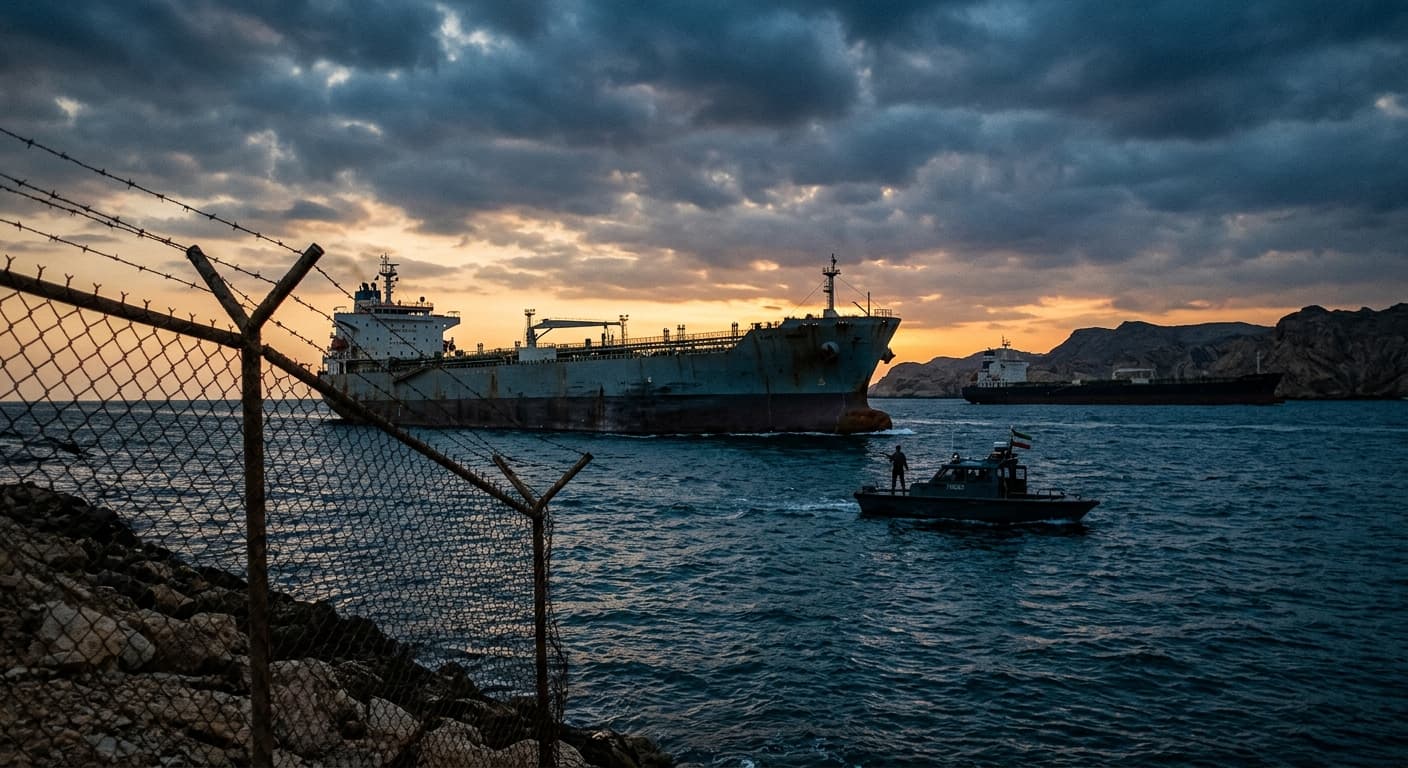
Crude oil prices stabilized above $78 per barrel after earlier volatility tied to Middle East developments. Gasoline and diesel followed with a lag. The primary catalyst remains geopolitical: repeated incidents near the Strait of Hormuz force tanker operators to pay higher insurance and, in some cases, reroute around Africa.
Diesel faces a tighter physical market. Refineries optimized for gasoline production during the summer driving season left middle distillate stocks depleted heading into fall harvest and heating demand. Overseas conflicts further tightened supply as European buyers competed for cargoes traditionally destined for the U.S. Gulf Coast.
AAA data shows the national average for regular gas rose 22 cents in the past month. Diesel moved even faster in regional markets serving agriculture and logistics hubs.
The Strait of Hormuz Risk Premium Explained
The Strait of Hormuz handles roughly 21 million barrels per day of crude and petroleum products—about one-fifth of global seaborne oil trade. Any credible threat to safe passage immediately lifts futures prices.
Recent tensions, including reported port strikes and naval posturing, pushed the implied risk premium on Brent from $3–4 per barrel earlier in the year to the current $8–12 range according to trading desk estimates. This premium appears in longer-dated contracts and in the cost of freight derivatives.
Integrated energy companies with diversified upstream portfolios can offset some losses, but pure-play refiners feel the margin squeeze when crude spikes faster than product prices.
Qatar-Iran War 2026 scenarios illustrate how even temporary blockades reshape sovereign wealth fund allocations toward hard commodities and alternative energy infrastructure.
Diesel Shortages Hit Hardest
While regular gasoline draws most consumer attention, diesel tells the real economic story. Trucking moves 70% of U.S. freight by tonnage. Farmers rely on it for harvest equipment. Rail and marine operators use it when natural gas prices make switching uneconomic.
Current inventories stand at roughly 18% below the five-year average for this time of year. Exports to Europe and Latin America remain strong because those regions face even tighter balances after refinery closures and maintenance.
The result is a diesel crack spread—the difference between diesel and crude prices—that remains structurally elevated. Refiners like Phillips 66 (NYSE:PSX), Valero (NYSE:VLO), and Marathon Petroleum (NYSE:MPC) report outsized margins on distillate production.
| Product | Current Price (per gallon) | Change Past 30 Days | Typical Seasonal Driver |
|---|---|---|---|
| Regular Gasoline | $3.68 | +$0.22 | Driving season tail + geopolitical risk |
| Ultra-Low Sulfur Diesel | $4.09 | +$0.31 | Low inventories + harvest demand |
| Jet Fuel | $2.41 | +$0.18 | Air travel recovery + military movements |
How Supply Chain Chokepoints Amplify the Problem
The Strait of Hormuz is not the only vulnerable artery. Houthi activity near Bab el-Mandeb forces many vessels to avoid the Suez Canal entirely, adding 10–14 days and thousands of miles via the Cape of Good Hope. Insurance premiums for Red Sea transits remain prohibitively high.
Simultaneously, congestion and piracy concerns around the Malacca Strait affect Asian crude imports and product exports. These overlapping disruptions create a multiplier effect: one barrel of oil takes longer to reach market, raising effective carrying costs and inventory requirements.
This environment directly echoes patterns analyzed in Houthi advances in Yemen and Bab el-Mandeb chokepoints that first exposed the Red Sea risk premium in late 2025.
Impact on Consumers, Businesses, and Institutional Investors
For households, every 10-cent increase in gasoline trims roughly $135 in annual spending power for the average driver. Combined with elevated diesel costs embedded in food and goods transport, the effect compounds.
Logistics companies pass costs through via fuel surcharges. Retailers absorb some margin pressure before raising shelf prices. Farmers face higher input costs at a time when commodity prices for corn and soybeans remain volatile.
Institutional portfolios feel the impact through energy equities, commodity futures, and inflation-sensitive assets. Sovereign wealth funds have increased exposure to midstream infrastructure and alternative fuels to hedge long-term chokepoint risks.
AI-driven data centers, which consume enormous electricity and maintain large diesel backup fleets, see indirect cost pressure. Northern Virginia operators already wrestle with grid constraints; higher fuel prices raise the cost of reliability during peak demand or outages.
Related analysis in how 2026 earthquakes reshape critical minerals supply chains and AI data center expansion shows how physical infrastructure shocks compound energy market volatility.
Refiner Winners and Upstream Losers
Not every energy company experiences the same outcome. Pure-play refiners with high distillate yields capture wide crack spreads. ExxonMobil (NYSE:XOM) and Chevron (NYSE:CVX) benefit from integrated models that balance upstream production gains against higher feedstock costs.
Smaller independent refiners without captive crude face tighter economics when crude spikes. Hedging strategies vary widely—some locked in favorable crude differentials months ago, others remain exposed.
Common Mistakes Investors Make in This Environment
- Assuming gasoline prices move in lockstep with crude without accounting for refining margins and seasonal demand shifts.
- Ignoring diesel as a separate market; its tightness often signals broader economic stress before headline gasoline figures reflect it.
- Treating all chokepoint risk as binary—temporary insurance spikes can persist for months even without full closure.
- Overweighting upstream producers without balancing against midstream and downstream exposure that benefits from volatility.
- Neglecting second-order effects on electricity prices and backup fuel costs for hyperscale data center operators.
Best Practices for Navigating 2026 Energy Volatility
- Track weekly EIA inventory reports with special attention to distillate stocks and implied demand calculations.
- Monitor tanker tracking data and insurance rate quotes for the Strait of Hormuz and Bab el-Mandeb as leading indicators.
- Build diversified energy exposure across integrated majors, independent refiners, and midstream logistics that benefit from longer voyage times.
- Stress-test portfolios for sustained $85–95 crude scenarios and corresponding diesel crack spreads above $30 per barrel.
- Consider physical hedges or commodity-linked ETFs for businesses with unavoidable diesel exposure in transportation or backup power.
- Evaluate long-term power purchase agreements and on-site generation strategies for data center operators facing both grid constraints and fuel price risk.
FAQ
When will gas prices come down in 2026?
Prices typically ease after Labor Day as driving demand falls, but geopolitical risk in the Strait of Hormuz and low diesel inventories limit relief. Analysts see potential moderation only if tensions de-escalate and refinery maintenance concludes without further outages.
Why is diesel more expensive than regular gas right now?
Diesel inventories sit well below seasonal norms while global demand from trucking, agriculture, and marine transport remains elevated. Refineries cannot easily shift production toward distillates without reducing gasoline output, keeping the diesel crack spread structurally high.
How do Strait of Hormuz risks affect U.S. gas prices?
Even though the U.S. imports relatively little crude from the Persian Gulf, global oil markets are linked. Threats to 21 million barrels per day of daily flow create an immediate risk premium that lifts Brent and WTI benchmarks, flowing through to domestic pump prices within weeks.
Will higher fuel prices slow AI data center growth?
Indirectly. Elevated diesel and natural gas prices raise both backup power costs and wholesale electricity rates in constrained markets such as Northern Virginia. Operators already facing grid interconnection delays must now factor higher energy volatility into long-term expansion models.
What role do sovereign wealth funds play in this market?
Funds from oil-producing states have increased allocations to infrastructure, critical minerals, and renewable projects to diversify away from pure commodity exposure. Their investment decisions influence capital flows into LNG terminals, nuclear restarts, and battery metals—each tied to long-term energy security. Trump’s 2026 UN Address on Strait of Hormuz Risks and Sovereign Wealth Fund Allocations
Conclusion
Gas prices in 2026 reflect more than simple supply and demand. They embed persistent geopolitical risk in the Strait of Hormuz, chronic diesel market tightness, and the cumulative friction of multiple supply chain chokepoints. Consumers feel it at the pump. Businesses see it in margins and surcharges. Institutional investors must position portfolios for sustained volatility rather than hoping for quick resolution.
Track inventory data, monitor chokepoint developments, and maintain balanced energy exposure. The current environment rewards those who treat fuel price risk as a structural feature of 2026 markets instead of a temporary spike.
Share This Article