Critical Minerals · Jonathan van den Berg · August 22, 2026
How 2026 Earthquakes Reshape Critical Minerals Supply Chains, Semiconductor Markets, and AI Data Center Expansion
Seismic clusters south of Istanbul signal rising risk to Turkey's role in European supply chains for processed critical minerals and advanced electronics. This directly affects semiconductor lead times and power-hungry AI data center buildouts worldwide.
Turkey recorded 117 microearthquakes in just 55 hours south of Istanbul near the Princes Islands. This swarm follows months of elevated seismic activity in the Marmara Sea region. The pattern raises immediate questions about infrastructure resilience along key supply routes for critical minerals, refined gallium, and semiconductor-grade materials that feed European and U.S. chip fabs.
Investors tracking how 2026 earthquakes reshape critical minerals supply chains now face concrete risk in a corridor that quietly handles significant volumes of boron, chromite, and rare earth processing byproducts. Any sustained disruption here forces longer routes through already congested chokepoints such as the Malacca Strait and Bab el-Mandeb.
Key Takeaways
- Intense seismic swarms near Istanbul threaten Turkey’s role as a secondary processor and logistics hub for critical minerals destined for European semiconductor plants.
- AI data center operators in Northern Virginia and similar load centers could see component delays of 8–14 weeks if Turkish port or rail infrastructure suffers damage.
- Gallium and germanium prices, already sensitive to Chinese export controls, would spike further on any Turkish supply shock.
- Sovereign wealth funds with heavy exposure to lithium and copper miners are quietly adding risk premiums for seismic and geopolitical overlap.
- Companies like TSMC, Nvidia, and Amazon are accelerating dual-sourcing strategies that favor non-seismic Asian and North American suppliers.
The Seismic Situation in Turkey
Turkish observatories logged more than 100 microearthquakes in a short window south of Istanbul. Experts point to the North Anatolian Fault, which last produced a major rupture in 1999. The Princes Islands segment remains one of the highest-probability zones for a magnitude 7-plus event in the coming decades.
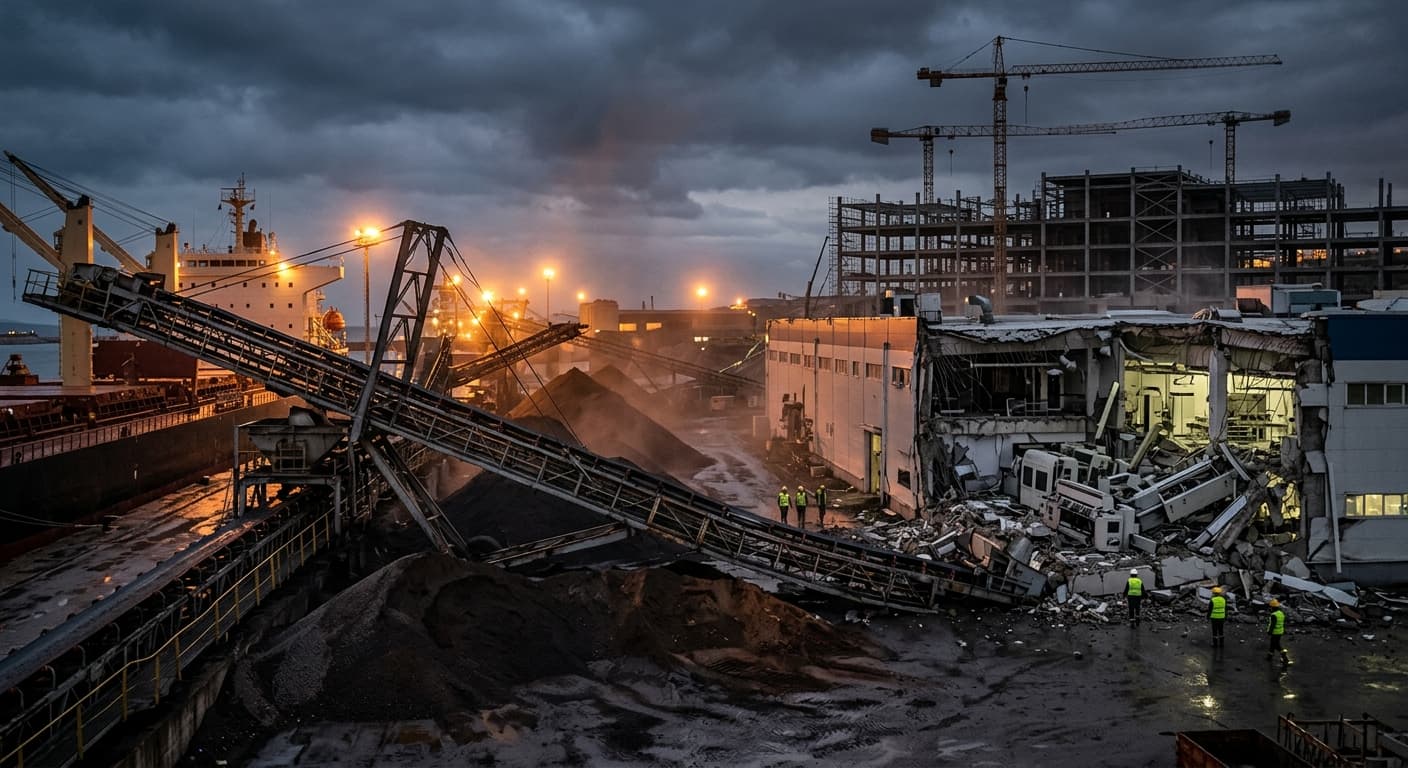
Recent activity includes both small tremors and several events strong enough to be felt in central Istanbul. While no widespread damage has occurred yet, the frequency itself disrupts investor confidence in long-lead infrastructure projects. Ports at Ambarli and Haydarpasa, rail corridors to Europe, and industrial zones that handle mineral concentrates sit directly in the impact zone.
This matters because Turkey functions as more than a transit country. It processes boron minerals used in high-performance magnets and specialty glass for semiconductor manufacturing. It also hosts refining steps for certain rare earth elements that European Union policies seek to diversify away from dominant Chinese supply.
Critical Minerals at Risk
Critical minerals include gallium, germanium, lithium, cobalt, nickel, and rare earth oxides. Turkey holds meaningful deposits and processing capacity for boron and some chromite derivatives that feed into the supply chain indirectly.
A major earthquake would damage port cranes, storage silos, and chemical processing plants. Insurance markets already price Turkish seismic risk at elevated levels. Reinsurers have tightened coverage for industrial facilities in the Marmara region since 2023. That leaves mine operators and traders exposed to larger self-insured losses.
Global inventories of refined gallium sit at historically low levels after China’s 2023–2025 export licensing regime. Any Turkish disruption compounds the problem. European chipmakers that source gallium-based compounds through Istanbul logistics hubs would face immediate allocation fights.
The same logic applies to lithium chemicals. While Turkey is not a top producer, several European battery and specialty chemical projects route intermediates through Turkish ports to avoid longer Black Sea or Mediterranean routes vulnerable to other geopolitical friction.
Semiconductor Market Implications
Semiconductor fabrication relies on uninterrupted flows of ultra-pure chemicals, specialty gases, and rare materials. TSMC and its U.S. and European partners maintain buffer stocks measured in weeks, not months. A Turkish earthquake that closes ports for even 10 days triggers allocation shifts that ripple through the entire industry.
Nvidia, AMD, and Broadcom customers building AI accelerators already operate on tight schedules. Any delay in gallium nitride or silicon carbide substrates directly slows delivery of power electronics needed for data center racks.
Memory markets prove especially sensitive. SK Hynix and Micron have warned that seismic events in Asia previously caused multi-quarter revenue volatility. A new vector in Europe adds complexity to already stretched forecasting models.
Investors can track this through the Philadelphia Semiconductor Index and individual names. SK Hynix stock movements often preview broader supply stress before official guidance changes.
AI Data Center Expansion Under Pressure
Hyperscale data center projects in Northern Virginia, Texas, and Ireland face power, land, and component constraints. A seismic shock in Turkey would tighten the component side further.
Amazon, Google, and Oracle continue aggressive buildouts to train and serve large language models. Each new gigawatt of capacity requires thousands of specialized chips, transformers, and cooling systems that depend on stable mineral and metal flows.
Power purchase agreements for nuclear and natural gas already command premiums. Add a materials delay and the effective cost of new AI infrastructure rises. Oracle’s data center expansion plans, for example, rely on timely delivery of custom silicon that incorporates materials indirectly linked to Eurasian logistics.
Grid operators in high-growth regions already warn of delays measured in years. Any supply chain shock from earthquakes adds another variable that financial models must now stress-test.
Comparison of Seismic Risk Across Key Supply Nodes
| Location | Primary Risk | Critical Minerals Affected | Typical Disruption Duration | Impact on AI Data Centers |
|---|---|---|---|---|
| Princes Islands / Istanbul | Strike-slip fault rupture | Boron, gallium byproducts, chromite | 2–12 weeks | Medium – indirect component delays |
| Taiwan (Hualien region) | Thrust fault earthquakes | Specialty chemicals, rare earth processing | 4–26 weeks | High – direct TSMC impact |
| Chile Lithium Triangle | Subduction zone events | Lithium brine and refined chemicals | 8–20 weeks | Medium-High – battery storage delays |
| Australia Rare Earths | Stable craton, low seismic | Neodymium, dysprosium | Minimal | Low |
The table shows why Turkey’s current activity stands out. It sits in the middle of European logistics arteries without the massive direct production of Chile or Australia. The risk is concentrated in processing and transit rather than raw extraction. For a focused analysis of how the 2026 Japan Earthquake reshapes semiconductor markets, AI data center expansion, and critical minerals strategy, the contrast with Taiwan’s vulnerabilities becomes particularly instructive. Similar Himalayan flash floods exposing critical minerals supply chain risks further demonstrate how climate-driven events in mountainous regions can suddenly disrupt upstream mineral flows.
How Sovereign Wealth Funds Are Responding
Funds such as Norway’s Government Pension Fund Global, Singapore’s Temasek, and Saudi PIF have increased allocations to critical minerals over the past three years. Many now embed seismic risk scores into their due diligence.
Temasek, in particular, has quietly shifted marginal capital from Eurasian processing assets toward North American and Australian projects with lower natural disaster profiles. This mirrors broader moves seen after the Evergrande collapse aftermath that forced a reevaluation of China-centric supply chains.
Insurance and derivative markets now offer instruments that bundle seismic risk with commodity price volatility. Hedge funds use these to protect portfolios heavy in lithium miners or copper smelters.
Practical Steps for Investors and Operators
- Map your supply chain’s exposure to Turkish ports and rail lines. Identify single points of failure for gallium, boron, or specialty glass.
- Stress-test lead times assuming a 30-day port closure. Add 20 percent contingency to AI hardware delivery forecasts.
- Review insurance and force majeure clauses with logistics partners. Many older contracts undervalue seismic swarm risk versus major rupture.
- Diversify processing routes toward non-seismic alternatives in Spain, Canada, or the U.S. Gulf Coast even if unit costs rise slightly.
- Track microearthquake counts daily through Turkish observatories and cross-reference with USGS data for acceleration in activity.
- Consider equity hedges in companies benefiting from supply diversification: U.S.-based rare earth processors, Australian lithium producers, and domestic semiconductor tool makers.
Common Mistakes to Avoid
- Treating Turkey as a minor logistics footnote. Its position between Black Sea, Mediterranean, and European rail networks makes it more important than raw production statistics suggest.
- Assuming microearthquakes are harmless. Swarms often precede larger events and already trigger operational slowdowns as facilities run precautionary inspections.
- Over-relying on Chinese supply as a backstop. Beijing’s own export restrictions on gallium and germanium mean it cannot fully offset a Turkish disruption.
- Ignoring second-order effects on power infrastructure. Data centers require both chips and the electrical equipment that depends on stable mineral flows.
- Neglecting insurance market signals. Rising premiums in the Marmara region serve as an early indicator of institutional risk pricing.
Best Practices for Supply Chain Resilience
- Build 90-day strategic stockpiles for gallium, germanium, and neon where feasible. This exceeds current industry averages but protects against overlapping risks from Turkey, Taiwan, and Ukraine.
- Use AI-driven predictive maintenance on critical processing plants to reduce downtime during heightened seismic periods.
- Form consortium buying groups among hyperscalers to secure priority access to alternative supplies during shocks.
- Invest in domestic U.S. and EU refining capacity even at higher operating costs. National security budgets increasingly subsidize this diversification.
- Monitor both earthquake data and shipping rates through the Bosporus. Freight spikes often appear before official disaster declarations.
FAQ
How do earthquakes in Turkey affect global critical minerals markets?
Turkey processes and transits materials used in semiconductors and magnets. Port or plant closures force rerouting through congested alternatives, raising costs and extending lead times by weeks.
Will the 2026 seismic activity near Istanbul delay AI data centers?
Indirectly yes. Component shortages for power electronics and specialty substrates can push back rack deployment schedules, especially in markets already facing grid constraints like Northern Virginia.
Which companies face the highest exposure?
TSMC, Nvidia, Amazon Web Services, Google, and Oracle maintain large exposure through complex supply webs. Pure-play miners with Turkish assets or logistics contracts also carry direct risk.
What role do sovereign wealth funds play in this environment?
They adjust portfolio weightings toward lower-seismic jurisdictions and use derivatives to hedge overlapping commodity and disaster risks. Many now require explicit seismic scenario analysis in new commitments.
Are there investment opportunities created by this risk?
Yes. Companies developing alternative processing technologies, seismic-resilient infrastructure, and domestic U.S. critical minerals capacity stand to gain market share as buyers diversify away from vulnerable nodes.
Conclusion
The current earthquake swarm south of Istanbul serves as a reminder that critical minerals supply chains remain fragile at multiple nodes. Investors and operators who treat seismic risk as a core variable—not a tail event—will maintain advantage as AI infrastructure demand collides with real-world geology and geopolitics. Those who act early on diversification and inventory strategies will face lower volatility when the next major rupture inevitably occurs along the North Anatolian Fault.
Review your current exposure to Eurasian processing hubs and begin mapping alternative flows before the next swarm escalates.
Sources
Share This Article