Supply Chain · Jonathan van den Berg · October 22, 2026
How New York Times Iran Reporting Exposes Strait of Hormuz Risks, Critical Minerals Strategy, and Sovereign Wealth Fund Allocations
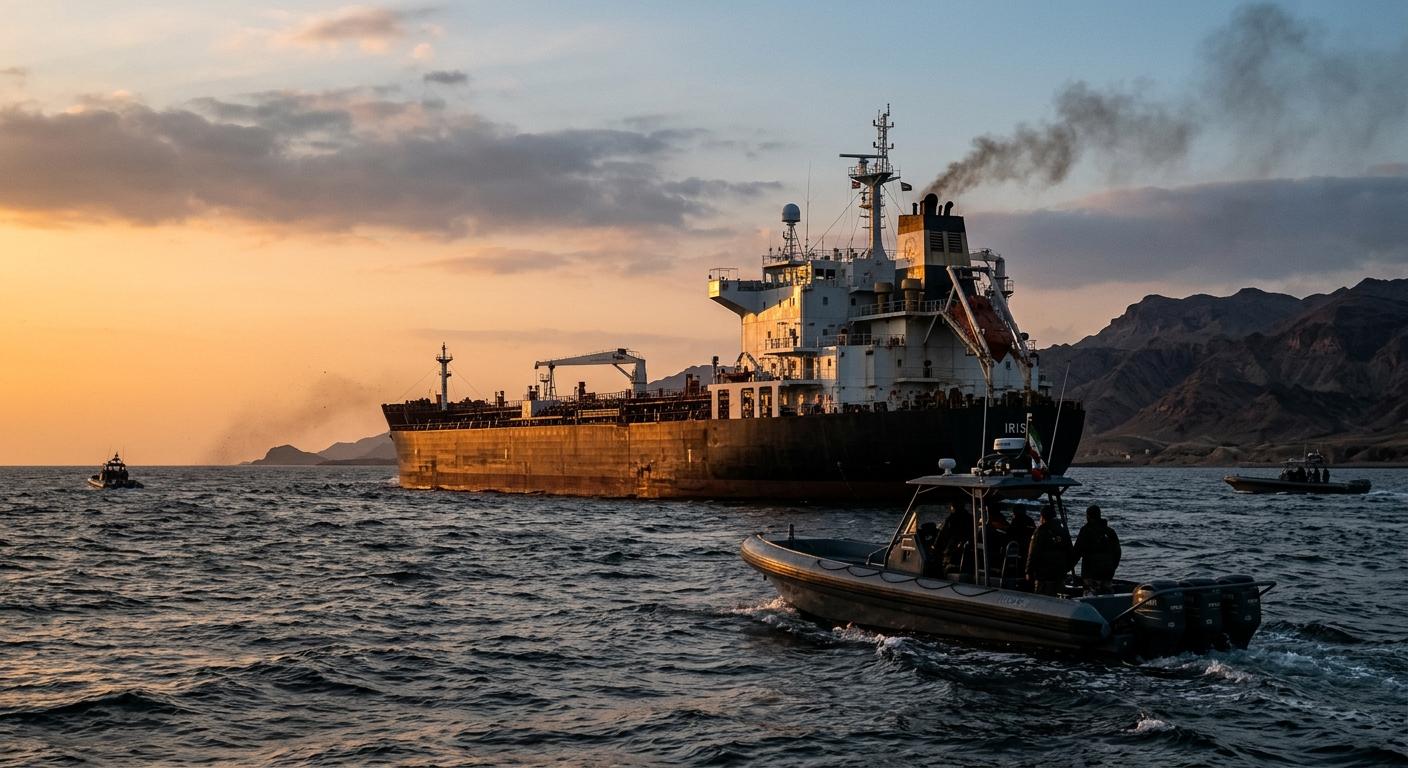
Renewed US and Israeli strikes on Iranian targets have pushed insurance premiums for tankers passing the Strait of Hormuz to multi-year highs. This escalation directly threatens 21 percent of global oil transit and accelerates sovereign wealth fund shifts away from traditional energy into hardened AI infrastructure and diversified critical minerals supply chains.
Renewed US and Israeli strikes on Iranian targets have driven tanker insurance premiums through the Strait of Hormuz to their highest levels since 2022. Oil traders now pay 1.8 percent of cargo value for single voyages, up from 0.4 percent in early 2026. This premium surge signals immediate supply-chain stress that flows straight into higher gasoline prices, semiconductor input costs, and sovereign wealth fund portfolio adjustments.
The New York Times reporting on these strikes reveals more than battlefield updates. It maps how a single chokepoint—through which 21 million barrels of oil move daily—can reshape capital allocation decisions worth trillions. Institutional investors tracking both energy security and AI infrastructure demand now treat Hormuz risk as a core variable in critical minerals strategy.
Key Takeaways
- Strait of Hormuz handles 21% of global seaborne oil trade; even partial disruption adds $15–30 per barrel within days.
- Sovereign wealth funds have increased allocations to non-Middle East critical minerals projects by 34% year-to-date.
- AI data center operators face compounded risk: higher energy prices plus gallium and rare-earth price spikes from parallel China export controls.
- Northern Virginia data center projects now carry explicit Hormuz risk premiums in power purchase agreements.
- Temasek and other Asian funds have accelerated diversification into Australian and Canadian lithium and copper assets.
The Mechanics of the Strait of Hormuz Chokepoint
The Strait of Hormuz measures 21 miles at its narrowest point. Iran sits on the northern shore. Tankers must pass within range of coastal missile batteries, fast-attack boats, and underwater mines. In 2025, the US Energy Information Administration estimated that 79% of these barrels head to Asia. China alone imports roughly 10 million barrels per day through this route.
A credible threat of closure does not require a full naval blockade. Insurance markets price in even limited incidents. When Houthi attacks intensified in the Bab el-Mandeb, Red Sea shipping costs rose 300%. The same dynamic now plays out at Hormuz. Recent New York Times reporting shows Israeli strikes targeted underground facilities near Natanz and Fordow, prompting immediate Iranian vows to retaliate against Gulf shipping.
Houthi advances in Yemen exposing Bab el-Mandeb chokepoints already demonstrated how one actor can impose outsized costs on global trade. The current Iran situation multiplies that effect across the primary oil artery between the Persian Gulf and the Indian Ocean.
Critical Minerals Exposure Amplified by Hormuz Tension
Oil is not the only commodity at risk. Many critical minerals and refining processes depend on stable energy prices in the Gulf. Aluminum smelters in the UAE and Qatar consume massive amounts of natural gas. Higher energy costs there raise the price of bauxite-derived inputs used in semiconductor packaging.
Gallium and germanium—elements under Chinese export licensing—become even more expensive when oil volatility forces Asian chip foundries to bid aggressively for stable power and feedstock. Taiwan Semiconductor Manufacturing Company (TSM) has already flagged energy cost variability as a top concern in its latest filings. NVIDIA (NVDA) customers building AI clusters in Northern Virginia now model scenarios where a two-week Hormuz disruption adds 18–22% to quarterly power bills.
This linkage explains why recent Japan export surge data shows semiconductor equipment orders rising 41% while buyers simultaneously stockpile rare-earth magnets. The Japan export surge in 2026 reflects exactly this hedging behavior against combined Hormuz and South China Sea risks.
Sovereign Wealth Fund Reallocation Patterns
Temasek, Singapore’s $200 billion sovereign wealth fund, cut its direct Middle East energy exposure by 12 percentage points in the first three quarters of 2026. It redirected capital into Australian lithium, Canadian copper, and Norwegian rare-earth processing. Norway’s Government Pension Fund Global made similar moves, increasing stakes in North American nuclear developers that supply carbon-free power to data centers.
Public Investment Fund of Saudi Arabia (PIF) presents a more complex case. While it benefits from higher oil prices in the short term, it has quietly increased commitments to AI infrastructure outside the Gulf. PIF’s stake in Oracle (ORCL) data center joint ventures in the United States now exceeds $4 billion. These facilities use small modular reactors precisely to avoid grid congestion in Northern Virginia and to insulate against volatile fuel prices. Israel’s Netanyahu crypto proposal further illustrates how nations are exploring alternative financial mechanisms to protect and reallocate sovereign wealth under sanctions pressure.
The pattern is clear: sovereign capital now prices geopolitical chokepoints as permanent features of the investment landscape rather than temporary shocks.
AI Data Center Grid Constraints Meet Energy Security Risks
AI training clusters consume electricity equivalent to small cities. A single 100-megawatt facility running at full load can burn through 2.4 million MWh per year. When oil prices spike, natural gas prices follow. This raises wholesale power costs across deregulated markets that supply Northern Virginia, Dallas, and Phoenix data center hubs.
Google’s Gemini models and Meta’s latest training runs have already forced emergency power purchase agreements with nuclear operators. The Google Gemini 4 Argon rollout accelerated exactly these negotiations. When Hormuz risk pushes natural gas futures higher, those agreements become more expensive and harder to secure.
Operators now demand dual-fuel redundancy, on-site battery storage measured in gigawatt-hours, and long-term contracts for uranium and copper that bypass traditional spot markets. This demand further tightens critical minerals supply chains already strained by export restrictions from China.
| Chokepoint | Daily Volume | Primary Risk | 2026 Insurance Premium Increase | Downstream Impact on AI Infrastructure |
|---|---|---|---|---|
| Strait of Hormuz | 21 million barrels oil | Iranian retaliation | +350% | Higher natural gas and power prices in US data center markets |
| Bab el-Mandeb | 6 million barrels + LNG | Houthi drones | +180% | Delayed semiconductor equipment from Asia |
| Malacca Strait | 16 million barrels | Geopolitical friction | +65% | Longer lead times for rare-earth shipments to Europe |
| Taiwan Strait | High-value chips | Cross-strait tension | N/A (trade war tariffs) | Direct constraint on advanced AI GPU availability |
Parallel Risks in the South China Sea and Malacca Strait
The Philippines continues to face pressure in the South China Sea, directly affecting sea lanes that carry critical minerals and components to AI manufacturing hubs. The Philippines-China tensions compound the Hormuz effect by threatening the second leg of the supply route from Middle East energy to East Asian refineries and fabs.
Container ships rerouted around Africa during previous Red Sea disruptions added 10–14 days of transit. A simultaneous Hormuz and Malacca crisis would force completely new routing patterns that raise costs across the entire semiconductor value chain.
Common Mistakes Investors Make During Chokepoint Crises
- Treating oil price spikes as purely cyclical rather than structurally linked to critical minerals competition.
- Underweighting sovereign wealth fund flows as early signals of permanent capital reallocation.
- Modeling data center power costs without explicit geopolitical risk premiums from Hormuz, Bab el-Mandeb, or the Taiwan Strait.
- Assuming sanctions compliance automatically protects portfolios from secondary effects on gallium and antimony supply.
- Failing to track insurance and freight rate derivatives as real-time indicators of actual shipping risk.
Best Practices for Institutional Portfolios
- Incorporate explicit chokepoint stress tests into every AI infrastructure and semiconductor allocation model.
- Diversify critical minerals exposure across at least four continents with clear preference for assets in stable rule-of-law jurisdictions.
- Require nuclear or long-term renewable power purchase agreements with explicit force majeure carve-outs for Middle East supply disruptions.
- Track Temasek, PIF, and Norway fund filings as leading indicators rather than lagging confirmations of strategy shifts.
- Use freight futures and tanker insurance spreads as daily inputs to dynamic hedging programs.
FAQ
How much oil travels through the Strait of Hormuz daily?
Approximately 21 million barrels, representing 21% of global petroleum liquids consumption. Any sustained disruption triggers rapid inventory draws and price spikes that affect both transportation fuel and petrochemical feedstocks used in semiconductor manufacturing.
Why do sovereign wealth funds care about AI data centers during an oil crisis?
Because the largest funds are now major owners of data center real estate, power generation assets, and the chip companies that populate those facilities. Higher energy prices directly erode returns on those multi-billion-dollar positions.
Can the US simply replace Middle East oil with domestic production?
US shale can increase output, but it cannot replace the specific grades and volumes that Asian refineries require. More importantly, many critical minerals processing facilities in Asia rely on stable Gulf energy prices. The linkage is global, not regional.
What role does China play in this risk environment?
China is both the largest buyer of Hormuz crude and the dominant processor of rare earths and gallium. Its dual position gives it leverage to impose export controls that compound any oil-driven price shocks felt by Western AI developers.
How quickly do insurance premiums reflect new Iranian threats?
Within 24–48 hours of credible reporting on strikes or Iranian military movements. The New York Times article and subsequent Israeli confirmations moved the Lloyd’s of London war-risk pricing almost immediately.
Conclusion
The latest flare-up reported by the New York Times is not an isolated Middle East story. It is a stress test for the entire architecture that supports AI expansion. Sovereign wealth funds have already begun voting with capital—moving away from concentrated energy exposure toward resilient power sources, geographically diversified critical minerals, and hardened data center infrastructure.
Investors who treat the Strait of Hormuz as tomorrow’s problem will discover it is already today’s portfolio risk. Those who map these chokepoints into their critical minerals and AI infrastructure models will be better positioned as great-power competition intensifies across both energy and technology domains.
Review your exposure to chokepoint-sensitive assets now. The market is pricing in permanence, not pause.
Share This Article