Supply Chain · Jonathan van den Berg · October 26, 2026
How Houthi Advances in Yemen Expose Bab el-Mandeb Supply Chain Chokepoints and Red Sea Shipping Risk Premiums
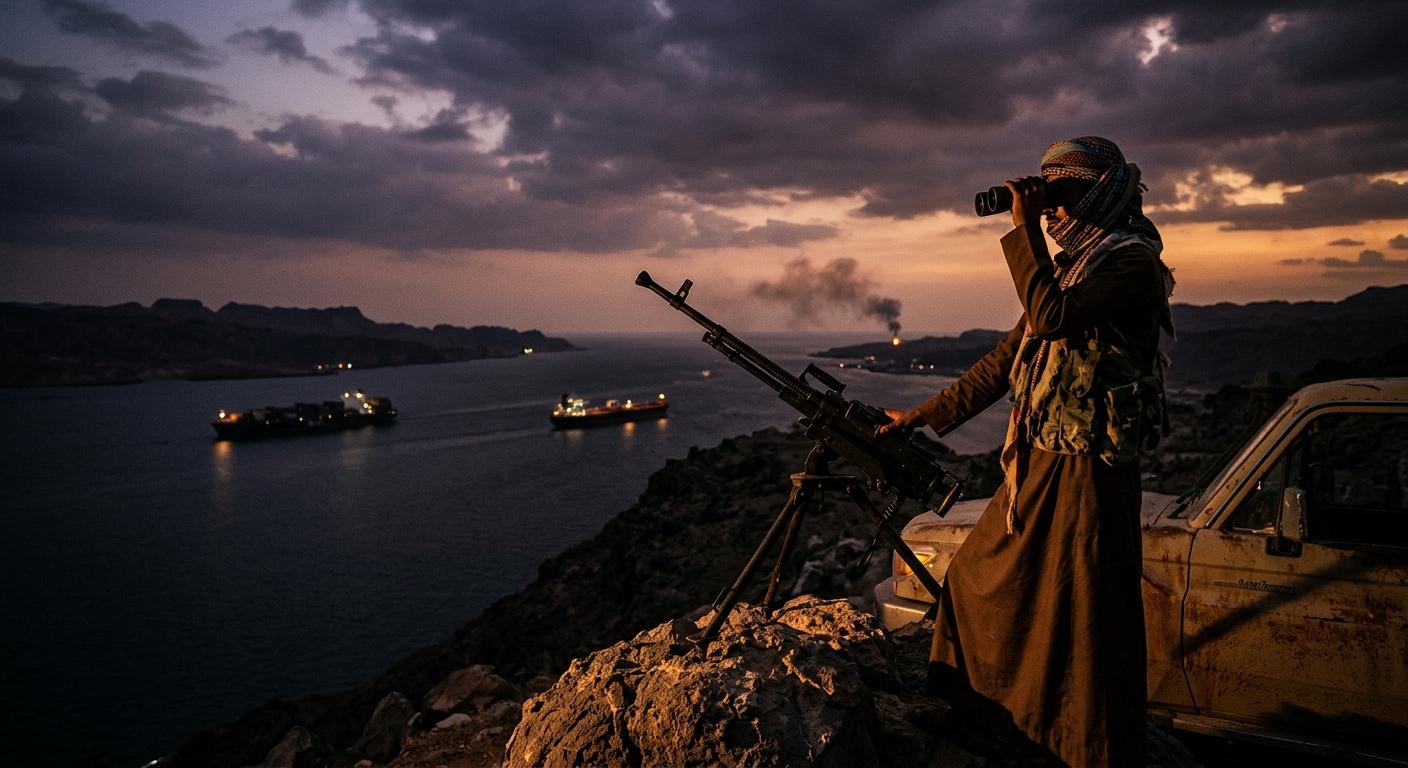
Houthi advances in Yemen have turned the Bab el-Mandeb Strait into one of the world's most dangerous maritime chokepoints, forcing shipping lines to reroute around Africa and inflating insurance and fuel costs that ripple through global supply chains.
Houthi advances in Yemen have turned the Bab el-Mandeb Strait into a high-risk maritime corridor where missile and drone strikes force shipping companies to reroute around the Cape of Good Hope. The resulting supply chain chokepoints add 10 to 14 days to Asia-Europe voyages, raise fuel consumption by up to 40 percent, and push marine insurance premiums for Red Sea transits to levels last seen during the height of Somali piracy.
These disruptions matter because roughly 12 percent of global seaborne trade normally passes through the Bab el-Mandeb Strait en route to or from the Suez Canal. When that route becomes too expensive or too dangerous, the extra costs flow directly into consumer prices for everything from European gasoline to Asian electronics components.
Key Takeaways
- Houthi missile and drone capabilities have successfully deterred most commercial traffic from the Bab el-Mandeb Strait since late 2023, with only a small fraction of pre-crisis volumes still transiting.
- Rerouting around Africa adds 3,500 nautical miles and significant fuel burn, inflating container shipping rates by 250-400 percent on affected lanes.
- Critical minerals shipments, including rare earth elements and cobalt routed via the Red Sea, face both delay and elevated geopolitical risk premiums.
- Sovereign wealth funds and commodity traders now price in a persistent Red Sea risk premium that affects portfolio allocations in shipping, energy, and logistics equities.
- Alternative routes increase pressure on global refining capacity and tanker availability, tightening diesel markets that power AI data center backup generators and semiconductor fabrication plants.
The Strategic Geography of the Bab el-Mandeb Strait
The Bab el-Mandeb Strait forms a narrow 18-mile-wide choke point between the Red Sea and the Gulf of Aden. Its Perim Island and narrow channels make it easy to target from Yemeni mainland positions now controlled by Houthi forces. Tankers and container vessels must slow to navigate the passage, turning them into predictable targets for anti-ship missiles and one-way attack drones.
This geography links directly to the Strait of Hormuz risks further east. Together they control the flow of Persian Gulf oil and LNG to Europe and Asia. When one chokepoint tightens, pressure on the other increases as traders scramble for alternative sourcing.
How Houthi Advances Changed Red Sea Shipping Patterns
Since their initial attacks on commercial vessels in support of Gaza operations, Houthi forces have launched over 100 strikes using increasingly sophisticated systems. Many vessels now display Israeli ownership ties or call at Israeli ports, but the net effect has been a broad avoidance of the entire Red Sea corridor by major carriers.
Maersk, MSC, and Hapag-Lloyd diverted the vast majority of their Asia-Europe services around South Africa. Data from 2025 shows Red Sea container volumes fell more than 90 percent from 2023 baselines. The few ships still transiting pay war-risk insurance premiums that can exceed 1 percent of vessel value per transit—an order of magnitude higher than normal hull insurance.
Tanker traffic has shown more resilience because many crude and product carriers lack obvious Israeli connections, yet even they face sporadic attacks and elevated premiums. The result is a bifurcated market where some operators absorb the risk while most reroute.
Economic Impact: Risk Premiums and Supply Chain Costs
The extra distance around Africa burns an additional 40 percent more bunker fuel per voyage. At current marine gasoil prices, that adds tens of thousands of dollars per transit for a large container ship. When multiplied across thousands of annual sailings, the aggregate cost runs into billions.
Insurance markets responded quickly. London underwriters now charge 0.5 to 1.5 percent of cargo value for Red Sea transits compared with 0.05 percent before the crisis. For a $50 million container load, that difference equals $225,000 to $725,000 per voyage. Many shippers simply choose the longer, slower, but cheaper route around the Cape.
These costs show up in global freight indices. The Shanghai Containerized Freight Index for Europe routes spiked repeatedly when Houthi activity intensified. European importers of Asian goods faced 2025 rate quotes three to four times higher than 2023 levels on affected lanes.
Critical Minerals and Semiconductor Supply Chains at Risk
The Red Sea route carries significant volumes of critical minerals from African mines to European and Asian processors. Cobalt from the Democratic Republic of Congo often moves through East African ports before heading north through the Bab el-Mandeb. Rerouting adds time and cost to already tight supply chains for battery and electronics manufacturers.
Semiconductor supply chains feel the pressure indirectly. Many fabrication plants in Taiwan, South Korea, and Europe rely on just-in-time delivery of specialty chemicals and rare earth materials that move through Red Sea routes. Delays compound existing shortages exposed by earlier disruptions.
Japan's 2026 semiconductor export surge has only heightened the stakes. Increased demand for advanced chips used in AI data centers makes any additional friction in mineral and component logistics more costly. The Japan export surge illustrates how quickly these chokepoints can amplify existing market tightness.
Energy Market Consequences and Diesel Tightness
Longer voyages consume more marine fuel, tightening global diesel and gasoil markets. European refiners already operate under tight margins after Russian crude sanctions. The extra fuel demand from rerouted shipping adds upward pressure on prices that affect everything from trucking to backup power for data centers.
Northern Virginia data center operators, already struggling with grid constraints, rely on diesel generators for reliability during peak AI training loads. Higher fuel prices and potential supply tightness translate directly into higher operating costs for hyperscale facilities run by Microsoft, Amazon, and Google.
The connection between Bab el-Mandeb disruptions and AI data center power constraints is more direct than many investors realize. Every percentage point increase in marine fuel demand contributes to the same diesel pool that powers both ships and standby generators.
Sovereign Wealth Fund and Investor Responses
Sovereign wealth funds tracking these developments have adjusted portfolios accordingly. Funds with exposure to shipping equities now model persistent risk premiums into their valuation assumptions. Temasek and GIC have reportedly increased allocations to alternative routing infrastructure and port operators in South Africa and West Africa.
Commodity trading houses have built Red Sea risk into their freight hedging strategies. Some now treat Bab el-Mandeb avoidance as the base case rather than a temporary disruption, affecting long-term contracts for mineral and energy shipments.
The OpenAI UAE funding round highlighted how sovereign capital is flowing into AI infrastructure while simultaneously hedging against the mineral and energy supply risks that these same data centers create. The intersection of Red Sea chokepoints and AI power demand creates complex portfolio challenges.
Common Mistakes in Assessing Red Sea Risk
- Assuming attacks target only Israeli-linked vessels. Many neutral-flagged ships have been hit when operating near the Bab el-Mandeb.
- Underestimating the duration of disruption. Early forecasts suggested weeks or months; the reality has stretched into years with no clear resolution path.
- Ignoring secondary effects on diesel and refining margins. The fuel impact matters more for certain sectors than the direct shipping cost.
- Treating insurance premiums as the only added cost. Fuel, time, inventory carrying costs, and schedule unreliability often exceed the insurance line item.
Best Practices for Supply Chain and Investment Professionals
- Model multiple routing scenarios in logistics planning software, including full Cape of Good Hope diversion as the baseline for 2026-2027.
- Build diesel price sensitivity into data center operating expense forecasts, especially for facilities in constrained grids like Northern Virginia.
- Diversify critical minerals sourcing and consider inventory buffers for materials historically routed through the Red Sea.
- Monitor Houthi technical capability closely. Advances in drone range, accuracy, and swarm tactics directly affect risk pricing.
- Evaluate shipping equities based on their exposure to rerouted versus high-risk corridor traffic. Operators with modern, fuel-efficient fleets hold advantages in prolonged disruption scenarios.
Future Outlook for Bab el-Mandeb and Red Sea Shipping
Resolution depends on broader regional diplomacy involving Yemen, Saudi Arabia, Iran, and Western naval powers. Naval task forces have reduced but not eliminated the threat. Houthi forces continue demonstrating the ability to launch attacks despite airstrikes and maritime interdiction efforts.
Longer term, shipping companies may permanently adjust network design around more reliable routes. This would represent a structural shift in global trade patterns last seen after the 1967 closure of the Suez Canal. The Bab el-Mandeb Strait may remain a high-risk corridor for years, embedding a geopolitical risk premium into global shipping economics.
Investors should track both naval developments and commodity price responses. Persistent chokepoint stress at Bab el-Mandeb will continue influencing critical minerals availability, energy costs, and AI infrastructure economics well beyond the immediate headlines.
FAQ
What is the Bab el-Mandeb Strait and why does it matter?
The Bab el-Mandeb is the narrow strait connecting the Red Sea to the Gulf of Aden. It serves as the southern gateway to the Suez Canal, making it essential for efficient Europe-Asia trade. Roughly 12 percent of global seaborne trade historically passed through it before recent disruptions.
How have Houthi advances affected shipping costs?
Attacks have driven marine insurance rates up by a factor of 10 to 30 for Red Sea transits. Rerouting around Africa adds 10-14 days and 40 percent more fuel per voyage, pushing container rates on affected lanes up 250-400 percent at peak disruption periods.
Which commodities are most affected by Bab el-Mandeb chokepoints?
Oil, LNG, containerized consumer goods, and critical minerals including cobalt, rare earth elements, and certain fertilizers face the greatest exposure. Semiconductor supply chains feel secondary effects through delayed chemical and component deliveries.
Will shipping companies eventually return to the Red Sea?
Some tankers have continued limited transits, but major container lines show little appetite for return without a durable ceasefire and security guarantees. Insurance markets will likely remain cautious even after kinetic activity declines.
How does this connect to AI data center power costs?
Longer shipping routes consume more marine diesel, tightening global distillate fuel markets. Data centers in power-constrained regions like Northern Virginia rely on diesel generators for backup and peaking power. Higher fuel prices flow directly into their operating expenses.
The Bab el-Mandeb supply chain chokepoints represent more than a regional security issue. They have become a structural feature of global trade that influences everything from consumer prices to the cost of training advanced AI models. Companies and investors who build these persistent risks into their planning will hold clear advantages over those hoping for a quick return to pre-crisis routing.
Sources
Espn·Skysports·Abs-cbn·Mysanantonio·Insidermonkey·Thestreet·Heavy·Essentiallysports·Yardbarker·Skysports·Bleachernation·Lastwordonsports·Frontofficesports·Cleveland·Nbcsports·Weather·Mensjournal·Ksnblocal4·Shopping·Stylecaster·Cnn·Detpress·Nbcuniversalnewsgroup·Imdb·Instyle·Istitutoimpariamo·Aol·Nytimes·Npr·Variety·Bloomberg·Lloydslist·Reuters·Eia·Csis
Share This Article