Sanctions · Jonathan van den Berg · October 25, 2026
Netanyahu Crypto Proposal: How Israel Plans to Use Bitcoin to Evade Sanctions and Reshape Sovereign Wealth Fund Strategies
Netanyahu's public consideration of cryptocurrency as a sanctions workaround signals a major escalation in global evasion tactics, forcing compliance teams, sovereign wealth funds, and investors to reassess exposure across energy, tech, and digital asset markets.
Netanyahu's crypto proposal marks the first time a sitting leader of a major U.S. ally has openly discussed using Bitcoin and other digital assets to sidestep potential international sanctions. The move highlights growing friction between Jerusalem and Washington over Iran policy and exposes fresh vulnerabilities in the global sanctions regime.
By floating cryptocurrency as a financial backstop, Israel is testing the boundaries of sanctions compliance while signaling to sovereign wealth funds and institutional investors that traditional banking rails may no longer be reliable in an era of heightened geopolitical risk.
Key Takeaways
- Netanyahu explicitly linked crypto adoption to potential U.S. or multilateral sanctions triggered by expanded military action against Iran.
- The proposal immediately drew sharp criticism from Israeli economists who warned of capital flight, money-laundering risks, and damaged relations with Western banks.
- Crypto's pseudonymous nature creates new secondary sanctions enforcement challenges for OFAC and its European counterparts.
- Sovereign wealth funds tracking the story must now model higher compliance costs and fragmented liquidity across traditional and digital channels.
- The announcement intersects with existing Strait of Hormuz risks, critical minerals strategy, and AI data center power demand pressures already reshaping capital allocation.
Background on the Netanyahu Crypto Announcement
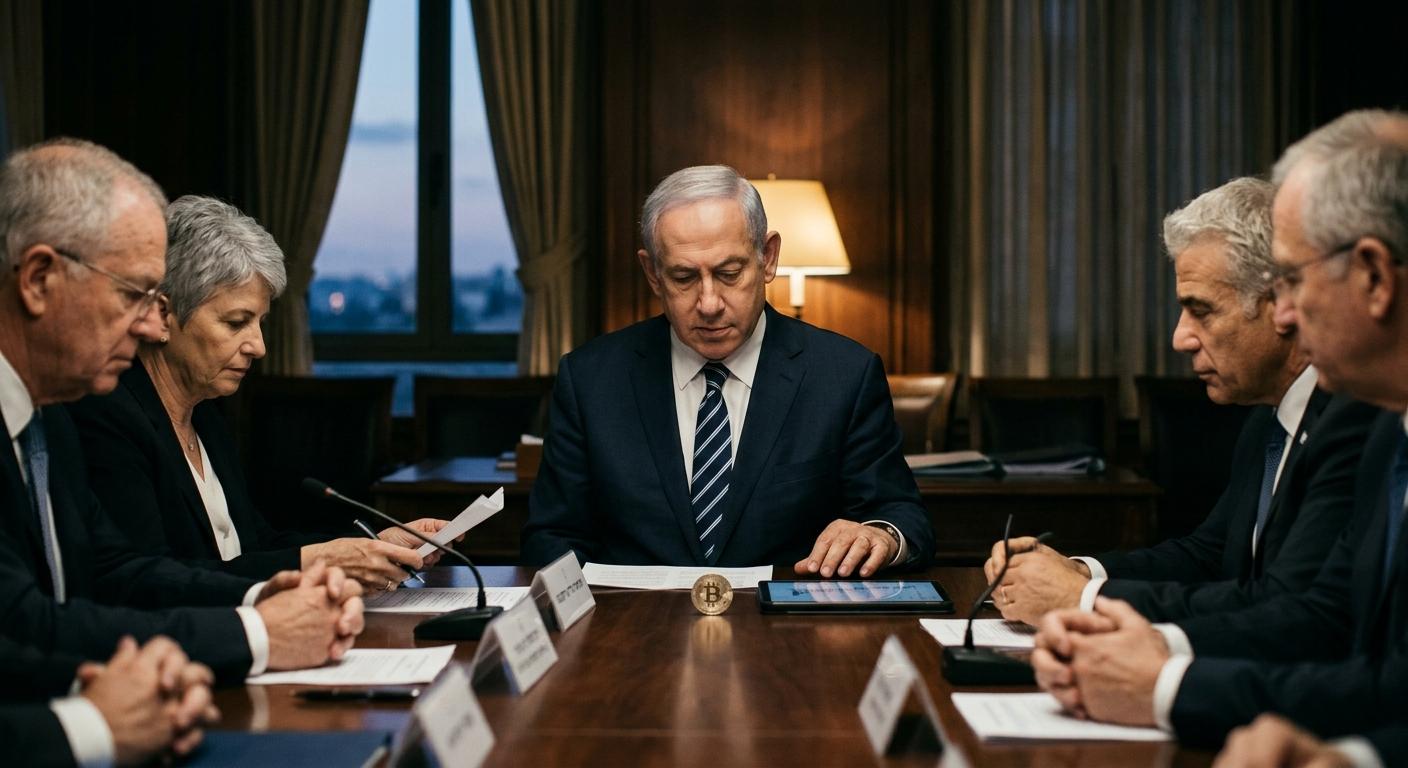
During a closed-door meeting with economic advisers, Netanyahu stated Israel should accelerate preparations to hold and transact in cryptocurrency if Western sanctions materialize. The comments were later confirmed by officials and quickly leaked to the press.
Israeli officials framed the idea as prudent contingency planning rather than defiance. They pointed to Russia's documented success in using crypto, gold, and parallel banking systems to blunt the impact of hundreds of sanctions imposed since 2022. Israeli defense planners reportedly see crypto as a way to maintain liquidity for imported weapons components, energy, and dual-use technology if traditional SWIFT access is curtailed.
The timing is not accidental. Escalating tensions around the Strait of Hormuz and repeated Israeli strikes on Iranian proxies have raised the probability of coordinated U.S. and EU sanctions packages that could target Israeli banks or individuals involved in certain military procurement channels.
How Crypto Could Function as a Sanctions Backdoor
Cryptocurrency offers three practical advantages in a sanctions scenario:
- Pseudonymity and wallet control. State-controlled wallets or military-linked entities can move value without naming beneficiaries on every transaction.
- Borderless settlement. Bitcoin and stablecoins settle in minutes across jurisdictions that refuse to enforce foreign sanctions.
- Integration with existing parallel networks. Israel already maintains strong ties with crypto-friendly jurisdictions in Eastern Europe, the Gulf, and Southeast Asia that could act as on-ramps and off-ramps.
However, these features also create compliance headaches. On-chain analysis firms like Chainalysis have grown adept at clustering wallets and identifying behavioral patterns. Any large-scale Israeli state adoption would likely be fingerprinted quickly, triggering secondary sanctions on counterparties.
Market and Institutional Reactions
Top Israeli economists expressed grave concern within hours of the leak. They argued that even discussing crypto as a sanctions tool could accelerate deposit outflows from domestic banks and raise borrowing costs across the economy.
Global markets showed mixed signals. Bitcoin rose modestly on the news, reflecting speculative interest rather than deep conviction. Sovereign wealth funds with exposure to Israeli bonds and technology stocks began internal reviews of sanctions risk models. Funds already active in crypto infrastructure, such as those modeled after Temasek's approach to geopolitical risk, saw the announcement as validation of their diversification thesis.
Linkages to broader capital flows are clear. The same sovereign investors funding OpenAI UAE funding rounds are simultaneously assessing how crypto liquidity might alter AI data center financing if traditional project finance dries up under sanctions pressure.
Impact on Sanctions Compliance Frameworks
OFAC and EU sanctions authorities have spent years building tools to track crypto flows. The Netanyahu proposal forces an acceleration of that work. Compliance teams at banks, payment processors, and crypto exchanges must now update risk scoring for any Israeli-linked wallet activity.
Three immediate implications stand out:
- Exchanges operating in Israel or serving Israeli clients face heightened de-risking pressure from correspondent banks.
- Companies in the critical minerals sector that supply both Israel and sanctioned jurisdictions could see their entire payment chains scrutinized for crypto contamination.
- AI data center operators reliant on sovereign capital may need to disclose crypto exposure in future funding rounds to satisfy Western limited partners.
This development echoes earlier warnings around how blocked crypto legislation reshapes sanctions compliance and critical minerals laundering channels.
Intersection With Critical Minerals and AI Data Centers
Israel holds modest but strategically important positions in several critical minerals supply chains, particularly in refining and advanced materials used in semiconductors. A sanctions-induced shift toward crypto payments would complicate due diligence for mining companies and processors already navigating export controls on gallium, germanium, and rare-earth elements.
At the same time, Israel's growing tech sector—including companies building AI infrastructure—relies on uninterrupted access to global capital markets. Any perception that Israeli counterparties are using non-transparent funding channels could slow investment into local AI data centers at a time when global power constraints already limit expansion. The Google Gemini 4 Argon rollout has further intensified competition for both power and minerals, making reliable cross-border payments even more critical.
Potential Scenarios for Sovereign Wealth Funds
| Scenario | Likelihood | Impact on SWFs | Key Actions |
|---|---|---|---|
| Full sanctions package triggered | Medium | High — forced reallocation from Israeli bonds to crypto hedges | Increase gold and Bitcoin allocations; stress-test liquidity lines |
| Targeted secondary sanctions only | High | Medium — compliance overhead rises sharply | Enhance on-chain monitoring; diversify custody providers |
| Proposal remains rhetorical | Medium-High | Low — short-term volatility only | Monitor for follow-through legislation in Knesset |
| Israel builds state-level crypto reserve | Low-Medium | High — creates new asset class precedent for other nations | Model portfolio impact of 2-5% strategic Bitcoin holdings by mid-sized states |
Sovereign wealth funds already adjusting portfolios in response to Strait of Hormuz risks and sovereign wealth fund strategies now face an additional variable in the form of digital asset policy.
Common Mistakes Investors Are Making
- Treating the announcement as isolated Israeli politics instead of a template other nations may follow.
- Underestimating how quickly on-chain forensics can link state activity to specific wallets.
- Assuming traditional sanctions compliance vendors can instantly adapt models to crypto-native evasion without significant lag.
- Failing to map second- and third-order effects on critical minerals contracts priced in dollars versus those settled in stablecoins.
- Over-relying on Bitcoin's volatility history while ignoring liquidity dry-up risks during coordinated enforcement actions.
Best Practices for Sanctions Compliance and Portfolio Construction
- Implement real-time wallet screening that combines blockchain analytics with traditional KYC data for any Israeli or Middle East exposure.
- Require portfolio companies in the AI data center and semiconductor sectors to disclose crypto treasury policies and sanctions-related payment contingencies.
- Stress-test sovereign wealth fund portfolios against simultaneous Strait of Hormuz disruption and partial Israeli sanctions scenarios.
- Build relationships with crypto-native compliance firms that specialize in state actor attribution rather than relying solely on legacy financial institutions.
- Diversify custody and settlement rails while maintaining detailed audit trails that satisfy both traditional regulators and future crypto-specific rules.
FAQ
Why is Netanyahu proposing crypto now?
The proposal serves as both genuine contingency planning and strategic signaling amid fears that expanded conflict with Iran could trigger U.S. or European sanctions on Israeli financial entities.
Can Israel actually replace its banking system with crypto?
No. Crypto would likely supplement rather than replace traditional rails, used primarily for specific high-priority imports and reserve holdings during acute sanctions pressure.
How do sovereign wealth funds view this development?
Most see it as another layer of geopolitical risk requiring updated scenario modeling, increased allocation to liquid hedges, and tighter compliance oversight across both traditional and digital assets.
Will this accelerate crypto adoption globally?
It adds momentum to the idea of digital assets as sanctions-resistant tools, though widespread state adoption still faces enormous technical, legal, and political hurdles.
What does this mean for critical minerals markets?
Any shift toward non-transparent payment channels increases due diligence costs and could delay or reroute supply contracts for materials essential to semiconductors and AI infrastructure.
Conclusion
Netanyahu's crypto proposal is more than political rhetoric. It represents a calculated bet that digital assets can provide strategic depth against sanctions pressure in an increasingly fragmented global financial system. For sovereign wealth funds, compliance officers, and investors in critical minerals and AI data center infrastructure, the message is clear: update your risk models, tighten monitoring, and prepare for a world where payment rails themselves have become geopolitical weapons.
Those who map these intersections earliest—between sanctions compliance, crypto liquidity, energy chokepoints, and technology supply chains—will hold a decisive edge in the years ahead.
Sources
Share This Article