Jonathan van den Berg · May 23, 2026
Hawaii's Oil Plant Dilemma: Why EPA Rejection Exposes the High Cost of Green Energy Mandates
Hawaii's plan to shut down its remaining oil-fired power plants has been blocked by the EPA, putting at risk the state's electricity reliability for 1.4 million residents and exposing the fragile economics of forced energy transitions in isolated grids.
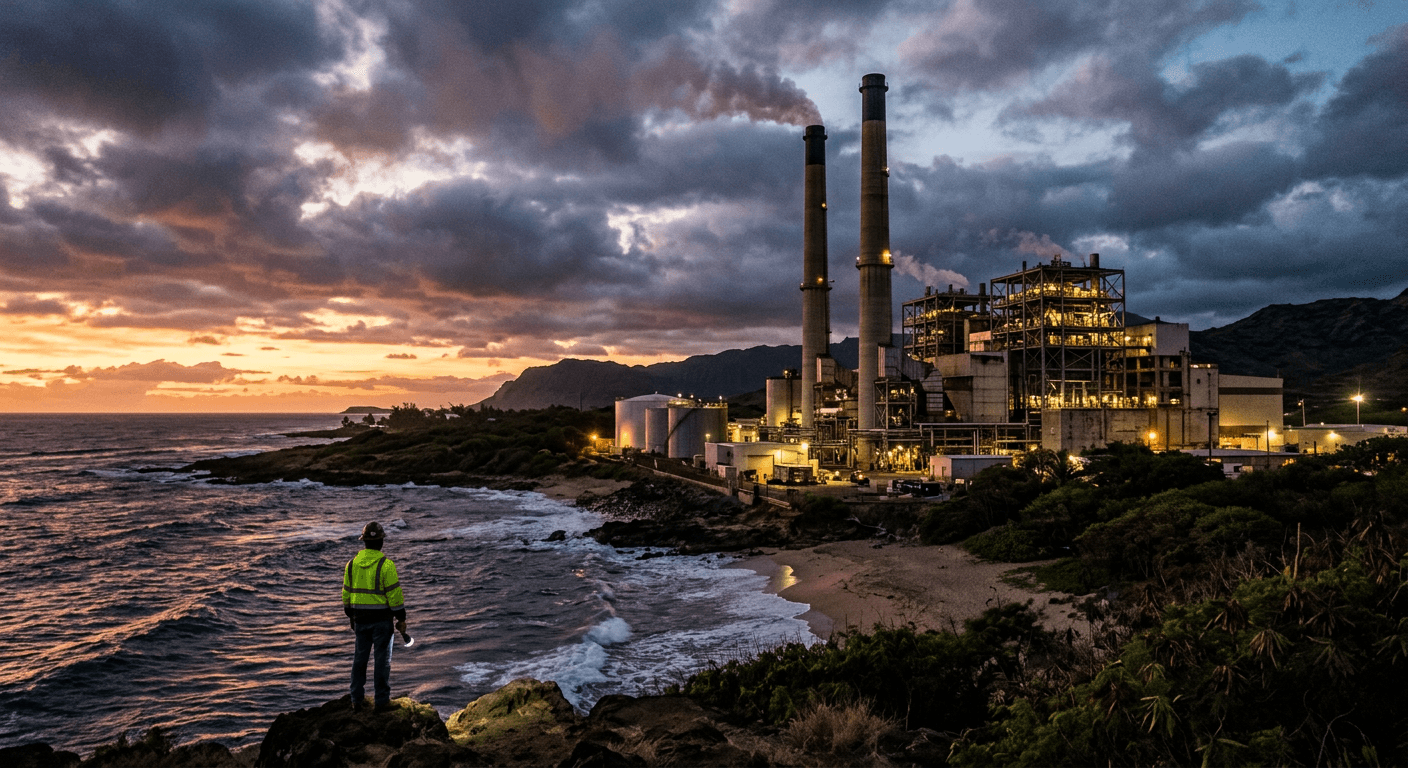
The conventional wisdom says retiring old oil-fired power plants is an obvious win for both the environment and public health. That view collapses once you look at Hawaii's reality. The EPA's recent rejection of the state's plan to close its last major oil plants shows these "dinosaur" facilities are still the only thing standing between reliable electricity and widespread blackouts for island residents.
Hawaiian Electric (HECO) and state officials had pushed hard to retire the remaining oil-fired units as part of an aggressive clean energy transition. The EPA's decision to walk back approval forces a uncomfortable reckoning: in places with weak interconnections and extreme weather vulnerability, rapid decarbonization carries real risks that politicians and activists often downplay.
The Immediate Stakes for Hawaii Residents
Hawaii's electricity prices are already among the highest in the United States, often double the national average. Families and small businesses pay the price every month. The state's isolation means it cannot easily import power from neighboring states during shortages. Every generator matters.
The plants targeted for closure have provided baseload power — steady, dispatchable electricity available 24 hours a day regardless of weather. Replacing that with solar and wind requires massive battery storage to cover evenings and cloudy days. Those batteries remain expensive and have limited lifespans. The engineering challenge is enormous on an island chain prone to hurricanes, earthquakes, and volcanic activity.
Recent seismic events across the Pacific, including the magnitude 5.9 and 6.0 earthquakes that rattled Japan, the Caribbean, and Peru in recent weeks, serve as reminders that Hawaii sits in one of the world's most geologically active regions. Any energy plan must account for physical resilience, not just carbon reduction targets.
What the EPA Decision Actually Means
The EPA determined that Hawaii's proposed plan did not adequately demonstrate how the state would maintain air quality standards while replacing the oil plants' capacity. This wasn't primarily an environmental rejection — it was a technical one. The agency questioned whether the replacement strategy could deliver the necessary reliable power without increasing pollution elsewhere or risking grid collapse.
Environmental advocates split sharply on the news. Some praised the EPA for preventing a rushed transition that could lock in new fossil fuel infrastructure. Others, including local clean energy groups, expressed disappointment that the retirement timeline faces further delays. Hawaiian Electric finds itself caught between state mandates for aggressive renewable targets and federal requirements for grid reliability.
This conflict highlights a deeper tension in energy politics. State leaders in Hawaii set some of the most ambitious renewable portfolio standards in America. Yet the practical details — cost, technology readiness, and backup power — keep colliding with reality. The "dinosaur" plants, as critics call them, were scheduled for retirement precisely because they burn imported fuel oil, contributing to both carbon emissions and energy dependence.
The Geoeconomic Reality of Island Energy
Hawaii's situation offers a window into broader global energy challenges. Many islands and remote regions face similar constraints. When policymakers push rapid transitions without sufficient backup systems, they create exactly the kind of vulnerability that critics of hasty decarbonization have warned about for years.
The state's dependence on imported oil creates genuine national security concerns. Every tanker bringing fuel from distant refineries represents a potential chokepoint. This mirrors larger global patterns where energy chokepoints shape economic and strategic calculations. For Hawaii, those chokepoints begin thousands of miles away at West Coast refineries or Asian suppliers.
Recent NOAA forecasts for the 2026 Atlantic hurricane season, predicting below-average activity, offer modest relief for Hawaii this year. But Pacific typhoons and tropical cyclone risks remain constant threats. A major earthquake or storm hitting during a period of reduced generating capacity could prove catastrophic.
Economics vs Environmental Goals
The numbers tell a sobering story. Hawaii generates roughly 70% of its electricity from petroleum products. The transition to renewables has made progress, particularly in solar on Oahu and wind on some islands. Yet the intermittency problem persists. When the sun doesn't shine and wind doesn't blow, something must fill the gap immediately.
Battery storage technology has improved dramatically, but scaling it to cover multi-day weather events remains prohibitively expensive. The cost gets passed to ratepayers. This creates a regressive impact — lower income families suffer most from high electricity bills that can consume 10-15% of household income in some cases.
Businesses face their own pressures. Data centers, tourism operations, and manufacturing need consistent power. Hawaii's economy depends heavily on visitors who expect air conditioning, working elevators, and illuminated resorts. Any perception of energy unreliability damages the brand.
The road rage incidents and local crime stories that often dominate Hawaii news reflect broader social stresses. When families struggle with high living costs, including energy bills, social tensions rise. Energy policy isn't abstract when it affects monthly budgets and community stability.
Lessons for Global Energy Politics
Hawaii's experience carries weight beyond its shores. Nations and states pursuing aggressive net-zero targets should study this case closely. Technical feasibility matters more than political rhetoric. The EPA's intervention suggests federal regulators recognize that blind adherence to deadlines can create worse outcomes than measured progress.
This situation connects to larger questions about energy politics in different contexts. Whether in Latin America, Europe, or Asia, governments face the same basic trade-off: how quickly can you change energy systems without breaking them? Hawaii provides a laboratory for testing those limits on a smaller but highly visible scale.
The split among environmental advocates reveals growing sophistication in the debate. Many now acknowledge that simply shutting down reliable plants before replacements are truly ready creates political backlash that ultimately slows the transition. Pragmatic voices increasingly call for hybrid approaches that maintain some conventional capacity while scaling new technologies.
Technical Challenges Specific to Hawaii
The state's grid operates as multiple isolated systems rather than one unified network. This increases complexity. Each island must largely balance its own supply and demand. Molokai and Lanai have different needs and resources than Oahu or the Big Island.
Geothermal power on the Big Island offers promise but faces local opposition and volcanic risks. Ocean energy technologies remain largely experimental at scale. Biomass faces supply chain limitations. Solar and wind dominate the conversation but bring well-known variability.
Importing liquified natural gas (LNG) has been proposed as a bridge fuel. It burns cleaner than heavy fuel oil and provides more reliable generation. Yet this option conflicts with pure renewable targets and raises new infrastructure questions. The debate continues without clear resolution.
What Comes Next
The EPA decision doesn't kill Hawaii's clean energy ambitions. It forces a more rigorous planning process. State officials must now demonstrate with greater certainty how they will replace the lost capacity while meeting federal air quality rules.
This likely means extended timelines for some plant retirements. It may also require keeping certain units available for emergency use or as peaker plants during high demand. Such compromises anger purists but reflect engineering reality.
For residents, the practical outcome is continued use of oil-fired generation for the foreseeable future. Electricity bills will remain high. The transition will proceed more cautiously than originally planned. This frustrates those who want faster change while reassuring those worried about blackouts.
The episode also highlights the limits of top-down mandates. Hawaii's politicians responded to strong public support for green energy by setting aggressive targets. Federal regulators, looking at the same data through a different lens, applied the brakes. Neither side is entirely wrong. Both are navigating genuine constraints.
The Bigger Picture for Energy Security
Hawaii's story fits into a global pattern where energy security concerns are regaining prominence. After years of focus almost exclusively on emissions reduction, governments increasingly recognize that affordable and reliable power underpins everything else in society. Hospitals, water treatment, communication networks, and emergency services all depend on it.
The recent earthquakes worldwide serve as timely reminders. From Japan to Peru to the Caribbean, seismic events test infrastructure. Hawaii's preparations must account for both climate-driven storms and geological threats. An energy system optimized only for carbon reduction might fail these other tests.
Global financial markets have taken note of these tensions. Energy company stocks, utility bonds, and renewable technology investments all reflect the uncertainty around transition speed and feasibility. When even progressive states like Hawaii face pushback on plant retirements, investors question similar plans elsewhere.
The global economic outlook for 2026 incorporates these cross-currents. Energy policy inconsistencies create volatility that affects everything from consumer prices to industrial competitiveness.
Conclusion: Facing Trade-offs Honestly
Hawaii's blocked oil plant retirement plan strips away comfortable illusions about easy energy transitions. The state must balance legitimate climate concerns with the hard requirement to keep lights on, hospitals running, and the economy functioning. There are no perfect solutions — only better and worse compromises.
The EPA's decision, while disappointing to renewable advocates, demonstrates that federal oversight can sometimes force more realistic planning. Rushing to close reliable generators before adequate replacements exist creates unnecessary risks for ordinary people who simply want affordable, dependable electricity.
As Hawaii revises its plans, the rest of the world should watch closely. Island nations from the Caribbean to the South Pacific face parallel challenges. Even larger countries with isolated regions or weak grids encounter similar tensions. The fundamental questions remain: How fast is too fast? What level of backup capacity is truly necessary? Who bears the cost when things go wrong?
The blunt truth is that oil plants Hawaii wanted to retire still provide essential insurance against blackouts. Ignoring that reality doesn't make it disappear. Sound energy policy begins with acknowledging physical and economic limits rather than wishing them away. Hawaii's experience offers a valuable, if uncomfortable, case study in exactly why that matters.
The coming months will test whether state leaders can craft a revised plan that satisfies federal regulators while maintaining momentum toward cleaner energy. Success requires honesty about current technology limits, realistic cost assessments, and genuine concern for ratepayers who ultimately foot the bill. Anything less risks repeating the same cycle of ambitious targets followed by delayed implementation and public frustration.
Share This Article