Jonathan van den Berg · May 18, 2026
Gas Prices and the Strait of Hormuz: How Middle East Tensions Could Hit Wallets Worldwide
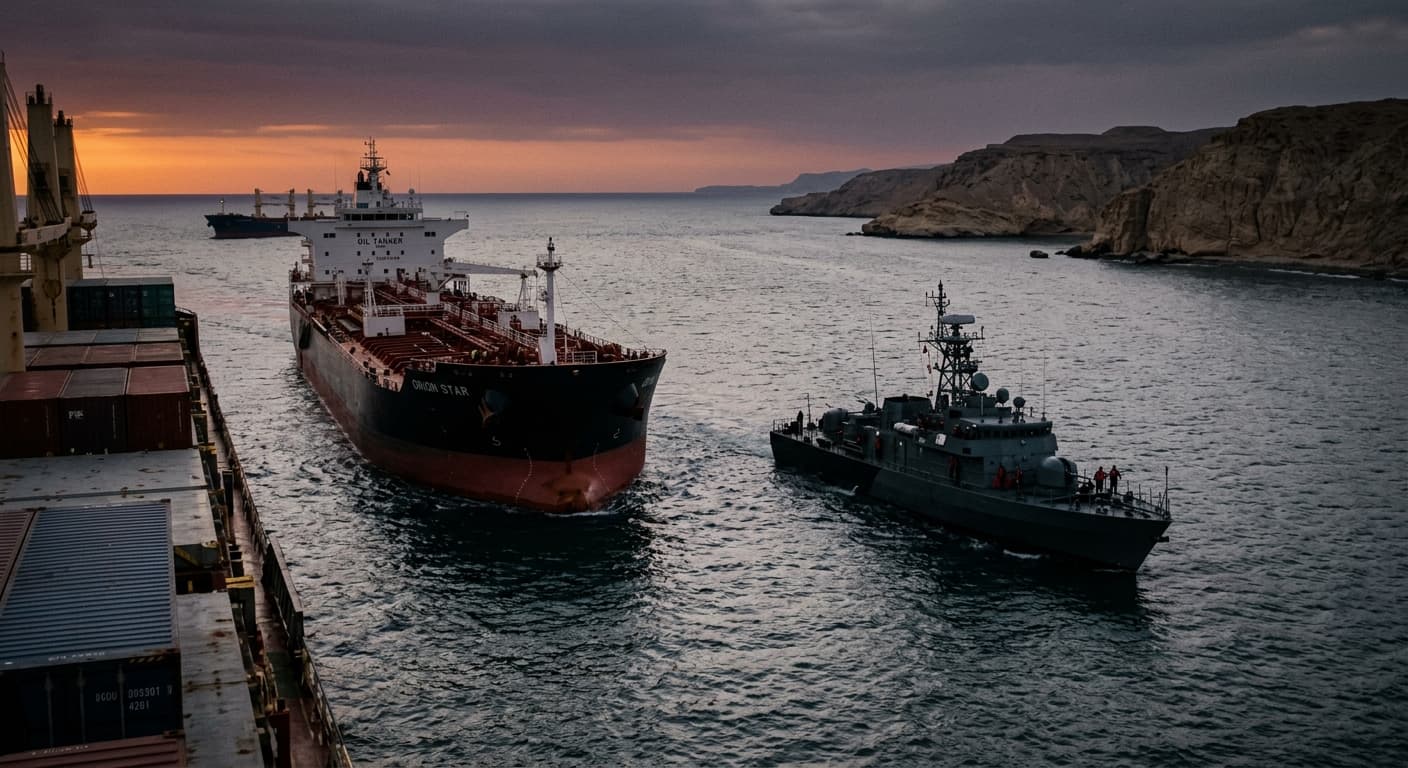
Oil markets are on edge after fresh threats to the Strait of Hormuz, the narrow waterway that carries nearly 20 percent of global oil trade. A single disruption here would send gasoline prices soaring far beyond what most families can comfortably absorb.
One-fifth of the world’s oil supply passes through a narrow stretch of water barely two miles wide at its tightest point. Any serious trouble in the Strait of Hormuz immediately ripples into higher gasoline, heating oil, and diesel prices for families and businesses everywhere.
Recent political noise around gas prices in Washington has sharpened focus on this vulnerability. House Republicans, including former Speaker Kevin McCarthy and Speaker Mike Johnson, have openly tied the cost of filling up your car to midterm election chances. Their concern is not abstract. When oil jumps, everyday costs jump with it—groceries, transport, manufacturing, and rent.
The Strait of Hormuz: Geography as Power
The Strait sits between Iran to the north and Oman and the United Arab Emirates to the south. Tankers leaving the Persian Gulf must thread this needle to reach Asian, European, and sometimes American markets. Roughly 21 million barrels of crude oil flow through it every single day, according to the U.S. Energy Information Administration.
That volume equals about 21 percent of global petroleum liquids consumption. A sustained closure or even credible threat of attack can remove several million barrels from the market almost instantly. Markets hate surprises. Prices move first on fear, then on actual supply losses.
Iran has repeatedly threatened to close the strait during moments of high tension. The country sits on one shore and possesses anti-ship missiles, fast-attack boats, and mines that could disrupt traffic for weeks. Even limited harassment—such as boarding tankers or firing warning shots—raises insurance costs and makes shipping companies think twice.
Recent Tensions and Political Rhetoric
Current worries trace back to renewed friction involving Iran, the United States, and Gulf Arab states. Comments from U.S. lawmakers suggest they believe voters will punish whichever party presides over another spike at the pump. Johnson has linked stable gas prices directly to Republican hopes in upcoming elections. McCarthy has echoed the point in public appearances.
This domestic political angle matters because it influences how aggressively Washington approaches sanctions, naval posture, and diplomacy in the Gulf. When American politicians treat pump prices as an election variable, every move in the Middle East gets examined through that lens.
The connection between Hormuz risks and consumer prices is not theoretical. In past flare-ups, Brent crude has jumped $10 or more per barrel within days of heightened rhetoric. Those increases eventually show up in your local gas station, often within two to four weeks as refined products move through the supply chain.
How Oil Flows Shape Everyday Costs
When crude prices rise, refiners pay more for their raw material. They pass much of that cost on to wholesalers, retailers, and finally drivers. In the United States, every $10 increase in the price of a barrel of oil tends to add roughly 25 cents per gallon to gasoline within a month or two, though regional factors and refining margins can alter the exact number.
Europe and Asia feel it too. Many Asian economies import nearly all their oil. A sustained Hormuz disruption would hit Japan, South Korea, India, and China especially hard. Higher energy costs there feed into manufactured goods that Americans and Europeans buy, creating a second-round effect on inflation.
Farmers notice higher diesel prices. Truckers pass along fuel surcharges. Airlines adjust ticket prices amid F1 logistics risks and aviation fuel chokepoints. Chemical companies that use oil and natural gas as feedstocks raise prices on plastics, fertilizers, and packaging. The pain spreads quietly but widely.
Sanctions, Evasion, and the Petrodollar Question
Iran has spent years building workarounds to Western sanctions. Shadow fleets of older tankers, ship-to-ship transfers at sea, and loosened enforcement by some buyers have kept Iranian oil moving, often to China. These evasion tactics appear in luxury assets as well. Reports of Russian oligarch superyachts and sanctioned Iranian vessels using similar routes and concealment methods highlight how energy politics and sanctions bleed into one another.
This cat-and-mouse game matters for global financial architecture. As more oil trades outside traditional dollar-based systems or through intermediaries, the petrodollar’s dominance slowly erodes. Some transactions now settle in yuan or other currencies. While the dollar remains dominant, the trend is clear and bears watching.
At the same time, cryptocurrency enthusiasts point to blockchain as a potential tool for evading sanctions or hedging against fiat currency risks tied to energy shocks. Whether digital assets can meaningfully cushion entire economies from oil spikes remains unproven, but the conversation itself shows how energy security, finance, and technology now overlap.
Links to Broader Semiconductor and Economic Volatility
Energy price shocks do not happen in isolation. They interact with other pressure points in the global economy. Higher oil directly raises costs for shipping semiconductors and raw materials, adding strain to already tense supply chains. The recent price collapse in Samsung OLED TVs revealed underlying fragility in chip production and logistics that energy costs can quickly worsen.
Foreign investors have already shown nervousness. Korean stocks tumbled as foreign investors fled amid earlier uncertainty. Another energy-driven inflation scare could accelerate capital flight from emerging markets and increase demand for safe-haven assets such as U.S. Treasuries or gold.
What History Teaches
The 1973 oil embargo, the 1979 Iranian Revolution, and the 1990 Iraqi invasion of Kuwait all produced painful price spikes and recessions or near-recessions. More recently, the 2019 drone attacks on Saudi oil facilities and the early stages of the Russia-Ukraine conflict reminded markets how fast things can change.
Each episode showed the same pattern: initial panic buying, inventory draws, substitution where possible, and eventual demand destruction as high prices curbed consumption. The difference today is the starting point. Global spare capacity is thinner than in some past decades, and many economies carry higher public and private debt loads. Recovery from a new shock could prove slower.
Possible Scenarios for the Coming Years
Several paths exist. In the best case, diplomacy and naval deterrence keep the strait open and tanker traffic flowing smoothly. Iran continues limited oil exports through workarounds while avoiding direct confrontation. Oil prices remain range-bound between $70 and $90 per barrel. Gas prices stay painful for many households but do not trigger widespread economic crisis.
A middle scenario involves sporadic incidents—seizures of tankers, brief exchanges of fire, mine scares—that push insurance premiums higher and add a persistent risk premium of $5–15 per barrel. Prices would be more volatile. Budgets for families and businesses would tighten further.
The worst case is direct military conflict that closes the strait for weeks or months. Alternative routes around Africa add thousands of miles and weeks of sailing time. Global oil supply could drop by 10–15 percent or more for a period. Prices could surge toward $150–200 per barrel in the acute phase. Inflation would spike. Central banks would face painful choices between fighting inflation and supporting growth.
Realistic analysts put the odds of full closure low but not zero. The probability of harassing actions or limited clashes sits higher. Markets price in the middle ground while watching for signs of escalation.
What Governments and Companies Are Doing
The United States maintains a naval presence in the region and works with allies to patrol key shipping lanes. Strategic petroleum reserves in multiple countries act as a buffer, though releases cannot replace lost supply indefinitely. Saudi Arabia, the UAE, and others have invested in pipelines that bypass the strait, yet these still represent only a fraction of total volume.
Oil companies hedge with futures contracts. Airlines and shipping firms lock in fuel prices where they can. Consumers have fewer tools. Many simply absorb the pain or cut spending elsewhere. Over time, sustained high prices encourage more electric vehicle adoption, efficiency improvements, and renewable energy investment—though these shifts take years.
The Human Impact
Behind every statistic sits a real person deciding whether to drive to work, turn up the thermostat, or delay a vacation. Truck drivers see their margins shrink. Farmers watch input costs climb. Small business owners absorb higher delivery charges and must choose between raising prices or eating the difference.
In developing countries the effects hit harder. Fuel subsidies strain government budgets. When those subsidies are cut, protests can follow. The 2019 fuel price protests in several nations showed how quickly energy costs become political flashpoints.
Even in wealthier nations, prolonged high gas prices quietly erode confidence. Polls consistently show that pocketbook issues, especially fuel and food costs, weigh heavily on voter sentiment. That explains why politicians from both parties watch the Strait of Hormuz closely even when other international stories dominate headlines.
Broader Energy Transition Context
The Hormuz risks arrive while the world is simultaneously trying to reduce dependence on oil. The tension is obvious. Short-term supply security pushes nations to secure fossil fuel flows, while long-term climate goals push toward electrification and renewables. Countries that rely on oil revenue, including Gulf states and Russia, face their own difficult balancing acts.
The Iran conflict’s potential to reshape global oil flows for years underscores this awkward transition period. Nations cannot simply flip a switch. Physical infrastructure, vehicle fleets, and industrial processes all change slowly. Until they do, the strait remains a critical pressure point in the global economy.
Conclusion: A Permanent Risk That Demands Attention
The Strait of Hormuz is not going away as a strategic chokepoint. Geography, geology, and politics have placed enormous leverage in a very small space. Consumers cannot control tanker traffic or diplomatic negotiations, but understanding the connection between distant events and daily costs helps separate signal from noise amid political rhetoric. Houthi advances in Yemen and Bab el-Mandeb supply chain chokepoints
Stable energy prices require more than political speeches. They depend on credible deterrence, smart diplomacy, diversified supply routes, strategic reserves, and steady progress on energy efficiency and alternatives. Until those pieces align more fully, the price at the pump will remain a real-time referendum on geopolitical stability in the Gulf.
Watch developments in the strait, Iranian statements, U.S. naval deployments, and inventory reports from the EIA. Those data points often tell the real story about where gas prices are heading long before they show up on the corner station’s sign. In today’s interconnected world, a threat thousands of miles away can empty your wallet faster than you expect.
Share This Article