The Inner Path · April 14, 2026
Global Economic Outlook 2026: Navigating Energy Transition, Geopolitical Risk, and Fragmented Growth
As 2026 unfolds, the world economy faces a complex interplay of accelerating renewable energy adoption, persistent geopolitical tensions, and diverging growth trajectories between developed and emerging markets. This comprehensive analysis examines the key forces shaping global prosperity amid rising energy politics and economic fragmentation.
The global economic outlook for 2026 presents a picture of cautious optimism tempered by significant structural challenges. Following years of post-pandemic recovery, supply chain disruptions, and inflationary pressures, the world economy is entering a new phase characterized by technological transformation in the energy sector, realignment of international alliances, and increasing fragmentation of global trade.
According to the International Monetary Fund’s latest projections released in early 2026, global GDP growth is expected to stabilize at approximately 3.2% for the year, slightly below the historical average of 3.7% seen between 2000 and 2019. This modest growth masks substantial regional variations and underlying tensions that could significantly alter trajectories throughout the remainder of the decade.
Three dominant themes emerge as critical drivers for 2026: the accelerating transition toward renewable energy and its geopolitical implications, persistent great-power competition between the United States and China, and the evolving role of central banks in an environment of elevated public debt and shifting inflationary dynamics. These factors are deeply interconnected, creating both opportunities and substantial risks for policymakers, businesses, and investors worldwide.
The Energy Transition Accelerates Amid Geopolitical Tension
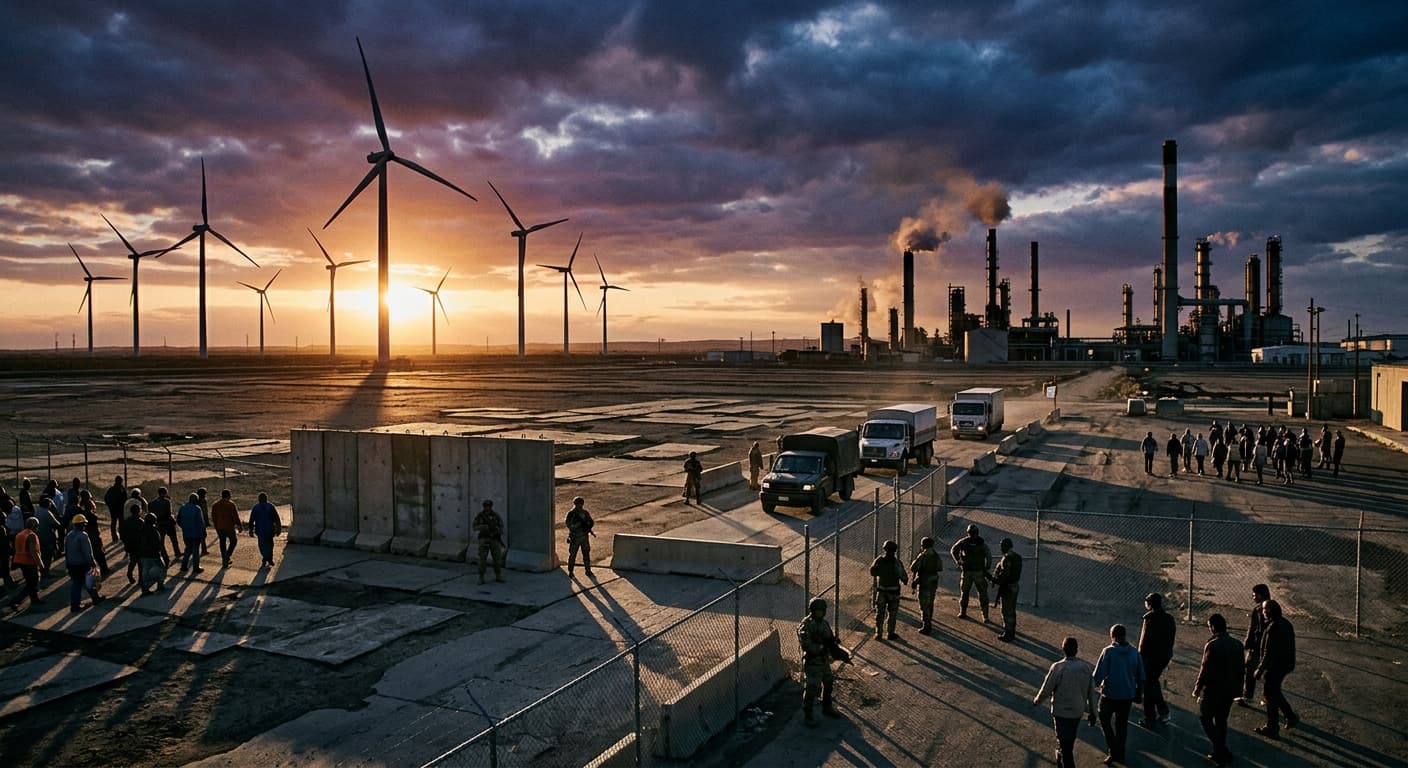
Renewable energy innovations have moved from peripheral concern to central driver of both economic policy and international relations. Global investment in clean energy technologies reached a record $2.1 trillion in 2025, surpassing combined investment in fossil fuels for the second consecutive year. Solar, wind, and battery storage technologies continue to see dramatic cost reductions, with utility-scale solar costs falling approximately 89% since 2010 according to BloombergNEF data.
This transition, however, is not occurring uniformly or without friction. China maintains dominant positions across multiple critical supply chains, producing approximately 75% of global lithium-ion battery capacity and over 60% of rare earth processing. The United States, European Union, and allies have responded with substantial policy interventions including the US Inflation Reduction Act’s continued incentives, the EU’s Net Zero Industry Act, and various “friend-shoring” initiatives designed to diversify critical mineral and technology supply chains.
The energy politics of 2026 reflect a complex balancing act. While Europe has successfully reduced its dependence on Russian natural gas through a combination of LNG imports, renewable deployment, and energy efficiency measures, new dependencies have emerged—particularly on Chinese solar panels, batteries, and critical minerals. This reality has prompted accelerated efforts to develop domestic and allied supply chains, though these initiatives face significant timeline challenges.
OPEC+ Adaptation and Oil Market Dynamics
Despite the renewable surge, oil markets remain geopolitically significant. OPEC+ producers, facing competition from both US shale and accelerating electric vehicle adoption, have maintained a strategy of production discipline throughout 2025. Brent crude prices have stabilized in the $75-85 per barrel range in early 2026, providing fiscal breathing room for Gulf producers while creating pressure on oil-importing emerging markets.
Saudi Arabia’s Vision 2030 initiatives have made notable progress in economic diversification, with non-oil GDP growth consistently outpacing hydrocarbon sectors. The United Arab Emirates has similarly positioned itself as both a traditional energy exporter and a growing hub for renewable investment, hosting significant green hydrogen projects expected to come online in 2027-2028.
Great Power Competition and Economic Fragmentation
The relationship between the United States and China remains the defining geopolitical dynamic of the era. While direct military confrontation has been avoided, economic and technological decoupling has deepened across multiple domains. The Biden administration’s successor has maintained core elements of the export control regime targeting advanced semiconductors, while China has accelerated its “Made in China 2025” successor initiatives and domestic technology self-sufficiency programs.
This technological bifurcation creates both risks and opportunities. Global semiconductor supply chains have split into distinct ecosystems, driving up costs and slowing innovation in some sectors while spurring massive investment in new fabrication facilities across the United States, Europe, Japan, South Korea, and Southeast Asia. Taiwan Semiconductor Manufacturing Company’s (TSMC) major Arizona facility began limited production in late 2025, with additional capacity scheduled for 2026-2027.
Trade patterns increasingly reflect “friend-shoring” and regional bloc formation rather than pure efficiency considerations. The expansion of the BRICS grouping to include additional members has created an alternative platform for economic coordination, though internal divergences between members limit its immediate challenge to Western-dominated institutions. India has notably pursued a hedging strategy, maintaining strong ties with both Western economies and Russia while expanding its domestic manufacturing capabilities under the “China+1” investment trend.
The Sanctions Landscape and Secondary Effects
The continued use of Western sanctions against Russia, Iran, and certain Chinese entities has demonstrated both effectiveness and limitations. Russia’s economy has shown surprising resilience through adaptation, parallel imports, and redirected trade toward China, India, and other partners. However, its long-term technological development faces constraints from restricted access to advanced components and financial services. The human costs of these prolonged conflicts also reveal the hidden inequality of war.
Secondary sanctions concerns have complicated international banking relationships and commodity trading, contributing to a gradual “de-dollarization” trend—though the US dollar’s dominance in global trade and reserves remains largely intact at approximately 58% of allocated foreign exchange reserves according to IMF COFER data through Q4 2025.
Regional Economic Outlooks and Divergences
Advanced economies face distinct challenges in 2026. The United States benefits from technological leadership, energy independence, and relatively favorable demographics compared to peers, though political polarization and elevated federal debt-to-GDP levels near 125% create fiscal vulnerabilities. The Federal Reserve is expected to maintain a data-dependent approach to monetary policy, with markets pricing in two to three rate cuts throughout 2026 assuming inflation stabilizes near the 2.0-2.5% range.
Europe’s outlook remains clouded by structural challenges including aging populations, energy costs higher than pre-2022 levels, and competitive pressures from both American technology giants and Chinese industrial policy. Germany’s manufacturing sector continues its adjustment to higher energy prices, while France and the United Kingdom pursue distinct strategies for economic revitalization. The European Central Bank faces the delicate task of supporting growth while guarding against renewed inflationary pressures. In this context, Kurt Volker’s warning on shifting transatlantic energy security and geopolitical realignment highlights the urgent need for European strategic adaptation.
Emerging markets present a study in contrasts. India appears well-positioned with projected growth near 6.5-7% for 2026, driven by domestic consumption, digital infrastructure development, and manufacturing investments. Vietnam, Indonesia, and certain Southeast Asian economies continue benefiting from supply chain diversification away from China.
Conversely, several major emerging economies face significant headwinds. China’s growth has stabilized near 4.2% amid property sector adjustment, local government debt challenges, and demographic pressures from its aging population and low birth rates. Brazil and South Africa contend with political uncertainties and structural constraints, while several African nations navigate debt sustainability challenges amid higher global interest rates. Real Estate Market 2026: Luxury Home Price Surge Driven by Geopolitical Risk and Global Capital Flows Pakistan's cricket crisis deepens as economic pressures mount in Dhaka.
Central Banking, Debt Sustainability, and Financial Markets
Global public debt levels remain elevated following pandemic spending and energy support measures. The IMF estimates that global debt-to-GDP will hover near 112% in 2026. While advanced economy central banks have successfully reduced inflation from 2022 peaks, bringing rates back to target has proven more challenging than anticipated due to persistent service sector inflation and tight labor markets.
The Bank for International Settlements has repeatedly warned about the risks of prolonged high debt levels combined with potential normalization of higher interest rates. Several developing nations have restructured debts under the G20 Common Framework, though the process has proven slower and more contentious than initially hoped.
Financial markets in 2026 reflect this complex environment. Equity markets have shown resilience, particularly in technology and renewable energy sectors, while commodity prices reflect the competing forces of energy transition and persistent demand from emerging Asia. Cryptocurrency markets have matured somewhat following regulatory clarification in major jurisdictions, though Bitcoin and Ethereum remain highly volatile and correlated with technology equity performance. For a detailed snapshot of current conditions, see Stock Market Today: Volatility, Policy Uncertainty, and Global Economic Crossroads in April 2026.
The US dollar’s strength has persisted due to interest rate differentials and safe-haven demand, creating challenges for emerging market borrowers with dollar-denominated debt. Currency volatility remains a key concern for international investors and multinational corporations. Stock Market Volatility and the New Rules of Global Economic Power in 2026
Key Risks and Scenarios for 2026-2027
Several downside risks could derail the baseline economic outlook:
- Escalation in Ukraine or Middle East conflicts disrupting energy and food markets
- Renewed US-China technology or trade restrictions causing supply chain shocks
- sharper-than-expected Chinese economic slowdown impacting global commodity exporters
- Debt distress in multiple emerging markets triggering contagion effects
- Delayed or disorderly energy transition creating stranded assets or energy price volatility
Conversely, upside scenarios exist around faster technological breakthroughs in battery storage, green hydrogen, or artificial intelligence applications that could boost productivity growth beyond current expectations. Successful international cooperation on critical issues like climate adaptation, pandemic preparedness, and debt restructuring could also improve the medium-term outlook.
Conclusion
The global economic outlook for 2026 reflects an era of profound transformation rather than simple cyclical recovery. The intersection of energy transition, geopolitical realignment, and technological competition creates a more complex environment for decision-makers than the relatively stable pre-2016 period.
Success in this environment will likely favor economies and businesses that demonstrate adaptability, strategic clarity, and willingness to invest in resilience. Nations that effectively balance energy security with decarbonization goals, maintain technological competitiveness while avoiding excessive fragmentation, and pursue fiscal sustainability alongside necessary public investments will be best positioned for the remainder of the decade.
For businesses, this environment demands sophisticated scenario planning, supply chain diversification, and careful attention to regulatory and geopolitical developments. Investors should expect continued volatility across asset classes while seeking opportunities in the secular trends of decarbonization, digitalization, and demographic shifts.
While challenges abound, the scale of human ingenuity applied to energy innovation, artificial intelligence, and biotechnology offers substantial reason for measured optimism. The choices made in 2026 regarding international cooperation versus fragmentation will significantly influence whether the global economy realizes its potential or remains constrained by preventable conflicts and policy errors.
The coming year represents not merely another data point in economic cycles but a pivotal period in determining the contours of the mid-21st century economic and geopolitical order. Policymakers, corporate leaders, and citizens alike must navigate these currents with both pragmatism and strategic vision.
Share This Article