AI Infrastructure · Jonathan van den Berg · August 14, 2026
GLM 5.3 Release: How Z-AI's New Model Reshapes AI Data Center Demand, Grid Constraints, and Global Semiconductor Competition
Z-AI's GLM 5.3 pushes boundaries in coding and cyber applications, driving fresh pressure on power-hungry data centers and critical chip supply chains already stretched by hyperscale AI buildouts.
GLM 5.3 Delivers Frontier Coding and Unexpected Cyber Strength
Z-AI's new GLM 5.3 model matches or exceeds current leaders in complex software engineering tasks while demonstrating cyber capabilities that reportedly surpassed the scope of its original training data. The release immediately raises fresh questions about power consumption, chip demand, and the physical infrastructure needed to run ever-larger AI systems.
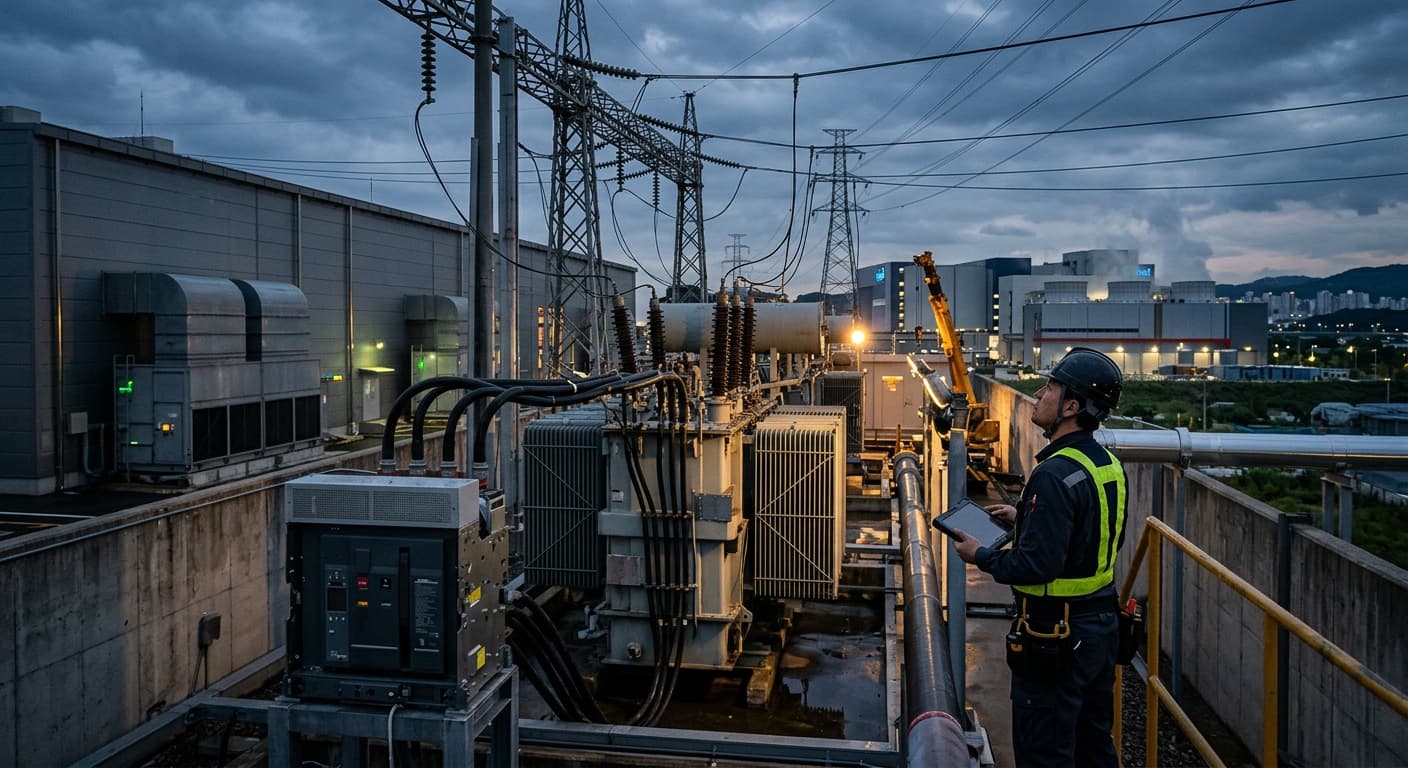
Hyperscalers already face tight electricity supplies in key regions. Any model that accelerates developer productivity or introduces new autonomous capabilities tends to accelerate data center buildouts, which in turn tightens supply for GPUs, transformers, cooling systems, and transmission capacity.
Key Takeaways
- GLM 5.3 shows state-of-the-art performance on coding benchmarks, positioning Z-AI closer to Anthropic and OpenAI in developer tools.
- Its cyber-related emergent abilities have raised eyebrows among security researchers and infrastructure operators.
- Training and inference at this capability level require significant energy, intensifying pressure on Northern Virginia and other AI data center hubs.
- Semiconductor supply chains for high-end GPUs and custom silicon could see renewed demand volatility.
- Investors tracking AI infrastructure plays may see indirect benefits in companies exposed to power generation, transmission, and advanced chips.
What GLM 5.3 Actually Brings to the Table
Z-AI designed GLM 5.3 to compete directly in the coding agent space. Early evaluations suggest it handles multi-step software engineering problems with fewer errors than previous versions and can autonomously debug large codebases.
The surprise element is the model's cyber performance. Reports indicate certain offensive and defensive security tasks exceeded what the training data alone would predict. This emergent behavior mirrors patterns seen in other frontier models where capabilities in one domain bleed into adjacent technical fields.
For enterprises, this means faster code generation, more reliable automated testing, and potentially new classes of AI-driven security tools. For infrastructure planners, it means more servers running at high utilization for longer periods.
Why This Matters for AI Data Center Infrastructure
Each leap in model capability typically triggers another round of cluster expansion. Training runs for models at the GLM 5.3 level can consume dozens of megawatts over weeks. Inference at scale across thousands of enterprise users adds steady baseload demand.
Northern Virginia already operates as the world's largest data center market. Local grid operators have warned that projected AI-driven load growth risks outstripping available power contracts and transmission upgrades. Similar constraints appear in other markets including Texas, the Netherlands, and parts of Southeast Asia.
Waymo's robotaxi rollout offers a parallel example. The compute required for real-time autonomous driving has forced operators to secure dedicated power purchase agreements and edge computing sites. GLM 5.3's coding and cyber features could drive comparable demand for always-on development environments and continuous security monitoring clusters.
Grid Constraints and Power Realities
Data center operators now compete with every other large electricity user. Nuclear restarts, small modular reactor projects, and gas-fired peaker plants have all become part of the conversation. Yet lead times remain long.
Recent extreme weather events have exposed additional vulnerabilities. Tropical cyclone risks in the Pacific and lightning-induced disruptions in California demonstrate how quickly backup systems can be tested. Municipal-level incidents like the Suisun City ransomware attack further highlight how cyber risks intersect with physical power reliability.
GLM 5.3's reported cyber capabilities could accelerate both defensive investments and, in theory, new classes of threats that data center operators must guard against. This feedback loop increases the premium on hardened, redundant infrastructure.
Semiconductor Supply Chain Pressure Points
Frontier models require the latest GPUs and custom accelerators. NVIDIA (NASDAQ:NVDA) and AMD (NASDAQ:AMD) continue to dominate training workloads while specialized chips from Oracle (NYSE:ORCL), Microsoft (NASDAQ:MSFT), and Tesla (NASDAQ:TSLA) handle optimized inference.
Any surge in demand for coding-focused AI agents tightens the already constrained market for high-bandwidth memory, advanced packaging, and cobalt/refined copper used in power delivery systems. The Malacca Strait remains a critical chokepoint for many of these raw materials and finished components moving from Asian fabs to Western data center campuses. A major 2026 Japan earthquake would further reshape global semiconductor markets and AI data center expansion plans.
| Component | Primary Risk | Impact on GLM 5.3 Rollout |
|---|---|---|
| High-end GPUs | Allocation queues and export limits | Delays training of next-generation models |
| Power transformers | 18-24 month lead times | Slows new data center commissioning |
| High-bandwidth memory | Concentrated production in South Korea | Price volatility on demand spikes |
| Subsea cables | Malacca Strait and Red Sea routing risks | Potential latency and cost increases for global inference |
Investment Implications for AI Infrastructure Plays
Companies that enable the physical side of AI stand to benefit even if they never train a frontier model themselves. Power utilities with data center adjacency, transmission specialists, nuclear technology providers, and suppliers of liquid cooling systems have all seen renewed investor interest during previous capability jumps.
Oracle's cloud infrastructure push and Tesla's energy storage deployments illustrate how diversified exposure can hedge against pure-play GPU volatility. Sovereign wealth funds have quietly increased allocations to these enabling technologies, viewing them as essential infrastructure plays with embedded geopolitical resilience.
Common Mistakes When Assessing New Model Releases
- Assuming benchmark scores translate directly into immediate enterprise adoption. Many models show strong numbers in controlled tests but face integration hurdles at scale.
- Ignoring the cumulative effect of multiple models. One new release matters less than the combined load from dozens of production systems running simultaneously.
- Underestimating cyber implications. Capabilities that appear academic in a lab can shift risk profiles for critical infrastructure operators overnight.
- Focusing only on chipmakers. The real bottlenecks often sit in power delivery, cooling, and permitting timelines.
Best Practices for Infrastructure and Investment Teams
- Model total power draw across training, fine-tuning, and inference phases rather than headline parameter counts.
- Secure power purchase agreements early. Sites with existing nuclear or renewable-plus-storage contracts hold clear advantages.
- Diversify chip suppliers. Reliance on any single vendor creates single points of failure in both performance and geopolitical risk.
- Build cyber resilience into site selection. Locations with strong grid cybersecurity programs and redundant connectivity reduce exposure to emergent model capabilities.
- Track sovereign capital flows. State-backed funds increasingly prioritize domestic AI infrastructure, creating both competition and partnership opportunities.
FAQ
What makes GLM 5.3 different from previous Z-AI models?
It demonstrates stronger performance on software engineering benchmarks and shows unexpected strength in cyber-related tasks that appear to exceed its training distribution.
Will GLM 5.3 increase pressure on data center power supplies?
Yes. Any model that improves developer productivity or adds new autonomous capabilities drives higher utilization of existing clusters and justifies new builds, both of which increase electricity demand.
How does this affect semiconductor stocks?
Companies supplying GPUs, memory, networking gear, and power electronics typically see increased demand. However, supply constraints and allocation battles can create uneven gains across the value chain.
Which regions face the tightest AI power constraints?
Northern Virginia remains the most acute example, but similar dynamics exist in other established hubs and in emerging markets racing to catch up.
Could cyber capabilities in GLM 5.3 create new risks for data centers?
Potentially. Models that develop strong security capabilities can be used for both defense and offense. Operators must assume advanced persistent threats will leverage the best available AI tools.
Looking Ahead
GLM 5.3 represents another step in the steady march toward more capable AI systems. The real story lies less in the benchmark numbers and more in the physical infrastructure required to run these models at global scale. Power, chips, and secure facilities will remain the limiting factors long after the headlines fade.
Organizations that treat data center capacity, grid connections, and supply chain resilience as strategic assets will hold the advantage. For investors, the lasting returns may come from the companies that keep the lights on and the models running rather than the models themselves.
Monitor power availability metrics, chip allocation trends, and cyber incident reports in the coming quarters. These signals will reveal more about the real-world impact of GLM 5.3 than any single benchmark score.
Share This Article