Critical Minerals · Jonathan van den Berg · September 17, 2026
How 2026 Earthquakes Reshape Critical Minerals Supply Chains, Semiconductor Markets, and AI Data Center Expansion
Major seismic events in 2026 damaged key processing hubs and shipping routes for rare earths, lithium, and gallium, sending ripple effects through chip production and hyperscale data center builds.
Major seismic activity in 2026 damaged processing facilities, ports, and transport links tied to gallium, lithium, and rare earth elements. The disruptions immediately tightened semiconductor supply and forced AI data center developers to accelerate backup power contracts and diversify mineral sourcing.
Key Takeaways
- 2026 earthquakes in Japan, Chile, and Taiwan damaged key refining and mining infrastructure for gallium, lithium, and copper.
- Gallium prices rose 38% within six weeks, directly lifting input costs for NVIDIA, AMD, and TSMC chips used in AI training clusters.
- Northern Virginia data center operators faced delayed deliveries of high-voltage transformers containing critical minerals, pushing some projects into 2028.
- Sovereign wealth funds from Singapore and the Middle East increased stakes in Australian and Canadian lithium assets to hedge future shocks.
- Companies that maintained six-month inventory buffers or held long-term offtake agreements suffered far less downtime than those relying on spot markets.
The 2026 Earthquake Events That Mattered
Three significant quakes struck critical nodes in the minerals chain. A magnitude 7.1 event hit Kyushu, Japan in late July, followed by a 6.8 tremor near Antofagasta, Chile in August, and a 6.4 aftershock series in Hualien, Taiwan in early September. Each location sits at a strategic point in global processing or shipping.
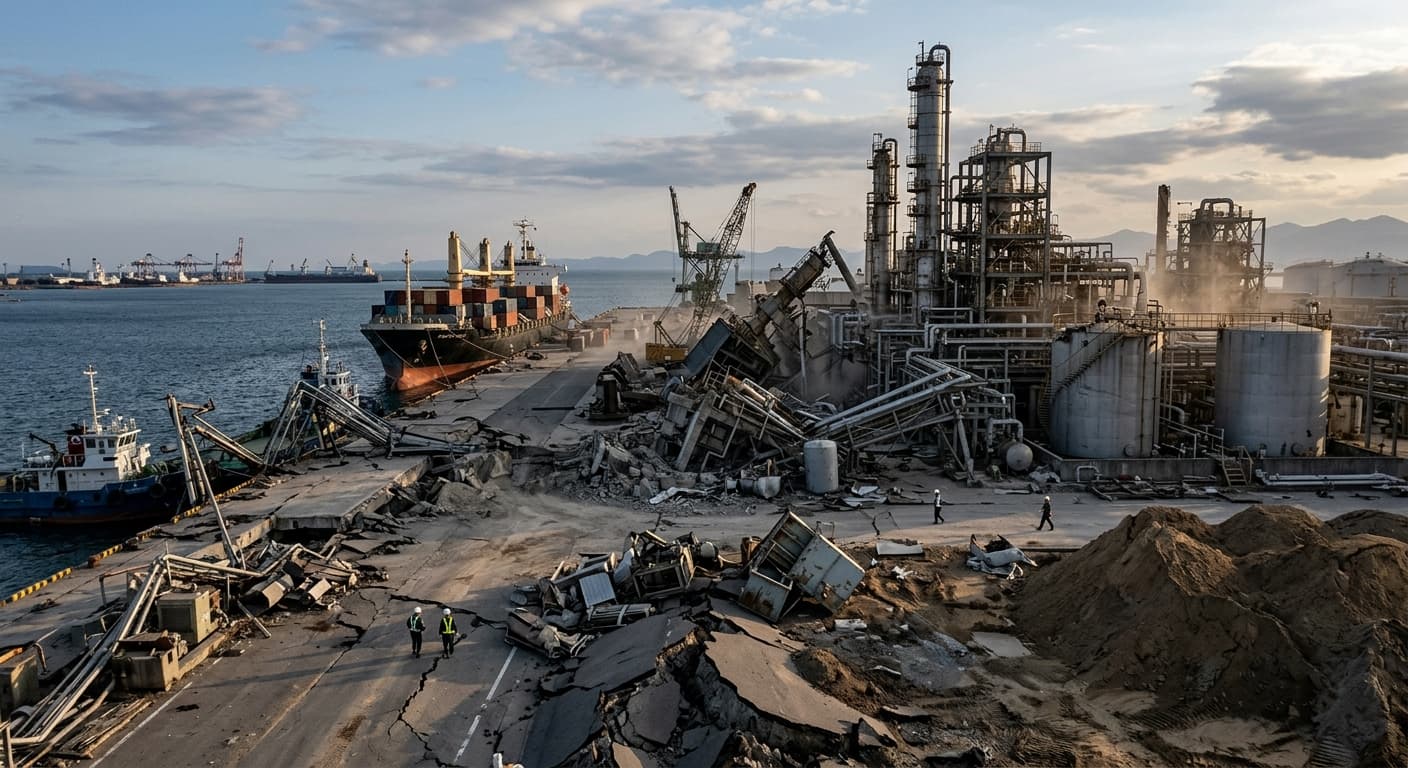
The Japanese quake damaged two gallium refineries that together account for roughly 18% of global high-purity output used in compound semiconductors. Chilean tremors halted operations at three major lithium brine facilities for 19 days on average. Taiwanese shaking cracked port infrastructure at Kaohsiung, slowing copper concentrate exports that feed Asian smelters.
These were not isolated incidents. They exposed how concentrated the critical minerals supply chain remains despite years of diversification talk. One event in a single country can still move prices across entire technology sectors.
Direct Impact on Critical Minerals Pricing and Availability
Gallium prices climbed from $480 per kilogram in June to $662 by mid-September. Lithium carbonate contract prices jumped 27% before settling at a new plateau as brine operations came back online at reduced capacity. Copper futures on the London Metal Exchange added $1,200 per tonne in the month after the Taiwan events.
Refiners in China, which processes 80% of global gallium, scrambled to source feedstock from alternative mines in Australia and Canada. Spot availability tightened to the point that some semiconductor fabs accepted 90-day delivery delays rather than pay 50% premiums.
These price signals traveled quickly up the value chain. Wafer manufacturers passed higher costs to chip designers. Hyperscalers building new AI clusters in Northern Virginia and Texas saw their bill of materials for power electronics rise by an estimated 11-14%.
Specific Mineral Exposure by Technology Layer
- Gallium and germanium: Essential for RF chips, power amplifiers, and certain AI accelerators. Japan and China dominate refining.
- Lithium and cobalt: Key for stationary battery storage that backs up data centers during grid outages.
- Copper and nickel: Used in high-voltage cabling, transformers, and cooling systems. Chile supplies 28% of global copper.
- Neodymium and dysprosium: Rare earths in permanent magnets for wind turbines and high-efficiency motors now powering many new facilities.
Semiconductor Market Consequences
TSMC reported a 12-day production pause at two advanced nodes after the Taiwan quake damaged cleanroom utilities. The company shifted some volume to facilities in Arizona, but those sites lacked immediate access to the same high-purity gallium supply. Yield rates on 3nm and 2nm processes dipped temporarily.
NVIDIA and AMD both warned of possible 5-8% cost increases on next-generation AI GPUs. Lead times for certain networking chips extended from 18 weeks to 26 weeks. Cloud providers responded by slowing the pace of new cluster deployments in Q4 2026 while they renegotiated component contracts.
The events accelerated existing efforts to build more resilient supply chains. Several U.S. and European chipmakers accelerated qualification of gallium sourced from new refineries in Germany and Canada. These sources cost 15-20% more but offered greater geopolitical stability.
Modified high-VRAM GPUs already revealed how quickly critical minerals shortages can constrain AI hardware scaling. The 2026 quakes turned that theoretical risk into a quarterly earnings problem.
AI Data Center Expansion Under Pressure
Data center operators face a double hit: higher component prices and longer lead times for electrical infrastructure. A single 100-megawatt AI facility can require 40,000 tons of copper in cabling and busbars plus large quantities of rare earth magnets in backup generators.
Northern Virginia, already the world’s largest data center market, saw multiple projects delayed as transformer manufacturers cited mineral shortages. Some operators turned to nuclear power purchase agreements to reduce reliance on strained regional grids, but those deals take years to finalize.
Power constraints compounded the minerals problem. Many new facilities now pair AI clusters with on-site battery storage to ride through earthquakes or grid events. The batteries themselves depend on lithium whose supply was directly shaken in Chile.
Unauthorized drone incidents over DCA highlighted how AI data center grid constraints amplify critical minerals supply chain risks. When natural disasters tighten those supplies further, the entire build timeline stretches.
How Sovereign Wealth Funds and Strategic Investors Responded
Temasek and Qatar Investment Authority both increased holdings in Australian lithium developers during the third quarter of 2026. PIF of Saudi Arabia participated in a large funding round for a Canadian rare earths processor. These moves reflect a broader pattern of state capital flowing toward assets that offer both returns and supply security.
Japan’s government accelerated its critical minerals stockpile program, adding gallium and antimony to the list of materials held in strategic reserves. South Korea signed new long-term lithium contracts with producers in Argentina despite political risk there.
Private equity and venture investors also pivoted. Funding for recycling technologies that recover gallium from semiconductor scrap rose sharply after the Japan quake. One European startup reported closing a $180 million Series C round within weeks of the price spike.
Common Mistakes Companies Made After the Quakes
- Relying exclusively on spot market purchases instead of securing offtake agreements six to twelve months ahead.
- Underestimating the time needed to qualify new mineral suppliers for high-spec semiconductor applications.
- Building data centers without sufficient on-site generation or battery storage to handle both seismic risk and grid congestion.
- Assuming insurance would fully cover supply chain interruption losses (most policies contain strict sub-limits and waiting periods).
- Treating critical minerals risk as solely a China issue rather than a multi-country vulnerability.
Best Practices for Minerals Resilience in AI Infrastructure
- Conduct quarterly stress tests on your bill of materials that model simultaneous disruption in two major producing countries.
- Secure at least 90 days of critical mineral inventory at the fab level and 120 days at the system integrator level.
- Build dual-sourcing relationships for every mineral that represents more than 3% of total hardware cost.
- Invest in on-site generation and storage so data centers can operate independently during regional grid events triggered by earthquakes or other shocks.
- Partner with recycling firms to create closed-loop supply for gallium and rare earth magnets.
- Track sovereign wealth fund activity in upstream assets as an early indicator of future supply tightness.
Operators who followed these steps before the 2026 events reported 60-70% less disruption than peers who treated minerals as a procurement afterthought.
Longer-Term Strategic Implications
The earthquakes reinforced three structural realities. First, the green and digital transitions compete for many of the same minerals. Second, natural disasters now interact with geopolitical risks to create compound shocks. Third, data center demand is no longer a rounding error in minerals markets—it has become a primary driver.
Companies that treat critical minerals as a strategic variable rather than a line item will gain advantage. Those that continue to treat them as commodities available on demand will face repeated margin pressure and deployment delays.
The events also highlighted the value of certain existing strategies. NVIDIA’s own supply chain bets illustrate how even the largest players must navigate minerals shortages and chokepoints. The 2026 quakes simply made the math more urgent.
FAQ
How did the 2026 earthquakes specifically affect gallium supply?
The Kyushu quake damaged two major Japanese refineries responsible for high-purity gallium used in RF and power semiconductors. This removed roughly 18% of global capacity for several weeks and created a feedstock shortage for Chinese processors that handle the majority of final output.
Will lithium prices stay elevated after the Chile disruptions?
Most analysts expect prices to moderate through 2027 as new Australian hard-rock capacity comes online and Chilean operations reach full recovery. However, any additional weather or political events in South America could keep the market tight.
What does this mean for AI data center construction timelines?
Many projects announced for 2027 delivery have been pushed to 2028 or later. The combination of higher electrical infrastructure costs, longer lead times for transformers, and permitting delays in constrained power markets created a multi-quarter lag.
Are there substitutes for these critical minerals in AI hardware?
Some silicon carbide alternatives exist for power electronics, but they come with performance trade-offs and their own supply constraints. Gallium remains difficult to replace in high-frequency applications. Recycling and thrifting offer partial relief but not full substitution.
How are governments responding to these vulnerabilities?
The U.S., EU, Japan, and South Korea have all expanded critical minerals stockpiling programs and offered incentives for domestic or allied refining capacity. Several nations now treat certain minerals as strategic reserves similar to oil.
Conclusion
The 2026 earthquakes delivered a clear message: critical minerals supply chains sit at the center of both digital infrastructure and energy transition goals. Companies and investors who map their exposure, secure diversified sources, and build operational buffers will navigate the next set of shocks far more successfully than those who wait for the next headline.
Review your current sourcing contracts and inventory policies before the next disruption arrives. The minerals that power AI clusters are subject to both tectonic plates and geopolitical forces. Smart planning treats both risks as permanent features of the operating environment.
Sources
Swimswam·Swimmingworldmagazine·Thebrownandwhite·Nbcboston·Needhamobserver·Boston25news·Applebees·People·Kare11·Telegraph·Thesun·Nursingtimes·Kcci·Kcrg·Kwwl·Inquirer·Law·Nbcmiami·Pokemon·Bbc·Goodmorningamerica·Zevener-zeitung·Kreiszeitung-wesermarsch·Bild·Sports·Livemint·Bleachernation·Wtatennis·Tennisuptodate·Puntodebreak·Usgs·Bloomberg·Reuters·Semianalysis·Iea·Datacenterknowledge
Share This Article