Jonathan van den Berg · July 18, 2026
Gas Prices 2026: How Iran Tensions, Diesel Shortages, and Strait of Hormuz Risks Drive Energy Market Volatility
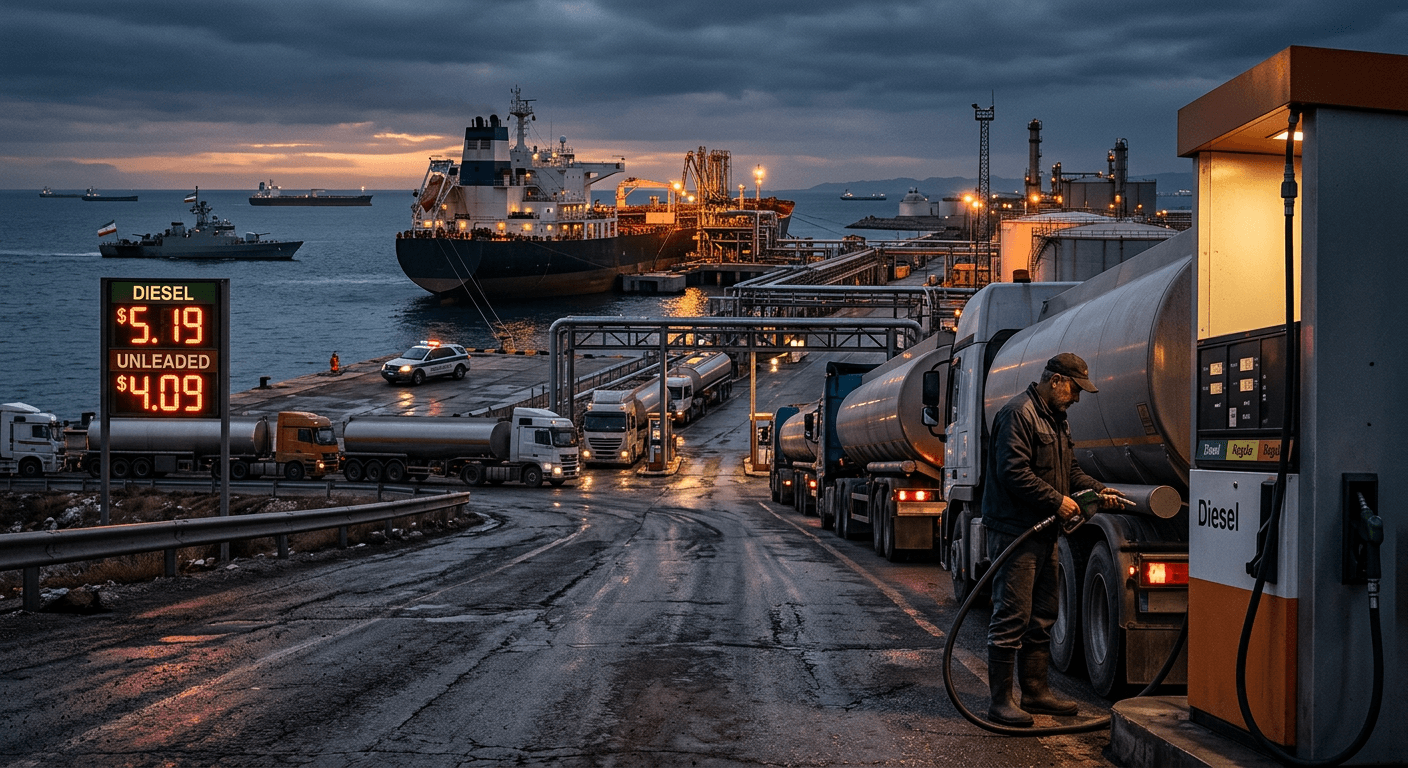
Diesel prices have surged above $5 per gallon while regular gasoline climbs toward $4 in many states, driven by supply disruptions from the Iran conflict and fears over the Strait of Hormuz. This energy shock ripples through global markets, inflation, and household budgets.
Gas prices in 2026 have spiked as Middle East tensions disrupt oil supply chains and diesel shortages push costs above $5 per gallon in key U.S. markets. The combination of reduced Iranian exports, heightened insurance costs for tankers near the Strait of Hormuz, and refinery constraints has created the sharpest energy price pressure since 2022.
Regular unleaded gasoline now averages $3.85 nationally, with diesel reaching $5.12 in parts of the Midwest and California. These increases stem directly from geopolitical events rather than simple seasonal demand. Households and businesses face higher transportation, heating, and goods-delivery costs that feed into broader inflation.
Key Takeaways
- Diesel prices exceeding $5 per gallon signal severe distillate shortages tied to Iran-related supply cuts.
- The Strait of Hormuz remains the critical chokepoint; any escalation there could add $20–$40 per barrel to crude within weeks.
- American drivers are paying 18–25% more for fuel than early 2025 levels, with trucking and agriculture hit hardest.
- Central banks are watching energy-driven inflation, limiting room for rate cuts in late 2026.
- Alternative energy assets and certain commodity hedges have outperformed amid the volatility.
Current Gas and Diesel Price Snapshot
As of mid-2026, the U.S. Energy Information Administration reports regular gasoline at $3.85 per gallon on average, up 42 cents from June. Diesel stands at $4.98 nationally but has crossed the $5 threshold in California, Illinois, and Pennsylvania. Wholesale diesel prices have risen faster due to low inventories and competing global demand for heating oil and marine fuel.
Regional differences are stark. West Coast prices reflect both refinery maintenance and long-term fears of Pacific seismic risks affecting port operations. Midwest prices track agricultural diesel demand during harvest season. East Coast figures show the direct impact of higher tanker insurance premiums routed around potential Hormuz disruptions.
| Region | Regular Gasoline | Diesel | 30-Day Change |
|---|---|---|---|
| National Average | $3.85 | $4.98 | +9% |
| California | $4.62 | $5.45 | +14% |
| Midwest | $3.71 | $5.12 | +11% |
| Gulf Coast | $3.48 | $4.65 | +6% |
Iran Conflict and Its Direct Impact on Oil Markets
The ongoing Iran conflict has removed roughly 1.2 million barrels per day of Iranian crude from global markets. U.S. strikes on Iranian ports and facilities, combined with insurance rates for vessels operating near the Persian Gulf rising 400%, have tightened supply at a time when OPEC+ production cuts remain in effect.
This situation directly connects to earlier developments in the Iran conflict that first threatened energy security. Markets now price in a persistent risk premium. Brent crude has traded between $82 and $94 per barrel for most of the summer, with spikes whenever tanker tracking data shows delays in the Strait of Hormuz.
Secondary effects appear in allied nations. Kuwait’s heightened tensions with Iran have further complicated Gulf shipping routes, adding upward pressure documented in recent oil politics analysis.
Why Diesel Prices Have Outpaced Gasoline
Diesel’s sharper rise reflects several converging factors. Refineries have maximized gasoline output to meet summer driving demand, leaving distillate inventories at multi-year lows. Global shipping companies continue switching to compliant low-sulfur marine gasoil under IMO regulations, pulling supply away from land transport.
Agricultural users face the worst timing. Harvest season in the Northern Hemisphere coincides with these shortages, raising food production and distribution costs that eventually reach consumers. Trucking companies have begun passing surcharges of 12–18% to retailers, contributing to shelf-price increases on everyday goods.
The situation echoes patterns seen in earlier energy shocks but with added complexity from fragmented global supply chains. Unlike 2022, current price pressure comes less from broad demand destruction and more from targeted geopolitical removal of supply.
The Strait of Hormuz Risk Factor
Nearly 21 million barrels of oil pass through the Strait of Hormuz daily—about 21% of global petroleum liquids consumption. Even modest disruptions create outsized price reactions. Insurance syndicates in London now charge premiums that effectively add $8–$12 per barrel for cargoes originating in the Gulf.
Tanker tracking services show increased circuitous routing via the longer African cape route, adding 15–20 days to delivery times and consuming extra fuel. This self-reinforcing cycle keeps physical supply tight even when headline production numbers appear adequate.
Recent analysis of U.S. strikes on Iran highlights exactly how these chokepoint vulnerabilities translate into immediate consumer pain at the pump. The same dynamics appear in broader examinations of how Middle East tensions affect household budgets.
Geopolitical Context and Related Energy Market Pressures
The current energy volatility does not exist in isolation. Russia’s reduced exports following infrastructure incidents, Venezuelan production instability after seismic events, and Mexican output fluctuations have compounded the Iran-driven tightness. These overlapping supply risks explain why prices remain elevated despite relatively soft economic growth in some regions.
Longer-term shifts also matter. The gradual erosion of traditional petrodollar mechanisms, partly accelerated by these conflicts, has prompted some nations to explore alternative settlement currencies—including increased interest in cryptocurrency trading for energy deals. This evolution is explored in depth in coverage of blockchain’s role in global financial power.
Meanwhile, major sporting events like the FIFA World Cup 2026 add complexity as host nations balance energy security needs with international diplomatic pressures.
How Rising Fuel Costs Affect Different Sectors
- Trucking and Logistics: Fuel represents 35–40% of operating costs. Many carriers have implemented fuel surcharges or reduced fleet sizes.
- Agriculture: Diesel-dependent farm equipment and transport raise input costs at a time when commodity prices face their own pressures.
- Airlines: Jet fuel, closely tied to crude and diesel refining economics, has increased ticket prices and ancillary fees.
- Manufacturing: Chemical and plastic producers using petroleum feedstocks see margin compression.
- Consumers: Higher commuting and grocery costs reduce discretionary spending, creating a drag on economic growth.
Common Mistakes When Responding to High Gas Prices
- Switching to lower-quality fuel that damages engines and reduces efficiency over time.
- Ignoring maintenance—underinflated tires and dirty air filters can reduce fuel economy by 10% or more.
- Chasing speculative commodity trades without understanding contango or storage costs in energy futures markets.
- Assuming prices will quickly revert to 2020–2021 levels despite structural supply risks.
- Failing to adjust business models or personal budgets for what may be a multi-year period of elevated energy costs.
Best Practices for Managing Energy Costs in 2026
- Track weekly regional price trends using EIA data and adjust bulk purchasing timing for businesses.
- Implement fuel hedging programs using futures, options, or exchange-traded funds that correlate with diesel and gasoline.
- Accelerate fleet modernization toward higher-efficiency vehicles or alternative powertrains where route profiles justify the capital expenditure.
- Diversify supply chains to reduce exposure to single chokepoints or politically volatile regions.
- Consider exposure to energy transition assets—renewable power producers and critical minerals have shown resilience during oil spikes.
- For individual drivers, combine route optimization apps with maintenance schedules and driving habit adjustments to capture 8–15% efficiency gains.
Investment Implications and Market Correlations
Energy price spikes have produced clear patterns across asset classes. Oil and gas equities have outperformed broader indices, though with high volatility. Gold and silver have served as partial hedges, as have Bitcoin and certain cryptocurrency assets during periods when traditional safe havens faced liquidity pressure.
Market briefings from platforms like Investing.com have highlighted these rotating correlations between energy, precious metals, and digital assets in the current geopolitical environment. Investors seeking balanced exposure should consider how energy price transmission affects sectors from semiconductors to real estate. For a closer look at how Iran nuclear optimism and Middle East tensions drive global volatility in 2026, related market movements provide important context.
Longer-term, sustained higher prices may accelerate policy shifts toward domestic production and alternative energy sources, creating both risks and opportunities across global markets.
FAQ
Why are diesel prices higher than gasoline right now?
Diesel faces tighter supply due to low inventories, strong global shipping demand, and refinery configurations optimized for gasoline production during summer. Geopolitical supply cuts from Iran have hit distillate markets particularly hard.
How much could gas prices rise if the Strait of Hormuz is disrupted?
Analysts estimate $20–$50 per barrel increases in crude prices depending on disruption duration and severity. This could translate to gasoline reaching $5–$6 per gallon in many U.S. markets within 30–60 days.
Will gas prices come down before winter 2026?
Most forecasts show only modest relief unless there is substantial diplomatic progress in the Middle East or significant OPEC+ production increases. Seasonal winter demand for heating oil may keep diesel prices elevated.
Should I buy a fuel-efficient or electric vehicle now?
At current price levels, vehicles with strong fuel economy or electric models deliver clear operating cost advantages over 3–5 years for high-mileage drivers. Tax incentives and improving charging infrastructure strengthen the case in many regions.
How do rising fuel costs affect inflation and interest rates?
Energy costs feed directly into transportation, food, and manufacturing expenses. Persistent increases limit central bank flexibility to cut rates, potentially prolonging higher borrowing costs across the economy.
Conclusion
Gas prices in 2026 reflect deeper structural tensions in global energy markets rather than temporary factors. The Iran conflict, combined with persistent risks around the Strait of Hormuz and tight distillate supplies, has created conditions where diesel above $5 per gallon may become the new normal in certain markets.
Households and businesses that adapt through efficiency gains, strategic hedging, and supply chain adjustments will navigate this environment more successfully. Those waiting for a quick return to cheap fuel risk falling behind as energy politics continue reshaping economic realities.
Stay informed on both geopolitical developments and practical cost-management strategies. The energy transition is no longer theoretical—it is playing out at the fuel pump today.
Share This Article