Jonathan van den Berg · May 14, 2026
Trump-Xi Summit Signals Fragile Pause in US-China Trade War as Taiwan Remains the Core Flashpoint
<strong>The most surprising development in US-China relations is that both sides now openly describe peace across the Taiwan Strait as their single biggest shared interest</strong>, even as tariffs, technology restrictions, and military posturing continue. This rare alignment offers a narrow window for de-escalation but also reveals how close the world’s two largest economies remain to open economic conflict.
The surprising common ground
Both President Trump and President Xi Jinping told their teams that maintaining peace and stability across the Taiwan Strait represents the most important agreement between the United States and China. This statement, delivered during their recent summit, stands in sharp contrast to the public image of constant rivalry. While tariffs remain in place and technology export controls continue, both leaders see an uncontrolled crisis over Taiwan as the one outcome that would damage both economies beyond repair.
This pragmatic recognition does not mean tensions have vanished. It means the world’s two biggest economies have quietly acknowledged that their competition has hard limits. For ordinary people this matters because the price of smartphones, cars, clothing, and even groceries can swing dramatically depending on whether Washington and Beijing choose confrontation or careful management.
The summit took place against a backdrop of slowing Chinese economic growth, persistent US concerns about technology theft and military expansion, and rising costs for American families struggling with stock market volatility and policy uncertainty. Yet both sides walked away with at least a temporary understanding on trade volumes and a public reaffirmation that neither wants war over Taiwan.
What actually happened at the summit
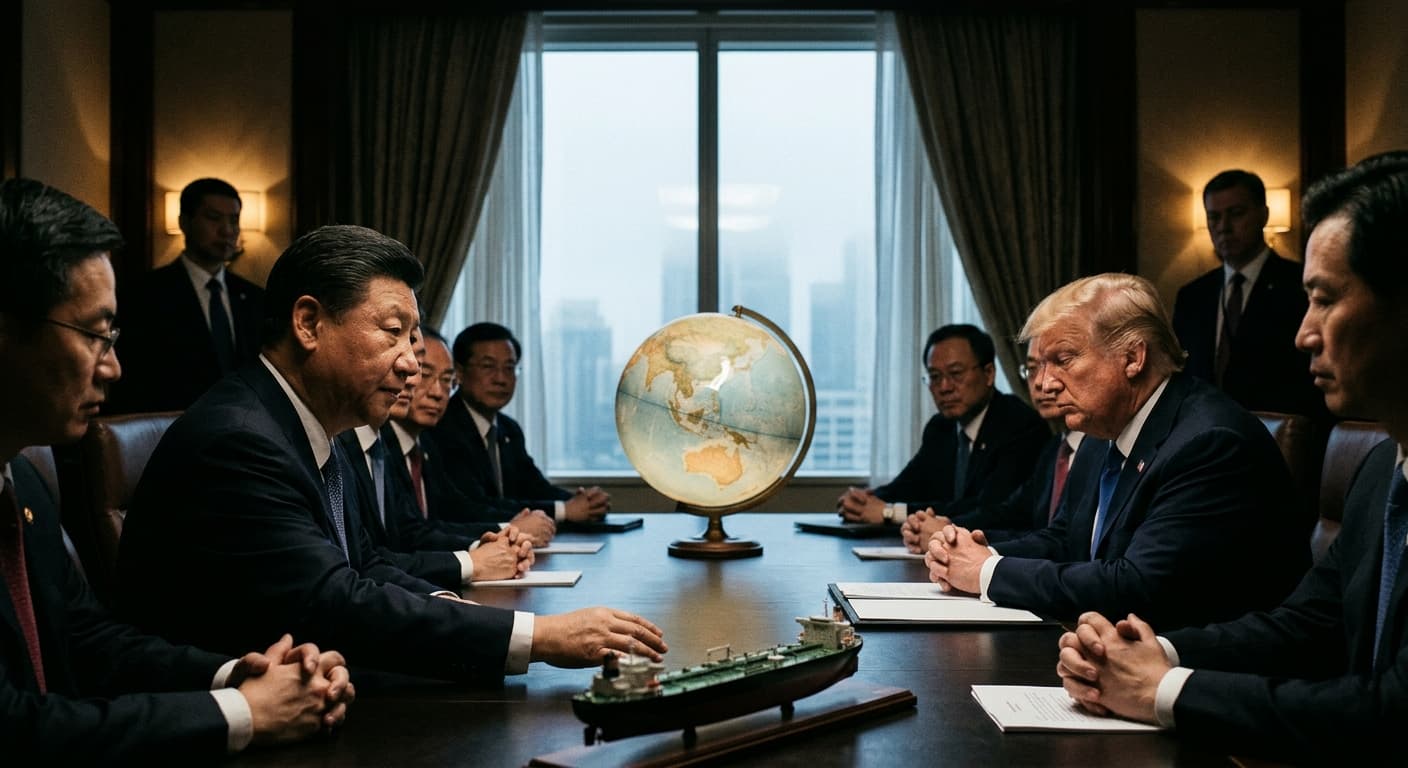
According to multiple reports from the meetings, Trump pressed Xi on unfair trade practices, forced technology transfers, and Beijing’s support for Russia. Xi countered with complaints about US chip export bans and tariff hikes that have hurt Chinese manufacturers. The conversation grew heated at points, yet both leaders repeatedly returned to the same bottom line: peace across the Taiwan Strait must be preserved.
Chinese state media emphasized Xi’s comment that “peace and stability in the Taiwan Strait is the most important common understanding between China and the United States.” American officials described the same discussions as “frank but constructive,” noting that Trump secured commitments for increased purchases of American agricultural goods and energy while keeping existing technology restrictions largely intact.
Neither side offered major new concessions. Instead they established a clearer channel for future talks and agreed to keep working-level negotiations active. This approach echoes the managed competition framework that has quietly guided relations for the past several years, even as public rhetoric stays tough.
The Taiwan reality check
Taiwan sits at the heart of this tension for a simple reason. The island produces more than 60 percent of the world’s advanced semiconductors through companies like TSMC. Any serious conflict would immediately disrupt global supply chains for everything from cars to laptops to medical equipment.
This economic reality explains why both governments treat the issue with extreme caution despite regular military exercises and political posturing. Beijing views Taiwan as a core interest and has never ruled out using force. Washington has maintained its policy of strategic ambiguity while selling defensive weapons to Taipei and increasing its own military presence in the region.
The recent summit did not resolve these differences. It simply recognized that both sides lose if the situation spirals out of control. For people in Taiwan, this offers temporary reassurance but no long-term solution. For American and Chinese businesses, it means supply chains remain vulnerable even if immediate war risks have decreased.
This dynamic connects directly to broader semiconductor competition. As detailed in our coverage of TSMC’s central position in US-China economic rivalry, the chip industry has become the clearest example of how technology and security concerns now drive economic decisions at the highest levels.
Economic pressures shaping the talks
China faces significant domestic challenges. Its property sector continues to struggle, youth unemployment remains high, and consumer confidence has not fully recovered. These pressures make Beijing more interested in stable trade relations with the United States even as it pursues long-term goals of technological self-sufficiency.
The United States confronts its own difficulties. Many American families still feel the effects of higher prices that emerged during the pandemic and subsequent inflation. Student loan defaults are rising, with the average defaulter now nearly 40 years old according to recent data. Political pressure to protect domestic manufacturing jobs remains intense.
These internal economic realities pushed both leaders toward pragmatism. Trump’s team saw an opportunity to claim progress on trade imbalances. Xi’s government gained breathing room for its slowing economy. The result was a summit that produced modest agreements rather than dramatic breakthroughs.
Global markets reacted with cautious optimism. Stock indexes in both countries showed modest gains following the meetings, though analysts warned that underlying tensions persist. The housing market in the United States shows mixed signals, with some regions facing potential price drops while others experience continued demand pressure.
Technology and the Googlebook factor
One interesting element in the background involves new computing platforms. Google’s upcoming Android-powered laptops, referred to as Googlebooks, represent another front in the technology competition between the two countries. These devices aim to challenge traditional Windows laptops while relying on American software and Chinese hardware components in many cases.
This interdependence illustrates why complete economic separation remains extremely difficult. Supply chains for electronics are deeply intertwined. Even as governments impose restrictions, companies on both sides continue to seek ways to keep production costs low and innovation high.
The development of these new laptop platforms comes at a time when both countries are trying to reduce dependence on each other in critical technologies. The United States has restricted advanced chip exports to China. China has invested heavily in its own semiconductor industry and encouraged domestic alternatives to foreign software.
Yet consumers worldwide still benefit from the combined strengths of American design and Asian manufacturing. The Googlebook launch serves as a reminder that commercial interests often push against political efforts to decouple the two economies.
Broader global context
This US-China dynamic does not exist in isolation. Russia’s ongoing conflict in Ukraine, tensions in the Middle East, and efforts by other countries to navigate between the two powers all influence how Washington and Beijing approach each other.
European leaders watch these developments closely. Many European economies depend on stable trade with both the United States and China. A serious deterioration in US-China relations would raise energy prices, disrupt supply chains, and force difficult choices about technology standards.
Countries in Southeast Asia and Latin America similarly try to maintain relationships with both powers. They seek Chinese investment and markets while looking to the United States for security guarantees and technology. The recent summit provides some reassurance that major economic warfare remains unlikely in the near term.
Our analysis of China’s economic slowdown and the new era of competition shows how these internal pressures shape Beijing’s approach to international relations. When domestic growth slows, Chinese leaders tend to prioritize stability in key economic relationships. Institutional investors are closely monitoring these developments, as explored in T. Rowe Price and the shifting landscape of global asset management in an era of geopolitical uncertainty.
What comes next
The summit produced working groups on trade, technology standards, and military communication channels. These represent important mechanisms for managing competition, but their success depends on whether both sides follow through on commitments.
Trump faces domestic pressure from lawmakers who want tougher action against China. Xi must balance nationalist sentiment at home with the need for economic stability. Both leaders know that elections, economic data releases, and unexpected military incidents could quickly change the atmosphere.
For now, the agreement that peace in the Taiwan Strait serves both nations’ core interests provides a foundation for continued dialogue. This represents progress compared to periods of complete breakdown in communication, yet it falls far short of resolving fundamental differences over technology leadership, regional influence, and political values.
Businesses and investors should prepare for continued volatility. Supply chain diversification will likely accelerate. Companies will keep seeking ways to serve both markets while reducing exposure to sudden policy changes. Consumers can expect higher prices for some goods as these adjustments work through the system.
The human stakes
Beyond the diplomatic language and stock market movements, these decisions affect real families. American factory workers want protection from what they see as unfair Chinese competition. Chinese engineers and entrepreneurs seek the freedom to innovate without constant fear of export restrictions or asset seizures.
Taiwanese citizens live with the daily reality that their island sits at the center of great power competition. Their economy thrives on semiconductor leadership but remains vulnerable to any escalation between Washington and Beijing.
People in countries around the world depend on stable US-China relations for affordable goods, reliable technology, and predictable economic conditions. When the two largest economies clash, the effects reach far beyond their borders.
The recent summit shows that leaders on both sides understand these stakes. The question is whether they can translate that understanding into policies that manage competition without allowing it to become destructive conflict. The coming months will test whether the fragile understanding reached in this meeting can survive inevitable disagreements over trade, technology, and Taiwan.
History suggests that economic interdependence alone cannot prevent conflict, but it can raise the costs high enough to encourage caution. Both Trump and Xi appear to have absorbed that lesson for now. The challenge lies in maintaining that perspective when domestic political pressures push toward harder lines.
In the end, the most important outcome from this summit may be the quiet recognition that some interests transcend rivalry. Peace across the Taiwan Strait benefits Chinese, American, and global interests alike. Whether this shared understanding can guide future decisions will determine whether the world’s most important bilateral relationship becomes a source of stability or a driver of continued uncertainty.
The coming years will reveal if pragmatism can prevail over ideology in Washington and Beijing. For everyone watching global markets, supply chains, and security developments, those decisions will shape economic opportunities and risks for years to come.
Sources
Bbc·Rfa·Dw·Housingwire·Nypost·Blog·Arstechnica·Businessinsider
Share This Article