Supply Chain · Jonathan van den Berg · September 3, 2026
Trump Iran War 2026: How Strait of Hormuz Risks and Missile Strikes Reshape Global Oil Markets
Renewed US strikes on Iranian targets have revived fears of a blockade in the Strait of Hormuz, the narrow chokepoint carrying one-fifth of global oil. Markets are repricing risks that could send crude above $100 per barrel while exposing critical supply chain vulnerabilities.
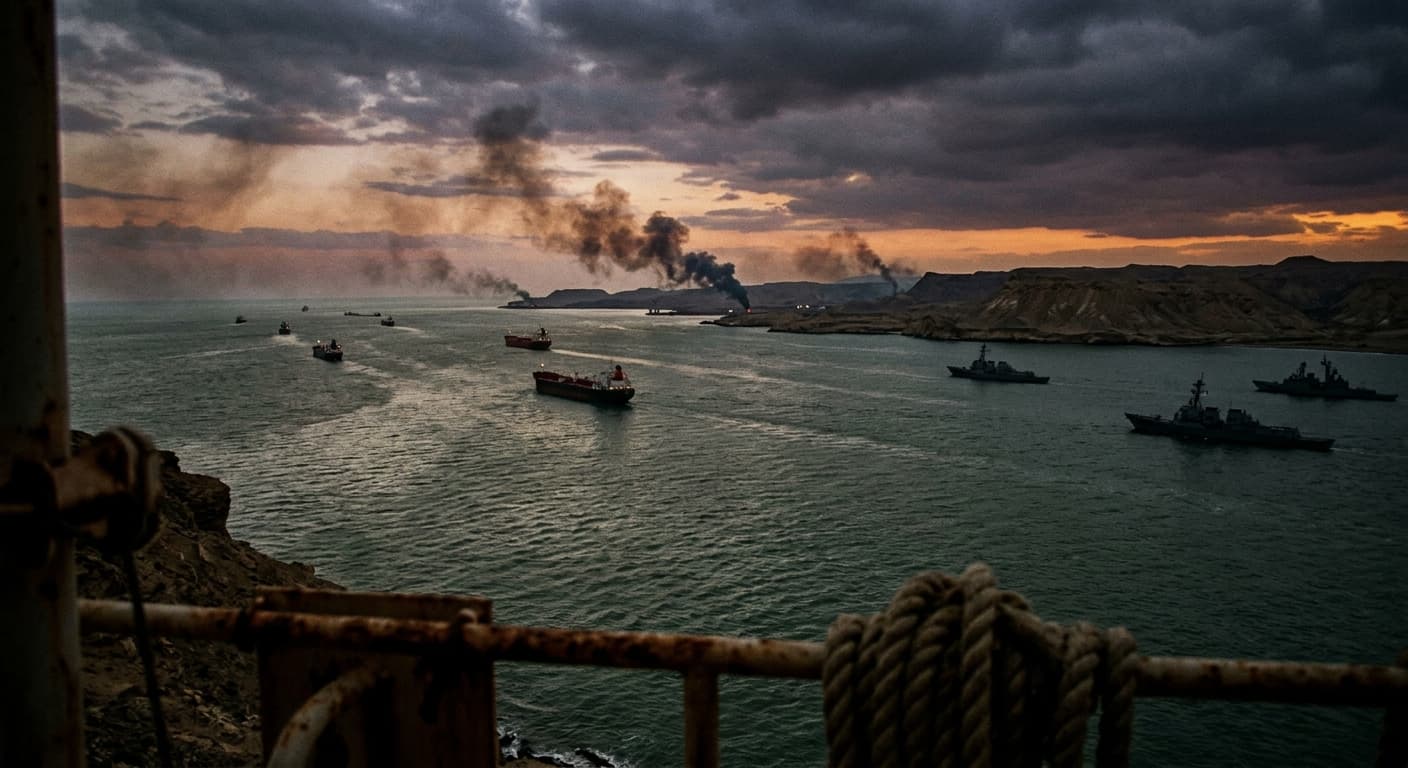
The Trump administration’s latest strikes on Iranian military sites have pushed oil markets into a risk premium phase not seen since 2022. One-fifth of the world’s seaborne crude passes through the Strait of Hormuz. Any credible threat of closure or harassment immediately reprices global supply expectations.
Brent crude jumped more than 9 percent in the first 48 hours after confirmed US strikes. West Texas Intermediate followed with an 8 percent move. Institutional investors now price in a 15-25 percent probability of sustained disruption lasting longer than 30 days. That probability directly affects tanker insurance rates, which have already climbed 40 percent on routes exiting the Persian Gulf.
Key Takeaways
- The Strait of Hormuz remains the single largest oil supply chokepoint, carrying roughly 21 million barrels per day.
- US strikes have targeted Iranian missile batteries and proxy support infrastructure, raising regime-change speculation.
- Major oil companies with Gulf exposure face immediate margin pressure from higher insurance and potential physical disruption.
- Alternative routes around Africa add 15-20 days and $4-7 per barrel in transport costs.
- Critical minerals and semiconductor supply chains tied to Gulf petrodollars could face secondary shocks if oil revenues collapse.
- Sovereign wealth funds from the region are already adjusting portfolios toward non-energy infrastructure.
Why the Strait of Hormuz Matters More Than Ever
The Strait is 21 miles wide at its narrowest point. Tankers must navigate a two-mile shipping lane in each direction. Iran’s arsenal of anti-ship missiles, sea mines, and fast-attack boats can create a credible threat without a full naval blockade. Even sporadic attacks raise war-risk premiums enough to reroute shipping.
Historical precedent exists. In 2019, attacks on tankers near the Strait caused Brent to spike 4 percent in a single session. The difference in 2026 is the direct involvement of US forces and explicit Iranian threats to close the waterway in response to what Tehran calls “wedding strikes” on civilian areas.
Global inventories sit at roughly 2.8 billion barrels above the five-year average, but that cushion shrinks fast under sustained 15 percent supply loss. OECD strategic reserves can cover only about 60 days of major disruption before political pressure forces releases that further distort price signals.
Immediate Market Reactions and Bond Market Signals
Bond yields rose sharply in the first trading sessions after the strikes. The 10-year Treasury yield climbed 18 basis points as investors priced higher inflation from energy costs. Investment-grade energy company debt widened 35 basis points against Treasuries.
Stock market volatility indexes jumped. Energy sector equities showed mixed performance: upstream producers with low lifting costs gained, while midstream and refining names with heavy Gulf exposure sold off on logistics fears.
Global bond markets reflected the same tension. Japanese Government Bond yields rose alongside German bunds, indicating a broad risk-off move away from duration in favor of inflation-protected assets. This shift mirrors patterns seen during previous Hormuz scares but with faster transmission due to algorithmic trading and tighter liquidity conditions.
Stock market reactions to Iran nuclear optimism have proven short-lived when physical supply risks replace diplomatic headlines.
Oil Company Exposure and Portfolio Implications
Companies with significant Persian Gulf production face the highest immediate risk. Chevron (NYSE:CVX) and ExxonMobil (NYSE:XOM) maintain large stakes in the region through joint ventures. BP (NYSE:BP) and Shell (NYSE:SHEL) have reduced but still material exposure through trading and upstream assets.
Occidental Petroleum (NYSE:OXY) stands out for its heavy Permian focus, which provides relative insulation from direct Gulf disruption but leaves it exposed to higher global pricing volatility that could affect demand destruction scenarios.
| Company | Ticker | Gulf Exposure Level | Primary Risk Factor | Recent Price Reaction |
|---|---|---|---|---|
| Chevron | NYSE:CVX | High | Insurance & logistics costs | +4.2% |
| ExxonMobil | NYSE:XOM | High | Potential production halt | +3.8% |
| BP | NYSE:BP | Medium | Trading book volatility | -1.1% |
| Shell | NYSE:SHEL | Medium | European refining margins | -0.9% |
| Occidental | NYSE:OXY | Low | Global price volatility | +6.4% |
These moves reflect classic chokepoint pricing: producers benefit from higher prices while logistics and downstream operators absorb margin compression.
Supply Chain Chokepoints Beyond Oil
The Hormuz crisis does not exist in isolation. The Bab el-Mandeb strait at the southern end of the Red Sea already carries elevated risk premiums from Houthi activity. Combined pressure on both chokepoints forces shipping companies to reroute around the Cape of Good Hope, adding distance that strains global container and bulk carrier capacity.
Semiconductor and critical minerals supply chains feel the indirect effects. Higher energy prices raise input costs for chip fabrication, already strained by Japan earthquake impacts on semiconductor markets. Trump’s 2026 UN Address Sovereign wealth funds from Gulf states, facing lower oil revenues, may reduce investments in AI infrastructure and data centers, creating knock-on effects for power demand in regions like Northern Virginia.
Related analysis on NVIDIA’s supply chain exposure to critical minerals and geopolitical risks shows how tightly energy and technology sectors now intertwine.
How Iran Could Disrupt the Strait
Iran maintains several asymmetric options:
- Mine warfare: Deploying naval mines in the shipping channel requires minimal assets but forces expensive clearance operations.
- Anti-ship missiles: Mobile launchers on the Iranian coast can target tankers at standoff ranges.
- Proxy swarm attacks: Fast boats and drones operated by aligned militias increase plausible deniability.
- Cyber and port sabotage: Attacks on loading terminals in the UAE or Saudi Arabia create effective supply reduction without direct Hormuz interference.
Each scenario carries different insurance classifications. Full closure would trigger force majeure clauses across long-term supply contracts, creating legal and financial uncertainty that markets hate.
Common Mistakes Investors Make During Chokepoint Crises
- Buying energy stocks purely on headline price spikes without examining individual company logistics exposure.
- Assuming OPEC+ will immediately increase production; spare capacity sits mostly in Saudi and UAE fields also vulnerable to Iranian retaliation.
- Ignoring secondary sanctions risks. Heightened US-Iran conflict increases compliance costs for any firm with even marginal Iranian exposure.
- Overweighting US shale names without modeling demand destruction from sustained $90-plus oil.
- Failing to stress-test portfolios against simultaneous disruption in multiple chokepoints including the Suez Canal and Panama routes.
Best Practices for Navigating Energy Geopolitics in 2026
- Build positions in companies with diversified production outside the Persian Gulf while maintaining exposure to higher realized prices.
- Use options strategies to hedge tail risk rather than selling core energy holdings during volatility spikes.
- Monitor sovereign wealth fund flows from Gulf states. Reduced petrodollar recycling into Western markets can tighten global liquidity.
- Track physical oil movements via tanker tracking data and insurance rate changes. These lead futures prices by days or weeks.
- Consider correlated critical minerals exposure. Higher energy costs accelerate shifts toward nuclear and renewables that require specific materials already under supply pressure.
Linking physical supply risks to financial market reactions remains essential. The bond market’s rapid repricing of inflation expectations shows how quickly energy shocks transmit to every asset class.
FAQ
How much oil travels through the Strait of Hormuz daily?
Approximately 21 million barrels per day, representing about 21 percent of global petroleum liquids consumption. LNG shipments add another layer of exposure, with Qatar supplying a significant share of Asian contracts through the same route.
Can the US Navy keep the Strait open?
The US Fifth Fleet maintains a strong presence in the region. However, keeping sea lanes fully open against determined asymmetric attacks requires sustained escort operations that strain naval resources already stretched across multiple theaters.
What happens to gas prices if the Strait is disrupted?
US retail gasoline prices typically rise 25-40 cents per gallon for every $10 increase in crude. Sustained disruption above 30 days could push national averages above $4.50 depending on refinery utilization and hurricane season overlap. For a detailed breakdown of these dynamics, see Gas Prices 2026 and Strait of Hormuz risks.
Which sectors benefit from higher oil prices during Hormuz tensions?
Oilfield services, US onshore shale producers, Canadian oil sands operators, and certain renewable equipment manufacturers see relative gains. Defense contractors with naval and missile defense exposure also rise on increased procurement expectations.
How does this affect AI data center expansion?
Higher energy prices increase power purchase agreement costs for hyperscale operators. Grid constraints in key markets become more acute when utilities face higher fuel costs for peaker plants. Nuclear restarts and small modular reactor projects gain further momentum as reliable baseload alternatives.
The current crisis in the Strait of Hormuz will not resolve quickly. Markets have begun pricing persistent risk rather than one-off spikes. Investors who treat this as a temporary headline event will likely underperform those who map out the second- and third-order effects across energy, critical minerals, technology infrastructure, and sovereign capital flows.
Position portfolios accordingly. The chokepoint is real. The repricing has only begun.
Share This Article