Critical Minerals · Jonathan van den Berg · September 28, 2026
Trump China Arms Request: How Xi Jinping Talks Reshape Critical Minerals Strategy, Sanctions Compliance, and Sovereign Wealth Fund Allocations
Reports that President Trump asked China’s leadership about purchasing American weapons highlight the contradictions in US-China economic and security policy. The move carries direct implications for critical minerals access, sanctions risk, and how state investment vehicles adjust portfolios.
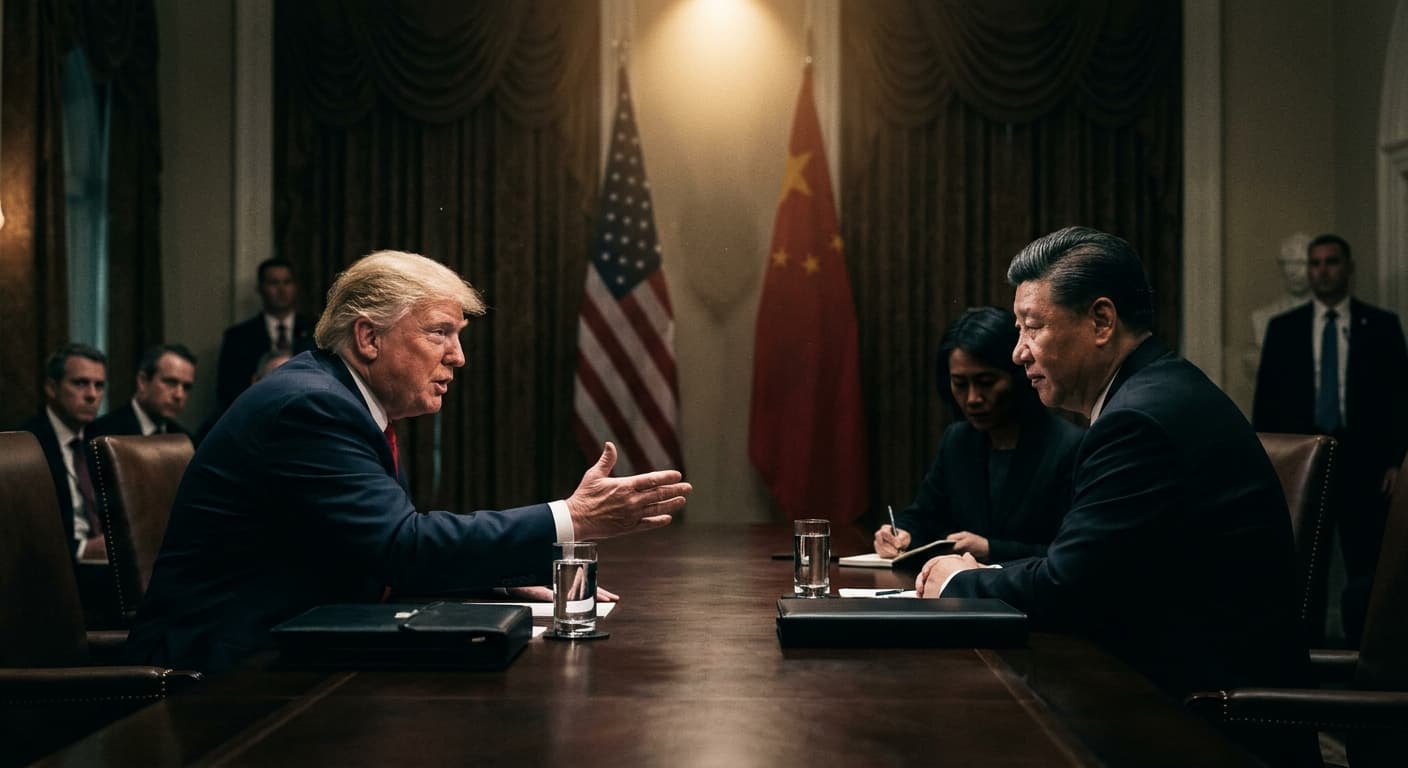
Reports that President Trump asked Chinese officials whether Beijing would consider buying US weapons during recent talks with President Xi Jinping highlight the contradictions at the heart of the bilateral relationship. The overture, later walked back by US officials, underscores how intertwined commercial, security, and resource interests have become. For investors tracking critical minerals, sanctions exposure, and sovereign capital flows, the episode signals fresh volatility across supply chains that feed everything from semiconductors to defense systems.
Key Takeaways
- Trump’s reported arms-purchase suggestion to Xi reveals ongoing US efforts to balance trade tensions with security concerns.
- Any shift in US-China military technology flows would immediately affect gallium, germanium, and rare earth supply dynamics that underpin chip manufacturing and defense electronics.
- Sanctions compliance teams at banks and tech firms must now model new secondary sanctions scenarios involving dual-use goods.
- Sovereign wealth funds in the Gulf and East Asia are accelerating diversification away from concentrated China exposure while increasing stakes in US critical minerals projects.
- Existing chokepoints in the Strait of Hormuz and Taiwan Strait become more strategically sensitive when arms and minerals discussions overlap.
The Reported Arms Request and Immediate Diplomatic Fallout
Ambassadorial briefings cited by multiple outlets indicate Trump floated the idea of China purchasing American-made weapons during a call or meeting with Xi. The White House and State Department quickly stated there are no current plans to sell lethal weapons to China, citing longstanding arms embargoes and export controls. Beijing has not publicly confirmed the exchange.
The episode occurs against a backdrop of persistent friction over Taiwan, South China Sea patrols, and technology transfer restrictions. While the specific request appears symbolic or tactical, it forces both capitals to revisit red lines on dual-use technologies that sit at the intersection of commercial trade and national security.
For institutional investors, the signal is clear: policy unpredictability remains elevated. Companies with heavy China revenue exposure, including semiconductor equipment makers and rare earth processors, face renewed headline risk even as underlying supply chain dependencies persist.
Critical Minerals Exposure in a Shifting US-China Dynamic
China controls roughly 80-90% of global refined rare earth supply and dominates processing of gallium and germanium—materials essential for advanced semiconductors, radar systems, and missile guidance. Any discussion of arms trade, however hypothetical, draws immediate attention to these dependencies.
Recent export licensing requirements imposed by Beijing on gallium and germanium have already tightened availability for certain US defense contractors. A hypothetical relaxation or tightening tied to broader diplomatic bargaining could swing prices and allocation priorities rapidly.
US efforts to onshore and friend-shore critical minerals processing have accelerated, yet remain years from full independence. Projects in Australia, Canada, and select African nations continue to receive funding, but permitting delays and capital intensity limit near-term relief. Investors should monitor:
- Progress on US Defense Production Act Title III awards for rare earth separation capacity.
- Offtake agreements between Western miners and non-Chinese refiners.
- Inventory levels at major semiconductor foundries, particularly NVIDIA and TSMC supply chains.
Sanctions Compliance Implications for Tech and Defense Sectors
The mere suggestion of arms-related discussions complicates sanctions compliance programs. US entities must navigate the Export Administration Regulations (EAR) and International Traffic in Arms Regulations (ITAR) that strictly limit technology transfers to China.
Secondary sanctions risk rises when third-country entities facilitate dual-use flows. European and Asian banks already apply enhanced due diligence on transactions involving gallium, germanium, or advanced lithography equipment. A public Trump-Xi exchange, even if later denied, increases scrutiny on any China-linked supply deals.
Compliance teams report higher false-positive rates in screening software when keywords related to “defense cooperation” appear. This raises operational costs and delays legitimate commercial activity. For listed companies, the compliance burden directly affects margins and investor perception of governance quality.
How Sovereign Wealth Funds Are Repositioning
State-backed investment vehicles have taken note. Saudi Arabia’s Public Investment Fund (PIF) has expanded exposure to US critical minerals startups and AI infrastructure while trimming certain China technology holdings. Singapore’s Temasek has similarly increased allocations to Australian lithium and rare earth developers.
Norwegian and Kuwaiti funds appear more cautious, citing governance risks in both US policy volatility and Chinese regulatory opacity. The net effect is accelerated capital flight toward projects perceived as geopolitically resilient.
Funds are also paying rising risk premiums for insurance on Red Sea and Bab el-Mandeb routes that carry critical minerals and energy cargoes. This cost is ultimately passed to downstream manufacturers and consumers.
| Fund | Recent Critical Minerals Move | Implied Risk Adjustment |
|---|---|---|
| PIF (Saudi Arabia) | Increased stakes in US and Australian rare earth juniors | Higher defense and supply security weighting |
| Temasek (Singapore) | Participated in Series B for Canadian lithium processor | Reduced direct China semiconductor exposure |
| Norway Government Pension Fund | Divested select Chinese battery makers | Elevated ESG and sanctions filters |
AI Data Center Demand Compounds Minerals Pressure
Explosive growth in AI training clusters has intensified competition for the same minerals needed in defense electronics. Data centers in Northern Virginia already strain local power grids while requiring high-performance chips that depend on gallium nitride components. How Ukraine Developments Reshape Critical Minerals Supply Chains, AI Data Center Power Demand, and Sovereign Wealth Fund Strategies
Any diplomatic thaw or escalation between Washington and Beijing that affects mineral export licenses will ripple through both AI infrastructure buildouts and military modernization programs. Oracle, NVIDIA, and hyperscale operators face the same tightening supply environment as defense primes like RTX and Lockheed Martin.
The linkage creates a feedback loop: higher AI-driven demand pushes up mineral prices, which increases costs for both commercial data centers and government defense contracts. Sovereign wealth funds seeking exposure to this theme increasingly favor integrated players with secured offtake rather than pure miners.
Common Mistakes Investors Make in This Environment
- Assuming US-China decoupling is linear. In reality, selective engagement on specific issues like arms trade proposals creates repeated policy whiplash.
- Underweighting compliance costs. Many models fail to capture the growing headcount and technology spend required to stay ahead of shifting EAR and entity list designations.
- Treating critical minerals as a single asset class. Gallium, antimony, and graphite each face distinct supply risks and substitution timelines.
- Ignoring second-order effects on shipping insurance and freight rates through contested maritime chokepoints.
Best Practices for Institutional Portfolios
- Stress-test holdings against simultaneous 30% spikes in gallium and rare earth prices combined with new Chinese licensing restrictions.
- Require quarterly sanctions and export-control audits from portfolio companies with material China revenue or supply exposure.
- Allocate 5-10% of relevant mandates to early-stage critical minerals projects in geopolitically aligned jurisdictions with secured government offtake.
- Model power availability and grid interconnection timelines when assessing AI data center operators, given minerals intensity of both chips and supporting infrastructure.
- Maintain liquidity buffers to exploit volatility when Trump-Xi style headlines trigger short-term market dislocations.
Practical Scenarios for Portfolio Managers
Consider a mid-sized sovereign fund with existing holdings in TSMC and NVIDIA. A credible report that China has quietly eased gallium export licenses in exchange for US concessions on dual-use machine tools would likely lift semiconductor equities while pressuring pure-play US rare earth miners. Conversely, renewed Chinese restrictions following a failed arms discussion would boost domestic US critical minerals names and increase hedging costs for data center operators facing higher chip prices.
Defense contractors such as RTX and LMT could see mixed effects. Easier access to certain Chinese supply might lower component costs, yet stricter US scrutiny on technology leakage could raise compliance overhead and slow program timelines.
FAQ
Did Trump really ask China to buy US weapons?
Multiple diplomatic sources confirm the topic was raised in talks with Xi Jinping, though the US government has stated there are no active plans to change existing arms export policy toward China.
How does this affect critical minerals markets?
Any signal of improved or deteriorated US-China relations influences Beijing’s willingness to issue export licenses for gallium, germanium, and rare earth compounds essential to both commercial AI chips and military systems.
Which sovereign wealth funds are most exposed?
Gulf funds with large technology and infrastructure allocations, plus East Asian vehicles balancing US and Chinese relationships, face the greatest need to recalibrate portfolios when such diplomatic episodes occur.
What should compliance teams watch for?
Increased screening alerts on dual-use goods, new additions to the Entity List, and heightened regulatory focus on transactions that could be interpreted as circumventing existing China arms embargoes.
How does AI data center growth change the equation?
Rapid expansion of GPU clusters multiplies demand for the same critical minerals used in defense electronics, tightening supply and raising costs across both commercial and government buyers. Green card visa suspensions reshape AI data center talent pipelines, critical minerals demand, and sovereign wealth fund strategies
Conclusion
The reported Trump request regarding Chinese purchases of US arms illustrates the persistent tension between economic interdependence and strategic rivalry. For those managing capital across critical minerals, sanctions compliance, and sovereign wealth strategies, the takeaway is not to chase headlines but to build portfolios resilient to repeated policy oscillation. Investors who secure diversified mineral supply, maintain rigorous compliance frameworks, and allocate thoughtfully to both AI infrastructure and aligned resource projects stand the best chance of navigating the next phase of US-China competition.
Track developments in the AI data center minerals competition and related chokepoint analytics to stay ahead of market-moving shifts.
Sources
Share This Article