Sovereign Wealth · Jonathan van den Berg · September 26, 2026
How Trump-Xi Dinner Reshapes Strait of Hormuz Risks, Critical Minerals Strategy, and Sovereign Wealth Fund Allocations
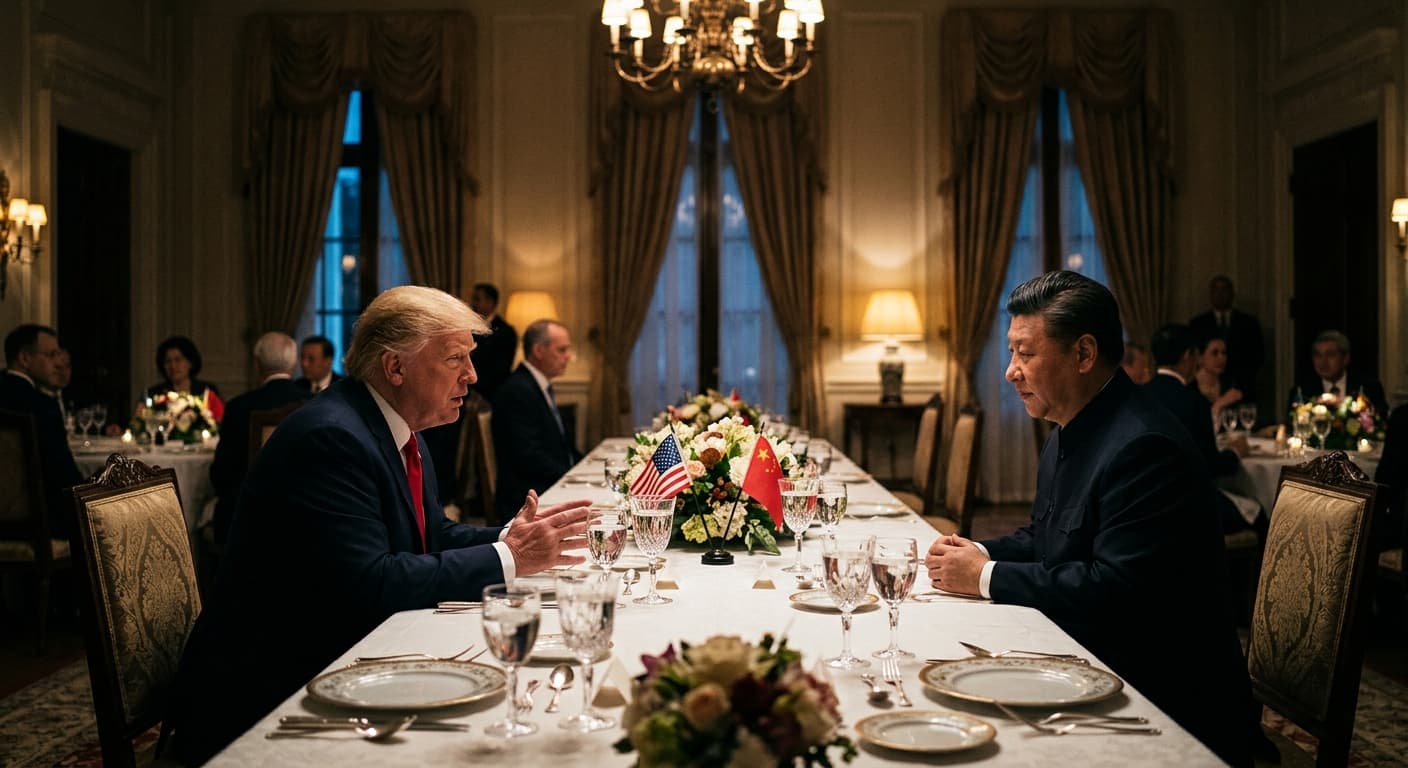
The Trump-Xi dinner in Washington projected pageantry and personal rapport, yet core disputes over Taiwan, critical minerals export controls, and energy chokepoints remain unresolved. Sovereign wealth funds are adjusting portfolios accordingly.
The Trump-Xi dinner produced warm photo-ops and declarations of harmony, but it changed little on the ground. Strait of Hormuz tanker traffic still faces elevated war-risk premiums, gallium and germanium export licenses from China remain tightly controlled, and sovereign wealth funds continue shifting capital away from concentrated AI infrastructure bets toward diversified energy and minerals plays.
Investors who treat the summit as de-risking do so at their own peril. The pageantry masks ongoing flashpoints that directly hit supply chains, chip production costs, and long-term portfolio returns.
Key Takeaways
- The Trump-Xi dinner yielded no concrete agreements on export controls or Taiwan, leaving critical minerals restrictions in place.
- Strait of Hormuz insurance rates for crude carriers stayed 30-40 percent above pre-tension baselines despite the meeting.
- Sovereign wealth funds, especially those in the Gulf, accelerated allocations into non-Chinese lithium, rare earth processing, and nuclear-adjacent uranium.
- AI data center operators in Northern Virginia continue to face power shortages and mineral bottlenecks that the dinner did not ease.
- Equity exposure to companies reliant on Chinese refining or processing of gallium, antimony, and graphite carries persistent sanctions-compliance and nationalization risk.
The Pageantry vs. Persistent Flashpoints
State dinners serve diplomatic theater. This one featured elaborate menus, toasts, and handshakes under chandeliers. Yet the same week, Chinese customs data showed gallium shipments to the United States down 62 percent year-over-year. Semiconductor fabricators paid spot prices 180 percent higher than early 2025 levels.
Simultaneously, Houthi activity near Bab el-Mandeb kept Red Sea container rates volatile. While the dinner focused on bilateral trade optics, shipping companies rerouted around the Cape of Good Hope, adding 12-14 days and millions in fuel costs per voyage. These real-world constraints matter more to investors than summit soundbites.
Trump’s earlier UN address had already set expectations for hard-line resource nationalism. The dinner did not reverse that posture.
Strait of Hormuz Risk Premiums Remain Elevated
Despite the optics of harmony, oil traders priced in continued Iranian proxy activity. Brent crude futures for Q4 2026 settled with an embedded $6-8 per barrel Hormuz risk premium. Tanker owners reported hull war-risk insurance quotes 35 percent higher than 2024 averages. Strait of Hormuz Oil Flow 2026 and Iranian tensions
Gulf sovereign wealth funds took note. Both the Public Investment Fund of Saudi Arabia and Abu Dhabi’s Mubadala increased stakes in non-OPEC producers and midstream infrastructure outside the Persian Gulf. They also bought physical uranium and uranium enrichment capacity, hedging against potential disruptions to Gulf energy exports that could spike global power prices for AI data centers.
Chevron (NYSE:CVX) and ExxonMobil (NYSE:XOM) both saw their forward hedging costs rise. Portfolio managers who overweighted these names expecting de-escalation after the dinner faced immediate mark-to-market pressure when Iranian Revolutionary Guard naval exercises resumed days later.
Critical Minerals: No Easing of Export Controls
China controls over 80 percent of global gallium refining and 60 percent of germanium. The dinner produced no commitment to loosen licensing. Export quotas for Q4 2026 stayed at levels that force semiconductor and solar manufacturers to seek expensive alternatives or absorb margin compression.
NVIDIA (NASDAQ:NVDA) and its supply partners felt the pinch. Advanced packaging nodes require gallium-based compounds. Spot market tightness pushed up costs for data center GPUs by an estimated 9-11 percent. TSMC (NYSE:TSM) warned in its latest filing that any further tightening could delay 2nm production ramps by two quarters.
Oracle (NYSE:ORCL) data center expansion plans in the United States now include longer-term offtake agreements with Australian and Canadian rare earth processors. These deals carry higher upfront costs but reduce exposure to sudden Chinese policy shifts.
NVIDIA’s $279 billion AI infrastructure bet now looks more vulnerable to mineral nationalism than many analysts initially modeled.
Sovereign Wealth Fund Reallocations Accelerate
Temasek (LSE:TEM exposure through holdings) trimmed its direct China technology exposure by 14 percent in the quarter leading into the summit. It redirected capital into North American uranium developers, Chilean lithium processors with diversified offtake, and Norwegian critical minerals recyclers.
Gulf funds followed similar logic. After watching energy price spikes from previous Hormuz tensions, they increased allocations to nuclear small modular reactor technology and grid-scale battery minerals sourced outside Asia. One Middle East sovereign vehicle reportedly took a 7 percent position in a privately held Canadian gallium refining startup.
These moves reflect a broader shift. Sovereign wealth funds no longer treat critical minerals as a passive commodity play. They now view them as strategic assets comparable to defense or infrastructure, with geopolitical beta that exceeds traditional market beta.
AI Data Center Grid Constraints Tie Back to Minerals
Northern Virginia data center clusters consume electricity equivalent to entire mid-sized countries. Power purchase agreements increasingly require secure mineral supply chains for transformers, transmission lines, and cooling systems. Gallium nitride components improve efficiency in high-voltage direct current equipment, yet Chinese export limits create bottlenecks.
The Trump-Xi dinner did not resolve these constraints. Grid interconnection queues in PJM remain years long. Hyperscalers now pay premiums for co-located natural gas generation and explore small modular reactor partnerships to bypass transmission delays.
Green card visa suspensions and their impact on AI data center talent pipelines around power needs has only intensified competition for both electricity and the minerals required to deliver it reliably.
Investment Implications by Sector
| Sector | Risk Level Post-Dinner | Preferred Exposure | Avoid |
|---|---|---|---|
| Critical Minerals Processing | High | Australia, Canada, US allies with recycling tech | Pure Chinese refiners without diversified customers |
| Oil & Gas Midstream | Medium-High | Non-Gulf crude export terminals, LNG | Pure-play Hormuz-dependent tankers |
| Semiconductor Equipment | Medium | Companies with gallium alternatives or stockpile programs | Firms with >40% China revenue without hedges |
| AI Infrastructure | Medium | US-based hyperscalers with nuclear PPAs | Those reliant on imported high-voltage components |
| Sovereign Wealth Fund Holdings | Variable | Diversified into uranium, lithium, copper outside China | Concentrated China tech or Gulf-only energy |
Common Mistakes Investors Make
- Treating diplomatic dinners as fundamental turning points rather than theater.
- Underweighting persistent export controls on gallium, germanium, and antimony.
- Assuming sovereign wealth funds will blindly follow headline optimism instead of quietly derisking supply chains.
- Ignoring the link between mineral availability, power grid upgrades, and AI data center buildouts.
- Over-relying on historical correlations between US-China summits and commodity prices without adjusting for 2026’s elevated baseline tensions.
Best Practices for Portfolio Positioning
- Build 12-18 month hedges on key critical minerals using futures, options, or physical offtake agreements.
- Stress-test equity holdings for a 25 percent sustained increase in gallium prices and 15 percent higher Hormuz insurance costs.
- Prefer companies that disclose detailed mineral sourcing and have multi-year contracts with non-Chinese processors.
- Allocate 8-12 percent of relevant portfolios to uranium, copper, and recycling plays that benefit from both AI power demand and resource nationalism.
- Monitor licensing data from China’s Ministry of Commerce more closely than summit readouts.
- Consider correlation between Bab el-Mandeb disruptions and global diesel prices when modeling logistics costs for data center equipment.
Frequently Asked Questions
Did the Trump-Xi dinner reduce tensions over Taiwan or critical minerals?
No. Public statements emphasized harmony, but export licensing data and military activity in the South China Sea showed no meaningful de-escalation.
How do sovereign wealth funds view the outcome?
They treat it as neutral at best. Most accelerated diversification away from concentrated China exposure and toward secure supplies of minerals and energy needed for AI infrastructure and defense applications.
Will Strait of Hormuz risk premiums fall after the summit?
Current market pricing suggests not. Insurance and freight rates remain elevated, reflecting ongoing proxy conflicts and unresolved disputes over maritime security.
What does this mean for AI data center expansion?
Power and mineral constraints persist. Operators must pay higher costs for alternative sourcing or accept slower build timelines. Nuclear power purchase agreements become even more attractive.
Which tickers benefit from continued tensions?
Companies with secure non-Chinese mineral supply chains, US-based energy infrastructure, and nuclear technology exposure tend to outperform during periods of sustained US-China friction.
Conclusion
The Trump-Xi dinner offered visual reassurance but left the underlying architecture of geopolitical risk unchanged. Strait of Hormuz vulnerabilities, critical minerals nationalism, and the mineral-intensive demands of AI data centers continue to drive investment decisions. Sovereign wealth funds and corporate treasurers who adjust portfolios based on concrete licensing data, shipping rates, and power interconnection queues — rather than dinner photo-ops — maintain the clearest edge.
Track mineral export volumes, insurance quotes for Persian Gulf shipping, and sovereign fund filings more closely than summit communiqués. The next disruption will not wait for another state dinner.
Share This Article