Jonathan van den Berg · April 28, 2026
Russian Superyachts and the Strait of Hormuz: How Luxury Assets Reveal Sanctions Evasion Tactics and Energy Chokepoint Vulnerabilities
What does the transit of a Russian-owned superyacht through one of the world’s most critical energy arteries tell us about the effectiveness of Western sanctions and the shifting architecture of global maritime power?
Over 20 percent of global liquefied natural gas and nearly 20 percent of total seaborne oil trade passes through the Strait of Hormuz each year, yet the appearance of a sanctioned Russian oligarch’s superyacht in these waters has underscored how easily high-value assets can exploit gaps in enforcement regimes.
The transit of Russian-linked luxury vessels through this narrow chokepoint between the Persian Gulf and the Gulf of Oman is more than a curiosity of the ultra-wealthy. It represents a visible symptom of deeper structural weaknesses in sanctions architecture, the continued centrality of maritime trade to geopolitical leverage, and the complex interplay between energy security, financial warfare, and great-power competition in 2026.
The Strategic Geography of the Strait of Hormuz
The Strait of Hormuz remains the single most important energy chokepoint on the planet. At its narrowest point, the shipping lane is only 21 miles wide, with shipping channels just two miles across in either direction. Iran controls the northern coast, while Oman and the United Arab Emirates control the southern side. This geography gives Tehran theoretical ability to disrupt roughly one-fifth of global oil supply with relative ease.
Despite repeated Iranian threats to close the strait during periods of heightened tension, the waterway has remained functionally open due to a combination of U.S. naval presence, international diplomatic pressure, and Tehran’s own economic dependence on hydrocarbon exports. However, the presence of Russian superyachts in these waters highlights how non-state actors and sanctioned elites are increasingly using commercial maritime routes to test enforcement boundaries and normalize sanctions evasion.
This phenomenon connects directly to broader questions of the erosion of the petrodollar and Middle East volatility. As traditional financial rails become more contested, physical movement of high-value assets through critical maritime domains takes on added strategic significance.
Russian Oligarchs, Sanctions, and Maritime Mobility
Since the escalation of Western sanctions following Russia’s full-scale invasion of Ukraine, dozens of superyachts linked to Russian billionaires have been seized, impounded, or forced to remain in friendly jurisdictions. Yet a significant portion of this shadow fleet—estimated by some analysts at over 100 vessels—has adapted through sophisticated ownership restructuring, flag changes, crew rotations, and routing decisions that minimize exposure to Western jurisdiction.
The transit through the Strait of Hormuz is particularly noteworthy because it places these vessels squarely within a region dominated by U.S. Fifth Fleet presence while simultaneously offering access to ports in the United Arab Emirates and Oman that have maintained pragmatic economic relationships with Moscow. The UAE, in particular, has emerged as an important hub for Russian business interests seeking to circumvent sanctions, with Dubai’s free zones and maritime infrastructure providing logistical support.
This maritime dimension of sanctions evasion mirrors larger patterns seen in the oil trade itself. Russia has developed a sophisticated “ghost fleet” of tankers to export discounted crude to buyers in China, India, and elsewhere. The same legal and operational techniques—complex ownership chains registered in jurisdictions like the Marshall Islands, Panama, and certain Pacific islands—apply equally to luxury vessels and crude carriers.
Energy Politics and the New Sanctions Landscape
The superyacht incidents occur against a backdrop of profound shifts in global energy markets. The redirection of Russian oil and gas away from Europe toward Asia has accelerated the fragmentation of energy trading patterns. Price caps, secondary sanctions, and increased scrutiny of ship-to-ship transfers have forced both state and private actors to develop more creative circumvention methods.
Iran, Venezuela, and Russia have increasingly cooperated on sanctions resistance strategies, sharing knowledge on shipping practices, alternative payment mechanisms, and diplomatic cover. The movement of Russian luxury assets through waters proximate to Iranian territory raises uncomfortable questions about potential coordination or at minimum mutual tolerance between Moscow and Tehran.
These developments intersect with ongoing debates about global economic outlook amid energy transition and geopolitical risk. The persistence of fossil fuel dependence, even as renewable capacity grows, continues to grant strategic importance to traditional chokepoints like Hormuz, Bab el-Mandeb, and the Suez Canal.
The Role of Gulf States in Great Power Competition
The United Arab Emirates and Saudi Arabia find themselves in delicate balancing acts. Both nations maintain security relationships with the United States while pursuing economic opportunities with Russia and China. The presence of Russian superyachts in their ports and waters serves as a visible reminder of these competing priorities.
Dubai has cultivated a reputation as a haven for international wealth regardless of geopolitical alignment. Luxury real estate, free zones, and sophisticated financial services have attracted capital from sanctioned Russian entities, Iranian traders, and Chinese technology firms seeking to hedge against potential future restrictions.
This economic pragmatism stands in contrast to European approaches to sanctions enforcement. While EU member states have aggressively pursued yacht seizures in Mediterranean ports, Gulf states have generally taken more measured approaches, prioritizing commercial relationships and sovereign decision-making over alignment with Western sanctions lists.
The situation echoes themes explored in analyses of strategic balancing acts in energy politics and geoeconomics, where smaller or mid-tier powers leverage their geographic or economic positions to maintain autonomy amid great power rivalry.
Insurance, Classification Societies, and Enforcement Gaps
One of the least understood aspects of sanctions evasion involves the role of maritime insurance, classification societies, and port state control. Major Western insurers like Lloyd’s of London have withdrawn coverage from vessels linked to Russian interests, yet alternative providers—often based in Asia or the Middle East—have filled the gap.
Classification societies responsible for certifying vessel safety and seaworthiness have faced pressure to maintain commercial relationships even as geopolitical tensions rise. The result is a fragmented regulatory environment where vessels can effectively operate in parallel legal and insurance universes depending on their routing and ownership transparency.
When a Russian-linked superyacht transits the Strait of Hormuz, it benefits from this fragmentation. The vessel may carry insurance from a non-Western provider, fly a flag of convenience from a compliant jurisdiction, and rely on crew from countries with limited interest in enforcing Western sanctions. Each layer complicates enforcement efforts by U.S. and European authorities.
Implications for Maritime Security and Naval Strategy
The U.S. Navy’s Fifth Fleet, headquartered in Bahrain, maintains constant presence in these waters to ensure freedom of navigation and deter Iranian aggression. Yet the focus on traditional military threats has sometimes come at the expense of attention to gray-zone activities involving commercial and luxury vessels.
Naval strategists increasingly recognize that sanctions enforcement requires not just military presence but sophisticated intelligence, financial tracking, and diplomatic coordination. The movement of superyachts serves as a canary in the coal mine—visible, expensive, and politically sensitive—revealing where enforcement regimes are working and where they are failing.
This reality connects to broader conversations about shifting sands of transatlantic energy security and geopolitical realignment. As Europe diversifies away from Russian energy and deepens relationships with Gulf producers, the maritime domain connecting these regions becomes even more strategically vital.
Technological and Financial Innovation in Sanctions Evasion
Modern superyachts represent pinnacles of technological sophistication, featuring advanced satellite communications, redundant navigation systems, and luxury accommodations that allow their owners to conduct business while remaining at sea for extended periods. These capabilities make them ideal platforms for testing sanctions boundaries.
Simultaneously, the rise of decentralized financial technologies has provided new tools for managing wealth outside traditional banking channels. While direct connections between specific yacht movements and cryptocurrency transactions remain difficult to prove, the broader trend toward asset mobility and financial opacity benefits those seeking to preserve wealth amid geopolitical conflict.
The intersection of these trends with traditional energy geopolitics creates novel challenges for policymakers. Traditional tools of sanctions enforcement—designed for state actors and large corporations—struggle to address decentralized networks of private wealth, shell companies, and maritime actors operating across multiple jurisdictions. FBI Hamas crypto donations seizure and fundraiser networks
The Broader Context of Multipolar Economic Statecraft
The Russian superyacht phenomenon must be understood within the larger shift toward a multipolar international system where economic statecraft, technological competition, and control of critical infrastructure increasingly define power. Neither the United States nor China can unilaterally dictate terms in the Strait of Hormuz or the global superyacht market.
Instead, outcomes depend on complex coalitions, economic incentives, and the ability to shape norms around transparency, ownership disclosure, and legitimate commercial activity. The relative success or failure of Western sanctions against Russia will influence future efforts to constrain Chinese technological development, Iranian nuclear ambitions, or other geopolitical challenges.
Gulf states, India, Turkey, and various Southeast Asian nations have demonstrated that hedging strategies—maintaining relationships with all major powers while avoiding exclusive alignment—represent a viable approach in this environment. The transit of Russian luxury vessels through critical energy routes both reflects and reinforces these hedging dynamics.
Future Trajectories and Policy Recommendations
Addressing the challenges highlighted by Russian superyacht movements through the Strait of Hormuz requires multifaceted approaches. Enhanced transparency in vessel ownership, stronger international cooperation on beneficial ownership registries, and more sophisticated tracking of maritime insurance markets represent important technical measures.
Diplomatic engagement with Gulf partners remains crucial. Rather than demanding perfect alignment with Western sanctions policy, the United States and Europe should focus on shared interests in maritime security, countering Iranian disruption capabilities, and maintaining stable energy flows. how the Iran conflict could reshape global oil flows and energy prices
Technological solutions, including improved satellite monitoring, AI-powered vessel tracking, and blockchain-based documentation systems, may eventually close some enforcement gaps. However, technology alone cannot substitute for diplomatic legitimacy and economic incentives that shape state behavior.
The fundamental tension remains between the West’s desire to use financial and economic tools as instruments of foreign policy and the reality of a globalized economy where capital, vessels, and commodities flow toward the path of least resistance. Russian superyachts in the Strait of Hormuz illustrate how this tension plays out in practice.
Conclusion: Luxury Assets as Geopolitical Indicators
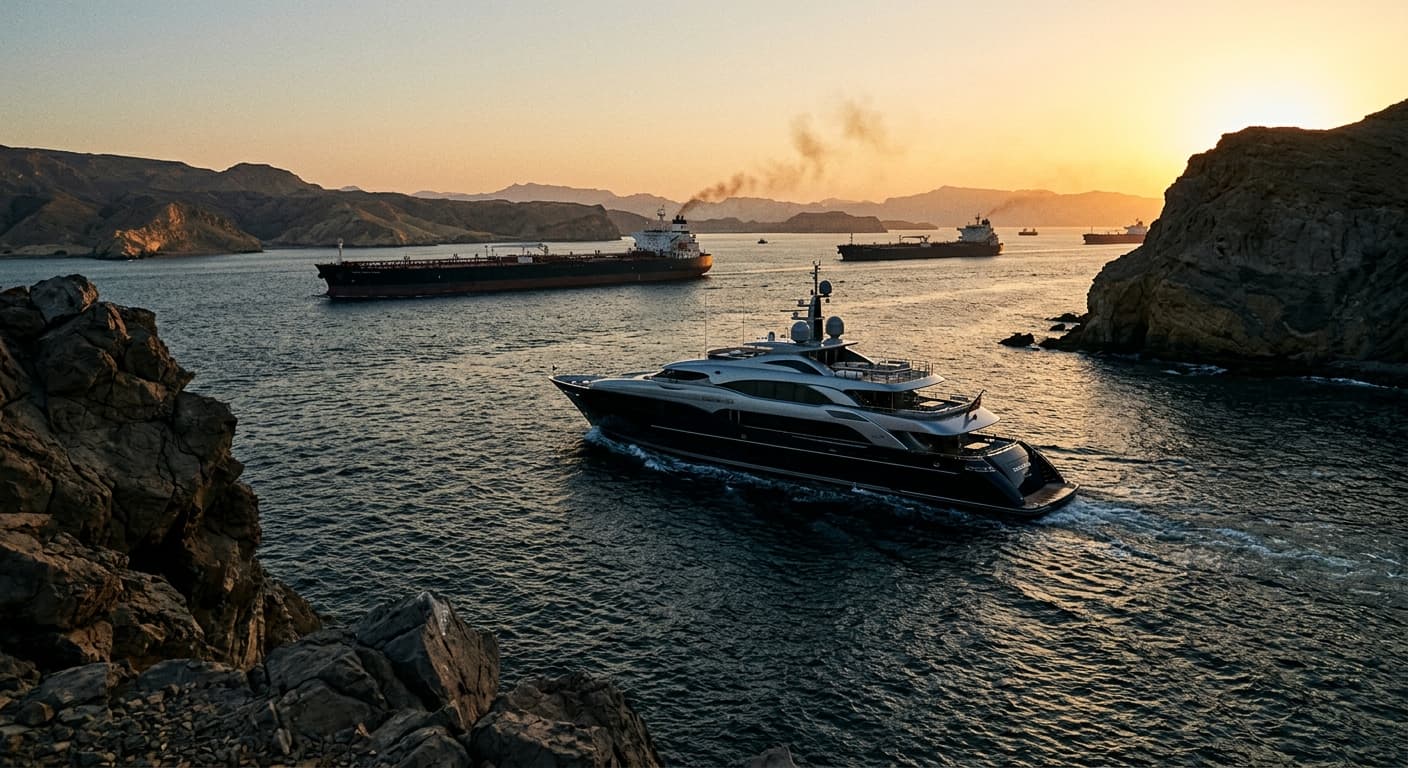
The image of a Russian oligarch’s superyacht gliding through waters critical to global energy security offers a striking visual metaphor for the current era of geopolitical competition. Behind the obvious displays of wealth lie serious questions about state power, regulatory effectiveness, and the future of economic warfare.
As long as substantial portions of global wealth remain mobile and jurisdictions exist that prioritize commercial opportunity over political alignment, sanctions regimes will face inherent limitations. The Strait of Hormuz, symbol of both energy vulnerability and maritime resilience, perfectly encapsulates these contradictions.
Policymakers seeking to strengthen sanctions effectiveness must move beyond simple asset freezes toward more comprehensive strategies that address the legal, financial, technological, and diplomatic dimensions of modern evasion networks. The alternative is a gradual erosion of economic statecraft tools that have formed a central pillar of Western foreign policy for decades.
The continued movement of Russian-linked vessels through one of the world’s most watched maritime chokepoints serves as both warning and opportunity—a warning about enforcement gaps and an opportunity to develop more sophisticated, multilateral approaches to managing geopolitical risk in an increasingly fragmented global economy.
Understanding these dynamics is essential not only for those tracking Russian sanctions but for anyone concerned with the future of energy security, maritime governance, and the evolving relationship between private wealth and state power in the 21st century.
Source: Trending on Google News
Share This Article