AI Infrastructure · Jonathan van den Berg · August 8, 2026
Puerto Rico Water Crisis 2026: How Severe Drought Exposes Critical Infrastructure Risks, Energy Grid Constraints, and Supply Chain Vulnerabilities
Severe drought has forced water rationing across Puerto Rico, exposing aging infrastructure that directly impacts power generation, semiconductor manufacturing continuity, and the feasibility of expanding AI data center capacity in hurricane-prone regions.
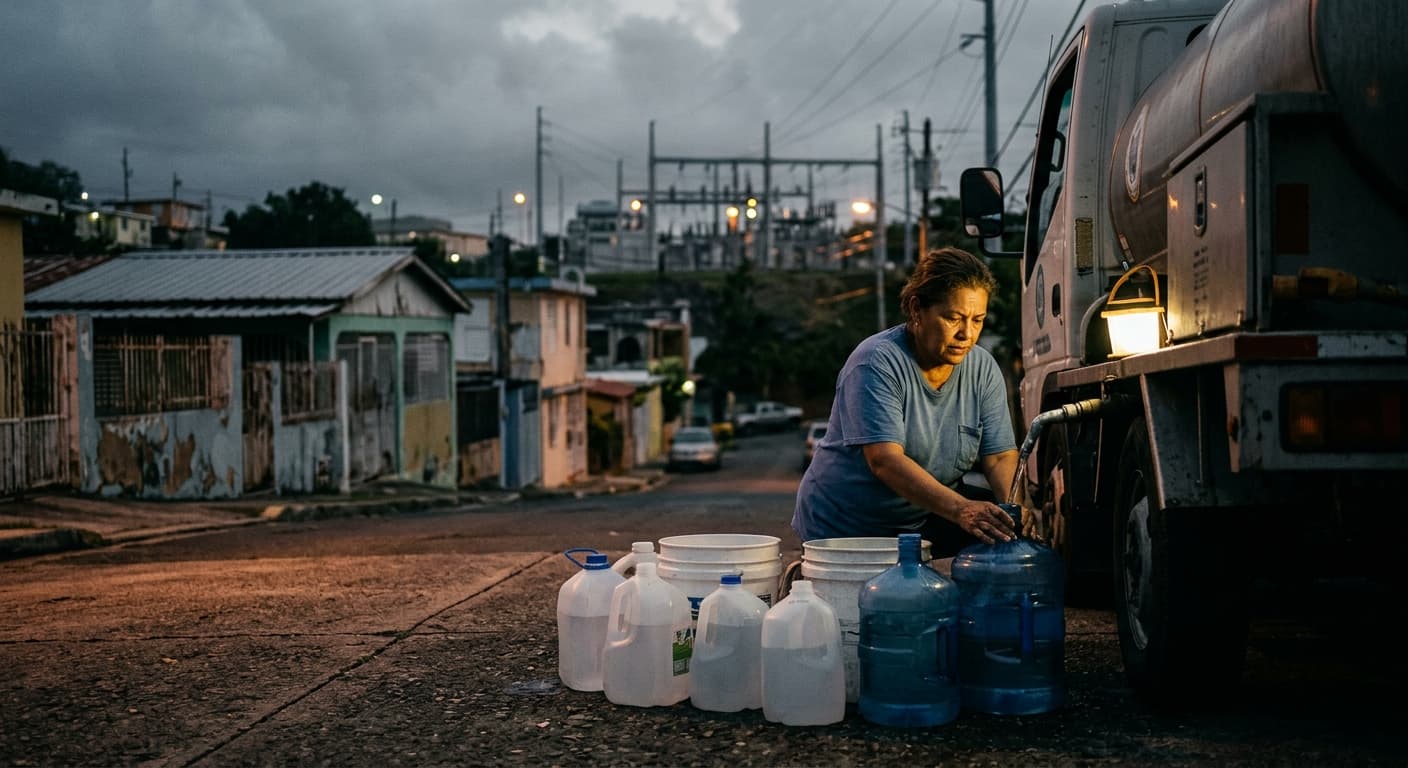
Puerto Rico’s severe drought has triggered mandatory water rationing for hundreds of thousands of residents, exposing long-standing weaknesses in water storage, treatment, and distribution systems that now threaten reliable electricity generation and the territory’s attractiveness for technology infrastructure investment.
The crisis arrives at a moment when U.S. territories face growing scrutiny from institutional investors evaluating climate risk, grid stability, and supply chain resilience for AI-driven projects. Water shortages directly constrain power plant cooling, hydroelectric output, and backup systems that data center operators require for uninterrupted operation.
Key Takeaways
- Puerto Rico’s reservoirs have dropped below 30% capacity in multiple regions, forcing the Puerto Rico Aqueduct and Sewer Authority (PRASA) to impose rotating 48-hour shutoffs.
- Power generation faces immediate risk because thermal plants require massive volumes of water for cooling; reduced output raises electricity prices and blackout frequency.
- AI data center developers targeting the island for near-shore latency advantages must now model acute water stress alongside hurricane exposure.
- The crisis highlights broader Caribbean supply chain vulnerabilities that ripple into semiconductor fabrication and pharmaceutical manufacturing continuity.
- Sovereign wealth funds and infrastructure funds are repricing risk premiums for U.S. territory assets as climate-driven resource constraints intensify.
Current Scale of the Drought and Water Rationing
According to recent reporting, large segments of Puerto Rico have received less than 50% of normal rainfall over the past six months. Major reservoirs including Lago Carraízo and Lago Guajataca sit at critically low levels. PRASA has implemented island-wide restrictions that alternate between 24 and 48 hours without service for residential and commercial customers.
Hospitals, pharmaceutical plants, and semiconductor-related facilities receive priority under emergency protocols, yet even these users face pressure to install on-site storage and treatment systems. The situation echoes patterns seen in other climate-stressed regions but carries unique consequences because Puerto Rico serves as a strategic logistics and manufacturing node between the U.S. mainland and Latin America.
Local businesses report production slowdowns. Chemical plants that supply water treatment consumables face their own input constraints, creating secondary supply chain chokepoints similar to those analyzed in extreme weather events that disrupt supply chains and energy infrastructure.
Impact on Energy Infrastructure and Grid Reliability
Water and electricity systems in Puerto Rico remain tightly coupled. Many thermal power plants depend on surface water or desalination output for cooling. When reservoir levels fall, operators reduce generation to avoid equipment damage, forcing greater reliance on already strained natural gas and diesel imports.
The Puerto Rico Electric Power Authority (PREPA) has warned that prolonged drought could push reserve margins below 10%, increasing the probability of rolling blackouts. This reality directly conflicts with the 24/7 uptime requirements of hyperscale data centers.
Northern Virginia’s data center corridor already grapples with power constraints and grid interconnection queues. Puerto Rico’s situation demonstrates that even territories with renewable potential face acute resource trade-offs that investors must quantify. Similar constraints appear in discussions around how natural disasters reshape semiconductor markets and energy politics.
Power Purchase Agreements Under Stress
Tech companies negotiating long-term power purchase agreements (PPAs) in the Caribbean now include explicit drought contingency clauses. Oracle, Google, and Equinix have publicly committed to water-positive or water-neutral operations globally. Persistent shortages in Puerto Rico raise execution risk for any expansion plans beyond current colocation footprints.
Digital Realty and other REITs monitor these developments closely because water availability increasingly determines where new capacity can be sited. The territory’s grid challenges compound the broader AI data center infrastructure bottlenecks visible in mainland markets.
Supply Chain and Critical Manufacturing Exposure
Puerto Rico produces roughly 10% of U.S. pharmaceutical consumption and maintains important electronics and precision manufacturing clusters. Water rationing forces plants to choose between potable needs, process water, and effluent treatment. Any sustained reduction in output creates immediate shortages in critical drug supply and specialized components.
These vulnerabilities mirror risks tracked in global chokepoints. While the Strait of Hormuz risks reshape global oil markets, Puerto Rico’s water crisis functions as a localized resource chokepoint with outsized effects on U.S. domestic resilience. The Suisun City cyberattack further illustrates how municipal ransomware exposes grid vulnerabilities, supply chain risks, and AI data center power constraints.
Semiconductor packaging and testing facilities on the island face particular pressure. Reduced water quality or quantity can introduce defects that cascade through global supply chains already stressed by geopolitical tensions in Asia.
Implications for AI Data Center Expansion
Hyperscalers continue to seek locations that balance latency, tax incentives, renewable energy access, and political stability. Puerto Rico offers fiber connectivity to mainland markets, attractive tax treatment under Act 60, and lower natural disaster insurance costs than some alternatives. Yet water scarcity now appears as a primary gating factor.
Data centers consume hundreds of thousands of gallons daily for cooling, especially in tropical climates where free-air cooling delivers limited benefit. Operators facing drought-induced restrictions must either invest in advanced recycling systems, desalination plants powered by renewables, or simply look elsewhere.
This dynamic accelerates capital reallocation toward mainland sites with more robust water resources or toward nuclear-powered campuses that reduce reliance on water-intensive thermal generation. Companies like Oracle have already signaled increased focus on regions with stable water supply as part of their AI infrastructure buildout. GLM 5.3 Release: How Z-AI's New Model Reshapes AI Data Center Demand, Grid Constraints, and Global Semiconductor Competition
| Factor | Puerto Rico | Northern Virginia | Impact on AI Deployment |
|---|---|---|---|
| Water Availability | Acute drought stress | Moderate seasonal constraints | High – limits cooling options |
| Power Grid Reliability | Frequent outages, high diesel dependence | Interconnection delays but improving | Critical – uptime requirements |
| Latency to U.S. East Coast | Excellent | Optimal | Neutral |
| Tax Incentives | Strong Act 60 benefits | Competitive but eroding | Favorable for Puerto Rico |
| Climate Risk Premium | Elevated (hurricanes + drought) | Moderate (heat + grid strain) | Increasing for island locations |
Geopolitical and Sovereign Risk Dimensions
The water crisis carries implications beyond immediate humanitarian and economic costs. As U.S. territories, Puerto Rico and the U.S. Virgin Islands represent strategic assets in Caribbean security and near-shoring strategies. Persistent infrastructure failure erodes confidence in long-term investment and raises questions about federal support levels.
Sovereign wealth funds evaluating infrastructure debt or public-private partnerships now demand higher risk premiums. The situation also intersects with broader sanctions compliance and trade route considerations, as reliable Caribbean logistics become more valuable when primary Asian routes face disruption. Similar dynamics are evident in Houthi Advances in Yemen that expose Bab el-Mandeb supply chain chokepoints and Red Sea shipping risk premiums.
Prediction markets tracked on platforms like those analyzed in related coverage reflect growing concern over long-term territorial stability. These signals influence how global capital allocates across emerging technology infrastructure plays.
Common Mistakes in Assessing Territorial Infrastructure Risk
- Assuming federal disaster declarations guarantee rapid infrastructure modernization.
- Underweighting water availability relative to renewable energy percentages in site selection.
- Treating Puerto Rico’s risk profile as identical to mainland U.S. jurisdictions without adjusting for grid isolation and import dependence.
- Modeling only hurricane risk while ignoring compounding drought and heat stress on power and water systems.
- Overlooking secondary supply chain effects on pharmaceutical and semiconductor production continuity.
Best Practices for Investors and Operators
- Require independent water stress modeling that incorporates 30-year climate projections and multi-year drought scenarios.
- Structure PPAs with explicit availability and quality guarantees that include penalties for drought-related curtailments.
- Invest in closed-loop cooling, atmospheric water generation, and advanced wastewater recycling as baseline requirements rather than optional features.
- Diversify geographic exposure across multiple Caribbean and Latin American nodes to avoid single-point territorial failure.
- Engage directly with PREPA, PRASA, and federal oversight bodies to understand capital improvement timelines and funding commitments.
- Incorporate real-time satellite and sensor data into risk dashboards rather than relying solely on historical averages.
FAQ
How long is the current water rationing expected to last in Puerto Rico?
PRASA has not provided a firm end date. Meteorologists indicate the drought could persist through the end of the year unless an active hurricane season delivers substantial rainfall. Restrictions will likely remain in place until reservoir levels recover above 50%.
Will the water crisis affect pharmaceutical manufacturing on the island?
Facilities receive priority water allocation, but many have already activated contingency plans including on-site wells, storage tanks, and purification upgrades. Prolonged drought increases operational costs and introduces delivery risk for time-sensitive medications.
Are data center operators still considering Puerto Rico for new AI facilities?
Some hyperscalers maintain interest due to tax advantages and connectivity, but most have placed near-term expansion plans on hold pending measurable improvements in water security and grid resilience. Several are redirecting capital to mainland sites with nuclear or advanced geothermal options.
How does this crisis compare to past Puerto Rico infrastructure challenges?
While Hurricane Maria in 2017 destroyed much of the electric grid, the current drought reveals chronic underinvestment in water storage and inter-system coordination. Both events demonstrate the territory’s extreme vulnerability to compounding climate and governance risks.
What role does climate change play in the frequency of these events?
Warmer atmospheric temperatures increase evaporation rates and shift rainfall patterns, making prolonged droughts more likely. Puerto Rico sits at the intersection of Atlantic hurricane activity and changing Caribbean precipitation trends, amplifying both flood and drought extremes.
Conclusion
The Puerto Rico water crisis of 2026 serves as a clear warning for any investor or operator evaluating climate-exposed locations for critical infrastructure. Water is no longer a secondary consideration. It has become a primary constraint that determines where AI capacity can be built, where manufacturing can operate reliably, and where capital can be deployed with confidence.
Companies that integrate rigorous water risk analysis into site selection and capital allocation will hold a decisive advantage as resource constraints spread across multiple geographies. Those who treat the current situation as an isolated territorial issue risk repeating the same miscalculations that have already cost billions in disrupted supply chains and delayed technology deployments.
Stakeholders seeking deeper insight into how extreme weather continues to reshape technology infrastructure should examine parallel developments in tropical cyclone risks that disrupt Pacific supply chains, energy infrastructure, and AI data center expansion and prediction tools that increasingly price these exact risks.
Share This Article