Supply Chain · Jonathan van den Berg · September 25, 2026
How Starbucks Store Closures Expose Supply Chain Chokepoints, Critical Minerals Risks, and AI Data Center Grid Constraints in 2026
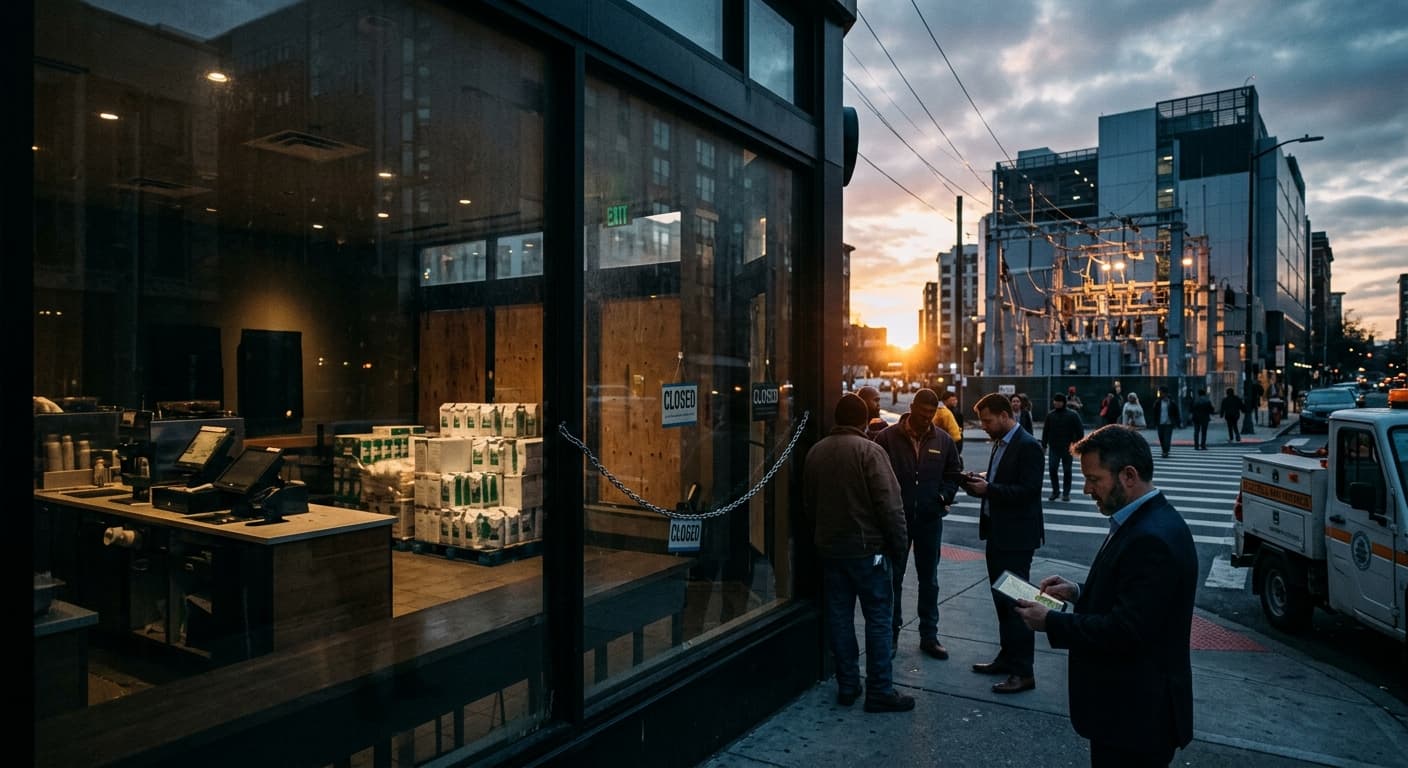
Starbucks closing 250 locations signals more than retail fatigue. The decision highlights tightening supply chains for coffee and equipment, rising costs tied to critical minerals in smart store tech, and competition for electricity from nearby AI data centers.
Starbucks closing 250 stores reflects more than softening same-store sales. The move exposes structural stress across global supply chains for coffee beans, dairy, and point-of-sale hardware, while highlighting how critical minerals shortages and exploding AI data center electricity demand squeeze retail operations in key markets.
Company executives cited "a difficult decision" driven by underperforming locations and shifting consumer habits. Yet the closures cluster in urban corridors already facing power constraints and logistics snarls. For institutional investors, the pattern reveals second-order effects from geopolitical chokepoints, resource nationalism, and infrastructure bottlenecks that pure retail analysis misses.
Key Takeaways
- Starbucks store closures concentrate in cities with acute grid pressure from AI data centers, particularly Northern Virginia and parts of California.
- Coffee supply chains remain vulnerable to weather extremes, Red Sea disruptions via Bab el-Mandeb, and fertilizer inputs tied to critical minerals.
- Modern stores rely on IoT sensors, digital menu boards, and mobile ordering systems that consume rare earth elements and semiconductors now diverted to AI infrastructure.
- Power demand from hyperscale data centers forces utilities to ration or raise commercial rates, eroding margins at high-traffic cafe locations.
- Investors should track SBUX exposure to logistics chokepoints alongside broader critical minerals and energy plays.
Why Starbucks Is Closing Stores Now
The company plans to shutter the locations over the coming months after internal reviews showed persistent traffic declines and rising operating costs. Many affected sites sit in dense metropolitan areas where commercial rents, labor, and energy prices have climbed fastest.
Beyond cyclical factors, three deeper forces stand out. First, global coffee supply faces repeated disruption from climate events and shipping delays. Second, the hardware inside each store depends on components that have grown scarce and expensive. Third, electricity bills in certain markets have spiked as utilities redirect capacity toward new data center clusters.
These pressures do not hit every location equally. Closures skew toward sites with high energy intensity and complex supply routes, suggesting operational triage rather than blanket retrenchment.
Supply Chain Chokepoints Hitting Coffee and Equipment
Coffee remains one of the most traded agricultural commodities, yet its journey from farm to cup crosses multiple vulnerable arteries. Beans from Vietnam, Brazil, and Colombia often transit the Bab el-Mandeb strait, where Houthi activity has already forced rerouting and added insurance premiums.
Dairy inputs and single-use packaging face their own bottlenecks. Plastic resins depend on petrochemical feedstocks routed through the Strait of Hormuz. Recent tensions there have lifted freight rates and feedstock prices simultaneously.
Store equipment tells an even tighter story. Espresso machines, refrigeration units, and digital order kiosks incorporate semiconductors, rare earth magnets, and lithium-based components. These inputs compete directly with electric vehicle batteries, wind turbines, and server hardware. When supply tightens, lead times stretch and costs rise.
The pattern mirrors broader trends examined in analyses of how Super El Niño drives supply chain disruptions and critical minerals volatility.
Critical Minerals Shortages and Smart Store Technology
Each upgraded Starbucks location now functions as a miniature data node. Sensors track occupancy, inventory, and equipment performance. Touchscreens and mobile app integration require gallium, germanium, and neodymium—materials subject to export controls and concentrated mining.
China’s dominance in processing these minerals creates a strategic vulnerability. Export restrictions or nationalization moves elsewhere in the supply chain quickly translate into higher component prices for retailers. Starbucks does not disclose exact bill-of-materials exposure, but the industry average for connected retail devices has risen 18–27 percent over the past two years according to supply chain benchmarks.
This competition for minerals appears across sectors. The same materials enabling efficient store operations also power the servers inside AI training clusters. As hyperscalers lock in multi-year contracts for chips and cooling systems, downstream users like restaurant chains absorb the residual volatility.
Related coverage of modified NVIDIA GPUs exposing critical minerals shortages shows how even consumer-grade hardware modifications highlight the same resource crunch.
AI Data Center Boom Creates Urban Power Crunch
Northern Virginia has become the clearest case study. The region hosts the densest concentration of data centers on earth. Dominion Energy and other utilities report that new AI-driven load is absorbing nearly all incremental generation capacity through 2028.
Commercial customers, including large cafe operators, face demand charges and time-of-use rates that penalize peak-hour consumption. A single flagship Starbucks with heavy HVAC, lighting, and computing loads can register peak draws comparable to small industrial users.
When data centers sign power purchase agreements for hundreds of megawatts, utilities sometimes curtail or delay commercial interconnections. In practice this means higher bills or reduced operating hours for retail tenants. Several closure sites overlap with zones where data center expansion has triggered grid upgrade delays.
The dynamic echoes findings in examinations of drone incidents exposing AI data center grid constraints and broader infrastructure stress.
Comparative Impact on Retail vs Tech Infrastructure
| Factor | Starbucks Retail Impact | AI Data Center Impact | Shared Critical Mineral |
|---|---|---|---|
| Power Demand Growth | 8–12% annually in key markets | 35–60% CAGR through 2030 | Copper for transmission |
| Semiconductor Use | Edge devices and POS systems | Training and inference GPUs | Gallium, germanium |
| Logistics Exposure | Coffee, dairy, packaging | Server racks, cooling fluids | Lithium, rare earths |
| Geopolitical Risk | Bab el-Mandeb, Malacca Strait | Taiwan Strait, export controls | Neodymium, cobalt |
The table illustrates why retail operators cannot treat energy and component costs as isolated line items. They now sit inside the same geopolitical and resource competition affecting trillion-dollar tech buildouts.
Common Mistakes Investors Make
- Viewing Starbucks closures as purely cyclical without mapping them against local grid congestion data.
- Assuming critical minerals shortages only affect semiconductor pure-plays rather than any company deploying connected devices at scale.
- Underweighting second-order effects of data center power demand on commercial real estate and retail tenancy.
- Treating shipping risk premiums on the Red Sea as temporary rather than a structural addition to cost of goods sold.
Best Practices for Tracking These Risks
- Cross-reference store closure lists with data center development maps published by utilities and local permitting offices.
- Monitor quarterly filings and earnings calls for language around “energy cost inflation,” “component lead times,” and “supply chain resiliency.”
- Track export policy changes from Beijing on gallium, germanium, and antimony, as these move input prices within 60–90 days.
- Follow sovereign wealth fund allocations to critical minerals and grid infrastructure for signals on long-term supply expectations.
- Stress-test retail margins against a 20–30 percent sustained rise in commercial electricity rates in data center-heavy metro areas.
How This Fits Broader Geopolitical Trends
The Starbucks example is not isolated. Similar dynamics appear in other consumer-facing chains that invested heavily in digital transformation. The same forces—concentrated mineral supply, concentrated chip manufacturing, concentrated power generation—create correlated risks across seemingly unrelated sectors.
Analysts who only follow Bloomberg or Reuters headlines often miss the local granularity. Mapping exact closure ZIP codes against substation load reports and data center interconnection queues provides a clearer forward-looking indicator than aggregate retail sales figures.
For portfolio managers, the lesson is simple. Retail exposure now carries embedded geopolitical and infrastructure beta. Treating it as low-volatility consumer defensive no longer matches the underlying physical realities.
FAQ
Why is Starbucks closing so many stores at once?
The company identified 250 locations with sustained low traffic and high operating costs, many in markets facing elevated energy prices and supply chain friction. The decision consolidates capital into higher-performing sites while addressing structural cost pressures.
How do AI data centers affect local retail electricity prices?
Hyperscale facilities sign large, long-term power contracts that absorb new generation capacity. Utilities then pass higher costs or impose demand charges on remaining commercial customers, particularly during peak summer cooling periods.
Which critical minerals are most relevant to Starbucks operations?
Gallium and germanium for semiconductors in digital menu boards and sensors, neodymium for small motors and magnets in equipment, and copper for electrical infrastructure all face tight supply and competing demand from AI infrastructure.
Will more retailers follow Starbucks with similar closures?
Chains with heavy investment in connected devices and high energy footprints in data-center-dense cities face parallel economics. Expect selective pruning where local power costs have risen fastest.
What should investors watch next?
Watch for updates on Northern Virginia grid upgrades, Chinese critical minerals export quotas, Red Sea shipping insurance rates, and any new power purchase announcements between tech firms and utilities.
The intersection of retail operations, critical minerals, and AI-driven power demand is no longer abstract. Starbucks store closures offer an early, visible signal of constraints that will shape corporate strategy and investment outcomes for years ahead. A parallel case study can be seen in how the Kailua shooting exposes Hawaii supply chain chokepoints, critical minerals risks, and AI data center grid constraints.
Track these dynamics through primary data on grid utilization, mineral export volumes, and chokepoint risk premiums rather than relying solely on aggregated economic commentary. The physical world still governs the spreadsheet.
Sources
Share This Article