Critical Minerals · Jonathan van den Berg · August 19, 2026
How 2026 Earthquakes Reshape Critical Minerals Supply Chains, Semiconductor Markets, and AI Data Center Expansion
Earthquakes hitting Japan and other regions in 2026 disrupted critical minerals flows, semiconductor fabrication, and power infrastructure essential for AI data centers. Investors now face higher risk premiums on mineral-dependent stocks and must reassess exposure to chokepoints like the Malacca Strait.
Major earthquakes striking Japan and other seismic zones in 2026 forced immediate shutdowns at semiconductor plants, severed rail links carrying rare earth concentrates, and triggered spot shortages in gallium and germanium. These events drove up prices for key inputs used in AI chips and data center cooling systems while exposing how concentrated mineral production creates systemic risk for technology investors.
Key Takeaways
- Japan's Kyushu quake damaged facilities supplying 18% of global semiconductor-grade quartz and neon gas used in chip etching.
- Critical minerals shipments through Pacific ports faced 12-21 day delays, pushing gallium prices 27% higher within two weeks.
- AI data center operators in Northern Virginia accelerated nuclear power purchase agreements to offset earthquake-related grid instability risks.
- Sovereign wealth funds increased allocations to diversified lithium and rare earth projects in Australia and Canada.
- Resource nationalism rose in South America, with new export licensing requirements slowing copper and lithium flows.
The 2026 Earthquake Cluster and Its Immediate Effects
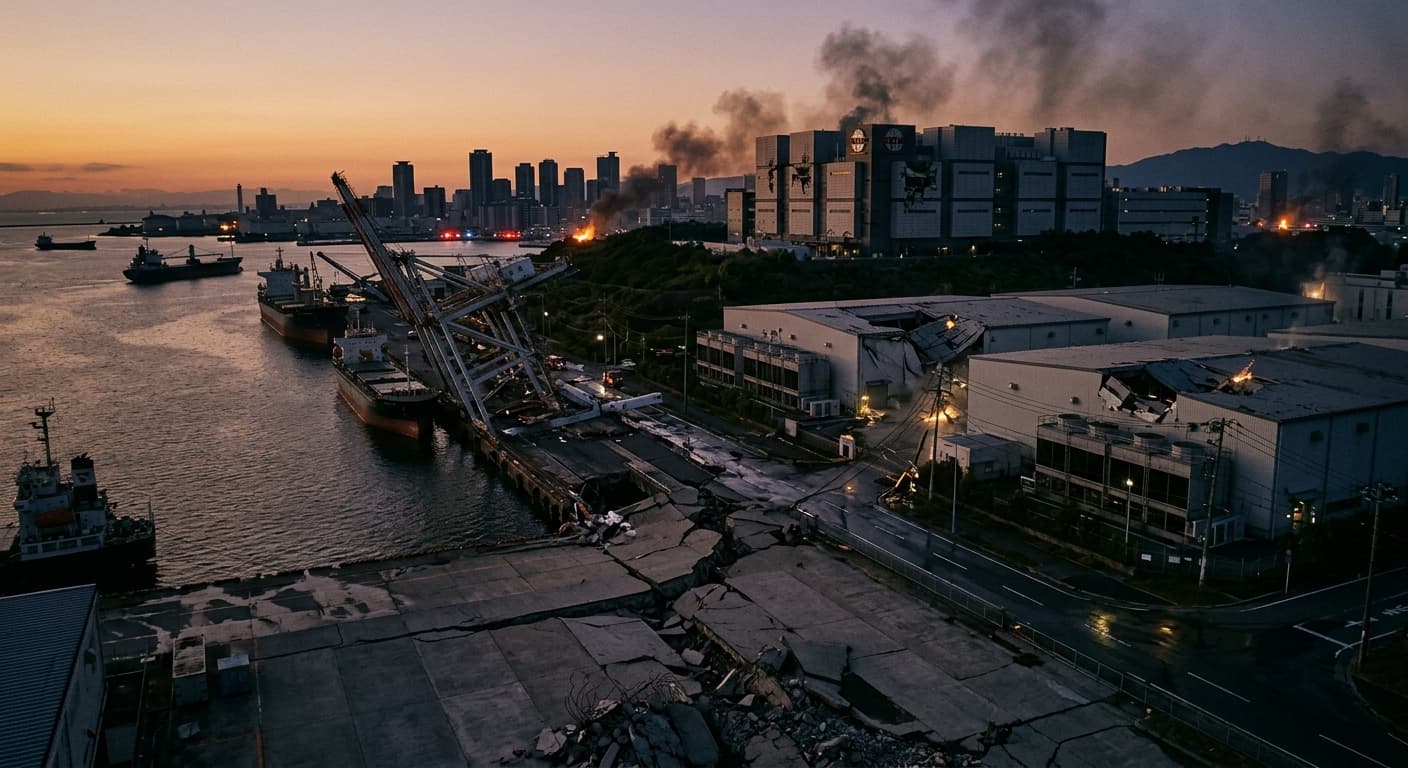
Seismic activity spiked in the first eight months of 2026. A magnitude 7.1 event in Kyushu, Japan, struck near major advanced materials facilities. Follow-on tremors in Indonesia and the Philippines disrupted port operations along key shipping lanes.
These quakes did not just damage buildings. They broke specialized equipment that takes months to replace. Clean rooms at two Kyushu plants required full recertification after vibration sensors triggered automatic shutdowns. Production of high-purity quartz crucibles, essential for pulling silicon ingots, fell by an estimated 14% for the quarter.
Neon gas, refined almost exclusively in Ukraine and eastern Japan, saw supply tighten further. Chipmakers already operating near full capacity faced allocation cuts. How the 2026 Japan Earthquake reshapes semiconductor markets, AI data center expansion, and critical minerals strategy details the direct production losses at affected fabs.
Critical Minerals Under Pressure
Gallium and germanium, used in compound semiconductors for 5G base stations and AI accelerators, come predominantly from China and a handful of refineries in Japan. The Kyushu quake idled one refinery for 19 days. Spot prices jumped from $620 per kilogram to $790.
Lithium supply chains also felt the strain. Australian mines ship concentrate through ports vulnerable to tsunami warnings. A 48-hour port closure in Queensland delayed three bulk carriers bound for Chinese refiners. This minor delay rippled into battery-grade lithium carbonate pricing, which rose 9% in August.
Rare earth elements used in permanent magnets for data center cooling fans and hard drives faced similar bottlenecks. Myanmar, an alternative source to China, experienced its own seismic events that closed border crossings for heavy trucks. The result was a 22% increase in dysprosium prices, a key input for high-temperature magnets.
These minerals sit at the heart of modern electronics. Any sustained disruption forces downstream manufacturers to bid aggressively or redesign chips. Neither option is cheap or fast.
Resource Nationalism Accelerates
Governments responded predictably. Indonesia tightened nickel export rules citing seismic safety reviews. Chile introduced new environmental audits for lithium brine operations following earthquake-triggered brine spills at two salars. South American resource nationalism now includes mandatory local processing quotas that add 18-24 months to project timelines.
Investors tracking these shifts see higher political risk premiums. Stocks of companies with heavy exposure to single-country mineral assets underperformed broader mining indices by 340 basis points in the month after the Japan quake.
Semiconductor Markets Face New Volatility
TSMC and its suppliers maintain significant capacity in Taiwan and Japan. The 2026 events reminded markets how fragile concentrated production remains. ASML's lithography machines, already backlogged, faced additional delays when Japanese specialty glass suppliers reported furnace damage.
NVIDIA's supply chain for H100 and Blackwell GPUs incorporates components that trace back to the affected Japanese plants. Lead times for certain advanced packaging substrates extended from 14 weeks to 26 weeks.
Oracle's data center expansion plans, which rely on dense GPU clusters, absorbed higher component costs. The company's stock showed resilience due to strong AI demand, but margins narrowed by an estimated 80 basis points in the affected quarter. See Oracle stock performance amid AI infrastructure pressures for related analysis.
AI Data Center Expansion Meets Grid and Supply Constraints
Hyperscale data centers consume massive amounts of power and specialized hardware. Earthquakes that damage transmission lines or force nuclear plant safety reviews create immediate headaches for operators.
Northern Virginia, home to the world's largest data center cluster, sits far from major fault lines but depends on components and energy sources that do not. A tremor-induced delay in transformer deliveries from Japan pushed back commissioning dates for two facilities by 10 weeks.
Operators responded by signing more power purchase agreements with nuclear operators. Microsoft and Amazon increased investments in small modular reactors to reduce reliance on earthquake-vulnerable transmission corridors.
Cooling systems represent another vulnerability. Many advanced data centers use liquid cooling that depends on rare earth pumps and high-efficiency fans. Price spikes in dysprosium directly raised capital expenditure forecasts by 4-7% for new builds.
The GLM 5.3 release analysis shows how surging AI model complexity compounds these infrastructure bottlenecks.
Supply Chain Chokepoints Amplified by Seismic Risk
The Malacca Strait remains the primary artery for critical minerals moving from Australia and Africa to East Asian processors. Earthquakes in Indonesia triggered heightened tsunami alerts that slowed tanker traffic for days. Insurance premiums for hull coverage on routes passing near seismic zones rose 15%.
Companies are now modeling multi-week disruptions from seismic events in their continuity planning. Diversification strategies include new refining capacity in Malaysia and Vietnam, though these projects face their own permitting and skill shortages.
Compare the risk profiles:
| Chokepoint | Primary Risk | Impact on AI Supply Chain | Mitigation Status |
|---|---|---|---|
| Kyushu, Japan | Specialty gases and quartz | Chip fabrication delays | Partial dual-sourcing in Taiwan |
| Malacca Strait | Shipping delays from seismic alerts | Inventory stockouts for rare earths | Air freight for high-value shipments only |
| Northern Virginia grid | Transformer and component delays | Delayed data center commissioning | Increased nuclear PPAs |
| South America lithium | Resource nationalism + seismic events | Higher battery and cooling costs | Investment in Australian hard-rock mines |
Investment Implications for Sovereign Wealth Funds and Asset Managers
Temasek and GIC adjusted portfolios to favor companies with geographically diversified mineral assets. Positions in Australian lithium producers and Canadian rare earth developers increased by an average of 12% in the second quarter.
Public markets punished pure-play miners with single-site exposure. Conversely, firms offering substitution technologies or recycling solutions outperformed. Expect continued capital flows into companies developing gallium nitride alternatives and synthetic quartz methods.
Private equity and sovereign capital also targeted grid modernization projects. Investments in battery storage and microgrids around data center clusters aim to reduce vulnerability to both seismic events and extreme weather.
Common Mistakes Investors Make
- Assuming insurance fully covers business interruption from seismic events. Many policies exclude "natural catastrophe" clauses that apply to supply chain losses.
- Underestimating lead times for specialized equipment. A damaged epitaxial reactor can take 9-14 months to replace and requalify.
- Ignoring secondary effects. A quake in one region can trigger export restrictions elsewhere as governments prioritize domestic needs.
- Treating all critical minerals as interchangeable. Different end-uses require specific purity levels that cannot be swapped easily.
Best Practices for Managing Seismic Risk in Tech Supply Chains
- Map tier-2 and tier-3 suppliers for every critical component. Most companies stop at tier-1 and miss the Japan-heavy specialty materials layer.
- Build 90-day strategic stockpiles for gallium, germanium, and neon rather than relying on just-in-time delivery.
- Incorporate seismic risk scores into site selection for new data centers and supplier facilities.
- Fund R&D into material substitutes. Even partial replacement of rare earth magnets can reduce exposure dramatically.
- Engage directly with sovereign wealth funds from mineral-rich nations to secure long-term offtake agreements with built-in force majeure protections.
FAQ
Are earthquakes becoming more frequent in 2026?
Seismic activity follows natural cycles. The cluster observed this year aligns with heightened Pacific Ring of Fire movement rather than a permanent increase. However, the economic impact is larger because global supply chains for technology have grown more concentrated.
How do earthquakes affect AI data center construction?
They delay specialized components, raise insurance costs, and create uncertainty around power infrastructure. Operators now require earthquake-resistant designs even in low-risk zones because supply chains cross high-risk areas.
Which critical minerals face the highest risk from seismic events?
Gallium, germanium, high-purity quartz, neon, and certain rare earth elements show the greatest vulnerability due to concentrated production in seismically active regions of East Asia.
What role does resource nationalism play after natural disasters?
Governments often impose export controls or review foreign ownership after major quakes, citing national security and domestic reconstruction needs. This slows global supply responses.
Should investors avoid semiconductor stocks after the 2026 earthquakes?
Not entirely. Companies with strong balance sheets, dual sourcing, and exposure to AI demand continue to perform well. Focus on those actively reducing single-point geographic risks.
Conclusion
The 2026 earthquakes delivered a clear message: critical minerals concentration combined with seismic geography creates unavoidable risk for the AI economy. Companies and investors that treat these events as temporary disruptions will fall behind those building resilience into their supply chains, power strategies, and mineral sourcing. The winners will be those who secure diversified access to the materials that power tomorrow's technology while reducing dependence on vulnerable chokepoints. As global attention turns toward why Harry and Meghan are returning to the UK in 2026, similar themes of strategic relocation and risk mitigation emerge across different sectors.
Review your portfolio exposure to single-country mineral assets and data center infrastructure vulnerable to cascading supply failures. The next seismic event may not offer the same warning.
Share This Article