Jonathan van den Berg · May 6, 2026
Viva Aerobus Expansion Reshapes Mexican Aviation and Regional Trade Routes
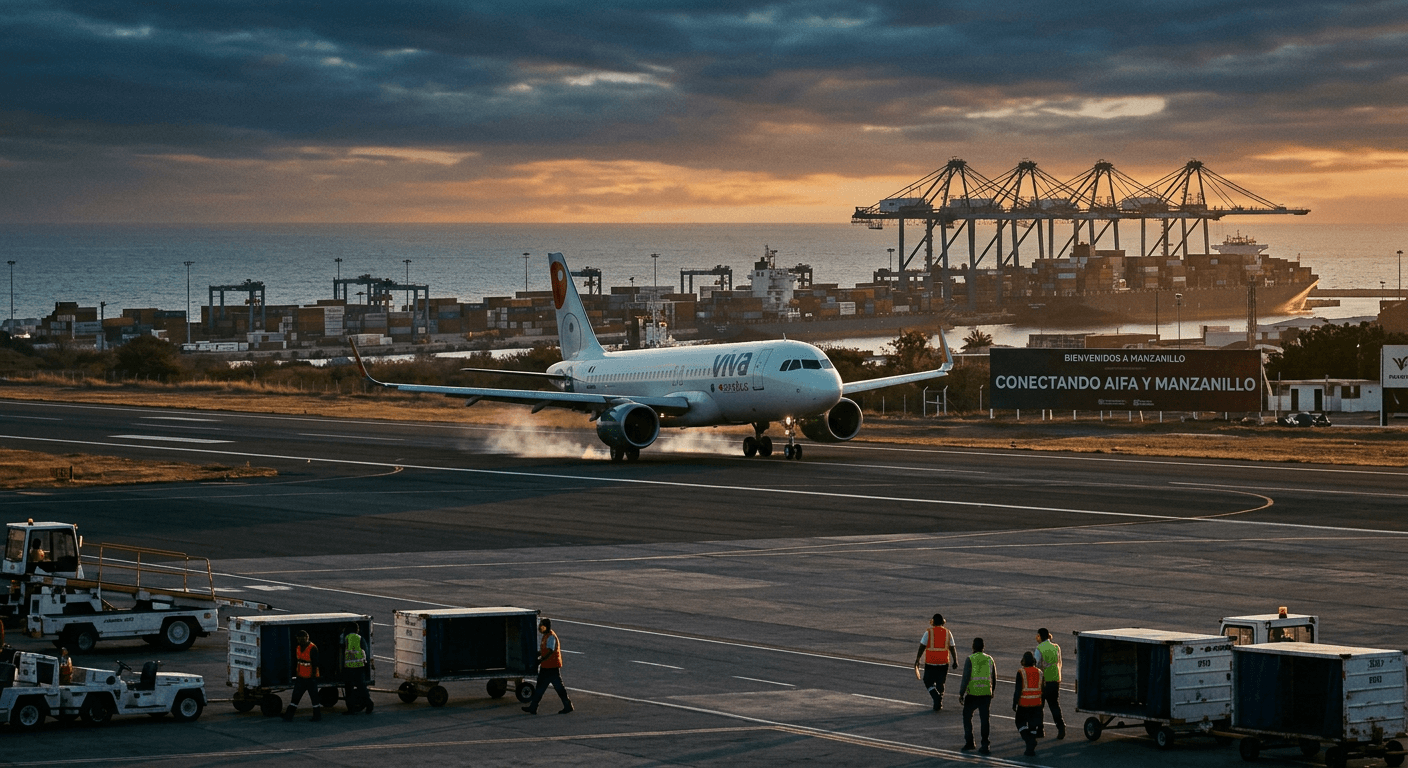
Viva Aerobus launched a new route connecting Mexico City’s AIFA airport to Manzanillo, promising lower fares and easier access to Pacific coast tourism and commerce.
Low-cost airlines are rewriting the economic map of Mexico.
Viva Aerobus announced a fresh direct route between Mexico City’s Felipe Ángeles International Airport (AIFA) and the Pacific port city of Manzanillo. Flights begin in July and will operate three times per week using Airbus A320 aircraft. The move matters because it links the capital’s growing secondary airport with one of Mexico’s most important tourism and commercial hubs on the Pacific coast.
For ordinary Mexicans and international visitors, this means cheaper fares and more options. Manzanillo serves as both a beach destination and a major container port. The city handles significant cargo traffic, including agricultural exports, manufactured goods, and cruise passengers. Better air links can reduce transport costs for businesses moving people and lightweight goods between central Mexico and the Pacific corridor.
Why AIFA and Manzanillo?
AIFA opened in 2022 as an alternative to the crowded Mexico City International Airport (AICM). The government has pushed hard to shift traffic to the newer facility north of the capital. Viva Aerobus, known for its no-frills model, has been one of the most aggressive carriers in building routes from AIFA. The airline now sees the airport as central to its growth strategy.
Manzanillo, in Colima state, offers something different from Cancún or Los Cabos. Its beaches attract Mexican families and some European tourists. More importantly, its port ranks among the busiest in Mexico for container traffic. It serves as a gateway for trade with Asia and the western United States. Improving air connectivity supports both leisure travel and business travel tied to port operations, logistics firms, and regional manufacturing.
The new route also reflects broader patterns in Latin American aviation. Budget carriers have expanded rapidly across the region. In Mexico, low-cost operators now carry more than 70 percent of domestic passengers according to industry data. This shift has made flying accessible to millions who previously relied on buses for long-distance travel. A trip that once took 12 hours by road can now take under two hours in the air, often for the price of a decent hotel room.
The Economic Ripple Effects
Cheaper flights do more than help tourists. They support supply chains and regional development. Business travelers can reach Manzanillo’s port facilities faster. Logistics managers can coordinate shipments with greater flexibility. Hotel operators, restaurants, and tour companies in Colima expect higher occupancy rates.
The route also ties into larger trade dynamics. Mexico’s economy remains tightly linked to the United States through the USMCA agreement. While this flight stays domestic, it strengthens internal connections that support export-oriented industries. Goods moving through Manzanillo often continue north by truck or rail. Faster movement of people who manage those flows matters.
Compare this to how aviation shapes other economies. Qatar Airways’ ultra-long-haul expansion shows how strategic air routes can reshape entire trade corridors and energy relationships. Mexico’s budget carriers operate on a smaller scale, yet they produce similar effects inside national borders by lowering the cost of movement and opening new economic possibilities.
Lower fares also influence where people choose to live and work. Young professionals in Mexico City can more easily consider opportunities on the Pacific coast. Families can maintain closer ties across regions. Over time, these patterns can shift labor markets and real estate demand in secondary cities.
Competition and Market Forces
Viva Aerobus is not alone. Aeroméxico, Volaris, and smaller carriers all compete aggressively on price and route frequency. AIFA has become a battleground for market share as the government continues to limit operations at the older AICM to reduce congestion and noise.
This competition drives efficiency. Airlines must keep costs low while maintaining safety standards. For passengers, it translates to fares that sometimes dip below 1,000 Mexican pesos for one-way trips. That price point changes behavior. Weekend getaways become realistic. Business meetings replace video calls.
Yet challenges remain. AIFA still struggles with ground transportation links. Many travelers complain about long taxi or bus rides from central Mexico City. The airport’s commercial facilities and hotel options lag behind its older rival. Success of new routes like Manzanillo depends partly on solving these access problems.
Fuel prices, currency fluctuations, and regulatory changes also affect the industry. Aviation remains sensitive to global economic shifts. When oil prices rise, even low-cost carriers must adjust fares or absorb thinner margins. Mexican carriers have shown resilience by hedging fuel costs and maintaining high load factors.
Broader Context of Mexican Aviation Growth
Mexico’s air travel market has recovered strongly from the pandemic. Passenger numbers exceeded pre-2020 levels by 2024 and continue climbing. Tourism contributes roughly 8.5 percent of national GDP, with aviation playing a key role in delivering visitors to destinations beyond the traditional Cancún corridor.
The Pacific coast offers growth potential. While the Caribbean coast dominates international arrivals, states like Colima, Jalisco, and Nayarit promote their beaches, ecology, and cultural sites. Direct flights from the capital make these places more competitive against better-known destinations.
International carriers have also taken notice. Some European and Asian airlines explore codeshare agreements with Mexican low-cost operators to feed passengers into their long-haul networks. This integration matters for smaller cities seeking direct access to global markets.
The Viva Aerobus announcement fits a pattern of incremental route additions that collectively reshape economic geography. Each new connection creates small advantages that compound over years. Cities with better air links tend to attract more investment, talent, and visitors.
Impact on Tourism and Local Economies
Manzanillo’s economy depends on three pillars: the port, tourism, and agriculture. The new air service strengthens all three. Cruise passengers already arrive by sea. Air arrivals can stay longer and spend more when flights are convenient and affordable.
Local business owners report that easier access from Mexico City increases mid-week bookings. This smooths out seasonal patterns and supports year-round employment in hotels and restaurants. Fishing villages near Manzanillo that have developed small-scale tourism also benefit when visitors can reach the region without long road journeys.
Environmental considerations matter too. More flights mean more emissions, yet modern Airbus A320neo aircraft burn significantly less fuel than older models. Viva Aerobus has invested in newer planes with better efficiency. Still, balancing growth with sustainability remains an ongoing challenge for the entire industry.
Links to Larger Economic and Technological Trends
Aviation does not exist in isolation. It intersects with technology, regulation, and global competition in unexpected ways. The recent settlement involving major technology companies and consumer data reminds us how digital infrastructure and privacy concerns now touch every sector, including travel booking platforms that budget airlines rely upon.
Similarly, developments in artificial intelligence and voice assistants affect how travelers search for and book flights. While not directly tied to Viva Aerobus, these technologies change consumer behavior across the board. Airlines that adapt fastest gain advantage.
On the financial side, Mexico’s economy navigates the same global crosscurrents affecting everyone. Stock market volatility and shifting rules of economic power influence investor confidence in airlines and related infrastructure projects. When capital markets tighten, expansion plans can slow. When confidence returns, new routes multiply. Claudia Sheinbaum’s foreign interference amendment further complicates these dynamics by reshaping US-Mexico relations and trade. The Pan Am Flight Discovery 2026 and its 74-year-old Atlantic wreck further illustrates how a single aviation discovery can reshape historical understanding, insurance markets, and geopolitical memory.
What This Means for Travelers and Businesses
For the average person, the message is straightforward. Flying within Mexico is becoming more practical and less expensive. Routes like AIFA to Manzanillo reduce the friction of distance. This matters for families stretched across different states, students, medical patients, and small business owners.
For companies, especially those in logistics, agriculture, and tourism, better connectivity lowers transaction costs. A manager can visit port facilities in Manzanillo in the morning and return to Mexico City the same day. This compresses decision timelines and improves competitiveness.
The route also signals confidence in AIFA’s long-term role. Despite early criticism about its location and infrastructure, the airport continues adding meaningful connections. Government policy supporting its growth appears to be paying off as more carriers commit capacity.
Future Outlook
Expect more announcements like this one. Viva Aerobus and its competitors will keep probing for profitable routes from both AIFA and traditional airports. Secondary cities across Mexico stand to gain if this trend continues.
The bigger picture involves how air travel supports or challenges larger economic goals. Mexico wants to reduce reliance on a few mega-destinations. It wants to spread tourism revenue more widely. It wants stronger internal markets that complement export industries. Strategic domestic routes advance all three aims.
Regional aviation also plays a quiet role in geopolitical economics. Reliable transport links strengthen national cohesion and economic resilience. In a world where supply chains face repeated disruptions, domestic connectivity provides options and backup capacity.
Viva Aerobus built its reputation on making flying ordinary. The AIFA-Manzanillo route continues that mission. It will not grab international headlines, yet it will change how thousands of people travel, work, and build businesses. Those cumulative changes matter more than single dramatic events.
Watch for load factors on the new flights. If they stay above 80 percent, expect frequency to increase. Other carriers may match the route. Hotel development near Manzanillo could accelerate. Small economic shifts like these often prove more durable than flashy mega-projects.
In the end, this story is simple. A Mexican airline found a gap between two important places and decided to fill it with affordable flights. The real test comes after takeoff—whether the route creates lasting value for passengers, businesses, and the communities at both ends. Early signs suggest it will.
The skies over Mexico are getting busier. For once, that feels like genuinely good news for regular people trying to get from here to there without spending a fortune.
Share This Article