Jonathan van den Berg · April 12, 2026
The Vance-Iran Talks in Pakistan
Historical Context, Current Dynamics, and Potential Outcomes
The Vance-Iran Talks in Pakistan: Historical Context, Current Dynamics, and Potential Outcomes
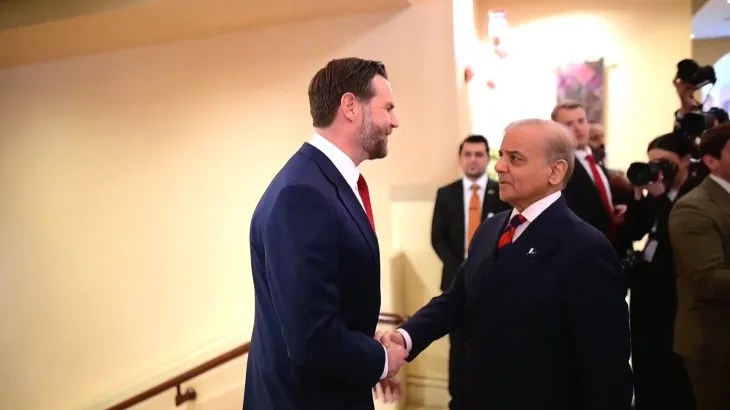
In early 2026, diplomatic channels between the United States and Iran have unexpectedly activated in an unlikely location: Pakistan. Reports indicate that U.S. Vice President JD Vance has engaged, directly or through senior intermediaries, with Iranian representatives on Pakistani soil in an effort to address Tehran’s nuclear program, sanctions, and broader regional tensions. While official confirmation remains limited, the development has drawn significant attention from analysts monitoring one of the world’s most volatile geopolitical relationships.
This article examines the historical backdrop that has shaped U.S.-Iran relations, the specific context of the current negotiations hosted by Pakistan, the interests of the primary actors, and a range of plausible outcomes. The analysis remains strictly neutral and fact-based, drawing on established patterns in international diplomacy rather than unverified leaks or partisan interpretations.
Historical Context
The relationship between the United States and Iran has been defined by deep mistrust since the 1979 Iranian Revolution. The hostage crisis at the U.S. embassy in Tehran set a tone of hostility that persisted through the Iran-Iraq War, during which the Reagan administration tilted toward Saddam Hussein. In the decades that followed, Iran’s support for non-state actors in Lebanon, Palestine, and later Iraq and Yemen further entrenched American concerns about Tehran’s regional ambitions.
The most significant diplomatic breakthrough came in 2015 with the Joint Comprehensive Plan of Action (JCPOA). Under the agreement, Iran accepted strict limits on its nuclear program—including caps on uranium enrichment levels, centrifuge numbers, and stockpiles—in exchange for sanctions relief. The deal was endorsed by the UN Security Council and involved the permanent members of the Council plus Germany and the European Union.
The Trump administration withdrew from the JCPOA in 2018, citing the agreement’s failure to address Iran’s ballistic missile program and regional proxy activities. This launched a “maximum pressure” campaign featuring sweeping sanctions, the designation of the Islamic Revolutionary Guard Corps as a terrorist organization, and the 2020 killing of Qasem Soleimani. Iran responded by progressively breaching JCPOA limits, increasing uranium enrichment to near-weapons-grade levels (reportedly reaching 60% by 2024-2025) and expanding its nuclear infrastructure.
Efforts to revive the deal during the Biden administration faltered amid mutual recriminations, Iran’s hardening position after the death of President Ebrahim Raisi, and shifting regional dynamics following the Abraham Accords and the normalization of some Arab states’ relations with Israel. By the time the second Trump administration took office in January 2025, the nuclear issue had become more acute, with Western intelligence assessments suggesting Iran’s “breakout time” — the period required to produce enough fissile material for a nuclear weapon — had shrunk dramatically.
Pakistan has long served as an intermittent diplomatic bridge. Sharing a border with Iran and maintaining close security and economic ties with the United States (particularly through counterterrorism cooperation), Islamabad has occasionally facilitated backchannel communications. During the 2010s, Pakistani diplomats helped arrange prisoner swaps and exploratory talks. Islamabad’s motivations are pragmatic: it seeks to reduce tensions on its western border, protect its substantial trade and energy interests with Iran, and maintain leverage with both Washington and Beijing, its primary strategic partner via the China-Pakistan Economic Corridor.
The Current Diplomatic Track
The reported Vance-Iran engagement in Pakistan appears to represent a calculated departure from previous public negotiating formats. Rather than the multilateral Vienna talks that characterized the JCPOA era, these discussions have adopted a more discreet, triangular format. Sources familiar with the process suggest the agenda includes:
Measures to cap Iranian uranium enrichment and restore some international monitoring.
Potential phased sanctions relief tied to verifiable nuclear steps.
Discussion of regional de-escalation, particularly regarding proxy conflicts in Yemen, Iraq, and Lebanon.
Exploration of humanitarian and economic gestures that could build confidence.
Pakistan’s role as host reflects its unique position. As a nuclear-armed state with deep ties to both China and the United States, and a neighbor that maintains working relations with Iran despite occasional border tensions, Islamabad offers a venue that is neither fully Western nor aligned with the Gulf Arab states most hostile to Tehran. Pakistani officials have framed their facilitation as consistent with the country’s tradition of “positive neutrality” in regional conflicts.
The timing is notable. The second Trump administration has signaled a preference for deal-making over prolonged confrontation, while Iran faces severe economic pressure from sanctions, internal unrest, and the cumulative effects of Israeli strikes on Iranian-backed networks. Both sides appear to recognize that the status quo carries unacceptable risks of miscalculation, especially following US strikes on Iranian ports that have heightened tensions in the Strait of Hormuz energy chokepoint.
Key Actors and Their Interests
United States: Under the current administration, the priority remains preventing Iran from acquiring a nuclear weapon while avoiding another major Middle East conflict. Vice President Vance, viewed as a pragmatic voice within the administration, appears to have been tasked with exploring whether a narrower, more enforceable understanding can be reached than the original JCPOA. U.S. interests also include securing Gulf energy flows, supporting Israel’s security, and managing competition with China in the broader Indian Ocean region.
Iran: Tehran’s leadership faces a difficult balancing act. Supreme Leader Ayatollah Ali Khamenei and the Revolutionary Guard prioritize regime survival and strategic autonomy. At the same time, President Masoud Pezeshkian (or his successor, depending on timing) must address a struggling economy battered by inflation, currency collapse, and youth unemployment. Iran seeks sanctions relief without appearing to capitulate on its nuclear rights or regional influence.
Pakistan: Islamabad’s calculus is complex. It must navigate its security partnership with the United States, its massive economic dependence on China, its rivalry with India, and its need for stability on its western frontier with Iran and Afghanistan. Hosting these talks allows Pakistan to demonstrate diplomatic utility while potentially securing economic concessions or reduced pressure on issues such as terrorism financing and the persistent Palestinian payment paradox.
Third Parties: Israel has consistently opposed any accommodation with Iran, viewing its nuclear program as an existential threat. Saudi Arabia and other Gulf states are wary of any deal that restores Iranian financial capacity without curbing its proxy activities. China, which purchases significant Iranian oil despite sanctions and has brokered the 2023 Saudi-Iran rapprochement, likely supports any process that stabilizes energy markets and reduces U.S. military focus in the region. Russia, entangled in Ukraine, has limited bandwidth but benefits from any distraction that weakens Western cohesion.
Potential Outcomes and Scenarios
Several scenarios emerge from the current negotiations.
Scenario 1: Limited Interim Agreement
The most probable near-term outcome is a temporary “freeze for freeze” arrangement. Iran would cap enrichment at current levels, allow limited IAEA access, and reduce support for certain proxy attacks. In return, the United States would ease some sanctions on oil exports and humanitarian goods. This would not resolve core issues but could buy time and prevent immediate escalation. Historical precedent exists in the 2013 Joint Plan of Action that preceded the JCPOA.
Scenario 2: Collapse and Escalation
If core red lines cannot be bridged — particularly regarding verification mechanisms and Iran’s insistence on retaining advanced centrifuges — talks could collapse. This might trigger renewed Israeli strikes, Iranian acceleration of its nuclear program, and potential direct U.S. involvement. The risk of miscalculation in the Persian Gulf remains high, with serious implications for global energy prices.
Scenario 3: Broader Regional Understanding
In an optimistic scenario, the Pakistan talks could evolve into a wider dialogue involving Saudi Arabia and other Gulf states, potentially building on the China-brokered 2023 détente. Such an understanding might address not only the nuclear file but also Yemen, maritime security, and economic cooperation. This would represent a significant diplomatic achievement but would require unprecedented compromise from all parties.
The variables most likely to determine success include the credibility of verification mechanisms, the scale of sanctions relief offered, Israeli tolerance for any agreement, and the internal cohesion of Iran’s leadership.
Domestic Political Constraints
Domestic politics significantly constrain all parties. In the United States, any perceived concessions to Iran face opposition from segments of Congress, pro-Israel advocacy groups, and conservative media. In Iran, hardliners within the Revolutionary Guard and clerical establishment remain deeply skeptical of any deal with the “Great Satan.” Pakistan’s military and civilian leadership must manage domestic Islamist sentiment and economic fragility while pursuing these sensitive talks.
These internal pressures often prove more decisive than international bargaining positions, as demonstrated by the ultimate fate of the original JCPOA.
Conclusion
The reported negotiations between JD Vance and Iranian representatives in Pakistan represent a high-stakes diplomatic gamble. Decades of hostility, broken agreements, and proxy conflicts have created deep skepticism on all sides. Yet the alternative — continued nuclear advancement by Iran coupled with the constant threat of military confrontation — carries even greater risks for regional and global stability. How the Iran Conflict Could Reshape Global Oil Flows and Energy Prices for Years will be a critical factor in assessing the broader consequences of these developments.
Whether these talks produce a modest confidence-building agreement, collapse into renewed crisis, or evolve into something more ambitious will depend on the realism of the participants, the effectiveness of Pakistan’s mediation, and the willingness of powerful third parties to refrain from sabotage. For students of geopolitics, the episode underscores a fundamental truth: even the most adversarial relationships occasionally find reason to talk, however imperfect the venue or uncertain the prospects. Pakistan's cricket crisis deepens as economic pressures mount in Dhaka.
This analysis is based on publicly reported diplomatic patterns, historical records, and standard geopolitical assessments as of April 2026. All scenarios remain speculative and subject to rapid change.
Share This Article