Jonathan van den Berg · May 19, 2026
Pakistan's Cricket Crisis Deepens as Economic Pressures Mount in Dhaka
Pakistan's Test series against Bangladesh is unfolding under a shadow of national economic strain so severe that even the national cricket team feels the weight of mounting debts, energy shortages, and political uncertainty back home. For millions of ordinary Pakistanis, a sport that once unified the country now mirrors deeper struggles over jobs, electricity, and financial stability.
The Surprising Link Between Cricket Defeats and Electricity Bills
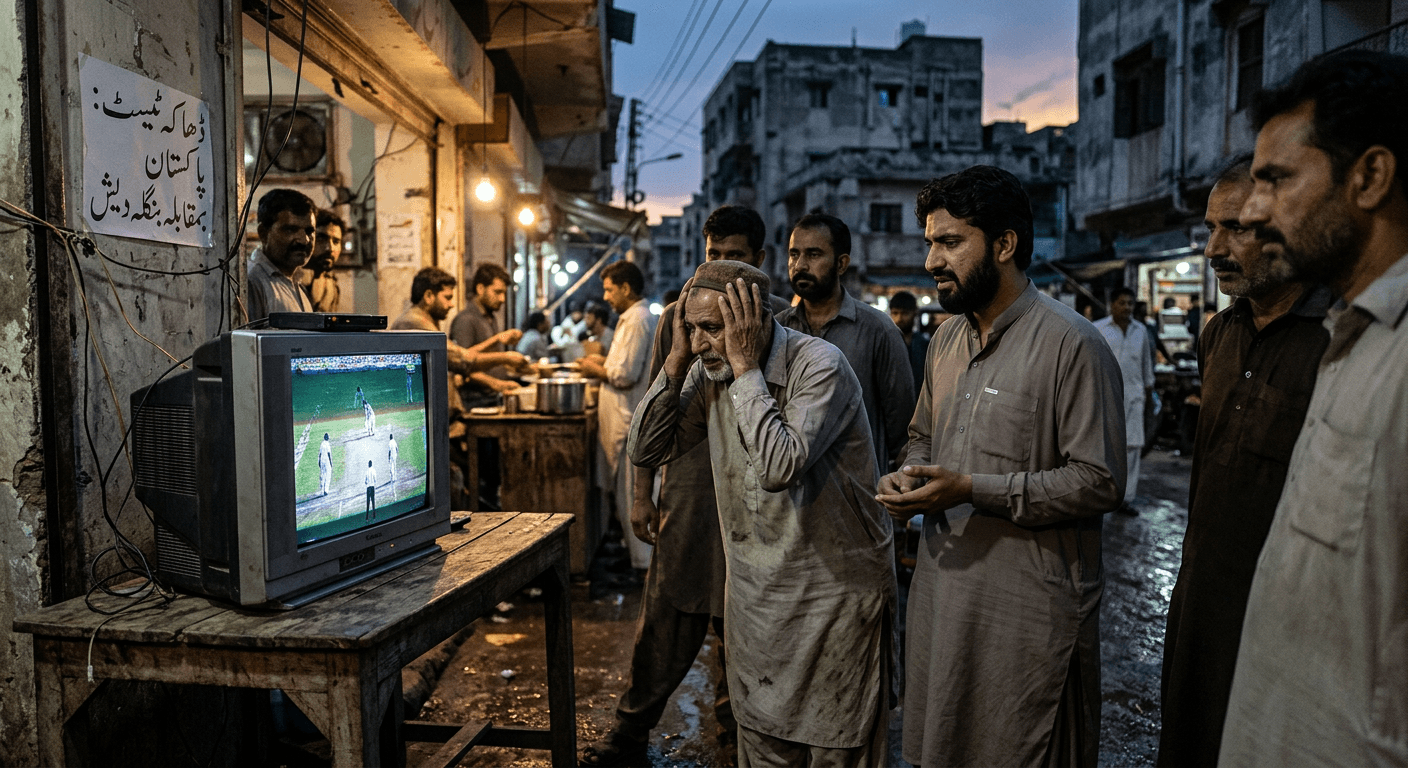
The most surprising fact about Pakistan's current tour of Bangladesh is not any on-field collapse. It is that many Pakistani fans following the matches from home are doing so without reliable electricity, their television screens going dark at the exact moment their team needs support the most.
This is not exaggeration. Power outages have become so routine across Pakistan in 2026 that they now shape daily life, work, and even how people experience national sporting events. The economic pain behind these blackouts runs deeper than most outsiders realize. It connects directly to the struggles of the national cricket team playing in Dhaka right now.
Pakistan entered the second Test against Bangladesh carrying more than just sporting pressure. The country faces an unsustainable debt burden, repeated International Monetary Fund interventions, and an energy system that fails to deliver consistent power to factories, homes, or even the Pakistan Cricket Board itself. These problems are not separate from the game. They are part of the same story.
What the Numbers Actually Mean for Families
Pakistan's external debt now exceeds $130 billion. Debt servicing alone eats up more than half of all government revenue in some recent fiscal years. That leaves less money for everything else: health, education, infrastructure, and yes, even sports development.
For ordinary citizens this translates into immediate hardship. A factory worker in Lahore might lose a day's wages when the power shuts down without warning. A small business owner in Karachi cannot keep refrigeration running, spoiling inventory. Students study by candlelight or phone torches when the grid fails at night. These are not abstract statistics. They are daily realities that shape how Pakistanis view their future and their government.
The energy crisis sits at the heart of these problems. Pakistan generates plenty of electricity on paper. Yet poor infrastructure, unpaid bills between distribution companies and producers, and heavy reliance on imported fuel create chronic shortages. When global fuel prices spike or the rupee weakens, the entire system wobbles. Circular debt—the term economists use for this chain of unpaid bills—has ballooned past $14 billion. Someone eventually pays. Usually it is the citizen through higher tariffs, longer outages, or both.
Recent reports from Dhaka during the Test series noted Pakistani players and support staff dealing with their own small frustrations: delayed equipment shipments, concerns about family members facing load-shedding back home, and the general sense that the country is stretched thin. Cricket has always been more than sport in Pakistan. It has served as an escape, a source of pride, and sometimes the only good news. When that escape itself feels burdened by the same problems, the emotional toll grows.
How Economic Pressure Reaches the National Team
The Pakistan Cricket Board is not immune from the country's financial troubles. Sponsorship deals have become harder to secure. Ticket sales in a weakened economy bring in less value. International broadcasting rights still provide important revenue, but much of that money gets diverted to cover debts or plug holes elsewhere.
Players sense this strain. Several senior figures have spoken privately about families dealing with inflation that has hovered near or above 20 percent in recent years. Basic food items, fuel for scooters or cars, school fees—all cost more while wages have not kept pace. When players take the field, they carry not just the hopes of a cricket-mad nation but also the quiet worries of millions struggling with bills.
This tour of Bangladesh was supposed to offer a relatively straightforward challenge after tougher assignments elsewhere. Instead it has become another reminder of larger troubles. Bangladesh itself has economic challenges, but its recent growth in certain sectors and relative stability have created a different atmosphere. Pakistani fans watching the matches have noticed the contrast: better infrastructure in Dhaka venues, fewer visible signs of economic distress around the grounds, and a home team that seems less weighed down by national crisis.
The on-field results have been mixed. Pakistan showed fight in patches but has struggled for consistency. More telling has been the reaction back home. Social media and call-in radio shows mix cricket analysis with broader complaints about jobs, electricity, and governance. The two conversations have merged. A dropped catch in the slips becomes symbolic of larger institutional failures. A batting collapse prompts comments about economic mismanagement.
The Broader Regional Picture
South Asia's economic landscape adds another layer. India has pulled further ahead as the region's dominant economy. Bangladesh has made notable strides in garments, digital payments, and certain infrastructure projects despite its own political turbulence in recent years. Pakistan risks falling further behind if it cannot stabilize its finances and energy supply.
China remains a major creditor and investor through Belt and Road projects. While these have brought new roads, ports, and power plants, they have also added to debt loads. Repayments in dollars have become more expensive as the Pakistani rupee has lost value. This creates a difficult balancing act: accept Chinese investment to build capacity, but risk deeper financial dependence.
The United States and Western institutions continue to press for reforms through IMF programs. These typically demand higher taxes, reduced subsidies, and better governance of state-owned enterprises. Each new agreement brings short-term loans but also political backlash at home. Citizens already feeling squeezed often see these deals as painful medicine prescribed from afar.
Energy politics run through all of this. Pakistan sits at a crossroads between oil and gas imports from the Middle East, coal plants funded by China, and ambitious but slow-moving renewable projects. Each choice carries geopolitical weight. Rely too heavily on one partner and you lose leverage with others. The result has been inconsistent policy that fails to deliver reliable, affordable power to the population.
Tensions in the Strait of Hormuz have at times raised fuel import costs for Pakistan, adding yet another external shock to an already fragile system. When global energy prices rise, the pain reaches Pakistani households faster than almost anywhere else in the region.
What Cricket Reveals About National Resilience
Despite everything, cricket retains remarkable power in Pakistan. Neighborhood games continue under floodlights powered by generators. Children still dream of representing the green shirt. The passion has not disappeared. It has simply become more complicated.
Some observers argue this very pressure has produced great teams in the past. Adversity, they say, forges character. Others worry that chronic economic instability is draining talent. Promising young players from poorer backgrounds face greater obstacles getting proper coaching, nutrition, or even safe places to practice when basic services fail.
The current squad contains a mix of experienced campaigners and exciting newcomers. Their performance in Bangladesh will not solve Pakistan's economic problems. Yet it matters. A strong showing can lift national mood. It can attract sponsorship. It can remind investors and global partners that Pakistan possesses creativity, fighting spirit, and world-class ability in at least one highly visible arena.
Conversely, a poor series deepens the gloom. It feeds narratives of decline. This is why the economic context matters so much. When people lack reliable electricity, good jobs, and confidence in the future, sports results take on extra symbolic weight.
The Human Stories Behind the Headlines
Consider a few real examples. In Faisalabad, a cricket-loving electrician named Ahmed has missed several matches because his workshop loses power for six to eight hours daily. His income has fallen. He wonders whether his son should pursue cricket seriously when the family struggles to afford basic equipment.
In Quetta, a schoolteacher follows the Test on radio during lengthy power cuts. She tells her students that discipline and patience matter both on the pitch and in life. Many of those students will enter a job market where youth unemployment remains stubbornly high.
These stories rarely make international news. They do not appear in match reports from Dhaka. Yet they form the true backdrop against which Pakistan's cricketers are being judged.
The Pakistan Cricket Board has tried various initiatives to shield the team from these pressures. Centralized contracts, mental health support, and private sponsorships help at the elite level. But the board itself operates within the same economy. When government funding becomes unreliable or sponsorship money dries up due to business caution, even these efforts face limits.
Looking Ahead: Can Stability Return?
Pakistan needs several things to break the current cycle. It must improve governance of its energy sector so that power plants run efficiently and bills get paid on time. It needs to broaden its tax base so that revenue does not depend so heavily on a small number of large payers. It must create conditions where local businesses can grow, hire workers, and generate the taxes that fund public services—including sports.
None of this is easy. Each reform creates winners and losers. Politicians fear unrest when subsidies are cut or taxes increased. International creditors demand results before releasing fresh funds. The public, exhausted by years of crisis, grows skeptical of yet another reform package.
Cricket offers a rare space where unity remains possible. When the team plays well, differences of region, ethnicity, and politics often fade. That unity is harder to maintain when the economy sends constant signals of trouble.
The matches in Bangladesh will end. The series will be analyzed, praised, or criticized. But the larger test facing Pakistan extends far beyond any sporting result. It is a test of whether a country of 240 million people, blessed with youthful demographics, strategic location, and remarkable entrepreneurial spirit, can translate those assets into stable progress.
Until reliable electricity becomes normal, until debt burdens ease, and until families feel genuine hope for better jobs and opportunities, cricket will continue carrying an extra load. It will remain both a beautiful game and an imperfect mirror of a nation's deeper challenges.
The players walking out onto the pitch in Dhaka know this. The fans watching—when the power stays on—know it too. The real contest is larger than twenty-two men and a leather ball. It is about whether Pakistan can build an economy strong enough to let its greatest cultural export flourish without the constant shadow of crisis.
That match is still being played. Its outcome will matter far more than any result in Bangladesh.
Conclusion: Beyond the Boundary
Pakistan's economic difficulties have deep roots and no simple fixes. The current cricket tour simply makes those struggles more visible to the world. When the national team struggles, it reflects real pressures felt by millions. When it succeeds despite those pressures, it offers genuine inspiration.
The coming months will test both the cricket team and the country's leadership. New IMF talks, energy sector reforms, and political stability all sit on the horizon. How these play out will determine whether the next generation of Pakistani cricketers takes the field with confidence or continues carrying the weight of national anxiety.
For now, the games continue in Dhaka. The outages continue back home. And the complex relationship between sport and survival remains as tangled as ever in one of cricket's most passionate nations.
Share This Article