Supply Chain · Jonathan van den Berg · September 29, 2026
Strait of Hormuz Oil Flow 2026: How Recent Iranian Tensions Reshape Global Energy Markets, Supply Chain Chokepoints, and Sovereign Wealth Fund Strategies
Iranian pressure on the Strait of Hormuz has eased but not vanished, sending fresh volatility through oil markets and forcing sovereign wealth funds to reassess exposure to energy chokepoints and related critical minerals supply chains.
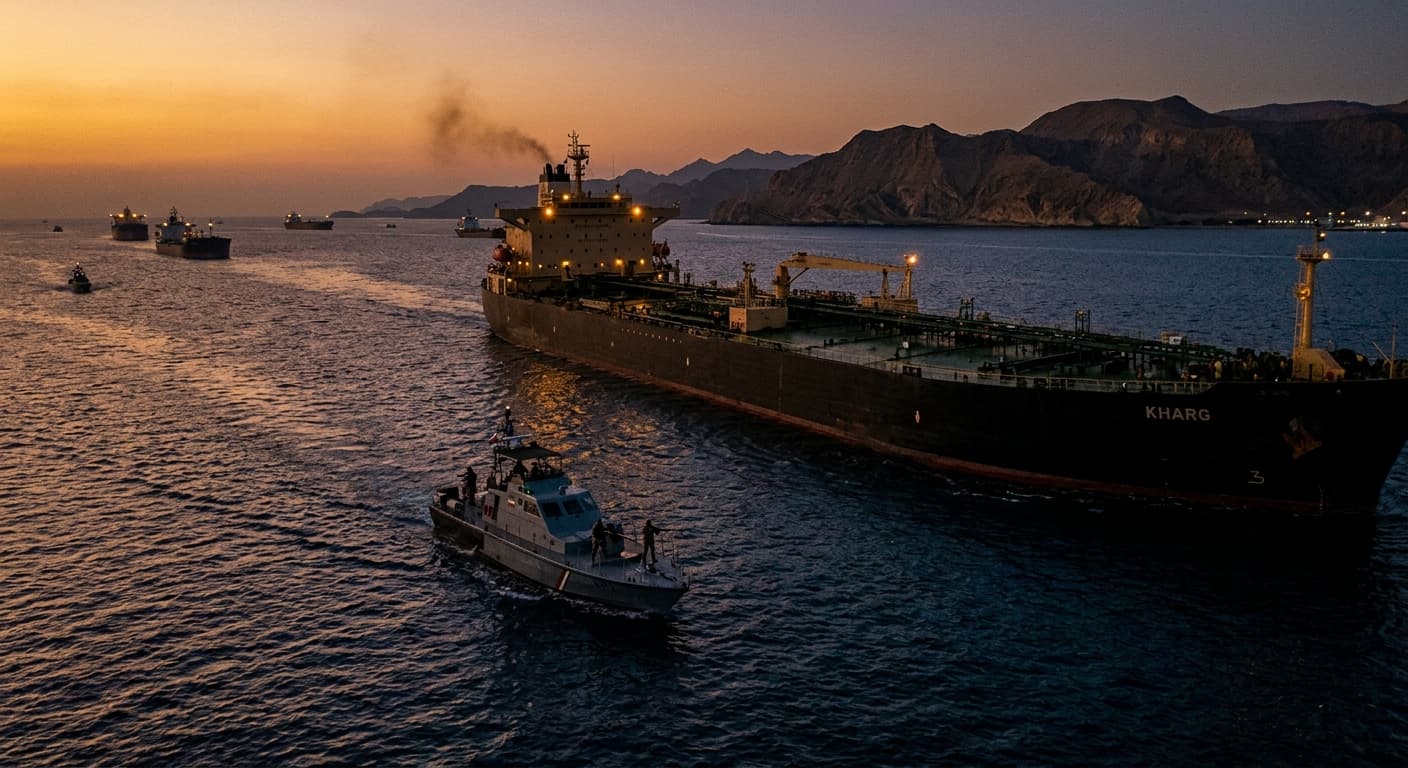
Iran’s recent inability to maintain a full chokehold on the Strait of Hormuz has allowed Middle East oil exports to rebound, yet the waterway remains the world’s most critical energy chokepoint. Roughly 21 million barrels of oil move through it daily, representing about 21% of global petroleum liquids consumption. Any sustained disruption still carries the power to spike prices, widen shipping insurance premiums, and force sovereign wealth funds to shift capital away from traditional energy toward diversified critical minerals and AI infrastructure.
Key Takeaways
- The Strait of Hormuz handles one-fifth of the world’s oil supply, making even partial blockades immediately visible in Brent and WTI futures.
- Recent breakdown of Iran’s effective control has eased immediate risk premiums, but tanker tracking data shows insurers continue charging elevated rates for transits.
- Sovereign wealth funds from the Gulf and Asia are reallocating toward critical minerals strategies and AI data center power assets to hedge energy volatility.
- Linked chokepoints such as Bab el-Mandeb and the Malacca Strait amplify cascading effects on global supply chains.
- Oil majors and downstream players face margin pressure while semiconductor and data center operators watch rising energy costs tied to diesel and power generation.
Current Oil Flow Through the Strait of Hormuz
According to tanker tracking and export data, daily flows have stabilized near 20.8 million barrels after a brief contraction during heightened tensions. Saudi Arabia, Iraq, UAE, Kuwait, and Qatar remain the primary shippers. LNG carriers from Qatar add another layer of strategic importance; roughly 80% of Qatar’s LNG exports also transit the strait.
The recent rebound stems from Iran’s reduced ability to interdict traffic, as reported in regional coverage. However, Iranian naval assets and proxy forces still operate nearby, keeping the threat of sudden closure alive. This uncertainty keeps the market in a state of elevated vigilance rather than outright panic.
Impact on Global Oil Prices and Volatility
Brent crude reacted with a 4-7% swing during the most recent flare-up before settling as flows resumed. WTI followed similar patterns, though basis differentials widened due to US domestic production strength. Refiners on the US Gulf Coast and in Asia saw feedstock cost volatility transmit directly into crack spreads.
Longer-term, persistent risk in the strait supports a structural floor under oil prices. Analysts tracking futures curves note that 12-18 month contracts now embed a 3-5% Hormuz risk premium compared to pre-2022 levels. This pricing dynamic affects everything from airline fuel surcharges to petrochemical feedstock costs used in critical minerals refining.
Linked Chokepoints: Bab el-Mandeb and Malacca Strait
Disruption in the Strait of Hormuz rarely occurs in isolation. Houthi activity near Bab el-Mandeb and Red Sea shipping risk premiums forces vessels to consider longer routes around Africa, adding 10-14 days and significant fuel burn. Meanwhile, any spike in Asian demand reroutes tankers through the Malacca Strait, creating secondary congestion that raises global shipping costs.
These interconnected risks explain why supply chain analysts now model “cascading chokepoint failure” scenarios. A simultaneous issue in two of the three major oil transit points could remove 35-40% of seaborne crude from the market for weeks.
Sovereign Wealth Fund Reallocation Strategies
Gulf sovereign wealth funds, particularly those in Saudi Arabia, UAE, and Qatar, hold substantial exposure to energy revenues. Recent volatility has accelerated their pivot toward technology and critical minerals. PIF and Mubadala have increased allocations to AI infrastructure, data centers, and battery metals, viewing these as hedges against oil revenue instability.
Asian funds, including Temasek and GIC, show similar patterns. They have trimmed direct upstream energy holdings while adding stakes in companies that benefit from higher power demand, such as those involved in nuclear restarts or grid modernization. This capital shift directly influences valuations in semiconductor and AI-related equities.
| Fund | Recent Shift | Target Sectors | Rationale |
|---|---|---|---|
| PIF (Saudi) | +18% to tech & minerals | AI data centers, lithium, rare earths | Reduce oil revenue volatility |
| Mubadala | Increased nuclear PPA exposure | Energy infrastructure, semiconductors | Hedge against strait risk |
| Temasek | Reduced pure-play upstream | Critical minerals processing, grid tech | Diversify geopolitical exposure |
Effects on Critical Minerals and AI Data Centers
Higher and more volatile oil prices raise the cost of diesel used in mining operations for copper, lithium, nickel, and cobalt. These metals are essential for the massive grid buildout required by AI data centers. Northern Virginia alone faces power constraints that already limit new hyperscale projects; any sustained energy price spike worsens the economics.
Semiconductor fabrication also depends on stable energy. TSMC, Samsung, and Intel facilities consume enormous electricity. When oil-driven power costs rise, the entire AI supply chain feels pressure. Companies like NVIDIA and Oracle see their customers delay or renegotiate data center expansions when power purchase agreements become more expensive.
Some operators respond by accelerating nuclear power agreements. Small modular reactors and restarted plants become more attractive when oil volatility highlights the fragility of fossil-heavy grids.
Insurance and Shipping Risk Premiums
Marine insurers have raised war risk premiums for Hormuz transits by 0.15-0.35% of hull value on a per-voyage basis. For a VLCC carrying two million barrels, this can add hundreds of thousands of dollars per trip. Some owners now route around Africa despite higher fuel costs, especially when insurance savings exceed the extra bunker expense.
This dynamic creates a self-reinforcing loop: higher costs reduce effective capacity, tightening supply and supporting higher crude prices. Shipping companies with modern, faster vessels gain relative advantage, while older tankers face economic obsolescence.
Common Mistakes Investors Make
- Treating the strait risk as binary (open or closed) instead of modeling graduated scenarios of harassment, partial blockade, or proxy attacks.
- Ignoring second-order effects on critical minerals mining costs and downstream semiconductor pricing.
- Overweighting pure-play oil producers without hedging through diversified sovereign-style allocations in technology and nuclear energy.
- Underestimating the speed at which sovereign wealth funds can redirect capital away from traditional energy when volatility spikes.
- Failing to track insurance premium changes as a leading indicator of sustained risk perception.
Best Practices for Portfolio Positioning
- Build exposure to companies with strong balance sheets that can withstand energy price swings, including integrated majors like ExxonMobil and Chevron that also invest in lower-carbon power.
- Monitor real-time tanker tracking services and insurance rate updates for early signals of changing risk premiums.
- Consider allocations to critical minerals processors located outside primary chokepoint regions to reduce supply chain concentration risk.
- Evaluate AI infrastructure plays with secured power contracts, especially those tied to nuclear or renewable PPAs that insulate against oil volatility.
- Use options or structured products to hedge tail risk rather than simply reducing energy exposure outright.
FAQ
How much oil travels through the Strait of Hormuz daily?
Approximately 21 million barrels per day, or about one-fifth of global oil consumption. This includes crude, condensate, and petroleum products.
What happens to oil prices if the Strait of Hormuz closes?
Historical models suggest an immediate spike of $30-80 per barrel depending on duration and available spare capacity from Saudi Arabia and the US. Prolonged closure would trigger emergency releases from strategic reserves worldwide.
Which sovereign wealth funds are most exposed to Strait of Hormuz risk?
Gulf funds—Saudi PIF, UAE’s Mubadala and ADIA, and Qatar’s QIA—derive significant revenue from oil and gas exports that transit the strait. Their recent diversification into technology and critical minerals reflects awareness of this vulnerability.
How do Hormuz tensions affect AI data centers?
Through higher energy costs and diesel prices that raise both power generation expenses and the cost of mining metals needed for chips and batteries. Data center operators in constrained regions like Northern Virginia feel these effects first.
Are there viable alternatives to the Strait of Hormuz?
Pipeline routes exist but have limited capacity. The longest workaround involves routing tankers around the Arabian Peninsula and Africa, adding roughly two weeks of sailing time and substantial fuel consumption.
Conclusion
The recent easing of Iran’s chokehold on the Strait of Hormuz provides temporary relief but changes little about the waterway’s structural importance. Energy traders, supply chain managers, and institutional investors must treat Hormuz risk as a permanent feature of the global landscape. Those who diversify into critical minerals security, resilient power infrastructure, and less chokepoint-dependent technologies will be better positioned when the next flare-up arrives.
Review your portfolio’s exposure to energy chokepoints and consider how sovereign wealth fund strategies are already adapting. The next disruption may not close the strait completely, yet its effects will still ripple through oil markets, semiconductor costs, and AI infrastructure buildout worldwide.
Share This Article