Jonathan van den Berg · April 30, 2026
Stock Market Today: Volatility, Policy Uncertainty, and Global Economic Crossroads in April 2026
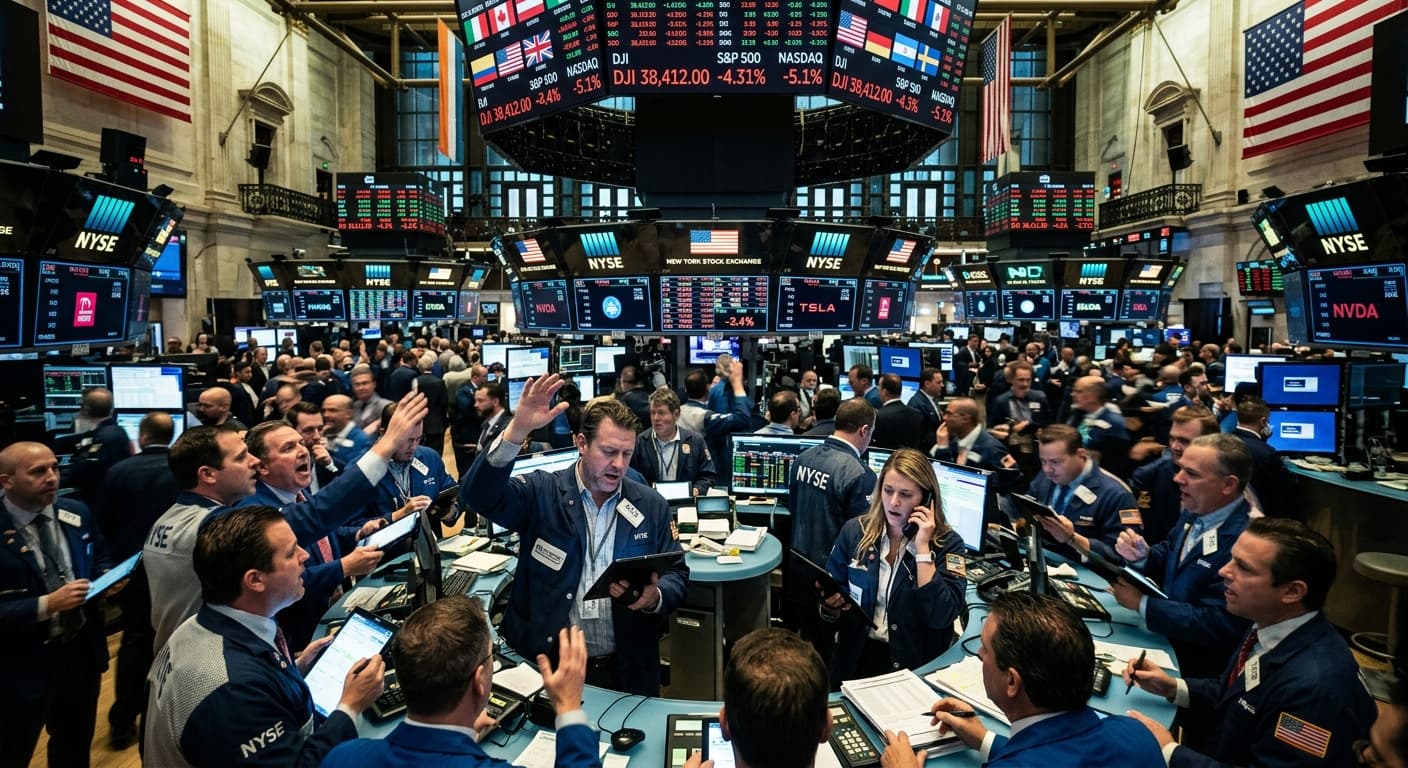
In New York, traders on the floor of the New York Stock Exchange are navigating another session of sharp swings as major indices react to diverging central bank signals, persistent inflation concerns, and shifting geopolitical tensions that continue to reshape capital flows worldwide.
Wall Street's Turbulent Spring
In New York, traders on the floor of the New York Stock Exchange are navigating another session of sharp swings as major indices react to diverging central bank signals, persistent inflation concerns, and shifting geopolitical tensions that continue to reshape capital flows worldwide. The S&P 500 has experienced multiple sessions of 1-2% moves in recent weeks, reflecting a market caught between optimism over technological innovation and anxiety regarding macroeconomic stability and international friction.
This volatility comes at a critical juncture in the global economy. While equity markets have shown remarkable resilience in the face of higher-for-longer interest rates, underlying pressures from energy politics, supply chain realignments, and the gradual erosion of traditional reserve currency dominance are forcing investors to reconsider long-held assumptions about portfolio construction and risk management.
The Current Market Landscape
As of late April 2026, the major U.S. indices present a mixed picture. The technology-heavy Nasdaq has outperformed broader benchmarks, driven by continued enthusiasm for artificial intelligence infrastructure and semiconductor innovation. However, this performance masks significant dispersion beneath the surface. Mega-cap technology names have carried much of the index gains, while smaller companies and traditional value sectors have struggled with higher borrowing costs and cautious consumer spending.
European markets have shown similar patterns of divergence. The STOXX 600 has faced headwinds from political uncertainty in several key economies and questions about the European Central Bank's ability to manage inflation without triggering stagnation. Meanwhile, Asian markets reflect the complex dynamics of China's economic recalibration and Japan's strategic positioning amid ongoing regional tensions.
According to recent trading data, volatility measures such as the VIX have remained elevated compared to historical averages during periods of economic expansion. This suggests that despite headline gains in certain sectors, market participants are pricing in substantial uncertainty regarding future policy decisions and geopolitical developments.
Central Bank Divergence and Monetary Policy Crosscurrents
A primary driver of current market volatility stems from diverging approaches among major central banks. The Federal Reserve has maintained a cautious stance, balancing concerns about inflation with the need to support economic growth amid geopolitical uncertainties. In contrast, the European Central Bank and the Bank of Japan have signaled potentially different trajectories based on their respective economic conditions and political realities.
This policy divergence creates both opportunities and risks for global capital flows. Investors are closely watching currency markets, where the relative strength of the dollar has significant implications for emerging markets, commodity prices, and international trade dynamics. The ongoing tension between inflation control and growth support continues to dominate macroeconomic analysis.
Market participants have increasingly turned to alternative assets as hedges against monetary policy uncertainty. This has accelerated interest in decentralized financial instruments and assets that exist outside traditional banking systems. The relationship between cryptocurrency trading and traditional reserve currencies has become a central focus for strategists examining long-term shifts in global financial architecture.
Energy Politics and Economic Security
Energy markets remain a critical undercurrent influencing broader economic conditions. The intersection of geopolitical tensions, transition policies, and traditional supply-demand dynamics has created a complex environment for both producers and consumers. Recent developments in the Middle East and shifting alliances in Eurasia continue to impact oil and natural gas pricing, with ripple effects throughout global equity markets.
The strategic importance of energy security has elevated certain companies and sectors in investor considerations. Traditional energy firms with diversified operations have shown relative stability, while companies positioned at the forefront of the energy transition face both opportunities and execution risks. This dynamic echoes broader themes explored in analyses of how innovative companies navigate the intersection of technology and energy geopolitics.
Commodity-dependent economies face particular challenges in this environment. Nations reliant on energy exports must balance fiscal planning with volatile global prices, while import-dependent regions grapple with the inflationary impact of energy costs on consumer prices and industrial production. These pressures contribute significantly to the policy dilemmas facing central bankers worldwide.
The Cryptocurrency Dimension
Digital assets have moved from the periphery to become an increasingly relevant factor in global financial markets. Bitcoin and other major cryptocurrencies have demonstrated both their potential as stores of value during periods of fiat currency uncertainty and their continued correlation with risk assets during periods of market stress.
The growing institutional adoption of cryptocurrency has profound implications for traditional financial power structures. As nations and institutions explore alternatives to the petrodollar system, blockchain technology offers both technological innovation and potential challenges to established monetary hierarchies. Recent market movements in major cryptocurrencies reflect this evolving role in the global financial ecosystem.
Regulatory developments across major economies will likely play a decisive role in determining the trajectory of digital assets. While some jurisdictions have embraced innovation-friendly frameworks, others maintain more cautious approaches focused on consumer protection and financial stability. This regulatory patchwork adds another layer of complexity to an already multifaceted market environment.
The ways in which Bitcoin continues to reshape global financial power structures warrant close attention from both investors and policymakers. The asset's fixed supply and decentralized nature present a stark contrast to traditional monetary policy tools, potentially limiting the effectiveness of certain central bank interventions in future economic cycles.
Geopolitical Risk Factors
Beyond monetary policy and energy markets, several geopolitical developments contribute to market uncertainty. Trade relationships continue to evolve as nations pursue strategic autonomy in critical technologies and supply chains. The semiconductor industry remains a particular flashpoint, with implications extending far beyond technology stocks to broader economic competitiveness.
Regional conflicts and tensions affect market sentiment in both direct and indirect ways. Energy infrastructure, shipping routes, and critical mineral access all face potential disruption from geopolitical friction. Investors have become more sophisticated in assessing these risks, incorporating scenario analysis and stress testing that accounts for various geopolitical outcomes.
The ongoing realignment of global alliances has created both winners and losers in financial markets. Countries and companies that successfully navigate the shifting landscape of international relations have attracted capital, while those caught in the crosscurrents have faced significant challenges. This selective capital allocation reflects a broader trend toward geoeconomic considerations in investment decision-making.
Sector Implications and Investment Considerations
Different sectors face unique challenges and opportunities in the current environment. Technology companies, particularly those involved in artificial intelligence, cloud computing, and cybersecurity, have benefited from both secular growth trends and increased demand for solutions that address geopolitical and economic uncertainties.
Financial institutions find themselves at the center of many crosscurrents. Banks must navigate higher interest rates, regulatory changes, potential shifts in consumer behavior, and evolving competitive pressures from both traditional and non-traditional players. The performance of regional banks has become a particular focus as economic conditions vary significantly across different geographic areas.
Consumer-facing companies face the challenge of balancing cost pressures with demand sensitivity. Inflation has eroded purchasing power in many markets, while higher interest rates have affected consumer borrowing and corporate investment decisions. Companies with strong brand positioning and pricing power have generally outperformed those in more competitive or commoditized markets.
The defense and aerospace sector has seen increased attention amid heightened geopolitical tensions, while renewable energy and clean technology companies navigate the complex interplay between policy support, technological advancement, and economic practicality.
Looking Ahead: Scenarios and Strategic Considerations
Market participants face several potential scenarios in the coming months. A "soft landing" outcome, in which central banks successfully moderate inflation without triggering recession, would likely support continued equity market gains, particularly in growth sectors. However, persistent inflation or renewed supply shocks could force more aggressive policy responses with corresponding impacts on asset valuations.
Geopolitical developments remain difficult to forecast but could rapidly alter market dynamics. Resolutions or escalations in key conflict zones would have immediate implications for energy prices, defense spending, and risk appetite. Similarly, progress or setbacks in trade negotiations could significantly impact multinational corporations and export-oriented economies.
The continued evolution of cryptocurrency markets and blockchain technology may provide both diversification opportunities and new sources of volatility. Investors increasingly view digital assets as part of a broader portfolio construction framework rather than a standalone speculative category.
Successful navigation of these crosscurrents requires careful attention to both macroeconomic indicators and company-specific fundamentals. The dispersion of returns across different sectors and market capitalizations suggests that selective investment approaches may outperform broad market exposure in this environment.
The Broader Economic Context
The current market volatility occurs against a backdrop of longer-term structural changes in the global economy. The transition toward more sustainable energy systems, the reconfiguration of global supply chains, demographic shifts in major economies, and the rise of new technological paradigms all contribute to an environment of persistent uncertainty.
These structural changes interact with cyclical factors in complex ways. Central banks must consider not only current inflation readings but also the longer-term implications of technological disruption, energy transition costs, and shifting labor market dynamics. Fiscal policy faces similar challenges, with many governments balancing short-term economic support against longer-term debt sustainability concerns.
The increasing importance of geoeconomic considerations in corporate strategy and investment allocation represents a significant evolution from previous decades. Companies and investors alike must now incorporate assessments of political risk, regulatory divergence, and strategic resource competition into their decision-making frameworks.
Conclusion: Navigating Complexity in a Multipolar World
The stock market's current volatility reflects the complex interplay of monetary policy challenges, energy market dynamics, technological innovation, and geopolitical realignment. Rather than representing a temporary disruption, these conditions appear to signal a new normal in which traditional economic models must be supplemented with deeper understanding of geoeconomic forces and technological disruption. Asian equities have been particularly hard hit, with Korean stocks tumble as foreign investors flee amid these broader pressures.
Investors who develop frameworks for analyzing these intersecting trends may be better positioned to identify opportunities amid the uncertainty. This requires moving beyond traditional financial analysis to incorporate insights from energy politics, international relations, regulatory developments, and technological forecasting. Iran nuclear optimism and Middle East tensions driving global volatility
The erosion of the petrodollar system, the rise of alternative financial technologies, and the reconfiguration of global supply chains suggest that the coming years will continue to reward adaptability and strategic foresight. While short-term market movements will remain difficult to predict, the underlying forces reshaping the global economy provide a framework for longer-term positioning.
As markets continue to process these complex dynamics, the interaction between traditional financial instruments and emerging digital assets will likely remain a central theme. The coming months will test the resilience of both market structures and investment approaches in an environment where economic decisions increasingly carry geopolitical weight. Extreme weather events such as the Lightning Storm San Diego 2026 and its disruption to supply chains, energy infrastructure, and AI data centers further illustrate how physical climate risks are compounding these existing economic pressures.
The challenge for investors, corporations, and policymakers alike is to develop strategies that account for this new reality of interconnected economic, technological, and geopolitical forces. Those who successfully navigate this environment will help shape not only their own outcomes but also contribute to the evolution of the global economic architecture in the years ahead. USPS postmark rules exposing election supply chain chokepoints and infrastructure risks
Source: Trending on Google News
Share This Article