Jonathan van den Berg · April 22, 2026
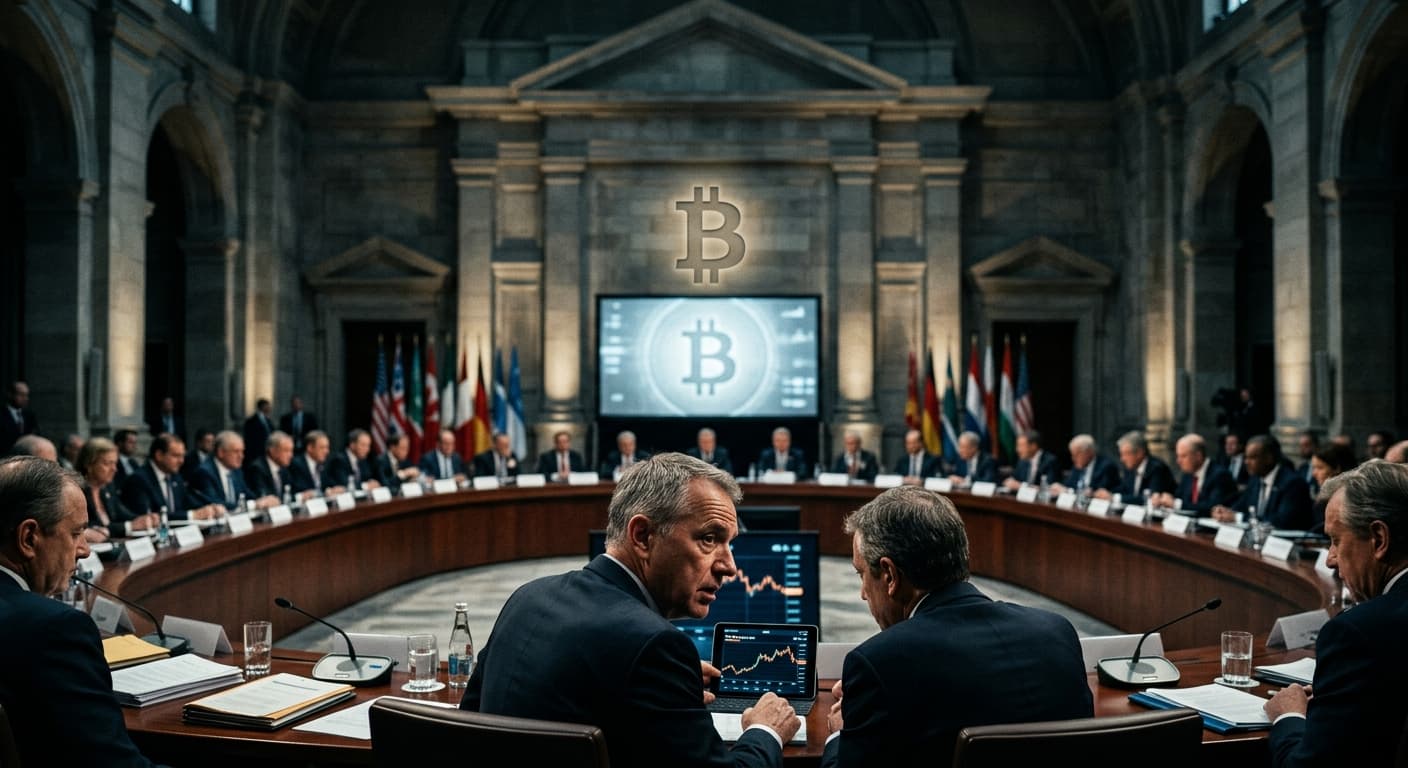
Bitcoin Reshapes Global Financial Power Structures
The historical significance of Bitcoin lies in its challenge to sovereign monetary monopolies, forcing central banks and governments to confront a borderless asset that now influences capital flows, sanctions evasion, and international bargaining power.
Bitcoin reshapes global financial power structures. What began as a pseudonymous experiment in digital scarcity has matured into a strategic asset class that nation-states can no longer ignore. With a market capitalization that has repeatedly exceeded $1 trillion and institutional adoption accelerating across continents, Bitcoin now sits at the intersection of technology, finance, and geopolitics. Its fixed supply of 21 million coins directly contradicts the inflationary policies of fiat currencies managed by central banks, creating both opportunities and existential risks for the existing monetary order.
Unlike traditional reserve assets, Bitcoin operates without counterparty risk, cannot be debased by political decree, and moves seamlessly across borders. These characteristics have transformed it from a niche libertarian project into a tool of economic statecraft. Countries facing sanctions, inflationary crises, or currency instability increasingly view it as a hedge or parallel settlement system. Meanwhile, major powers compete to shape the regulatory environment that will determine who captures the economic and strategic benefits of cryptocurrency trading and the erosion of the petrodollar in 2026 infrastructure.
The Monetary Sovereignty Challenge
Bitcoin's core innovation—decentralized consensus through proof-of-work—fundamentally alters the relationship between citizens and monetary authorities. Central banks have historically maintained exclusive control over money creation, using it as a primary lever of economic policy. The emergence of a predictable, algorithmically enforced monetary policy with a hard cap directly challenges this monopoly.
El Salvador became the first nation to adopt Bitcoin as legal tender in 2021, a move that drew both praise and criticism. President Nayib Bukele positioned the decision as liberation from IMF conditionalities and traditional banking gatekeepers. The country has since accumulated Bitcoin through mining powered by geothermal energy and established a national Bitcoin Office. While critics highlighted volatility risks, the experiment demonstrated that sovereign states could integrate Bitcoin into national financial strategy.
Other nations have taken more measured approaches. Switzerland's "Crypto Valley" in Zug has fostered blockchain innovation through supportive regulation. Singapore and the United Arab Emirates have positioned themselves as crypto-friendly hubs, attracting capital and talent that might otherwise flow to less accommodating jurisdictions. These moves reflect a global competition for digital asset supremacy that carries clear economic implications.
Bitcoin as a Geopolitical Tool
In an era of weaponized finance, Bitcoin offers a potential escape valve from the dollar-dominated SWIFT system. Russia, facing Western sanctions after its invasion of Ukraine, has explored cryptocurrency payments for energy exports. Iran has used Bitcoin to circumvent sanctions on its oil trade, reportedly mining cryptocurrency with subsidized electricity to fund imports. North Korea has allegedly employed state-sponsored hackers to steal Bitcoin, converting digital assets into hard currency for its nuclear program.
These examples illustrate Bitcoin's dual-use nature. While it enables financial inclusion and innovation, it also provides authoritarian regimes with mechanisms to evade international pressure. The United States and its allies have responded by tightening regulations on crypto exchanges and implementing stricter know-your-customer requirements. However, the decentralized nature of Bitcoin's network makes complete control impossible—transactions continue even when major platforms face Bitcoin ATM crackdowns driven by scams and regulation.
China presents a particularly instructive case. After banning cryptocurrency mining and trading in 2021, Beijing shifted focus to its own central bank digital currency, the digital yuan. This move reveals a core tension in the geopolitical cryptocurrency landscape: permissionless networks versus state-controlled digital money. While China suppresses Bitcoin to maintain capital controls and monetary sovereignty, it simultaneously invests heavily in blockchain technology for supply chain tracking and digital identity systems.
The Energy Dimension
Bitcoin mining's substantial electricity consumption has thrust it into energy geopolitics. Estimates suggest the network consumes electricity comparable to mid-sized countries, though the exact figure fluctuates with price and mining profitability. This demand has created unexpected alliances between Bitcoin miners and energy producers.
Stranded or flared natural gas in oil fields has found productive use powering Bitcoin mining operations, potentially reducing methane emissions compared to flaring. Countries with abundant renewable or hydroelectric capacity—including Iceland, Paraguay, and parts of Canada—have attracted mining operations seeking cheap electricity. Kazakhstan emerged as a major mining center after China's ban, though it later faced domestic energy shortages partly attributed to crypto mining.
The energy intensity of Bitcoin has also fueled debates about its environmental impact. Critics argue that proof-of-work is inherently wasteful, while proponents point to increasing use of renewable energy in mining and Bitcoin's potential to monetize stranded energy assets that would otherwise be uneconomic to develop. This discussion sits within larger conversations about energy security and the transition to sustainable power sources.
Institutional Adoption and Financial Markets
The transformation of Bitcoin from speculative curiosity to institutional asset represents one of the most significant shifts in modern finance. MicroStrategy pioneered the corporate Bitcoin treasury strategy under Michael Saylor, holding more than 200,000 BTC and inspiring other companies to follow. Tesla briefly accepted Bitcoin for vehicle purchases before reversing course over environmental concerns, demonstrating the asset's volatility and public perception challenges.
Spot Bitcoin ETFs approved in the United States marked a watershed moment for mainstream adoption. BlackRock, Fidelity, and other major asset managers now offer regulated exposure to Bitcoin, bringing it into 401(k) accounts and traditional portfolios. This institutionalization has implications for monetary policy transmission and financial stability that central bankers are only beginning to analyze.
Meanwhile, nation-state Bitcoin accumulation has accelerated. Reports indicate that the United States government holds substantial Bitcoin seized from criminal operations, though it has periodically auctioned portions of these holdings. Other countries maintain strategic reserves that include cryptocurrency, treating it similarly to gold or foreign currency reserves. Bitcoin lending rebounds as banks and institutions enter the market
Central Bank Perspectives
Major central banks have adopted cautious but evolving stances toward Bitcoin. The Federal Reserve has warned about risks to financial stability while acknowledging potential benefits of blockchain technology. The European Central Bank has been more skeptical, with officials describing Bitcoin as a speculative asset with limited utility. Emerging market central banks facing currency depreciation have shown greater openness to exploring Bitcoin as a reserve asset.
The Bank for International Settlements has conducted extensive research on cryptocurrencies and central bank digital currencies. Its reports highlight the tension between decentralized cryptoassets and the need for monetary policy effectiveness. Several central banks are advancing CBDC projects partly as a response to the competitive pressure from Bitcoin and stablecoins. Ethereum Foundation Shakeup: How Vitalik Buterin's "Smaller Ship" Model Reshapes Crypto's Role in Global Financial Power
Regulatory Competition and Economic Statecraft
Different jurisdictions have taken markedly different approaches to Bitcoin regulation, creating a form of regulatory arbitrage that influences capital flows. The European Union's MiCA framework aims to provide comprehensive crypto regulation, while the United States has relied on a patchwork of agency actions and court decisions. This regulatory fragmentation affects where exchanges operate, where talent concentrates, and ultimately where economic activity related to digital assets occurs.
Developing nations often face acute choices. Bitcoin can provide citizens with access to global financial markets when local banking systems are inadequate or corrupt. Mobile money innovations in Africa demonstrated the power of digital finance to bypass traditional infrastructure limitations. Bitcoin and stablecoins extend this capability globally, allowing remittances to flow with lower fees and faster settlement than traditional correspondent banking. Trump bank citizenship executive order and its implications for global finance
However, volatility and consumer protection concerns remain legitimate. The collapse of FTX in 2022 served as a cautionary tale about the risks of inadequate regulation and the concentration of power in centralized crypto platforms despite the decentralized ideals of the underlying technology. The event accelerated regulatory scrutiny worldwide while highlighting the distinction between Bitcoin's robust base layer and the often fragile ecosystem built upon it.
The Future of Monetary Competition
Looking ahead, Bitcoin's role in the international monetary system will likely expand rather than contract. Its properties as a scarce, verifiable, portable, and divisible asset align with classical definitions of sound money. As trust in fiat institutions faces periodic challenges—from inflation surges to banking crises—Bitcoin's credibility as an alternative settlement system strengthens.
The integration of Bitcoin into traditional finance through ETFs, corporate treasuries, and potential sovereign adoption creates feedback loops that increase its systemic importance. Lightning Network development and other layer-two solutions address scalability limitations, potentially enabling Bitcoin to function more effectively as a medium of exchange in addition to its store-of-value characteristics.
Geopolitical competition will shape Bitcoin's evolution. Nations that embrace innovation while managing risks may capture disproportionate economic benefits through technology leadership, talent attraction, and favorable trade balances in digital services. Those that suppress cryptocurrency entirely risk falling behind in blockchain expertise with applications far beyond Bitcoin itself.
The rise of Bitcoin also forces a reckoning with fundamental questions about monetary sovereignty in a digital age. Can governments maintain effective capital controls when citizens can memorize twelve words and carry billions in value across borders? How should central banks adjust their policies knowing that citizens have a viable exit option from depreciating local currencies? These questions have no easy answers and will likely drive policy experimentation for decades.
Conclusion
Bitcoin has evolved from marginal experiment to geopolitical reality. Its continued existence despite regulatory hostility, energy concerns, and repeated predictions of demise demonstrates the power of its underlying incentives and technology. As nations grapple with debt burdens, currency competition, and the digitization of finance, Bitcoin serves as both mirror and catalyst—reflecting existing monetary weaknesses while accelerating the search for viable alternatives.
The asset's decentralized nature ensures no single government or institution controls its destiny. This quality, once seen as a bug by traditional financial authorities, increasingly appears as a feature in a multipolar world where trust in centralized powers faces growing skepticism. Whether Bitcoin ultimately supplants aspects of the current system or simply forces necessary reforms remains uncertain.
What is clear is that ignoring Bitcoin's implications for economic sovereignty, energy markets, regulatory competition, and international power dynamics is no longer viable for serious policymakers. The cryptocurrency revolution has merged with traditional geopolitics, creating a new domain where code, capital, and national interest intersect. Nations that understand and strategically engage with this reality will likely hold advantages in the monetary and technological competitions defining the 21st century.
The historical experiment continues. Bitcoin's fixed supply clock ticks inexorably toward its 21 million coin limit, creating predictable scarcity amid unpredictable global events. How governments, institutions, and individuals respond to this novel form of money will shape economic outcomes and power relationships for generations to come. The borderless, permissionless nature of Bitcoin ensures that this monetary competition plays out on a truly global stage, with consequences that extend far beyond financial markets into the realm of sovereignty itself.
Share This Article