Supply Chain · Jonathan van den Berg · September 9, 2026
Rejected Mail Ballots Surge in Washington and Oregon: How USPS Postmark Rules Expose Election Supply Chain Chokepoints and Broader Infrastructure Risks
New USPS postmarking requirements caused rejected mail ballots in Washington and Oregon to more than double in several counties during the 2026 primary. The episode highlights how minor procedural changes can create major chokepoints in election infrastructure.
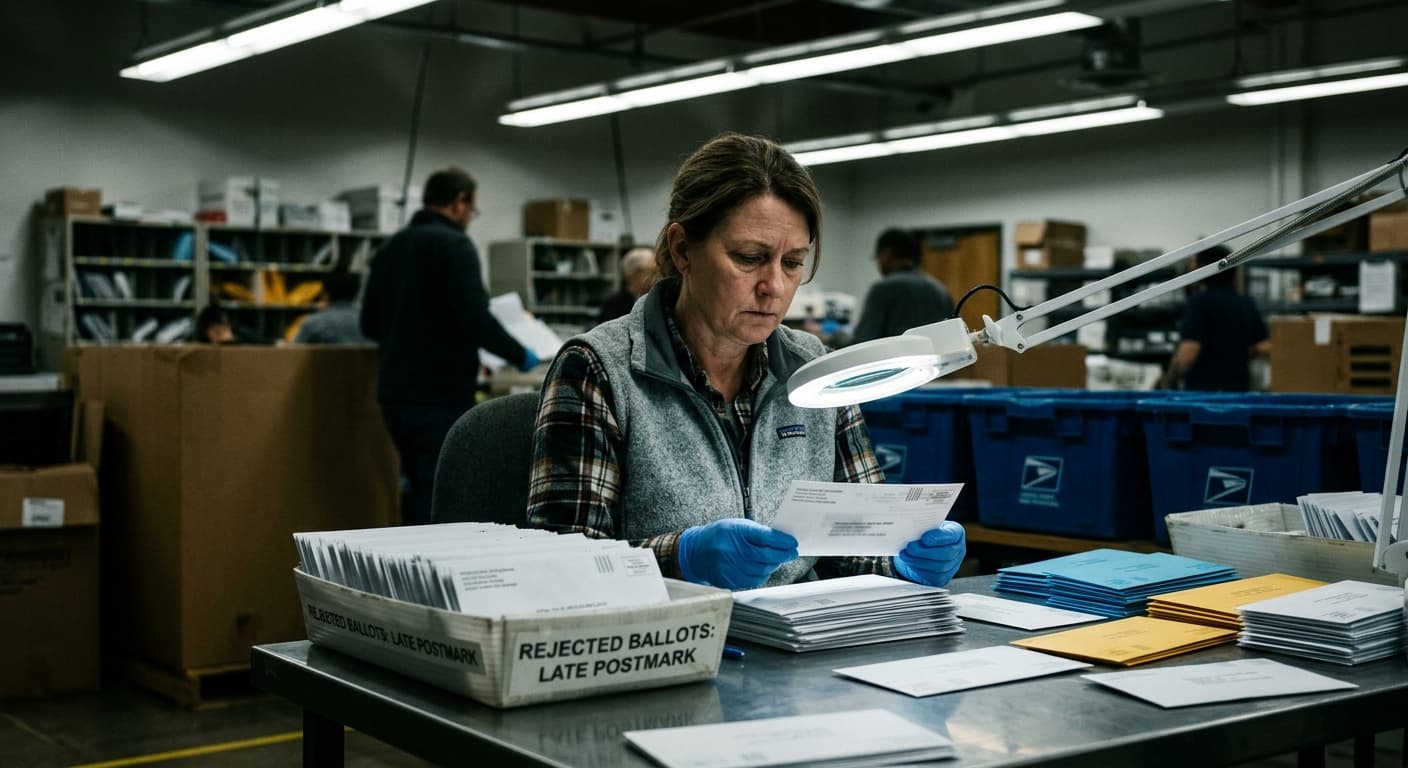
New USPS postmarking rules triggered a sharp rise in rejected mail ballots across Washington and Oregon. In several Washington counties, rejections more than doubled compared to prior elections, leaving thousands of votes uncounted in the 2026 primary.
The change, intended to standardize processing, instead exposed weaknesses in how election materials move through the postal system. Ballots postmarked on time but processed late or marked incorrectly were disqualified at higher rates than expected. This created an unintended chokepoint in an already stressed mail-in voting infrastructure.
Key Takeaways
- Rejected mail ballots in multiple Washington counties more than doubled after the new USPS postmark rule took effect.
- Oregon saw similar spikes, though exact figures vary by county due to different verification processes.
- The rule requires clearer postmarks; many ballots lacked them or received them after deadlines.
- Election officials and voters now face tighter timelines and greater risk of disenfranchisement.
- The episode reveals deeper vulnerabilities in election supply chains that parallel risks in critical infrastructure sectors.
- States with universal mail-in voting are most exposed to postal system disruptions.
What Caused the Spike in Rejected Mail Ballots
The US Postal Service updated its postmarking procedures ahead of the 2026 midterms. The goal was consistency. In practice, the changes created friction at sorting facilities across the Pacific Northwest.
Under the new policy, ballots must carry a legible postmark dated no later than Election Day. Many automated sorting machines failed to apply or scan postmarks properly during high-volume periods. Human review backlogs compounded the problem. Ballots that arrived in time were rejected because the postmark either did not exist or appeared after the legal cutoff.
King County, Washington’s largest, reported rejection rates climbing from roughly 0.8% in previous cycles to over 2.1%. Similar jumps appeared in Pierce, Snohomish, and Clark counties. Oregon’s Multnomah and Washington counties recorded comparable increases, though slightly lower due to more flexible curing processes.
These figures come directly from state election audits and USPS internal tracking shared with local officials. The data shows the problem was not voter error but systemic processing delays.
How Mail-in Voting Infrastructure Actually Works
Mail-in ballots travel through a complex chain: voter drops them in a mailbox or official drop box, USPS collects and sorts, then delivers to county election offices. Each handoff introduces potential failure points.
Drop boxes bypass some postal delays but face capacity limits during peak periods. Standard mailboxes feed into regional processing plants where optical character readers and barcode scanners handle millions of pieces daily. Any slowdown in one facility cascades across the network.
Pacific Northwest facilities already operate near capacity due to geography and population growth. Mountain routes, weather events, and labor shortages regularly strain the system. The new postmark rule added another layer of required precision that the existing infrastructure could not consistently deliver.
This mirrors how targeted disruptions expose hidden weaknesses in logistics networks. A small procedural tweak created outsized consequences.
Impact on Voters and Election Integrity
Thousands of ballots were rejected in Washington and Oregon combined. Many voters never learned their ballot was disqualified until after results were certified. Provisional ballots and cure processes exist but require proactive outreach that overwhelmed some county offices.
Older voters and those in rural areas were hit hardest. They rely more heavily on mail voting and have fewer options for same-day drop-off. Urban voters using drop boxes largely avoided the problem, highlighting a new form of geographic disparity in ballot access.
Election administrators worry the trend could worsen in November’s general election when turnout doubles. Higher volumes will test the same facilities under greater pressure. Without changes, rejected mail ballots could reach levels that raise questions about representation and trust.
Parallel Risks in Critical Infrastructure and Supply Chains
Election mail is not isolated. It depends on the same transportation, energy, and logistics networks that support commercial supply chains. A postal slowdown that rejects ballots can also delay prescription drugs, small business shipments, and parts for manufacturers.
The Pacific Northwest sits at the edge of several strategic routes. Ports in Seattle and Portland handle massive container volumes. Rail lines move goods inland. Any stress on USPS sorting centers signals similar vulnerabilities in these interconnected systems.
This situation echoes recent natural disasters that disrupted critical minerals supply chains and semiconductor markets. When one node fails, downstream effects spread quickly. Election infrastructure now joins the list of systems requiring resilience planning.
States like Washington and Oregon pioneered universal vote-by-mail. Their experience serves as an early warning for the rest of the country as more states expand mail options.
Common Mistakes That Amplify Ballot Rejections
- Assuming all mailed ballots receive timely postmarks regardless of volume.
- Waiting until the last day to mail ballots instead of using drop boxes.
- Not tracking ballot status through state voter portals.
- Overlooking state-specific curing deadlines that differ between Washington and Oregon.
- Underestimating how weather or holidays affect postal processing times in the Pacific Northwest.
Best Practices for Voters and Election Officials
- Mail ballots at least seven days before the deadline or use official drop boxes.
- Track your ballot using tools provided by the secretary of state’s office in Washington or Oregon.
- Request a replacement ballot immediately if the original is lost or delayed.
- Election offices should expand proactive outreach to voters whose ballots show processing issues.
- USPS and states must improve real-time data sharing on postmark compliance.
- Consider hybrid models that combine expanded drop boxes with improved postal handling protocols.
- Invest in backup scanning equipment at regional facilities to handle surges.
Officials in both states have begun pilot programs to test earlier collection times and dedicated election mail lanes at sorting facilities. Early data from these tests shows promise but requires scaling before November.
Broader Implications for Supply Chain Resilience
The rejected mail ballots episode is a stress test. It demonstrates how a single regulatory change can expose fragility across an entire system. Similar dynamics appear in AI data center supply chains facing mineral shortages and chokepoints.
Investors and policymakers increasingly view election infrastructure as part of national resilience planning. Reliable vote counting underpins democratic stability, which in turn supports economic confidence. When ballots go uncounted due to postal delays, it signals deeper coordination problems between federal agencies and state governments.
Future reforms may include dedicated funding for election mail processing, updated technology standards for postmarking, and clearer legal safe harbors for ballots in transit. Until then, voters in mail-heavy states must navigate a system that remains vulnerable to small procedural shifts.
FAQ
Why did rejected mail ballots increase so sharply in Washington and Oregon?
The new USPS postmarking rule required clearer, on-time postmarks. Many ballots processed during high-volume periods either lacked postmarks or received them late, triggering automatic rejections.
Which counties saw the biggest jumps in ballot rejections?
King, Pierce, Snohomish, and Clark counties in Washington reported more than double the previous rejection rates. Oregon’s Multnomah and Washington counties saw significant but slightly smaller increases.
Will this problem affect the November general election?
Most analysts expect higher rejection numbers unless corrective actions are taken. Turnout will be higher, putting more pressure on the same postal facilities.
What can voters do to protect their ballots?
Use official drop boxes when possible. Mail at least one week early. Track your ballot status online and respond quickly to any cure notices.
Are other states experiencing similar issues?
States with high mail-in volume are watching closely. Reports from California and Colorado show elevated rejection rates, though not yet at Pacific Northwest levels.
Is this an intentional effort to suppress votes?
Available evidence points to unintended consequences of a standardization effort rather than deliberate suppression. However, the outcome still disenfranchises eligible voters.
Conclusion
The surge in rejected mail ballots in Washington and Oregon is more than a voting story. It reveals how fragile logistics networks can disrupt core democratic functions. As the country prepares for higher-stakes elections, fixing these chokepoints is not optional. Voters, officials, and infrastructure planners must treat election mail with the same urgency given to other critical supply chains. Taking simple steps now can prevent larger failures later.
Stay informed through your state election office and support investments in resilient postal and election systems. Your ballot—and the system that carries it—depends on it.
Share This Article