Jonathan van den Berg · May 17, 2026
Pakistan's Cricket Crisis Deepens as Economic Pressures Mount in Dhaka
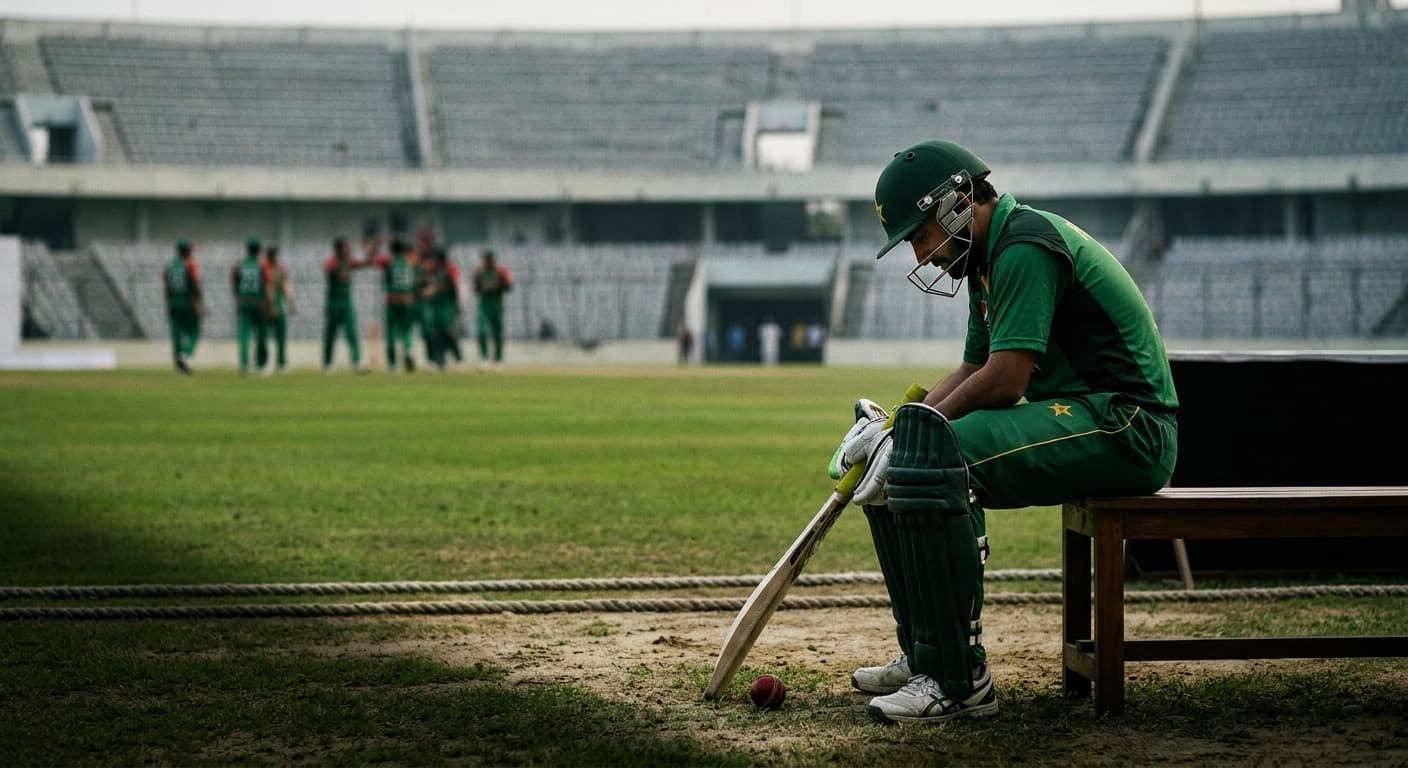
Pakistan's batting collapse to 96 for 4 by lunch on day two of the second Test against Bangladesh in Dhaka has triggered fresh questions about the team's direction at a time when the country's economy continues to battle high inflation and IMF loan conditions.
In Dhaka, Bangladesh's bowlers have Pakistan reeling at 96 for 4 at lunch on the second day of the second Test, piling fresh pressure on a national team that many Pakistanis see as a rare point of pride amid broader national struggles.
This latest on-field setback comes at a delicate moment for Pakistan. The economy remains fragile. Foreign reserves are thin. Political tensions linger after years of turbulence. For millions of ordinary Pakistanis, the performance of the cricket team often feels like a mirror to the country's wider fortunes.
The match in Dhaka is more than sport. It highlights how economic stress, governance challenges, and international relations intersect in one of South Asia's most important relationships. Bangladesh has transformed its economy in recent decades. Pakistan is still searching for stable growth. The contrast is visible both on the cricket pitch and in the macroeconomic data.
The Collapse in Dhaka
Bangladesh's seamers and spinners exploited a hesitant Pakistan top order. According to ball-by-ball commentary from ESPNcricinfo, Pakistan lost early wickets and struggled to build partnerships. By lunch, the visitors were staring at a difficult path to save the match.
Dawn newspaper reported that fans back home expressed frustration mixed with familiar resignation. Cricket is followed passionately across Pakistan, from crowded urban neighborhoods in Karachi to remote villages in Khyber Pakhtunkhwa. When the national team falters, the disappointment is national.
Yet this is not simply about one poor session. Pakistan cricket has faced questions about selection, coaching stability, and player motivation for several years. The current tour of Bangladesh occurs while the Pakistan Cricket Board wrestles with funding issues tied to the country's overall economic health.
Economic Headwinds at Home
Pakistan's economy has been on life support for years. The country has turned to the International Monetary Fund multiple times. As of 2026, negotiations for a new bailout package continue. Inflation, while lower than its 2022-2023 peaks, still squeezes household budgets. Energy prices remain volatile. Power outages continue to disrupt businesses and daily life.
The World Bank notes that Pakistan's growth has been inconsistent. Debt servicing consumes a large share of government revenue. This leaves less room for investment in infrastructure, education, or healthcare — areas that determine long-term stability.
These pressures affect cricket directly. The PCB relies on sponsorship deals, broadcast rights, and government support. When the national economy weakens, these revenue streams come under strain. Players worry about contracts. Administrators face tough budget choices. Fans sense the instability.
Bangladesh's Rise and Regional Contrast
Bangladesh offers a different story. Once one of the poorest countries in the region, it has built a strong garment export industry and achieved steady GDP growth. Its cricket team has improved markedly over the past decade. Hosting Pakistan and gaining the upper hand carries both sporting and symbolic weight.
The two nations share deep cultural and historical ties, yet their economic paths have diverged. Bangladesh's per capita income has overtaken Pakistan's in recent years. This shift is felt in everything from trade balances to migration patterns. Many Pakistani professionals now look toward opportunities in Bangladesh's growing economy.
This context makes the Test series more than entertainment. It becomes a stage where national pride, economic performance, and regional influence compete for attention.
Cricket as Soft Power and Economic Signal
Cricket plays an outsized role in South Asian geopolitics. Matches between Pakistan, India, Bangladesh, and others draw massive television audiences. They influence public sentiment and, at times, diplomatic moods.
A strong Pakistan team helps project an image of resilience and excellence that the country struggles to show in other areas. Victories boost morale. They can even support tourism, sponsorships, and related business activity. Defeats, especially heavy ones, reinforce narratives of decline.
This dynamic appears across many countries. Sports success often serves as a proxy for national confidence. When economies face difficulties, governments and citizens look to the pitch, the track, or the field for reasons to celebrate.
In Pakistan's case, the link feels particularly strong. The country has produced some of cricket's greatest talents — Imran Khan, Wasim Akram, Shahid Afridi, and Babar Azam. Each generation measures itself against those legends. Current struggles hurt more because expectations remain high.
Political and Governance Challenges
Pakistan's economic troubles cannot be separated from its politics. Frequent changes in government, allegations of corruption, and tensions between civilian leaders and the military have complicated reform efforts. The IMF repeatedly calls for stronger tax collection, reduced subsidies, and better governance. These changes are politically difficult.
Ordinary citizens feel the results. Rising prices for food and fuel create hardship. Young people face limited job prospects. Many seek opportunities abroad, contributing to a brain drain that further weakens the economy.
Cricket offers temporary escape. Yet when the team also struggles, the sense of frustration compounds. Social media during the Dhaka Test showed fans linking on-field failures with broader national discontent.
Regional Relations and Trade Potential
Despite sporting rivalry, Pakistan and Bangladesh have scope to improve economic cooperation. Trade volumes remain below potential. Both countries belong to the South Asian Association for Regional Cooperation (SAARC), though the group has been largely inactive due to India-Pakistan tensions.
Improved ties could bring benefits in textiles, agriculture, pharmaceuticals, and information technology. Bangladesh has developed expertise in certain manufacturing sectors that could complement Pakistani strengths. Joint ventures or easier visa policies for business travel could help.
Cricket diplomacy has a long history in the region. Successful tours and cordial relations on the field sometimes open doors for quieter discussions on trade or people-to-people contacts. The current series, even if challenging for Pakistan, keeps high-level contact alive.
Links to Global Economic Trends
Pakistan's situation reflects wider patterns. Many developing economies face high debt, climate vulnerability, and pressure from global commodity prices. Energy politics play a major role. Pakistan relies heavily on imported fuel. Price swings in global oil markets directly hit its balance of payments.
This connects to larger stories about how conflicts in the Middle East affect energy prices and shipping routes. When oil becomes more expensive, Pakistan's import bill rises. That squeezes foreign reserves and forces tougher economic choices.
The country has also explored closer ties with China through the China-Pakistan Economic Corridor. While this has brought infrastructure investment, it has also added to debt concerns. Balancing relations with China, the United States, Saudi Arabia, and international lenders remains a delicate act.
Meanwhile, stock market volatility and policy uncertainty affect investor confidence in emerging markets like Pakistan. Foreign portfolio investment can swing rapidly based on global risk sentiment, making economic planning harder.
What Needs to Happen
Fixing Pakistan's economy requires sustained effort across several fronts. Leaders must broaden the tax base without crushing small businesses. They need to improve the energy sector so that factories can run reliably and households avoid load-shedding. Education and skills training must improve so young Pakistanis can compete in a global economy.
Cricket can help by inspiring unity and discipline. A successful national team creates role models for young athletes and boosts national self-belief. But sport alone cannot carry the weight of economic reform.
The current generation of players faces intense scrutiny. They carry the hopes of a nation dealing with inflation, unemployment, and political uncertainty. Their performance in Dhaka matters not just for the series scoreline but for the mood of a country hungry for good news.
The Road Ahead for Pakistan Cricket and Economy
The second Test in Bangladesh is far from over. Pakistan still has batting depth and the chance to fight back. How the team responds will be watched closely at home.
Beyond the match, Pakistan needs a clearer economic strategy. Recent talks with the IMF suggest some recognition of necessary reforms. Implementation will be the real test. History shows that agreements are easier to sign than to deliver in practice.
Bangladesh, for its part, continues its upward trajectory. Its cricket team growing in confidence mirrors the country's increasing self-assurance on the regional stage. The contrast with Pakistan is instructive for both nations.
For ordinary people in both countries, these issues matter in practical ways. A stronger economy means more jobs, stable prices, better schools, and reliable electricity. Cricket victories provide celebration and pride. When both align, the effect is powerful. When neither delivers, disappointment runs deep.
The events in Dhaka this week capture a larger story. They show how sport, economics, politics, and national identity remain tightly linked in South Asia. Pakistan's path to recovery will not be easy. It will require wise leadership, public patience, and a willingness to make difficult choices.
Yet the country has shown resilience before. Its people are resourceful. If cricket can provide inspiration during tough times, perhaps the lessons learned on the field — discipline, adaptability, teamwork — can also apply to the harder task of building a stable and prosperous economy.
The coming days in Dhaka will determine the result of this Test. The coming years will determine whether Pakistan can turn its considerable potential into lasting progress. Both contests matter deeply to the millions watching from afar.
Conclusion
Pakistan stands at an important crossroads. The batting collapse in Dhaka is painful but ultimately just one match. The deeper challenges involve creating an economy that delivers opportunity and stability for its citizens. Cricket will continue to play an emotional role in national life. Sustainable progress, however, depends on reforms that go well beyond the boundary rope.
Success is possible. Other countries have turned difficult situations around through consistent policy, investment in people, and pragmatic international partnerships. Pakistan possesses talented people, strategic location, and a young population. Harnessing these strengths while addressing long-standing weaknesses will define its future.
For now, fans will hope for a fighting performance in the remainder of the Test. Beyond the scoreboard, they will also watch to see whether their country's leaders can show the same resilience and strategic thinking needed to navigate economic challenges in a competitive world.
Share This Article