Critical Minerals · Jonathan van den Berg · November 10, 2026
NVIDIA Megaspeed Probe: How Huang's China Ties Expose Critical Minerals Risks, Sanctions Compliance Gaps, and AI Data Center Vulnerabilities
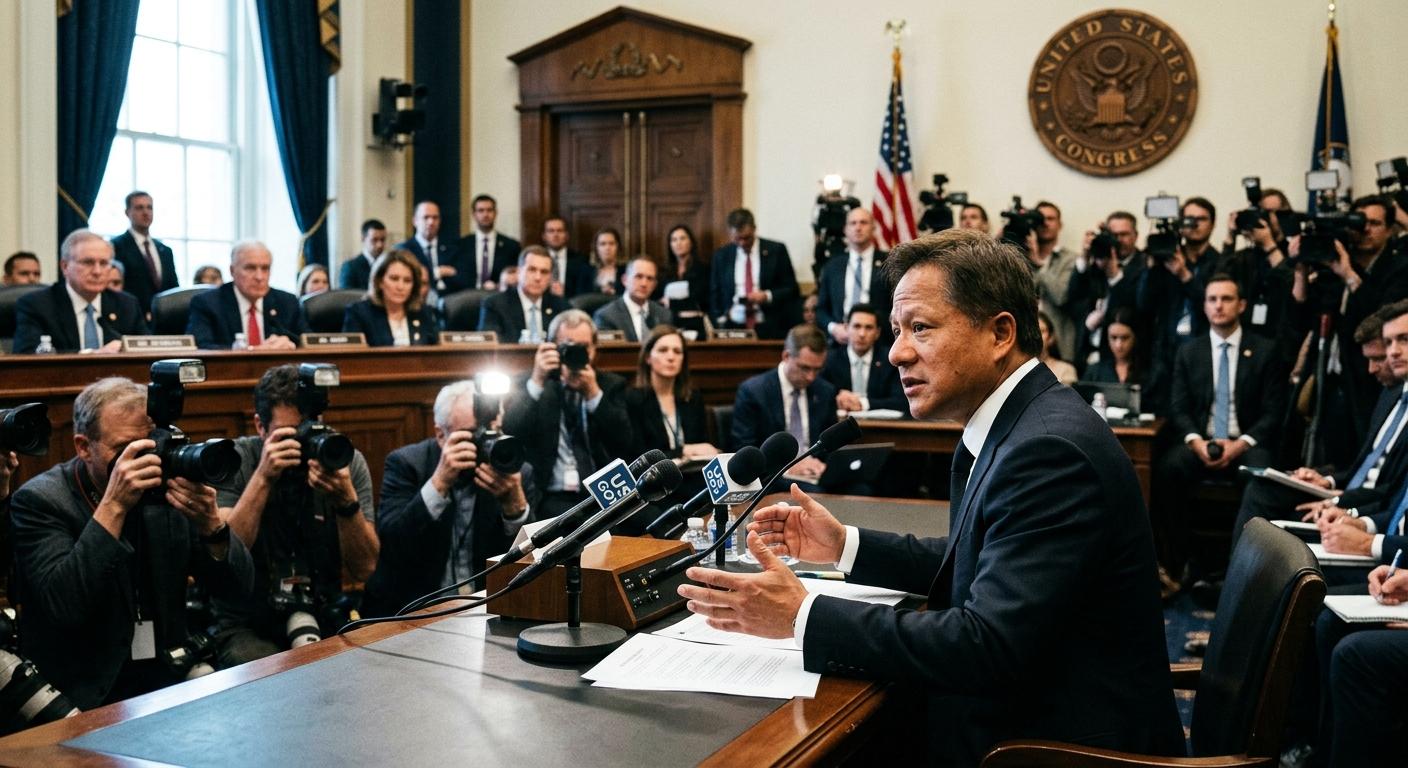
Jensen Huang and NVIDIA face intensifying probes into claims that restricted high-performance GPUs reached Chinese entities despite U.S. export controls. The allegations spotlight persistent gaps in sanctions compliance, critical minerals exposure, and accelerating power demands from AI data centers.
The NVIDIA megaspeed investigation centers on allegations that high-performance GPUs, including modified versions of the H100 and H20 series, reached Chinese military and AI research entities in violation of U.S. export controls. Investigators claim these transfers occurred through complex transshipment networks involving third countries and shell companies, exposing weaknesses in sanctions compliance and accelerating China's domestic AI capabilities.
Key Takeaways
- Probes focus on whether NVIDIA executives, including CEO Jensen Huang, knew or should have known about end-use violations involving "megaspeed" modified chips.
- Critical minerals such as gallium, germanium, and rare earth elements face heightened nationalization risks as China responds to perceived tech decoupling.
- AI data center operators in Northern Virginia and other U.S. hubs now face greater supply uncertainty for advanced GPUs essential to training large models.
- Secondary sanctions risk extends to intermediaries and logistics firms operating near the Malacca Strait and other chokepoints.
- Sovereign wealth funds are reassessing exposure to NVIDIA and its supply chain partners amid compliance uncertainty.
What the NVIDIA Megaspeed Allegations Actually Mean
U.S. authorities allege that thousands of advanced GPUs were rerouted to China after export restrictions tightened in 2022 and 2023. The term "megaspeed" reportedly refers to specialized firmware and hardware modifications that allow chips to exceed performance thresholds set by the Bureau of Industry and Security (BIS). These modifications allegedly bypassed detection systems at ports and during final assembly.
For institutional investors, the probe raises immediate questions about NVIDIA's compliance infrastructure. The company has maintained that it follows all U.S. regulations and requires customers to certify proper end use. Yet repeated incidents involving third-party distributors suggest enforcement gaps that regulators now target directly at senior leadership.
This matters because NVIDIA supplies roughly 80-90% of the high-end AI accelerators used globally. Any material disruption to its China-related revenue — which historically accounted for more than 20% of total sales — would force rapid repricing of growth expectations.
Critical Minerals Exposure in the Crossfire
China dominates global refining of gallium and germanium, two metals essential for producing advanced semiconductors and fiber optics used in data center networking. In response to U.S. chip controls, Beijing has already imposed export licensing requirements on these materials. A full nationalization scenario or retaliatory embargo would immediately raise costs for every AI infrastructure project worldwide.
The NVIDIA megaspeed investigation accelerates this dynamic. Chinese entities reportedly used the diverted chips to train models that reduce reliance on foreign semiconductors. This self-sufficiency push increases pressure on global critical minerals supply chains already strained by demand from recent seismic events affecting Asian processing hubs.
Investors tracking lithium, cobalt, and copper should note parallel risks. Data center construction requires enormous quantities of these metals for power infrastructure and cooling systems. Any escalation in U.S.-China tech friction tends to trigger resource nationalism in producer nations across South America and Africa.
Sanctions Compliance Failures and Secondary Risks
The core issue in the NVIDIA probe is not simply illegal shipment but whether internal controls were adequate. OFAC and BIS have increased focus on "know your customer" diligence for high-risk jurisdictions. Companies must now demonstrate they actively monitor downstream use, not just initial sales.
Secondary sanctions could target logistics providers, freight forwarders, and banks facilitating these transfers. Routes through Southeast Asia near the Malacca Strait have become particularly sensitive. Shipping companies operating in this corridor already apply risk premiums similar to those seen in the Red Sea after Houthi activity intensified.
Compare this to earlier cases:
| Incident | Primary Risk | Market Impact |
|---|---|---|
| Huawei Entity List additions (2019-2023) | Supply chain disruption | TSMC and ASML volatility |
| Russian oil sanctions evasion | Shadow fleet creation | Persistent price premiums |
| NVIDIA China GPU restrictions (2022-present) | Transshipment networks | Ongoing compliance costs |
The current probe differs because it appears to implicate executive awareness. This raises the possibility of personal liability and heavier corporate fines that could reach several percent of annual revenue.
AI Data Center Power and Infrastructure Implications
Every diverted GPU that reaches China represents one fewer unit available for domestic U.S. and allied data centers. Northern Virginia, already facing acute grid constraints, competes directly with Chinese hyperscalers for limited supply. Operators report lead times stretching beyond 12 months for high-end systems.
This scarcity drives up costs for power purchase agreements (PPAs) and forces reliance on less efficient alternatives. Nuclear restarts and small modular reactor projects gain urgency precisely because AI training clusters consume electricity equivalent to small cities.
The investigation also highlights vulnerabilities in the broader semiconductor ecosystem. Modified NVIDIA RTX 5090 GPUs with expanded VRAM, previously discussed in specialized markets, illustrate how hardware tweaks can circumvent controls while still demanding the same critical minerals and energy inputs.
Related developments show the interconnected risks. Houthi advances in Yemen have already demonstrated how regional conflicts quickly translate into higher insurance and logistics costs for technology shipments. Similar dynamics could emerge around the Strait of Hormuz if tensions escalate in response to technology sanctions.
How Sovereign Wealth Funds Are Responding
Funds from the Gulf and East Asia have poured capital into AI infrastructure. The NVIDIA megaspeed probe forces a reassessment. Temasek, GIC, and PIF now demand more granular compliance reporting from portfolio companies. Some have reportedly slowed commitments to data center projects in jurisdictions with high sanctions exposure.
This shift favors projects with secure domestic supply chains and clear regulatory alignment. It also accelerates interest in alternative computing architectures that reduce dependence on NVIDIA's CUDA ecosystem, though such transitions remain years away at scale.
Cross-reference with broader trends: OpenAI's funding rounds involving sovereign capital have already reshaped power demand forecasts. The current probe adds a compliance overlay that makes such deals more complex to underwrite.
Common Mistakes Investors Make in This Environment
- Assuming NVIDIA's dominant market position protects it from regulatory penalties.
- Underestimating China's ability to accelerate domestic chip development using diverted hardware.
- Ignoring second-order effects on critical minerals markets when assessing pure-play semiconductor stocks.
- Failing to model grid connection delays and power costs when projecting AI infrastructure returns.
- Treating sanctions compliance as a legal checkbox rather than an operational risk factor.
Best Practices for Navigating Sanctions, Minerals, and AI Infrastructure Risk
- Conduct regular third-party audits of downstream GPU usage with blockchain-based tracking where possible.
- Diversify critical minerals sourcing across multiple jurisdictions while maintaining stockpiles equivalent to six months of projected needs.
- Secure long-term PPAs with nuclear or renewable providers before finalizing data center site selection.
- Build parallel supplier relationships in Taiwan, South Korea, and the United States to mitigate single-point failures.
- Stress-test portfolios against scenarios where China imposes full gallium and germanium export bans.
- Monitor logistics risk premiums in key maritime chokepoints as leading indicators of enforcement intensity.
These steps mirror strategies employed after earlier shocks, including those analyzed in NVIDIA's broader supply chain challenges.
FAQ
What exactly is the NVIDIA megaspeed investigation about?
Authorities are examining whether modified high-performance GPUs were shipped to Chinese entities in ways that violated U.S. export controls on advanced AI technology. The focus includes potential knowledge or negligence at senior levels of the company.
How does this affect critical minerals markets?
Escalating tensions increase the likelihood of Chinese export restrictions on gallium, germanium, and other refining-heavy materials. This directly impacts semiconductor production costs and timelines for AI data center buildouts globally.
Will the probe materially hurt NVIDIA's financial performance?
Direct China sales have already declined sharply due to existing controls. The greater risk lies in potential fines, executive scrutiny, and accelerated development of domestic Chinese alternatives that could erode long-term market share.
What should AI data center operators do differently?
Prioritize suppliers with robust compliance programs, lock in power capacity early, and diversify GPU vendors even if it means accepting lower performance in some clusters. Grid constraints in hubs like Northern Virginia make supply certainty more valuable than peak theoretical performance.
Are sovereign wealth funds pulling back from AI investments?
Not entirely, but they are applying stricter due diligence on sanctions exposure and demanding clearer pathways to secure critical minerals and energy supply. Deals now take longer to close and often include more stringent governance requirements.
Conclusion
The NVIDIA megaspeed investigation reveals how quickly technology controls, critical minerals strategy, and sanctions compliance intersect in today's geopolitical environment. For investors and operators in AI infrastructure, the episode underscores that supply chain resilience now depends as much on regulatory foresight as on engineering excellence.
Those who treat compliance, minerals security, and power procurement as integrated strategic priorities will maintain advantage as these pressures intensify. Monitor enforcement actions closely. The next round of restrictions or retaliatory measures could reshape competitive landscapes faster than many balance sheets are prepared to absorb.
Review your exposure to chokepoints, whether maritime, regulatory, or energetic. The margin for error continues to shrink.
Share This Article