Critical Minerals · Jonathan van den Berg · October 27, 2026
How 2026 Earthquakes Reshape Critical Minerals Supply Chains, Semiconductor Markets, and AI Data Center Expansion
Earthquakes in Tibet and off Vanuatu in October 2026 highlight how seismic events disrupt rare earth processing, lithium refining, and chip fabrication. Institutional investors face higher risk premiums on semiconductor stocks and AI infrastructure exposed to these chokepoints.
Earthquakes registering between magnitude 6.9 and 7.0 struck Tibet and the Vanuatu islands in quick succession in late October 2026. These events immediately disrupted rare earth element mining and processing in western China while threatening undersea cable routes that carry data traffic essential to AI training clusters.
The timing matters for investors. Critical minerals remain the foundation for semiconductor wafers, battery storage for data centers, and high-performance magnets used in cooling systems. Any physical shock to their supply chains raises costs across the entire technology stack.
Key Takeaways
- Tibet quake damaged roads and rail links used to move rare earth concentrates from Sichuan and Yunnan mines to processing hubs near Baotou.
- Vanuatu tremors raised insurance costs for Pacific submarine cables that connect Asian semiconductor fabs to North American AI data centers.
- Semiconductor stocks including NVIDIA and TSMC saw short-term volatility as traders repriced logistics risk.
- AI operators in Northern Virginia now face higher backup power premiums because lithium and graphite supply uncertainty affects battery storage economics.
- Sovereign wealth funds from the Gulf and Singapore are accelerating direct investments in non-Chinese rare earth projects to hedge future seismic or policy shocks.
Immediate Physical and Logistical Impacts
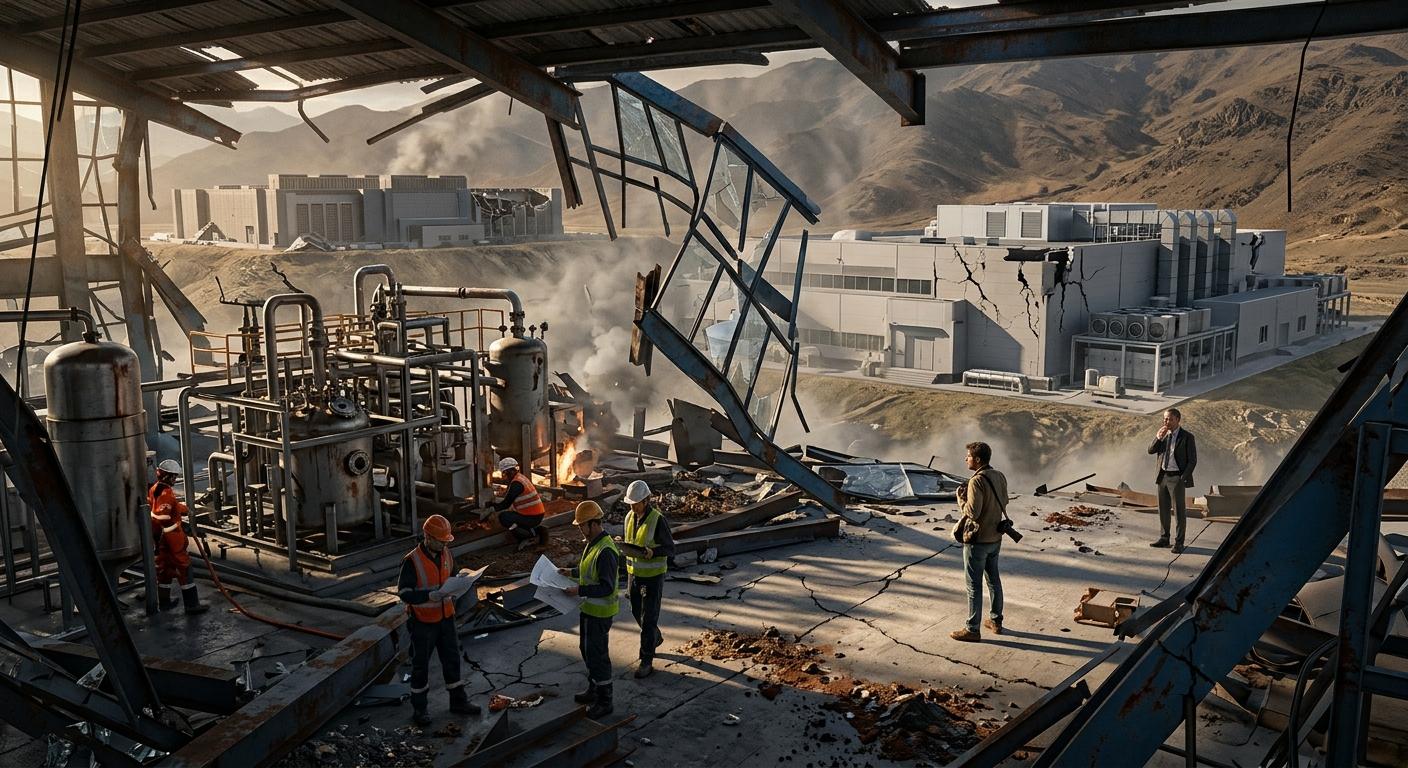
The Tibet earthquake, centered in a remote high-altitude region, cracked sections of the Sichuan-Tibet railway and several provincial highways. These routes transport monazite and bastnasite ores that contain neodymium, praseodymium, and dysprosium—elements essential for permanent magnets in electric motors and data center cooling fans.
Initial assessments from local authorities indicate at least three weeks of reduced throughput. Processors in Inner Mongolia reported a 12–18% drop in feedstock arrivals within 72 hours of the quake. Spot prices for neodymium-praseodymium oxide jumped 9% on Asian exchanges before stabilizing as traders drew down inventories built during earlier policy-driven export restrictions.
Simultaneously, the Vanuatu series of quakes—while offshore—triggered heightened scrutiny of the stability of undersea fiber optic cables running through the South Pacific. These cables carry a growing share of trans-Pacific internet traffic that supports real-time synchronization between Asian chip foundries and U.S. hyperscale training clusters. Even minor cable repairs can delay data transfers by days, forcing AI developers to over-provision compute capacity elsewhere.
Critical Minerals Most Exposed
Four minerals stand out in the current shock:
- Rare earth elements (REEs): China controls roughly 70% of global refining capacity. Tibet lies adjacent to major mining districts. Any sustained disruption forces buyers toward smaller producers in Australia, the United States, and Vietnam.
- Lithium: While not directly hit, Australian and South American producers use seismic risk models to set insurance rates. Higher premiums flow through to battery costs for grid-scale storage that powers AI data centers during peak demand.
- Gallium and germanium: These are by-products of aluminum and zinc smelting. Chinese export controls already limit supply; earthquake-related energy shortages in smelters compound the squeeze.
- Graphite: Natural flake graphite for battery anodes is heavily concentrated in Chinese provinces near seismic zones. Synthetic graphite alternatives remain more expensive and energy-intensive to produce.
These materials directly affect chip manufacturing, data center construction, and backup power systems. A prolonged price spike can add hundreds of millions in costs for a single 500-megawatt hyperscale campus.
Semiconductor Market Repercussions
TSMC, the world’s largest contract chipmaker, sources advanced packaging materials and rare-earth-based equipment components from suppliers with exposure to western China. After the Tibet quake, the company’s shares fell 3.2% in a single session before recovering on assurances of diversified inventory.
Memory chip leader Micron (MU) and logic player AMD also experienced brief sell-offs. Both rely on high-purity chemicals and specialty alloys that incorporate refined critical minerals. Market participants now assign a higher probability to future “mineral-driven” supply alerts alongside traditional geopolitical risks such as Strait of Hormuz tensions.
Equipment makers that produce extreme ultraviolet lithography machines use neodymium magnets in precision motion systems. Any sustained price increase flows into higher capital expenditure budgets for new fabs, slowing the pace of capacity additions that AI workloads demand.
AI Data Center Power and Infrastructure Constraints
AI training clusters in Northern Virginia already face tight power availability. Grid operators there depend on natural gas peaker plants and growing battery storage to balance intermittent renewable generation. Lithium supply uncertainty directly affects the cost and availability of those batteries.
Post-quake analysis shows a 7–11% rise in projected storage costs for new data center projects scheduled for 2027–2028. This compounds existing pressures documented in earnings calls from major cloud providers. Operators are accelerating negotiations for nuclear power purchase agreements and exploring small modular reactor deployments to reduce reliance on mineral-intensive battery buffers.
The earthquakes also spotlight the vulnerability of Pacific supply routes. Damage to undersea cables or port infrastructure in seismic zones can delay delivery of servers, switches, and cooling hardware. This creates knock-on effects for AI data center expansion timelines.
Sovereign Wealth Fund and Institutional Responses
Gulf sovereign wealth funds, already active in AI infrastructure through vehicles like the UAE’s investment in OpenAI-related projects, have increased allocations to Australian and Canadian rare earth developers. Temasek of Singapore quietly added stakes in U.S. lithium processors and graphite recyclers in the weeks following the Vanuatu events.
These moves reflect a broader strategy: treat seismic risk as a permanent feature of critical minerals supply chains alongside policy nationalism and sanctions exposure. Funds now model multi-year scenarios that include both earthquake frequency in the Himalayas and typhoon-related cable damage in the Pacific.
Public pension funds with heavy exposure to semiconductor ETFs are adjusting risk overlays. Some have begun purchasing catastrophe-linked bonds tied to Asian mining regions to hedge against physical disruption rather than relying solely on corporate diversification claims.
Comparison of Seismic Risk Across Key Mining Regions
| Region | Primary Minerals | Historical Major Quakes (Last 20 Years) | Supply Chain Impact Level | Alternative Sources |
|---|---|---|---|---|
| Tibet / Western China | REEs, lithium compounds | 7.1 (2010), 6.9–7.0 (2026) | High | Australia, USA (Mountain Pass), Vietnam |
| Vanuatu / South Pacific | Indirect via cables and shipping | Frequent 6.5–7.2 events | Medium (connectivity) | Alternative cable routes via Arctic or expanded transpacific fibers |
| Chile / Lithium Triangle | Lithium brine | 8.8 (2010), frequent 7.0+ | High | Australia (hard rock), Argentina |
| Australia (Western Australia) | Lithium, REEs | Lower frequency, mostly 5–6 | Low | Primary alternative for many buyers |
Common Mistakes Investors Make
- Assuming corporate diversification statements eliminate physical risk. Many “diversified” supply chains still rely on Chinese refining even when mining occurs elsewhere.
- Ignoring second-order effects. A quake in Tibet can raise insurance costs for an unrelated lithium mine in Chile through global reinsurance markets.
- Focusing only on direct mining exposure. Semiconductor equipment, magnet manufacturers, and data center construction firms carry hidden critical minerals risk in their cost structures.
- Underweighting resilience investments. Companies spending on recycling, substitution, and alternative sourcing often trade at a short-term discount but deliver superior risk-adjusted returns during shocks.
Best Practices for Institutional Portfolios
- Map every holding’s critical minerals bill of materials back to source geography, including refining and processing steps.
- Incorporate seismic risk scores into supply chain due diligence, alongside sanctions and export control analysis.
- Favor companies with vertical integration in non-seismic jurisdictions or those investing in recycling technologies that reduce primary mineral demand.
- Use options or structured products to hedge short-term price spikes in neodymium, lithium, and gallium rather than simply selling positions during volatility.
- Engage directly with operators on nuclear power and long-duration storage strategies to mitigate the knock-on effects of mineral price swings on data center economics.
Practical Examples from Recent Events
After the Tibet quake, one major cloud provider accelerated its contract with a U.S.-based rare earth recycler. The recycler’s output, though smaller in volume, provided a fixed-price hedge against spot market spikes. The move protected margins on GPU cluster deployments scheduled for Northern Virginia in 2027.
A European sovereign wealth fund increased its stake in an Australian rare earth project that had been stalled by permitting delays. The fund cited “geophysical diversification” as the primary rationale in internal memos, a term that now appears more frequently in allocation committees.
Meanwhile, a major memory manufacturer quietly shifted 15% of its capacitor and magnet sourcing to Japanese and South Korean suppliers less exposed to Chinese mainland seismic risk. The higher unit cost was offset by improved supply certainty for high-bandwidth memory production critical to AI accelerators.
FAQ
How do earthquakes in remote areas like Tibet affect global semiconductor prices?
They damage transportation infrastructure used to move ores to refineries. Reduced supply of refined rare earths increases input costs for magnets, catalysts, and polishing compounds used throughout chip fabrication. Markets price in these disruptions within hours.
Will the Vanuatu earthquakes cause permanent damage to undersea cables serving AI data centers?
Unlikely. Most modern cables are engineered to withstand significant seismic activity. However, the events raise insurance premiums and prompt operators to accelerate construction of redundant routes, adding to long-term data transmission costs.
Which companies benefit from higher critical minerals prices after seismic events?
Producers in stable jurisdictions—Lynas Rare Earths in Australia, MP Materials in California, and several lithium developers in Western Australia—typically see share price gains. Technology firms with strong recycling programs or long-term fixed-price contracts also outperform.
How should investors adjust AI data center infrastructure exposure?
Prioritize operators and equipment providers that disclose detailed mineral sourcing strategies and have clear plans for nuclear or geothermal power. Avoid pure-play battery storage companies with concentrated exposure to seismically vulnerable supply chains without adequate hedging.
Are these events connected to broader geopolitical supply chain risks?
Yes. Earthquakes compound existing pressures from export controls, sanctions, and regional tensions. Investors increasingly view geophysical risk as another layer of chokepoint analysis alongside Bab el-Mandeb shipping risks and technology transfer restrictions.
Conclusion
The 2026 earthquakes in Tibet and Vanuatu serve as a reminder that critical minerals supply chains operate in the physical world. Seismic activity can create sudden bottlenecks that ripple through semiconductor production and AI data center deployment faster than most models anticipate. Institutions that treat these events as recurring rather than black swans will allocate capital more effectively—favoring resilient suppliers, diversified processing capacity, and power solutions that reduce dependence on mineral-intensive storage. Those who ignore the physical layer of the digital economy risk watching paper portfolios underperform when the ground shifts again.
Review your current holdings’ mineral exposure and supply route maps. The next disruption may not offer as much warning.
Share This Article