Jonathan van den Berg · July 1, 2026
Nigeria School Attack 2026: How Boko Haram Kidnappings Threaten Regional Stability and Global Oil Markets
Gunmen stormed a school in northeast Nigeria, kidnapping dozens of students during exams. The attack reveals Boko Haram's renewed strength and raises fresh concerns about stability in Africa's largest oil producer.
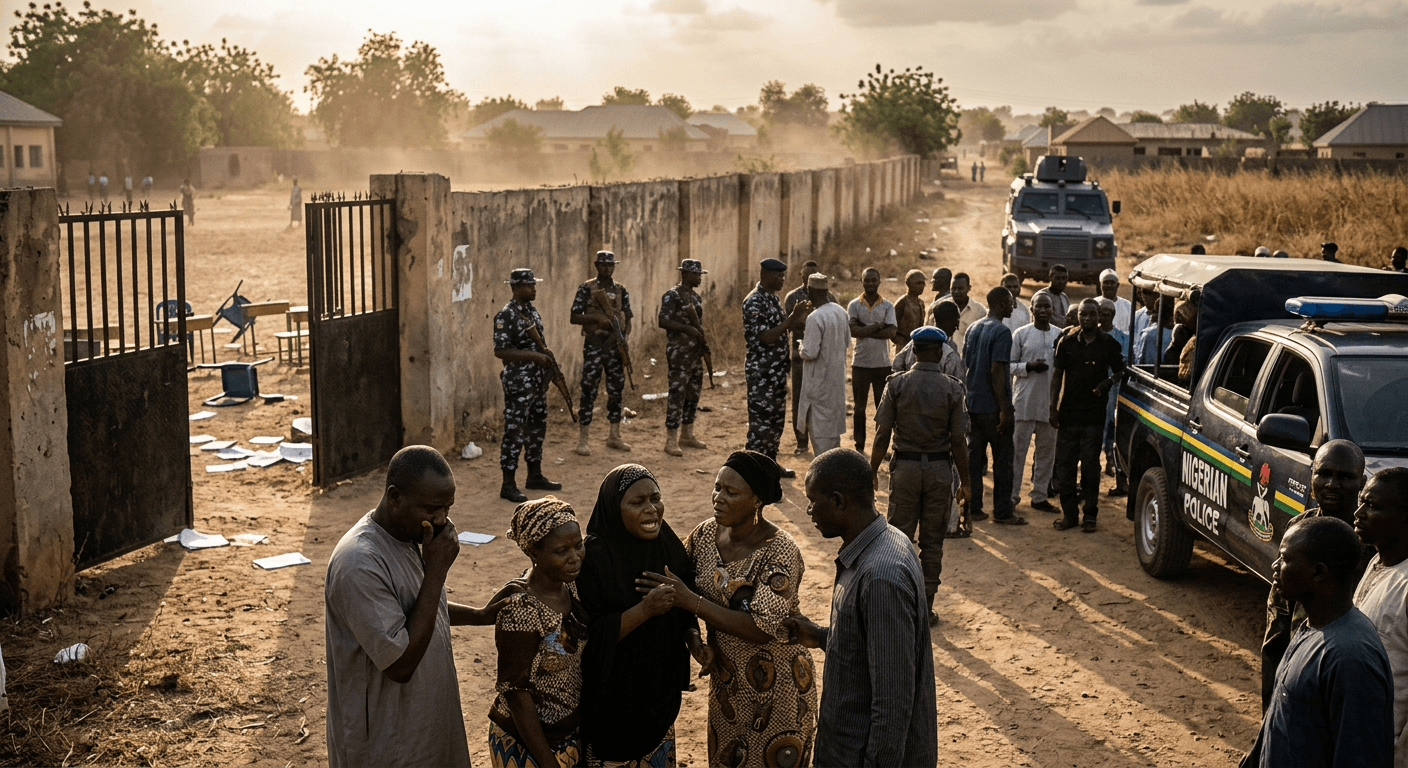
The latest Nigeria school attack has left at least 37 students still in captivity after gunmen stormed a secondary school in Borno State during exams. Security forces rescued some students, but the scale of the abduction shows Boko Haram retains the ability to strike deep inside government-controlled territory.
This incident is not isolated. It fits a pattern of renewed militant activity across Nigeria’s northeast that threatens both local communities and wider economic interests. Nigeria remains Africa’s top oil exporter. Any erosion of stability in the region feeds directly into global oil supply risks and price volatility.
Key Takeaways
- Gunmen kidnapped more than 100 students in a single raid, with dozens still missing weeks later.
- Boko Haram and Islamic State West Africa Province (ISWAP) have increased attacks since early 2025.
- The Nigerian military has struggled to secure rural areas despite years of counter-insurgency spending.
- Escalating insecurity raises fears of renewed attacks on oil infrastructure in the Niger Delta.
- Global oil markets are watching Nigeria closely as OPEC+ manages production quotas.
- Hostage situations complicate international aid and diplomatic engagement.
What Happened in the Latest Nigeria School Attack
On June 29, 2026, armed militants arrived at a government secondary school in northeast Nigeria shortly before students were due to sit exams. Witnesses described dozens of gunmen arriving in pickup trucks, firing into the air, and rounding up students. Many fled into surrounding bushland. Security sources confirm at least 100 young people were initially taken.
Military operations rescued around 60 students in the following days. However, Nigerian officials told Reuters that at least 37 remain in captivity as of late June. The attackers are believed to belong to a Boko Haram faction or an aligned ISWAP cell. Both groups have a history of using school abductions to generate ransom revenue and spread fear.
The choice of target during exam season appears deliberate. Schools represent symbols of Western-style education that Boko Haram has long opposed. They also offer large groups of young hostages who can be moved quickly across porous borders into Cameroon or Niger.
Boko Haram’s Evolution and Current Strength
Boko Haram has operated in northeast Nigeria since 2009. Its tactics have shifted over time. Early mass abductions, such as the 2014 Chibok kidnapping of 276 schoolgirls, drew global attention. While the group suffered heavy losses under former President Muhammadu Buhari’s military campaigns, it never fully disappeared.
Today the insurgency has fractured. The original Boko Haram faction under leader Abubakar Shekau largely collapsed after his death. ISWAP, which pledged allegiance to the Islamic State, has emerged as the more organized and financially capable actor. ISWAP funds itself through taxation of local communities, cattle rustling, and occasional high-value kidnappings.
The latest Nigeria school attack suggests these groups have regained operational reach. Analysts point to several factors: reduced military pressure due to redeployments elsewhere, weapons flowing from Libya and the Sahel, and local grievances over governance and poverty that allow militants to recruit.
How the Iran conflict could reshape global oil flows offers a parallel case study. Just as tensions in the Strait of Hormuz create price spikes, instability in Nigeria’s oil-producing regions can tighten supply expectations even if attacks occur hundreds of miles from the Niger Delta.
Economic and Energy Market Implications
Nigeria produces roughly 1.4 million barrels of oil per day in 2026, down from peaks above 2 million earlier in the decade. Much of this output comes from the southern Niger Delta, far from the northeast where this school attack occurred. Yet the two regions are linked through national security capacity and investor confidence.
When militant groups demonstrate renewed reach, foreign oil companies reassess security costs. Shell, Chevron, and ExxonMobil have repeatedly scaled back onshore operations due to kidnapping risks and pipeline vandalism. Each major attack, even in distant states, reminds investors that Nigeria’s security challenges remain systemic.
Global oil traders monitor Nigerian events closely. Brent crude prices rose modestly in the days following the attack as analysts factored in possible supply disruptions. While the immediate impact appears limited, sustained insecurity could push Nigeria further below its OPEC+ quota and tighten Atlantic Basin supplies.
This dynamic connects directly to broader energy politics. Nigeria’s output helps balance volatility from other producers. When Nigerian barrels become less reliable, buyers turn elsewhere, supporting higher prices and strengthening the negotiating position of Middle East producers.
Impact on Local Communities and Development
Beyond macroeconomics, the human cost is severe. Families of abducted students face months or years of uncertainty. Ransoms demanded by militants often reach tens of thousands of dollars per child — sums impossible for most rural families. Some turn to crowdfunding or sell assets. Others never see their children again.
Schools in affected areas have closed or operate at reduced capacity. This deepens educational gaps in a region already among the world’s poorest. The United Nations estimates that over 2,000 schools have been destroyed or abandoned since the insurgency began. Each closure hands another recruitment advantage to the militants.
Government and Military Response
Nigerian President Bola Tinubu has faced criticism for the pace of response. The military claims it has intensified patrols and conducted airstrikes on suspected militant camps. Yet local officials complain of poor coordination between army, police, and intelligence services.
Critics argue that focusing solely on military solutions ignores root causes. High youth unemployment, weak governance, and competition over land and water resources fuel the insurgency. Previous attempts at dialogue and amnesty programs yielded mixed results.
International partners, including the United States and European Union, provide training and equipment. However, human rights concerns over Nigerian security forces have sometimes limited deeper cooperation. The latest attack will likely prompt renewed calls for improved intelligence sharing and border security assistance.
Links to Global Security and Economic Trends
The Nigeria school attack occurs against a backdrop of wider Sahel instability. Jihadist groups have expanded across Mali, Burkina Faso, and Niger. This creates a corridor of insecurity that stretches from the Atlantic to the Red Sea. Weapons and fighters move relatively freely across weak borders.
These security challenges intersect with global economic competition. China maintains significant investments in Nigerian infrastructure and oil. Western nations worry about losing influence. Meanwhile, cryptocurrency networks have reportedly been used to move ransom payments, complicating tracking efforts.
Cryptocurrency trading and the erosion of the petrodollar shows how non-state actors exploit new financial tools. Militant groups in Nigeria have adapted similar methods, reducing their reliance on traditional banking channels that governments can more easily monitor.
The situation also relates to energy transition pressures. As Europe and others seek to diversify from Russian and Middle Eastern supplies, African producers like Nigeria should be well positioned. Persistent insecurity undermines that potential and keeps global markets tighter than they might otherwise be.
Common Mistakes in Analyzing Nigerian Insecurity
- Treating Boko Haram and ISWAP as a single organization with unified goals.
- Assuming military operations alone can end the threat without addressing governance failures.
- Underestimating the economic incentives that sustain kidnapping for ransom.
- Viewing the crisis as purely regional rather than one with global energy and migration implications.
- Overlooking the role of local informants and complicit officials in enabling attacks.
Best Practices for Addressing the Crisis
- Improve civil-military coordination to ensure rapid response and accurate intelligence.
- Invest in rural development programs that offer credible alternatives to militant recruitment.
- Strengthen border security through regional cooperation with Cameroon, Niger, and Chad.
- Enhance financial tracking to disrupt ransom payments while protecting humanitarian flows.
- Engage community leaders in deradicalization and reintegration efforts tailored to local realities.
- Maintain transparent communication with international investors about security conditions in oil regions.
Effective policy requires balancing immediate security needs with longer-term economic and social reforms. International partners can help, but sustainable progress depends on Nigerian leadership.
FAQ
How many students remain missing after the latest Nigeria school attack?
Nigerian officials report at least 37 students are still held captive. The total number initially abducted exceeded 100, with many rescued or escaped in the first days after the raid.
Which militant group carried out the attack?
Authorities have not made a definitive attribution. Both Boko Haram remnants and the more sophisticated ISWAP faction operate in the area. The scale and location suggest ISWAP or a closely aligned cell.
Does this attack threaten Nigerian oil production?
Directly, no. The incident occurred in the northeast, while most oil comes from the southern Niger Delta. However, it signals broader instability that can raise insurance costs and deter investment across the country’s energy sector.
How do these kidnappings affect global oil prices?
Each major security incident in Nigeria contributes to a risk premium in oil markets. When traders fear attacks could spread to oil infrastructure, they bid up futures contracts. The effect is usually modest but compounds with other geopolitical tensions.
What can the international community do to help?
Practical steps include sharing satellite intelligence, supporting regional border management, and funding development programs that address poverty and lack of education. Caution is needed to avoid inflaming local grievances against foreign interference.
Has the Nigerian government requested international military help?
Successive governments have accepted training and equipment but resisted direct foreign combat involvement. Political sensitivities around sovereignty and past controversies with private military contractors limit options.
Conclusion
The latest Nigeria school attack serves as a stark reminder that Africa’s most populous nation continues to battle a resilient insurgency. While the immediate victims are students and their families, the ripple effects reach global energy markets and international security calculations. Nigeria’s ability to contain this threat will shape not only its own future but also the reliability of African oil supplies in an increasingly volatile world.
Investors, policymakers, and energy traders should monitor developments closely. Sustainable solutions require more than military operations. They demand addressing the governance and economic failures that allow groups like Boko Haram to persist. Until then, Nigeria’s insecurity will remain a source of both human tragedy and global market risk.
Kuwait tensions and Middle East oil politics demonstrate how localized conflicts can influence worldwide energy prices. The same principle applies in West Africa. Understanding these connections helps separate temporary headlines from structural shifts in global energy security.
Share This Article