Critical Minerals · Jonathan van den Berg · October 6, 2026
How the 2026 Measles Outbreak in New York Exposes Critical Minerals Risks, Vaccine Supply Chain Chokepoints, and AI Data Center Grid Constraints
New York’s measles emergency highlights fragile vaccine production networks dependent on rare minerals and energy-intensive cold chains that overlap with surging AI data center power needs.
New York Governor Kathy Hochul declared a state disaster emergency over the ongoing measles outbreak, mobilizing resources to contain spread in communities with low vaccination rates. The move exposes deeper structural weaknesses: vaccine supply chains that rely on critical minerals, energy-hungry refrigeration networks, and healthcare facilities competing for grid capacity with nearby AI data centers.
Key Takeaways
- New York’s measles emergency highlights gaps in MMR vaccine distribution tied to semiconductor-dependent cold chain equipment.
- Gallium, germanium, and rare earth elements sourced from geopolitically sensitive regions remain essential for medical imaging devices and vaccine manufacturing tools.
- AI data center expansion in the Northeast is tightening power availability for hospitals running high-volume vaccination clinics.
- Merck (NYSE:MRK), GSK (NYSE:GSK), and Pfizer (NYSE:PFE) face rising input costs from mineral export controls and energy price volatility.
- Investors should monitor secondary sanctions risks on Chinese mineral processors that supply components for both semiconductor and medical supply chains.
The Scale of the 2026 Measles Outbreak in New York
State health officials have confirmed hundreds of cases concentrated in Orthodox Jewish communities in Brooklyn and Rockland County, echoing the 2019 outbreak that sickened over 1,400 people. This time the response includes mandatory vaccination orders in affected zones and expanded clinic hours at public hospitals.
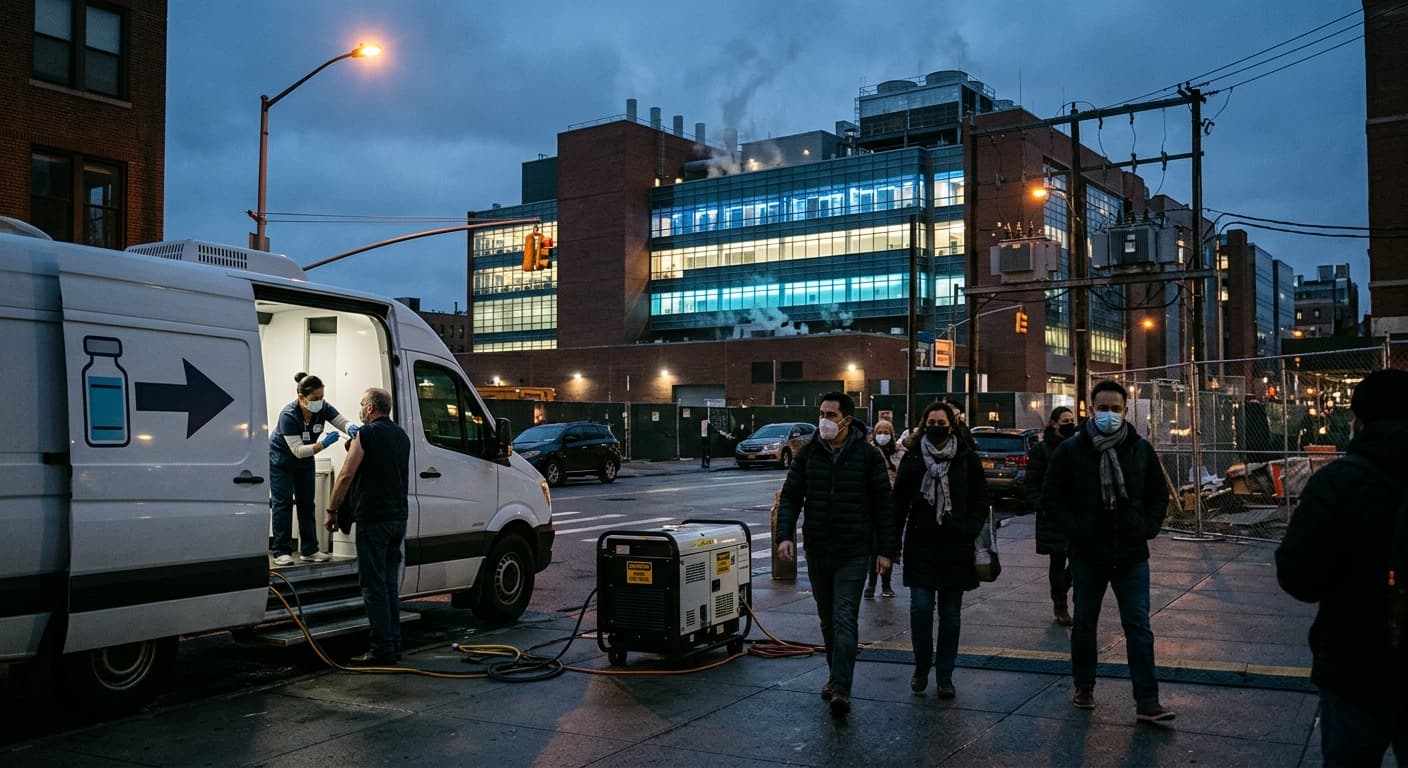
Low vaccination coverage below the 95% herd immunity threshold created the opening. Many families cite religious or philosophical exemptions. The emergency declaration unlocks federal funding and allows faster deployment of mobile vaccination units, yet those units depend on reliable refrigeration—equipment already strained by global semiconductor shortages.
Vaccine Supply Chain Chokepoints Exposed
Measles vaccines require strict temperature control from factory to arm. The cold chain uses specialized refrigerators, data loggers, and sensors built with semiconductors that have faced repeated supply disruptions since 2022. A single chokepoint in Taiwan or South Korea can delay MMR shipments by weeks.
Merck’s MMR II vaccine and GSK’s Priorix dominate the U.S. market. Both companies source key components from suppliers exposed to export restrictions on gallium and germanium—minerals China restricted in 2023 in response to U.S. chip controls. Any escalation in those restrictions directly raises production costs.
Starbucks store closures earlier this year already showed how even consumer-facing companies suffer when refrigeration and logistics overlap with mineral-intensive electronics. The same dynamics now hit public health infrastructure.
Critical Minerals Dependency in Medical Manufacturing
Modern vaccine production and diagnostic equipment rely on several minerals under increasing resource nationalism:
- Gallium and germanium for semiconductors in temperature sensors and imaging systems.
- Neodymium and dysprosium for magnets in high-efficiency refrigeration compressors.
- Platinum group metals used in certain vaccine adjuvants and laboratory catalysts.
China processes over 80% of global rare earths and a majority of gallium. Export licensing delays already ripple through medical device makers. Hospitals in New York now face higher prices for replacement parts on MRI machines and vaccine storage units that use these materials.
This pattern mirrors risks detailed in semiconductor supply chain analysis from the Tokyo tennis tournament, where even unrelated global events expose concentrated production vulnerabilities.
AI Data Center Power Demand Collides with Healthcare Needs
Northern Virginia’s data center boom has set a precedent now repeating in the Northeast corridor. Hyperscale facilities operated by companies tied to NVIDIA (NASDAQ:NVDA) and others consume gigawatts of power. Grid operators in New York and New Jersey report tightening capacity margins exactly when hospitals need reliable electricity for 24-hour vaccination drives and cold storage.
During the emergency, several New York City hospitals activated backup generators more frequently. These diesel systems face their own supply risks linked to Strait of Hormuz tensions that drive diesel price spikes.
Power purchase agreements (PPAs) that prioritize data centers over hospitals create political friction. State regulators may soon face choices between supporting AI infrastructure growth and guaranteeing uninterrupted power for public health emergencies.
Comparison of Supply Chain Vulnerabilities
| Sector | Key Mineral | Primary Source Risk | Impact on Measles Response |
|---|---|---|---|
| Vaccine Refrigeration | Gallium, Germanium | China export controls | Delayed sensor replacements raise spoilage risk |
| Medical Imaging | Rare Earth Elements | Processing concentrated in China | Higher costs for diagnostic equipment during outbreak |
| Power Infrastructure | Copper, Lithium | South American nationalization trends | Grid upgrades compete with data center demand |
| Logistics Vehicles | Neodymium | Export licensing delays | Mobile clinic efficiency drops with parts shortages |
Investment Implications for Institutional Portfolios
Pharmaceutical companies with diversified manufacturing footprints show more resilience. Merck maintains production sites outside dominant Asian supply routes, yet still depends on mineral inputs. GSK and Pfizer face similar exposure.
Data center operators and their suppliers must price in the risk that public health emergencies could trigger new grid allocation rules. Sovereign wealth funds tracking critical minerals have already increased allocations to Australian and Canadian producers to hedge Chinese dominance.
Secondary sanctions remain a wildcard. Any U.S. move to restrict trade with Chinese mineral processors could spike costs across both semiconductor and medical supply chains simultaneously.
Common Mistakes Investors Make
- Assuming vaccine supply chains are insulated from semiconductor cycles.
- Underestimating how local grid constraints near AI hubs affect hospital reliability during emergencies.
- Treating critical minerals exposure as only an electric vehicle or renewable energy story.
- Ignoring secondary sanctions risk when modeling pharmaceutical margins.
Best Practices for Risk Management in 2026
- Map supplier exposure to Chinese-processed gallium and germanium for every healthcare holding.
- Stress-test pharmaceutical stocks against simultaneous mineral export curbs and energy price shocks.
- Evaluate data center operators on their PPAs and ability to flex during declared health emergencies.
- Track state-level policy on grid prioritization between digital infrastructure and public health facilities.
- Diversify critical minerals exposure through producers in stable jurisdictions with transparent governance.
FAQ
Why did New York declare a disaster emergency for measles?
The declaration unlocks expedited federal aid, allows mandatory vaccination in high-risk zones, and mobilizes National Guard support for logistics. Case numbers threatened to overwhelm local health departments.
How do critical minerals affect vaccine availability?
They are essential for semiconductors in temperature monitoring devices, refrigeration compressors, and diagnostic tools used in production and distribution. Restrictions on these minerals raise costs and create delays.
Do AI data centers really impact hospital power during outbreaks?
Yes. In regions with tight generation capacity, large data center loads reduce reserve margins. Hospitals running extra shifts for vaccination and testing face higher risk of brownouts or reliance on expensive backup power.
Which companies face the largest exposure?
Merck, GSK, and Pfizer on the pharmaceutical side. NVIDIA-linked data center operators and semiconductor equipment makers on the infrastructure side. Mineral processors with heavy China exposure also sit in the crosshairs.
What can investors do to protect portfolios?
Build positions in companies with geographically diversified supply chains, favor jurisdictions with strong rule of law for mineral projects, and monitor grid policy developments in states hosting both data centers and major medical hubs.
The New York measles outbreak serves as a reminder that public health, critical minerals strategy, and AI infrastructure now share the same stressed supply chains. Institutions that map these overlapping risks today will navigate the next supply shock with clearer eyes and fewer surprises.
Review your portfolio’s exposure to vaccine makers, medical device suppliers, and data center power consumers before the next health or geopolitical trigger tightens these links further.
Share This Article