Supply Chain · Jonathan van den Berg · October 2, 2026
How Starbucks Store Closures Expose Supply Chain Chokepoints, Critical Minerals Risks, and AI Data Center Grid Constraints in 2026
Starbucks is closing stores across multiple states as rising operational costs collide with volatile supply chains, critical minerals constraints in electronics, and explosive electricity demand from AI data centers.
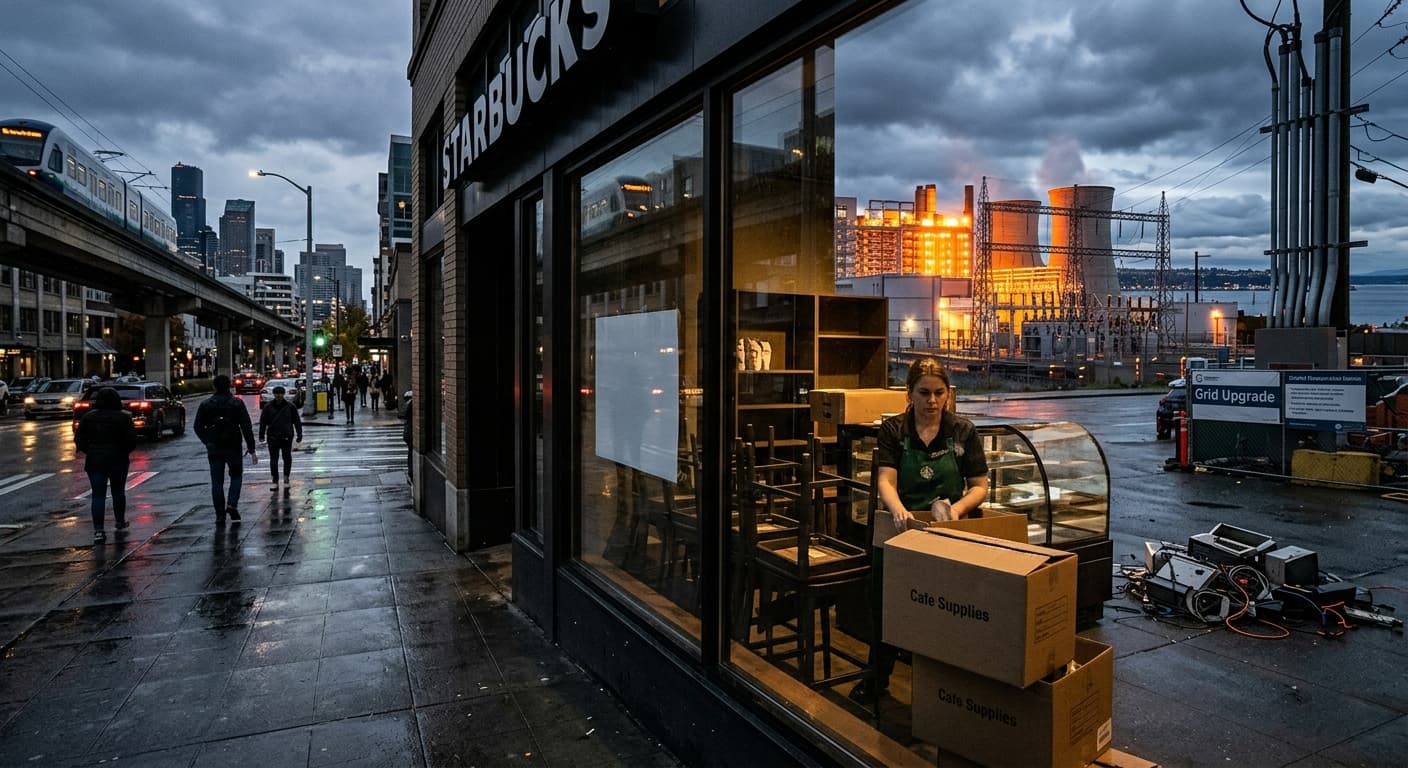
Starbucks is closing dozens of locations across California, Ohio, and other states because labor costs, rent, and supply expenses have climbed faster than sales in many urban and suburban markets. These closures are not isolated retail decisions. They expose how global supply chain chokepoints, critical minerals shortages, and the massive electricity draw from AI data centers now directly affect everyday businesses and the stocks investors hold.
Key Takeaways
- Starbucks plans to close more than 50 U.S. stores in 2026, with clusters in San Diego County and Northeast Ohio.
- Coffee supply chains remain vulnerable to weather extremes, Red Sea shipping disruptions, and fertilizer shortages tied to critical minerals.
- AI data center construction in Northern Virginia and similar hubs has tightened regional power capacity, pushing commercial electricity rates higher.
- Retailers with heavy refrigeration, digital menu boards, and mobile-order systems face rising energy bills linked to the same grid constraints that slow AI infrastructure buildout.
- Investors tracking NVIDIA supply chain exposure should also watch downstream effects on consumer companies that depend on stable power and electronics pricing.
Scale of the Starbucks Closure Wave
Recent announcements list at least 17 locations in San Diego County and additional sites in Akron, Cleveland, and surrounding Ohio communities. Many of these stores opened during the 2015-2019 expansion cycle when low interest rates and cheap capital encouraged rapid footprint growth. Today those locations face double-digit increases in labor, rent, and utilities while same-store sales growth has slowed.
The closures follow years of union organizing, pandemic-era shifts to drive-thru and mobile orders, and persistent inflation in dairy, coffee beans, and plastic packaging. Yet the deeper story lies in the upstream inputs that make a modern Starbucks possible: refrigerated display cases, always-on point-of-sale tablets, digital menu boards, and constant Wi-Fi all require reliable, affordable electricity and semiconductors.
Supply Chain Chokepoints Hitting Coffee and Retail Operations
Coffee beans travel through multiple maritime routes before reaching U.S. roasters. The Bab el-Mandeb chokepoint and Red Sea disruptions have forced carriers to reroute around Africa, adding 10-14 days and thousands of dollars per container. Insurance premiums for Red Sea transit remain elevated even after partial de-escalation.
Simultaneously, fertilizer prices tied to natural gas and phosphate rock have stayed volatile. Many coffee-growing regions in Brazil, Vietnam, and Colombia still feel the effects of earlier El Niño weather patterns that reduced yields and increased input costs. These pressures flow straight into the cost of goods sold for any chain reliant on consistent bean quality and volume.
Packaging presents another layer. Single-use cups, lids, and straw alternatives depend on petrochemical derivatives and specialty papers. When oil flows through the Strait of Hormuz face geopolitical risk, or when paper mills deal with energy price spikes, the entire disposable supply chain tightens.
Critical Minerals Shortages and the Electronics Inside Every Store
Modern coffee shops run on electronics. Touch-screen registers, inventory tablets, payment terminals, and digital signage all contain semiconductors that rely on gallium, germanium, rare earth elements, and lithium compounds. China’s earlier export controls on gallium and germanium—key materials for chip production and LED backlights—created lasting price pressure even after partial relief.
Starbucks and similar chains upgraded thousands of stores with energy-efficient LED lighting and high-resolution menu boards during the post-pandemic refresh cycle. Those upgrades now face component cost inflation. When semiconductor foundries cannot secure enough critical minerals, lead times stretch and prices rise. That cost eventually shows up in corporate overhead or forces operators to delay planned remodels.
The same minerals power the sensors and chips in automated espresso machines and inventory robots being tested in select markets. Any disruption in critical minerals supply directly affects the technology edge these chains use to offset higher labor costs.
AI Data Center Boom and Commercial Grid Constraints
Northern Virginia has become the world’s largest data center market. Hyperscale facilities operated by Amazon, Microsoft, Google, and Oracle consume gigawatts of power. Local utilities have delayed new connections and raised commercial rates in response to the surge in demand.
Many Starbucks locations sit in the same regional grids. Higher wholesale electricity prices and occasional peak-load warnings translate into bigger utility bills for retailers running refrigeration, air conditioning, and digital systems 18 hours a day. In markets where data centers compete for the same megawatts, commercial customers pay the price through rate hikes or reduced reliability.
This dynamic appears beyond Virginia. Similar grid pressure exists in parts of Texas, Georgia, and the Pacific Northwest where tech companies have announced large AI campus builds. Retail chains with dense urban footprints feel the downstream effects first through their monthly power statements.
Related analysis shows how AI model training secrecy further distorts power demand forecasts, making it harder for utilities and businesses to plan capacity.
How These Forces Interact: A Practical Example
Consider a typical suburban Starbucks in Northeast Ohio. The store uses 45 kWh per hour during peak periods. Annual electricity costs have risen 18 percent in two years. Coffee bean deliveries now carry a 7 percent logistics surcharge due to longer maritime routes. Digital menu boards purchased in 2023 required gallium-based LEDs; replacement parts cost 22 percent more today because of tightened mineral export rules.
When all three pressures hit simultaneously—higher shipping costs, mineral-driven component inflation, and elevated electricity rates—the store’s contribution margin shrinks. Corporate teams respond by closing lower-performing sites rather than accepting permanent losses. Multiply this math across hundreds of locations and the closure list grows quickly.
Investment Implications for Public Companies
Starbucks (NASDAQ:SBUX) investors have watched the stock react to each new closure announcement. The market now prices in slower unit growth and higher capital intensity for remaining stores.
Broader exposure appears in companies tied to the same constraints:
| Company | Ticker | Exposure Type | Key Risk |
|---|---|---|---|
| Starbucks | NASDAQ:SBUX | Retail Operations | Energy + logistics cost inflation |
| NVIDIA | NASDAQ:NVDA | AI Infrastructure | Critical minerals for GPUs |
| Oracle | NYSE:ORCL | Data Center Cloud | Grid connection delays in key markets |
| Amazon | NASDAQ:AMZN | Logistics + Cloud | Red Sea shipping and data center power |
Sovereign wealth funds and institutional investors increasingly allocate to critical minerals producers and grid technology firms to hedge these exact risks. The same capital flows that fund AI data centers can starve or inflate costs for traditional commercial users.
Common Mistakes Retail and Supply Chain Analysts Make
- Treating store closures as purely local demand problems instead of symptoms of global input cost shocks.
- Underestimating the compounding effect of simultaneous maritime, mineral, and electricity pressures.
- Focusing only on direct suppliers while ignoring second- and third-tier mineral dependencies in electronics.
- Assuming grid capacity will expand fast enough to prevent commercial rate hikes in data center-heavy regions.
- Reviewing quarterly earnings without cross-checking shipping indices, gallium prices, and regional ISO power auction results.
Best Practices for Tracking These Interconnected Risks
- Monitor Red Sea transit volumes and insurance rates weekly as leading indicators for consumer goods logistics costs.
- Track export license data for gallium, germanium, and antimony from China to forecast semiconductor component inflation.
- Review monthly PJM and ERCOT power market reports for commercial rate trends in data center clusters.
- Map retail footprints against planned data center campuses to identify locations most at risk of future rate shocks.
- Stress-test supplier contracts for force majeure clauses tied to critical minerals or prolonged shipping delays.
Companies that integrate these three lenses—supply chain chokepoints, critical minerals availability, and AI-driven grid demand—gain clearer foresight than those examining each factor in isolation.
Frequently Asked Questions
Why is Starbucks closing so many stores in 2026?
Multiple years of rising labor, rent, logistics, and energy costs have made certain locations permanently unprofitable. The company is pruning its portfolio to protect overall margins amid slower traffic growth.
How do AI data centers affect local coffee shops?
Data centers consume enormous electricity. In regions where they cluster, utilities raise commercial rates or limit new connections. Retailers with high refrigeration and digital loads pay more for power.
What critical minerals are most relevant to retail technology?
Gallium and germanium used in chips and LEDs, lithium in backup batteries, and rare earths in magnets for cooling fans and motors all appear in modern store equipment.
Will more retailers follow Starbucks with widespread closures?
Chains with similar real estate, energy intensity, and technology footprints face parallel pressures. Expect further optimization announcements from quick-service and casual dining operators in 2027.
How can investors protect portfolios from these risks?
Diversify into critical minerals producers, grid modernization firms, and logistics technology companies. Reduce concentrated exposure to retail names with heavy footprints in constrained power markets.
Conclusion
The Starbucks closures offer an early warning. What looks like routine retail pruning actually reflects structural changes in global trade routes, mineral availability, and electricity markets reshaped by AI infrastructure. Companies and investors who treat these forces as separate risks will keep getting surprised. Those who map the connections gain the clearest view of where costs will rise next and which locations remain viable long term.
Track shipping indices, mineral export data, and regional power auctions in the same dashboard. The next round of closures—and the next opportunities—will appear there first.
Share This Article