Critical Minerals · Jonathan van den Berg · August 23, 2026
How the 2026 Japan Earthquake Reshapes Semiconductor Markets, AI Data Center Expansion, and Critical Minerals Strategy
A moderate but strategically placed earthquake in eastern Japan exposed fresh vulnerabilities in the global semiconductor supply chain and critical minerals pipeline, forcing AI infrastructure developers to reassess expansion timelines and sourcing strategies.
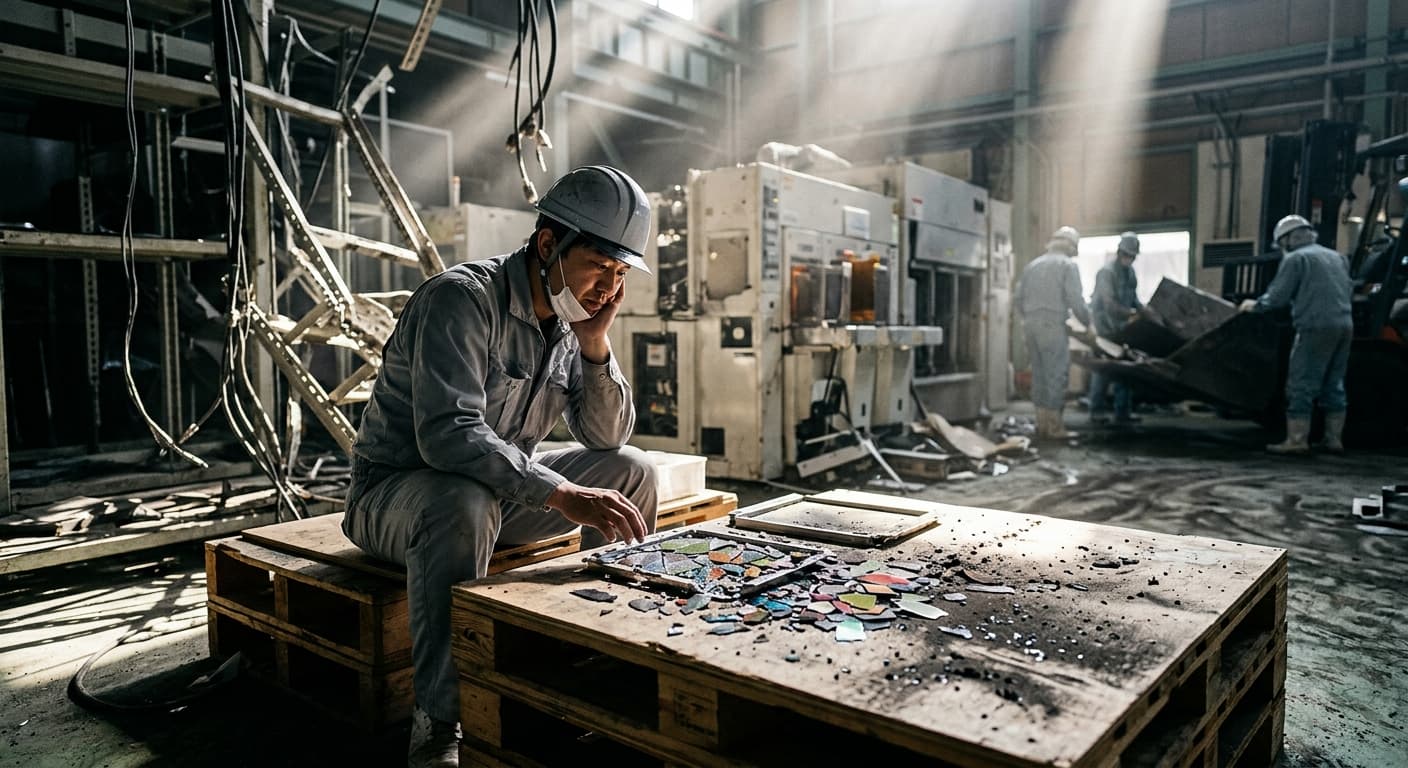
The 2026 Japan earthquake delivered a sharp reminder that even moderate seismic events can trigger outsized effects across global technology supply chains. Centered in Ibaraki Prefecture within the Kanto region, the magnitude 5.9 tremor injured more than 20 people and forced temporary shutdowns at precision manufacturing facilities critical to semiconductor production and advanced materials processing.
Facilities in the affected zone supply specialized substrates, photoresists, and rare-earth-derived components used in both memory chips and high-performance computing hardware. Production halts lasted between 48 and 96 hours at several plants, yet market reaction proved far more sustained. Institutional investors immediately repriced exposure to firms with concentrated manufacturing footprints in seismic risk zones.
Key Takeaways
- The Ibaraki quake exposed single-point vulnerabilities in the semiconductor materials layer that feed both consumer electronics and AI accelerators.
- Critical minerals sourcing strategies now carry a higher geopolitical and geophysical risk premium, particularly for gallium, indium, and high-purity quartz.
- AI data center developers in Northern Virginia and other hyperscale hubs face renewed pressure to secure diversified component inventories and longer-term power purchase agreements.
- Sovereign wealth funds and large asset managers are accelerating reviews of supply-chain concentration in East Asia.
- Companies with dual-site or non-Japan sourcing for advanced materials gained immediate share-price premiums.
Immediate Operational Impact on Semiconductor Production
Tokyo Electron (TYO:8035) and Lasertec (TYO:6920) both reported temporary line stops for calibration and safety inspections. While neither company sustained structural damage, the precautionary pauses rippled through the tightly synchronized just-in-time delivery model that dominates advanced chip manufacturing.
TSMC (NYSE:TSM), which relies on Japanese suppliers for roughly 35 percent of its critical photoresist and silicon wafer materials, activated contingency protocols within hours. The company maintains buffer stocks equivalent to 10–14 days of consumption for most materials, yet prolonged disruption beyond one week would have forced allocation decisions across its global customer base, including NVIDIA (NASDAQ:NVDA) and AMD (NASDAQ:AMD).
Advanced packaging substrates used in AI accelerators proved especially sensitive. Several facilities in the greater Kanto area produce the ultra-flat ceramic carriers required for 2.5D and 3D chip stacking. Even minor delays here cascade into data center deployment schedules that already face multi-year grid connection queues.
Critical Minerals Angle: Gallium, Indium, and High-Purity Quartz
The earthquake highlighted Japan’s outsized role in refining and processing several minerals essential to both semiconductor lithography and AI hardware. Japan accounts for approximately 40 percent of global high-purity quartz production used in crucibles for silicon ingot growth. It also dominates the specialty chemical processing that turns raw gallium into the ultra-pure forms required for compound semiconductors.
Market participants now assign a geophysical risk premium to these flows similar to the risk premium attached to critical minerals supply chains after major seismic events. China’s existing export controls on gallium and germanium already created tight markets. Any sustained Japanese supply reduction would compound the squeeze and accelerate efforts to develop alternative refining capacity in Australia, Canada, and the United States.
Indium, used in indium tin oxide coatings for display manufacturing and certain sensor applications, also saw spot prices rise 7 percent in the 48 hours following the quake. While the absolute volume affected remained modest, the psychological impact on procurement teams at hyperscalers proved significant.
AI Data Center Expansion Under Pressure
Hyperscale operators have committed tens of billions toward new facilities, yet power availability and component availability now represent parallel constraints. The 2026 Japan earthquake added a third variable: reliable access to advanced materials and substrates at predictable lead times.
Oracle (NYSE:ORCL), which has positioned itself as a major AI cloud provider, relies on NVIDIA’s latest GPU clusters. Any delay in next-generation Blackwell or Rubin shipments due to upstream materials issues directly affects Oracle’s ability to bring new capacity online in Northern Virginia and other key markets.
Grid operators in data center-heavy regions already ration new connections. When those connections finally activate, operators need certainty that the specialized chips inside the racks will arrive on schedule. The earthquake reinforced the view that single-region concentration in semiconductor materials creates unacceptable operational risk for AI infrastructure investors.
Similar dynamics appeared after Hawaii’s 2026 tropical cyclone risks disrupted Pacific shipping lanes and exposed energy infrastructure weaknesses. Both events demonstrate that climate and geological hazards now intersect with technology supply chains in ways that directly influence capital allocation decisions.
Investment Implications for Institutional Portfolios
Asset managers tracking sovereign wealth fund behavior noted accelerated diversification efforts post-quake. Funds with large exposure to East Asian semiconductor supply chains began increasing allocations to North American and European materials companies capable of scaling high-purity processing.
Companies positioned to benefit include:
- North American quartz producers expanding crucible manufacturing capacity
- Specialty chemical firms developing gallium refining outside China and Japan
- Firms offering multi-site advanced packaging solutions that reduce Kanto region dependency
Conversely, pure-play suppliers with more than 60 percent of output tied to Japanese facilities traded at widened risk discounts. The episode also increased focus on insurance structures and parametric triggers for seismic events in technology supply contracts.
Comparison of Regional Semiconductor Materials Risk
| Region | Key Material Dominance | Primary Risk Factor | Estimated Days of Global Buffer Stock |
|---|---|---|---|
| Japan (Kanto/Ibaraki) | High-purity quartz, photoresists, advanced substrates | Earthquakes and tsunami | 10–21 |
| Taiwan | Semiconductor-grade silicon wafers, advanced packaging | Geopolitical tension, earthquakes | 14–28 |
| China | Gallium, germanium, rare earth processing | Export controls, resource nationalism | Variable (policy-driven) |
| United States / Europe | Emerging gallium refining, specialty chemicals | Scale-up delays, permitting | Expanding but currently <10 |
Common Mistakes in Supply Chain Risk Assessment
- Assuming moderate-magnitude quakes (M5.9–M6.5) cause negligible industrial disruption. The 2026 Ibaraki event proved otherwise due to the precision required in semiconductor manufacturing.
- Relying solely on geographic diversification without verifying actual material provenance. Many “Taiwanese” chips still depend on Japanese inputs.
- Underweighting the compounding effect of simultaneous hazards. A Pacific typhoon season coinciding with seismic activity could overwhelm contingency plans, as seen in overlapping 2026 weather and geological events.
- Treating critical minerals as interchangeable commodities rather than highly specialized, facility-specific processed materials with long qualification cycles.
Best Practices for AI Infrastructure and Critical Minerals Strategy
- Map Tier-2 and Tier-3 suppliers to at least two geographic layers. Identify every facility producing the specialized chemicals or substrates feeding your primary foundry partners.
- Build strategic stockpiles for items with qualification cycles longer than 90 days. This includes certain photoresists, bonding wires, and ceramic substrates.
- Incorporate geophysical risk scores into vendor scorecards alongside traditional ESG and financial metrics. Several large pension funds now require this for new AI infrastructure commitments.
- Accelerate qualification of non-Japanese sources for gallium and high-purity quartz. Even partial qualification provides leverage during supply shocks.
- Structure power purchase agreements and capacity reservations with explicit force-majeure carve-outs that account for upstream materials delays, not just local grid outages.
Forward-looking operators now treat the convergence of geological risk, resource nationalism, and explosive AI compute demand as a single integrated risk category rather than separate silos. Events such as Nepal-China flash floods exposing critical minerals supply chain risks in the Himalayas further underscore how climate-driven disruptions in mountainous regions compound these vulnerabilities.
Broader Geopolitical Context
The earthquake arrives at a moment when semiconductor supply chains already face layered pressures from US-China technology competition, export controls, and concentrated manufacturing in seismically active zones. Taiwan’s own earthquake history and the persistent tensions across the Taiwan Strait add further complexity.
Investors monitoring China’s property crisis aftermath have observed parallel shifts in sovereign capital allocation away from traditional real estate toward technology infrastructure and secured critical minerals assets. The Japan quake reinforces this trend.
Meanwhile, the surprise emergence of the anonymous Ox Alpha AI model on open platforms has further intensified demand for immediate GPU capacity, leaving operators with even less tolerance for supply disruptions.
FAQ
How long did production stoppages last after the 2026 Japan earthquake?
Most affected facilities resumed operations within 48 to 96 hours. However, full supply chain normalization for specialized materials took 10–14 days due to backlog clearing and quality revalidation processes.
Which critical minerals faced the greatest immediate price pressure?
High-purity quartz, gallium compounds, and certain photoresist precursors experienced the sharpest spot price movements. Indium prices also rose noticeably in the immediate aftermath.
Will this earthquake accelerate nearshoring of semiconductor materials production?
Yes. Institutional investors and hyperscale operators have increased scrutiny of single-region concentration. Several announced investments in North American and allied-nation refining capacity within days of the event.
How does this event affect AI data center build timelines in Northern Virginia?
Operators with heavy exposure to Japanese materials added 4–8 weeks of contingency to their 2027–2028 deployment forecasts. Those with diversified sourcing saw minimal schedule impact.
Are sovereign wealth funds changing allocation strategies as a result?
Funds with significant technology infrastructure exposure are reallocating marginal capital toward companies developing alternative critical minerals processing routes and multi-site manufacturing footprints.
Conclusion
The 2026 Japan earthquake delivered a live stress test for assumptions that had quietly become embedded in AI infrastructure planning. Moderate seismic activity in a materials-critical region proved sufficient to move markets, shift procurement strategies, and accelerate diversification efforts that many analysts previously viewed as distant future projects.
For institutional investors, the clearest signal is that geophysical risk now belongs in the same analytical framework as sanctions exposure, export controls, and grid capacity constraints. Those who integrate all four factors into capital deployment decisions will hold a decisive edge as AI compute demand continues its steep climb.
Review your current supply chain mapping against the latest seismic and materials risk data. The next disruption may not offer the luxury of a magnitude 5.9 event with limited structural damage.
Share This Article