Critical Minerals · Jonathan van den Berg · October 8, 2026
How 2026 Earthquakes Reshape Critical Minerals Supply Chains, Semiconductor Markets, and AI Data Center Expansion
Magnitude 5.5 quakes in Alaska and ongoing seismic activity in key mining regions are disrupting lithium, rare earth, and copper flows while pushing AI hyperscalers to reassess grid resilience and backup power needs.
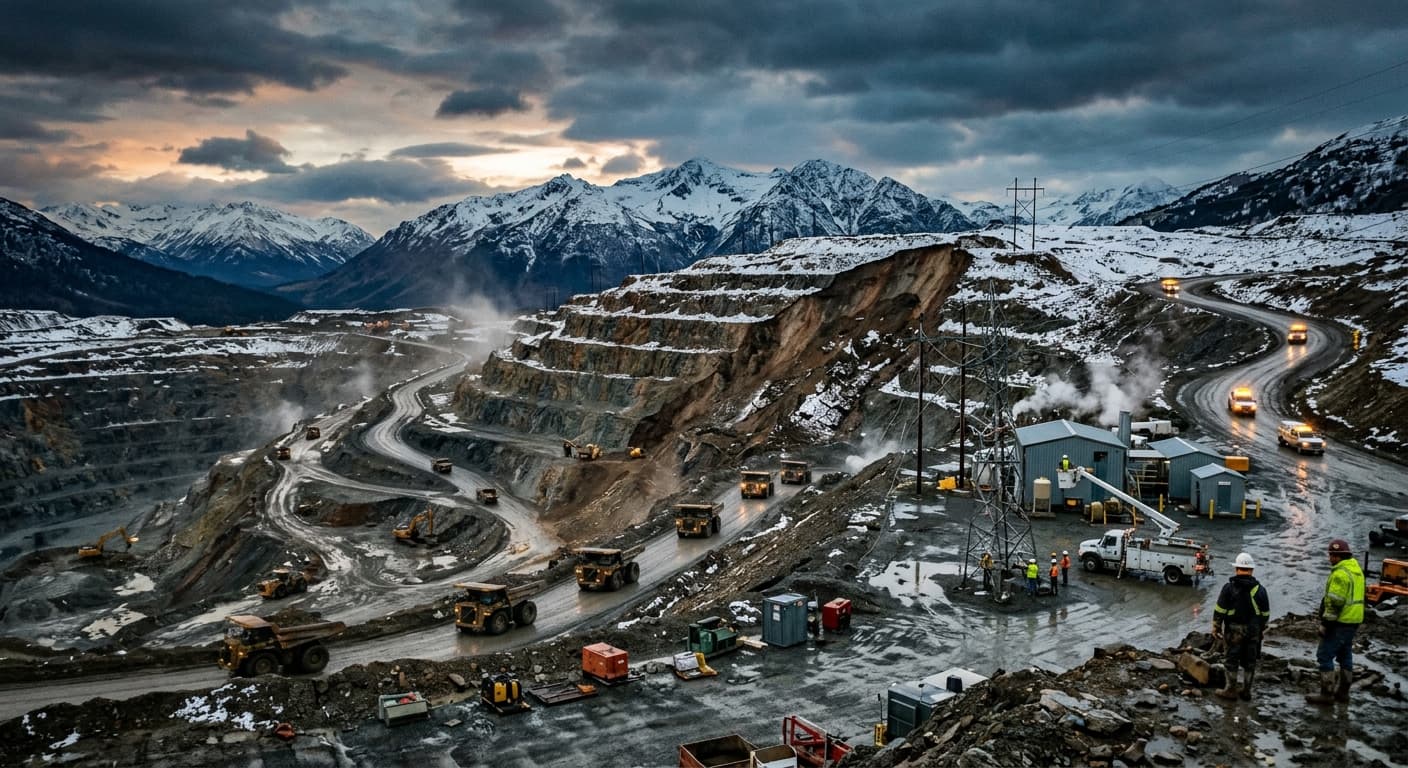
Earthquakes hitting Alaska in early October 2026 highlight how seismic events can ripple through critical minerals supply chains, semiconductor production, and the explosive growth of AI data centers. A magnitude 5.5 quake struck near Aleneva along the Alaska Peninsula, followed by additional tremors in the Kodiak Island Borough. While no major damage was reported, the incidents serve as a reminder of vulnerabilities in remote mining infrastructure and global logistics networks that feed advanced technology sectors.
These events come at a time when demand for lithium, copper, nickel, and rare earth elements is surging to support everything from battery storage to high-performance chips and the massive power infrastructure required for AI training clusters. Institutional investors tracking resource nationalism and supply reliability now face heightened uncertainty in project timelines and cost projections.
Key Takeaways
- Alaska quakes expose risks to cobalt and rare earth byproduct streams tied to regional geological instability.
- Semiconductor manufacturers like TSMC and AMD see immediate knock-on effects through copper and specialty metal pricing volatility.
- AI data center operators in Northern Virginia and similar load centers are accelerating nuclear power purchase agreements and on-site generation plans.
- Critical minerals projects in Chile, Australia, and Indonesia are reassessing insurance and seismic engineering costs.
- Sovereign wealth funds are shifting allocations toward hardened infrastructure plays and diversified mining jurisdictions.
Why Earthquakes Matter for Critical Minerals Markets
Critical minerals are defined by their economic importance and supply concentration. Lithium, used in energy storage, and copper, essential for electrical conductivity, dominate current investment conversations. Earthquakes disrupt both extraction and transport.
In Alaska, seismic activity can affect port facilities that handle mineral concentrates and the roads serving remote mine sites. Although the state is not a primary producer of battery-grade lithium, it holds strategic deposits of rare earth elements and graphite that serve as diversification plays against dominant Chinese processing capacity. Even moderate quakes trigger reviews of tailings dam stability and underground ventilation systems, delaying permitting and capital deployment.
Globally, the pattern repeats. Investors have watched how seismic risks in Chile’s lithium triangle and Indonesia’s nickel laterite operations translate into higher risk premiums. A single event that halts shipments for weeks can tighten spot markets and lift futures prices by double digits. This volatility feeds directly into battery costs for grid-scale storage that AI data centers increasingly require to manage intermittent renewable power.
Aurora borealis visibility spikes have already drawn attention to geomagnetic disturbances that compound physical seismic threats to long-distance transmission lines feeding data center campuses.
Semiconductor Supply Chain Exposure
Semiconductor fabrication depends on ultra-pure materials and stable energy supplies. Copper is a primary conductor in advanced packaging and interconnects. Any sustained price spike from disrupted mining or refining flows straight into bill-of-materials costs for companies like NVIDIA, Advanced Micro Devices, and memory leader Micron.
Taiwan Semiconductor Manufacturing Company (TSMC) operates in a seismically active zone itself. The 2026 Japan earthquake earlier this year already forced temporary fab evacuations and revealed weaknesses in just-in-time chemical deliveries. Additional pressure from Alaskan or South American disruptions multiplies the effect.
Specialty gases and photoresists used in EUV lithography also rely on stable global logistics. Earthquakes that damage ports or rail lines in source countries create cascading delays. Market data after recent tremors showed a 4-7% intraday move in shares of equipment and materials suppliers as traders repriced supply certainty.
Memory chip demand tied to AI accelerators makes the sector especially sensitive. Higher input costs or delayed deliveries can slow the ramp of next-generation high-bandwidth memory (HBM) stacks that power large language model training runs.
AI Data Center Power Constraints Meet Seismic Reality
Hyperscale data centers now consume electricity equivalent to small cities. Northern Virginia alone faces grid interconnection queues stretching years. Operators such as Oracle, Google, and Microsoft have turned to nuclear restarts, small modular reactors, and natural gas peaker plants to guarantee uptime.
Earthquakes complicate this picture in multiple ways. First, they can damage transmission infrastructure that delivers baseload power. Second, they raise questions about the seismic resilience of proposed nuclear facilities and battery storage farms. Third, they drive up insurance costs across the entire energy stack.
OpenAI’s recent announcement of breakthroughs in mathematical reasoning only accelerates the timeline. Solving hundreds of long-standing math problems with AI systems requires ever-larger clusters. Each new training run increases the pressure on mineral-intensive power infrastructure—transformers, switchgear, and high-voltage cabling all rely on copper and rare earth magnets.
Investors are watching how these dynamics affect companies like Oracle, which has aggressively expanded its data center footprint to capture cloud AI demand. Power reliability becomes a competitive moat when seismic or weather events threaten regional grids.
Modified NVIDIA GPUs with expanded VRAM have highlighted the mineral intensity of even edge deployments, amplifying the broader supply chain pressure felt after seismic disruptions.
Investment Implications and Risk Premiums
Institutional capital is responding with three clear strategies:
- Diversification away from high-seismic jurisdictions. Funds are accelerating due diligence on projects in more stable geology within Australia and parts of North America while maintaining exposure to Chile through political risk insurance.
- Hardening of downstream infrastructure. Data center developers are paying premiums for earthquake-resistant designs, redundant cooling systems, and on-site generation. This lifts capex but improves long-term contracted returns.
- Technology substitution plays. Companies developing silicon carbide and gallium nitride semiconductors that reduce material intensity per unit of compute gain favor. Lower copper and rare earth content per FLOP becomes a selling point.
| Mineral | Main Uses in AI/Data Centers | Key Seismic Risk Regions | Recent Price Reaction Post-Alaska Quake |
|---|---|---|---|
| Copper | Cabling, transformers, heat sinks | Chile, Peru, Alaska | +3.2% within 48 hours |
| Lithium | Battery storage for grid stability | Chile, Australia, Argentina | +1.8% on tightened supply fears |
| Nickel | Stainless steel for infrastructure, battery cathodes | Indonesia, Australia | Stable but watch for follow-on Indonesia policy moves |
| Neodymium | Permanent magnets in cooling fans and generators | China, Australia, USA | +4.1% on inventory drawdown signals |
Common Mistakes Investors Make
- Treating all mining jurisdictions as equal on seismic risk. A 5.5 quake in a remote area with modern engineering differs dramatically from one near aging tailings facilities in South America.
- Underestimating secondary effects. Even when mines are undamaged, port closures or road damage can halt concentrate shipments for weeks.
- Ignoring power contract fine print. Many data center PPAs lack sufficient force majeure carve-outs for regional seismic events, exposing operators to penalties.
- Chasing headline mineral names without tracking actual processed material flows. Many “lithium” projects ship spodumene concentrate that still requires Chinese refining capacity.
Best Practices for Portfolio Construction
- Map every portfolio holding back to its mineral intensity per unit of revenue or compute. Use lifecycle assessment data rather than broad sector classifications.
- Stress-test supply chains for 30-day, 90-day, and 12-month disruption scenarios tied to seismic, geopolitical, or extreme weather events.
- Build in exposure to companies providing seismic monitoring, advanced materials testing, and hardened power electronics. These serve as natural hedges.
- Engage directly with operators on their insurance renewals and capital allocation for resilience projects. Rising premiums often signal future margin pressure.
- Track sovereign wealth fund flows into critical minerals. Entities like Temasek and PIF have increased direct stakes in processing and recycling technologies that reduce primary extraction risk.
Linking these themes, the Strait of Hormuz oil flow dynamics demonstrate how energy chokepoints interact with mineral supply risks to shape sovereign capital deployment decisions.
FAQ
How do earthquakes affect critical minerals prices?
They create uncertainty around mine output, transport infrastructure, and tailings safety. Even without direct damage, markets price in potential delays, lifting spot and futures prices for copper, lithium, and rare earth oxides.
Which semiconductor companies face the highest risk from mineral supply disruptions?
Fabrication leaders such as TSMC, memory specialists like Micron, and GPU designers including NVIDIA and AMD sit at the intersection of advanced packaging and high-volume compute demand. All require stable supplies of ultra-pure copper, tungsten, and specialty chemicals.
Why are AI data centers particularly exposed to seismic events?
They combine enormous continuous power demand with the need for near-perfect uptime. Earthquakes threaten both the grid connections that deliver electricity and the mineral supply chains that build transformers, generators, and battery storage systems used for backup.
Should investors avoid mining stocks in seismically active regions?
Not necessarily. Many operators in Chile, Indonesia, and Alaska maintain world-class engineering standards. Focus on companies with strong balance sheets, political risk mitigation, and clear plans for tailings and infrastructure resilience rather than avoiding entire jurisdictions.
How are sovereign wealth funds responding to these risks?
They are increasing allocations to recycling technologies, long-term offtake agreements with diversified producers, and direct investments in next-generation nuclear and geothermal power that can serve both mining operations and data center clusters.
Conclusion
The Alaska earthquakes of October 2026 are not isolated incidents but signals of broader stresses in the physical foundations supporting the AI economy. Critical minerals supply chains, semiconductor manufacturing, and data center expansion all rest on geological stability that markets have only begun to price accurately. Investors who map these interdependencies, stress-test assumptions, and favor resilient operators will be better positioned as seismic, geopolitical, and demand pressures intensify together.
Review your current exposure to mineral-intensive technology and energy infrastructure. The next disruption may not offer as much warning as these recent tremors.
Share This Article