Jonathan van den Berg · May 5, 2026
Golf Course Redevelopment Sparks Battle Over Urban Land Use, Public Access, and Economic Priorities in Washington DC
<strong>The termination of the East Potomac Golf Course lease has triggered an intense legal and political fight that could reshape how American cities balance recreation, environmental cleanup, and economic development on valuable public land.</strong> What began as a routine contract dispute now raises bigger questions about who controls urban waterfronts and whether long-standing community assets should give way to new commercial visions.
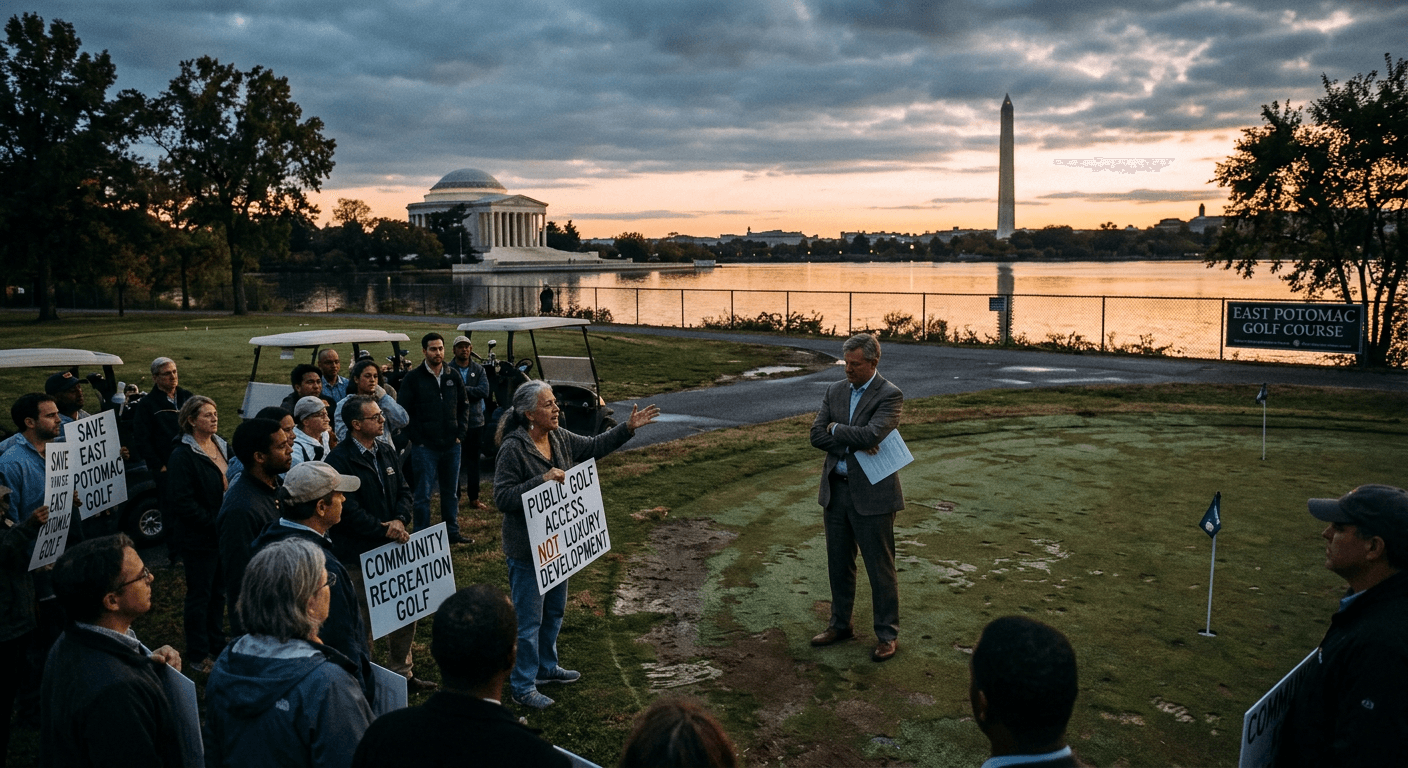
The termination of the long-standing lease for the East Potomac Golf Course has immediately triggered a federal lawsuit, community protests, and a judge’s temporary ruling that has halted major redevelopment plans while toxic debris concerns mount.
This fight in the heart of Washington, DC, is not just about one golf course. It sits at the intersection of urban planning, environmental responsibility, public access to green space, and the economic pressures cities face when deciding what to do with aging public facilities on increasingly valuable land.
The Background: A Course Built for Everyone
East Potomac Golf Course opened nearly a century ago as a public facility meant to give regular residents a place to play. Unlike exclusive private clubs, it welcomed players of all incomes and backgrounds. For generations, it served families, beginners, and serious golfers alike on land managed by the National Park Service but operated under a private concession lease.
The current operator’s lease was set to run for years longer. Then the federal government moved to end it early, citing the need for major upgrades, environmental remediation, and a new vision for the peninsula that includes the golf course, tennis center, and surrounding parkland near the Tidal Basin and Potomac River.
Critics say the move looks more like a land grab that favors private development interests over public use. Supporters argue the course is outdated, the facilities are crumbling, and the land could serve far more people with modern recreation options or mixed-use development that brings in revenue for the cash-strapped National Park Service.
Toxic Debris and Environmental Stakes
One of the most serious flashpoints involves the discovery of potentially toxic materials. According to detailed reporting, years of golf course operations left behind debris that may contain elevated levels of heavy metals and other contaminants. The hidden costs of deferred maintenance on public land have now become impossible to ignore.
Environmental advocates point out that any redevelopment must deal with proper cleanup first. Rushing new construction without addressing these issues could create long-term health risks for nearby residents in Southwest DC and visitors to the National Mall area. The New York Times investigation highlighted how golf course maintenance chemicals, old infrastructure, and river flooding have combined to create a complicated remediation challenge.
Proper environmental cleanup costs real money. Those costs inevitably shape the economic calculations behind any new plan. If the federal government or a new concessionaire must spend tens of millions on remediation, that changes what kinds of development can pencil out financially.
The Legal Battle and Judge’s Ruling
A coalition of golfers, local residents, and advocacy groups quickly filed suit to stop the lease termination. They argue the process violated federal rules requiring proper public notice and environmental review. In early May 2026, a federal judge issued a ruling that temporarily blocked parts of the overhaul, buying time for the plaintiffs while larger questions get sorted.
The Washington Post covered the courtroom drama in detail, noting that the judge appeared skeptical of the government’s claim that emergency conditions justified bypassing standard procedures. This legal pause has frozen plans for new commercial facilities, luxury sports amenities, or potential private partnerships that backers hoped would generate steady revenue streams.
At its core, the lawsuit highlights tension between federal land managers trying to modernize aging assets and local communities that see the golf course as an important democratic space in a city where green recreation options are not equally distributed.
Economic Pressures Driving the Conflict
Cities and federal agencies face tough choices in 2026. Maintenance backlogs at national parks and public facilities have grown. The National Park Service has talked openly about needing new revenue models to avoid constant taxpayer bailouts.
Redeveloping East Potomac represents one attempt to solve that problem. Proponents envisioned updated facilities, possibly including event space, better food and beverage operations, or partnerships that could bring private capital to public land. In theory, this approach reduces the burden on federal budgets strained by broader economic pressures.
Yet opponents counter that turning public parkland into higher-revenue ventures often leads to higher prices that price out the very people the facilities were built to serve. A round of golf at East Potomac has historically been affordable. Many worry a redeveloped version would cater mainly to tourists, corporate events, and wealthier residents.
This mirrors debates happening across America. From waterfront redevelopments in Brooklyn to park conversions in San Francisco, communities are wrestling with the same question: when does upgrading public space cross the line into gentrification that pushes out longtime users?
Broader Questions About Urban Land Use
The East Potomac fight connects to larger patterns in how American cities think about economics and public goods. Land near the monumental core of Washington is scarce. Every acre carries both symbolic and financial weight.
Some urban economists argue that cities should seek the highest and best economic use of land to generate tax revenue and jobs. Others believe certain spaces should remain protected from pure market logic because they provide social value that cannot be easily measured in dollars.
Golf itself sits in an interesting spot in these debates. Participation has grown since the pandemic, especially among younger people and women. Yet the sport still carries an image problem for some who see it as out of touch. Public courses help counter that perception by keeping the game accessible.
Data from the National Golf Foundation shows public facilities account for the majority of rounds played nationwide. Losing or significantly changing a visible public course like East Potomac sends a signal about priorities that goes beyond one city.
Environmental Justice Dimensions
The communities closest to East Potomac include some of Washington’s historically Black and working-class neighborhoods. Residents there have already dealt with years of flooding, limited park investment, and past development projects that promised benefits but delivered uneven results.
Any cleanup plan must consider not just the technical aspects of removing contaminants but also how construction disruptions and future pricing will affect people who live nearby. If the redeveloped site becomes primarily a tourist or corporate destination, local families could lose convenient access to recreation on their doorstep.
This connects to wider conversations about who benefits when cities redevelop public assets. The unequal distribution of costs and benefits in public policy decisions often falls hardest on those with the least political power.
What Happens Next
The temporary court ruling gives both sides time to negotiate or prepare for longer litigation. The National Park Service must decide whether to appeal the judge’s decision or go back through more formal environmental and public review processes.
Meanwhile, the operator of the golf course continues limited operations while the future remains uncertain. Golfers wonder if their regular tee times will survive. Local businesses near the course worry about losing customer traffic if the facility shrinks or closes during redevelopment.
Larger policy questions loom too. Congress has shown increasing interest in how the National Park Service manages its concession contracts. Lawmakers from both parties have criticized sweetheart deals for some operators while questioning whether aggressive lease terminations create unnecessary legal risk and bad faith with longtime partners.
The outcome at East Potomac could set precedents for other aging public recreation facilities on federal land nationwide. With hundreds of similar concession agreements up for review in coming years, the legal and political battles playing out in DC will be watched closely.
Connecting to Bigger Economic Patterns
This local dispute reflects pressures visible in many areas of American economic life right now. Governments at all levels struggle with aging infrastructure, rising maintenance costs, and limited budgets. The temptation to unlock value from public land through redevelopment is strong.
Yet history shows these transitions rarely go smoothly. Private operators often need higher revenue to justify their investment, which can mean higher prices or different target customers. What starts as a plan to “upgrade” public amenities can end up changing who feels welcome there.
The East Potomac case also highlights how environmental regulations, legal requirements for public process, and community organizing can slow or redirect top-down redevelopment plans. In an era when many Americans feel disconnected from decisions that affect their daily lives, fights over local parks and recreation take on added meaning.
Resolving this will require balancing several real needs: cleaning up environmental hazards, modernizing outdated facilities, protecting public access, controlling costs to taxpayers, and respecting the history of a beloved community asset.
Why This Matters Beyond Washington
Most Americans will never play golf at East Potomac. But the principles at stake apply to parks, waterfronts, and public facilities in cities everywhere. As urban land grows more valuable and government budgets remain tight, similar battles will multiply.
The outcome will signal what kind of balance America strikes between market-driven development and preserving public goods. It will test whether environmental cleanup can happen without sacrificing access. And it will reveal whether long-time users of public spaces have a meaningful voice when powerful interests see opportunities for profit.
For now, the judge’s ruling has paused the most aggressive changes. But the underlying pressures have not gone away. The lease termination, the toxic debris problem, the competing visions for the land, and the economic realities facing public land management all point toward more conflict ahead.
Watch what happens at East Potomac. The resolution there will say a lot about how American cities will navigate the tension between economic pressures and community needs in the years ahead. The players on this particular course may be fighting over fairways and greens, but the real stakes involve who gets to decide the future shape of public space in our most symbolic city.
In the end, this is about more than golf. It is about whether public land truly remains public in both name and practice when money and politics enter the picture. The lawsuit, the environmental concerns, and the community pushback all suggest that many people believe the answer still matters.
Share This Article