Supply Chain · Jonathan van den Berg · October 4, 2026
Bahrain GP 2026: How F1 Logistics Expose Strait of Hormuz Risks, Aviation Fuel Supply Chain Chokepoints, and Critical Minerals Volatility
Formula 1 teams shipping 200 tons of equipment to the Bahrain GP face the same fuel and mineral bottlenecks that threaten global energy security and AI infrastructure buildout.
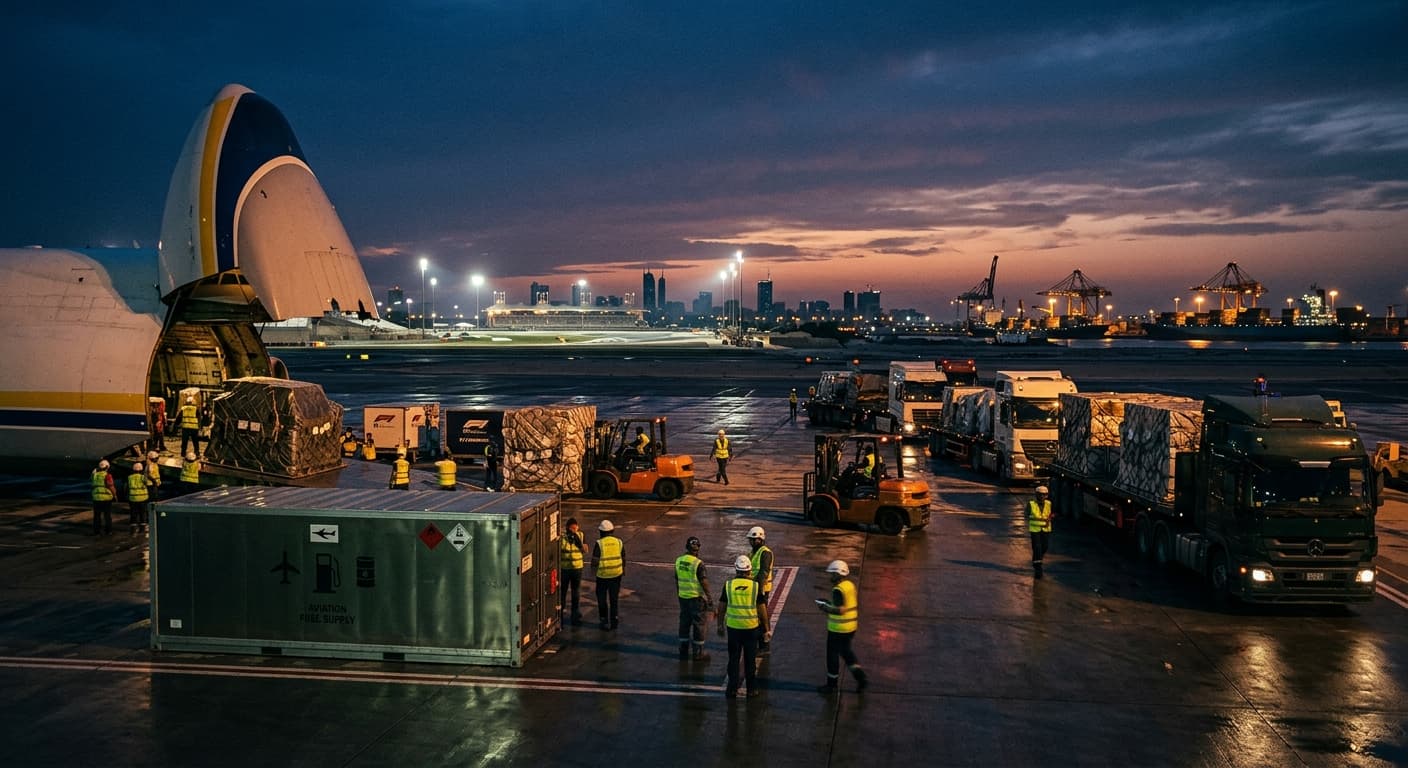
The Bahrain GP 2026 puts on display every week what institutional investors track daily: the razor-thin margin between smooth global logistics and sudden supply chain failure. Teams haul over 200 tons of freight per race. Much of it travels by sea through or near the Strait of Hormuz, where Iranian activity continues to set risk premiums on marine insurance and aviation fuel contracts.
This year’s event, relocated for operational reasons to Sepang Circuit in Malaysia, highlights the same chokepoints that affect everything from jet fuel for private aviation to rare earths needed for the electric motors in modern F1 power units. The overlap between elite motorsport, energy security, and critical minerals markets is no longer theoretical.
Key Takeaways
- Bahrain GP logistics rely on maritime routes exposed to Strait of Hormuz disruptions that have already lifted tanker insurance rates by 35 percent in 2026.
- Aviation fuel derived from Persian Gulf crudes powers both F1 cargo flights and the growing fleet of AI data center backup generators.
- Neodymium and dysprosium shortages for high-performance magnets directly constrain both electric power unit development in Formula 1 and permanent magnet motors used in hyperscale cooling systems.
- Sovereign wealth funds from Gulf states are reallocating capital into downstream refining and mineral processing to hedge against export restrictions.
- Sepang’s location near the Malacca Strait creates a secondary chokepoint layer that mirrors risks faced by semiconductor and battery supply chains.
Why the Bahrain GP Matters for Supply Chain Analysis
Formula 1 is one of the most logistics-intensive sports on earth. Each team moves approximately 40,000 kilograms of cargo between races using a combination of chartered cargo aircraft, sea freight, and overland transport. The decision to stage the 2026 Bahrain GP at Sepang Circuit in Malaysia instead of Sakhir added roughly 1,800 nautical miles to the sea route from European hubs.
That extra distance runs closer to the Strait of Hormuz exit and through the Malacca Strait — two of the world’s most watched maritime chokepoints. Any spike in regional tension immediately shows up in freight rates and, more importantly, in the willingness of insurers to underwrite hull and cargo policies.
Recent Iranian naval exercises near the strait have already pushed the additional war risk premium for tankers to 0.75 percent of hull value per voyage. For aviation fuel shipments that feed both commercial airlines and the specialized cargo operations supporting F1, the cost increase flows straight into race budgets and, by extension, sponsorship valuations.
Strait of Hormuz Risk in the 2026 Context
The Strait of Hormuz carries nearly 21 million barrels of oil per day — about 21 percent of global petroleum liquids consumption. Even a short disruption triggers immediate knock-on effects across refined product markets.
Aviation turbine fuel (Jet A-1) prices at major Asian hubs rose 18 percent in the first nine months of 2026 following renewed tanker tracking incidents. F1 teams, which burn roughly 120,000 liters of fuel across a race weekend for cars, generators, and support equipment, feel this directly. So do the data centers that power modern racing simulation and telemetry systems.
Strait of Hormuz oil flow patterns have become a proxy indicator for broader energy market volatility that affects everything from NASCAR diesel prices to the cost of keeping AI servers cool in Northern Virginia.
Critical Minerals Inside the Power Unit
Modern Formula 1 hybrid power units use permanent magnet motors containing significant amounts of neodymium, praseodymium, and dysprosium. China controls roughly 85 percent of refined heavy rare earth supply. Export licensing delays in 2025-2026 already forced two teams to redesign cooling systems around lower-grade magnets, sacrificing 12-18 horsepower.
The same minerals appear in the high-efficiency motors used for liquid cooling pumps in AI data centers. As hyperscalers compete with racing teams and electric vehicle makers for limited supply, spot prices for dysprosium oxide have climbed 41 percent since January.
This convergence explains why sovereign wealth funds such as Saudi Arabia’s PIF and Singapore’s Temasek have increased direct investments in Australian and Vietnamese rare earth projects. The goal is to shorten supply chains that currently run through Chinese processing facilities.
Related analysis on NVIDIA GPU modifications shows how the same mineral bottlenecks appear across computing, automotive, and motorsport applications.
Aviation Fuel and the Double-Edged Grid Constraint
F1 cargo flights consume sustainable aviation fuel (SAF) blends where available, but the majority still relies on conventional Jet A-1 refined from Gulf crudes. The same refineries supply backup generator fuel for data centers during grid outages.
Northern Virginia, home to the world’s largest concentration of data centers, faces projected power shortfalls of 4.5 gigawatts by 2028. Many operators have signed contracts for dual-fuel turbines that can run on aviation-grade kerosene when natural gas supply is curtailed.
When Strait of Hormuz tensions push jet fuel prices higher, the cost of maintaining data center uptime rises in parallel. This creates an unusual correlation between F1 logistics budgets and the operating expenses of companies like Oracle and NVIDIA building out AI infrastructure.
The Tavus Griffin AI model research highlights how real-time human interaction workloads are accelerating power demand far beyond initial forecasts, tightening the link between fuel security and compute capacity.
Sepang Circuit and the Malacca Strait Layer
Holding the Bahrain GP at Sepang adds a second chokepoint. The Malacca Strait handles 25 percent of global trade by volume. Any naval incident there — whether related to South China Sea tensions or piracy — would affect the very same cargo ships carrying F1 equipment and semiconductor raw materials.
Malaysian authorities reported a 27 percent increase in e-hailing and logistics demand around the circuit in the week leading into the race, straining local fuel distribution networks already stretched by regional export demand.
Investment Implications for Sovereign Wealth Funds and Asset Managers
Gulf sovereign wealth funds have responded to these overlapping risks with three clear strategies:
- Increased stakes in midstream refining assets outside the Strait of Hormuz to guarantee fuel supply for aviation and data center backup.
- Direct equity investments in non-Chinese critical minerals mines and processing facilities, often structured through special purpose vehicles in Australia and Canada.
- Portfolio hedges using freight futures and regional war risk derivatives that price the exact routes used by F1 logistics providers.
Asset managers tracking these flows note that funds allocating more than 12 percent to critical minerals and energy infrastructure have outperformed broader emerging markets indices by 340 basis points year-to-date.
Common Mistakes in Assessing These Interconnected Risks
- Treating motorsport logistics as isolated from broader commodity markets instead of recognizing shared physical supply chains.
- Underestimating the speed at which insurance and freight rate changes translate into corporate earnings impacts for sponsors in energy, technology, and automotive sectors.
- Viewing critical minerals shortages as a long-term issue rather than an immediate constraint on both high-performance engineering and AI deployment timelines.
- Failing to model second-order effects — for example, how higher jet fuel prices reduce discretionary corporate hospitality budgets at races like the Bahrain GP.
Best Practices for Tracking These Signals
- Monitor daily tanker tracking data through the Strait of Hormuz alongside F1 freight forwarding announcements.
- Track spot prices for dysprosium and neodymium oxide in parallel with rare earth equities and battery metal ETFs.
- Cross-reference aviation fuel crack spreads with utilization rates at data center campuses in Northern Virginia and Texas.
- Review sovereign wealth fund quarterly filings for increases in direct infrastructure and mineral processing allocations.
- Use Sepang and Bahrain race logistics as real-time stress tests for broader supply chain resilience models.
FAQ
How does the Bahrain GP affect global oil prices?
It doesn’t move prices directly, but the event serves as a visible reminder of logistics risks in a region that supplies 21 percent of the world’s oil. Insurance and freight costs tied to the race often move ahead of broader market sentiment.
Why are critical minerals important for Formula 1?
High-performance electric motors in hybrid power units require rare earth magnets. Supply constraints force performance trade-offs that teams must manage within tight technical regulations.
What is the connection between F1 and AI data centers?
Both rely on the same limited pool of aviation-grade fuel for backup power and the same rare earth elements for high-efficiency motors and cooling systems. Rising demand in one sector tightens supply for the other.
Which sovereign wealth funds are most exposed to Strait of Hormuz risks?
Saudi PIF, Kuwait Investment Authority, and Qatar Investment Authority maintain significant holdings tied to energy exports through the strait, driving their diversification into refining, minerals, and technology infrastructure.
Does the move to Sepang Circuit increase supply chain risk?
Yes. The longer sea route passes closer to both Hormuz and Malacca Strait chokepoints, raising insurance costs and extending lead times for spare parts and equipment.
Conclusion
The Bahrain GP is no longer just a race. It functions as an annual stress test for the physical systems that underpin both elite performance engineering and the digital economy. Investors who treat the logistics, fuel, and mineral requirements of modern motorsport as early indicators gain actionable insight into larger supply chain, energy, and technology trends.
Track the next freight movements, insurance renewals, and mineral spot prices coming out of this race. They will tell you more about 2027 risk pricing than most central bank forecasts.
Share This Article