Jonathan van den Berg · May 30, 2026
TikTok Spinoff Deal: How National Security Concerns Are Reshaping US-China Tech Trade and Global Data Power
US senators are pressing TikTok’s proposed spinoff with Oracle over national security risks, data handling, and foreign influence. This high-stakes case reveals how tech platforms have become central to economic competition and geopolitical strategy between Washington and Beijing.
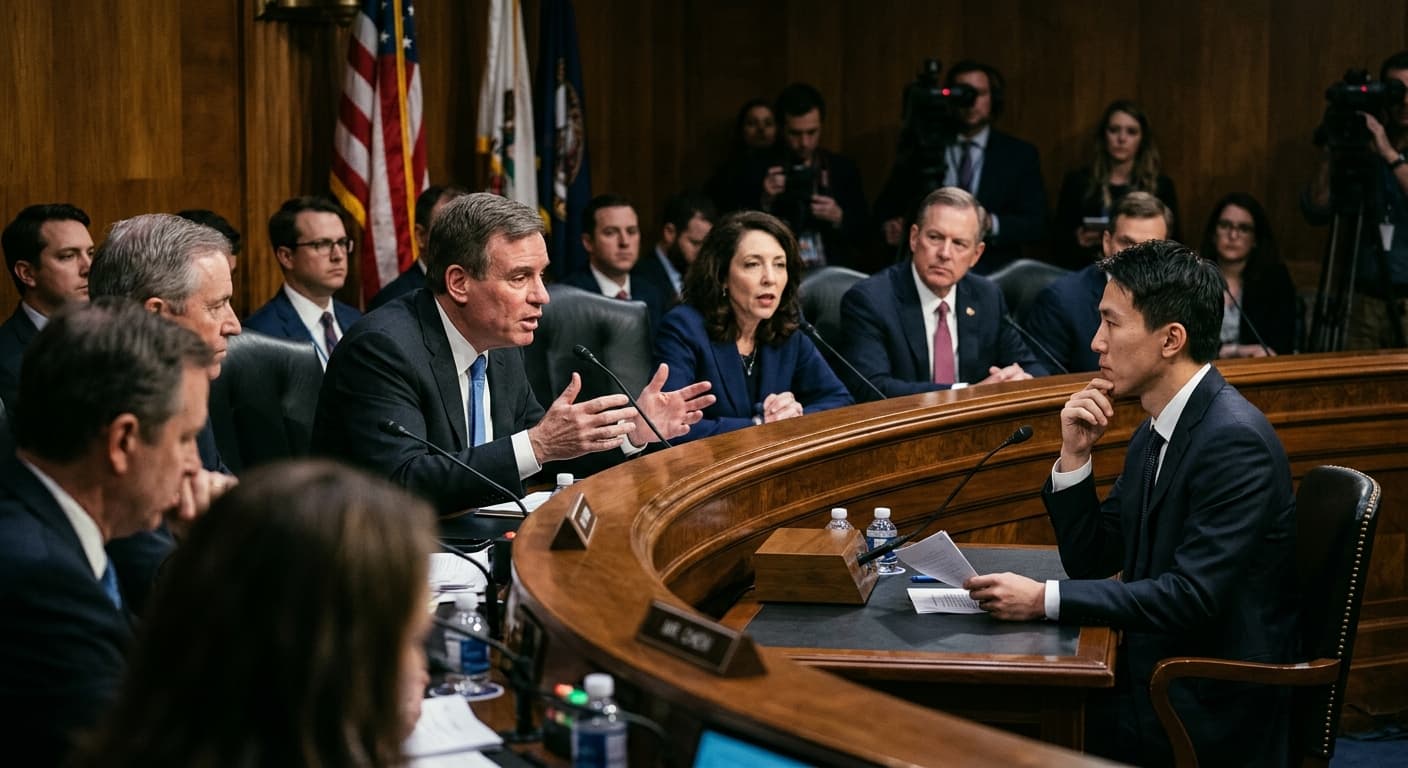
Senator Edward Markey is demanding detailed answers from TikTok and Oracle on their proposed US spinoff partnership, citing persistent national security risks around user data, algorithmic control, and potential Chinese government influence. The move highlights how the TikTok spinoff deal has evolved from a simple divestiture into a test case for America’s broader strategy of technological decoupling from China.
The Democratic senator from Massachusetts sent a formal letter this week seeking specific commitments on data localization, oversight mechanisms, and protections against Beijing-directed content manipulation. His questions reflect growing bipartisan frustration that earlier agreements have not fully resolved concerns about how ByteDance retains indirect sway over the platform’s US operations.
Key Takeaways
- Senator Markey’s letter targets gaps in the TikTok-Oracle joint venture, focusing on data security, algorithmic transparency, and governance structure.
- The TikTok spinoff deal remains incomplete more than a year after initial announcements, exposing fractures in US-China tech trade relations.
- National security reviews now treat consumer apps as critical infrastructure, influencing everything from foreign investment screening to export controls on semiconductors.
- Oracle’s role as the US “trusted technology partner” has become a model—and a cautionary tale—for future attempts to separate Chinese-owned platforms from their parent companies.
- The outcome will likely set precedents for how Washington handles other Chinese apps, cloud services, and data-driven businesses in coming years.
The Current State of the TikTok Spinoff Deal
The proposed arrangement would create a new US-based entity that houses TikTok’s American operations, with Oracle taking a significant equity stake and responsibility for hosting user data on domestic servers. ByteDance would retain minority ownership but surrender day-to-day operational control. Despite multiple rounds of negotiations, final approval from the Committee on Foreign Investment in the United States (CFIUS) has remained elusive.
Markey’s letter specifically asks both companies to detail how the new structure prevents ByteDance from accessing US user data, whether Chinese engineers can still contribute to core recommendation algorithms, and what independent auditing mechanisms will verify compliance. These questions echo concerns raised in earlier congressional hearings and by the FBI, which has warned that TikTok’s parent company remains subject to Chinese national intelligence laws.
Recent reporting indicates the spinoff would create a standalone company valued at roughly $20-30 billion, depending on final terms. Oracle would manage the data infrastructure through its cloud services, aiming to create a “walled garden” that physically and legally separates American users from ByteDance’s global network. Yet lawmakers remain skeptical that technical firewalls alone can neutralize influence that operates through software updates, personnel decisions, and corporate culture.
National Security Risks at the Heart of the Dispute
At its core, the debate centers on whether a consumer social media app can be treated as dual-use technology with strategic implications. TikTok’s massive user base—over 170 million Americans—gives it unparalleled reach into public opinion, cultural trends, and youth behavior. Intelligence officials worry this influence could be weaponized during crises, whether through subtle content curation or outright data harvesting.
The concerns go beyond content moderation. TikTok’s sophisticated recommendation engine relies on vast troves of behavioral data. Critics argue that even if raw data stays on Oracle servers, model training and algorithmic updates could still draw on patterns that reveal sensitive information about US users, infrastructure vulnerabilities, or military personnel.
This case fits into a larger pattern of US policy that now views data as a national asset. Similar logic underpins restrictions on Chinese firms accessing advanced AI chips, cloud computing services, and biotechnology tools. The TikTok spinoff deal is therefore not an isolated corporate restructuring but a visible front in the contest for technological and informational superiority.
Data Localization vs. Algorithmic Control
Many observers note a key weakness in current proposals: separating data storage from algorithmic development is extremely difficult. Even with US-based servers, the models that decide what videos appear on users’ For You pages are often developed in China or by teams with close ties to ByteDance’s Beijing headquarters.
Senator Markey’s questions focus on this exact gap. He wants binding commitments that US regulators can review and approve any changes to the recommendation system. Without such oversight, the spinoff could become little more than a compliance theater that leaves core influence mechanisms intact.
Economic Implications for US-China Tech Trade
The prolonged uncertainty around the TikTok spinoff deal has already chilled investment and innovation in the social media sector. US venture capitalists report hesitation to back consumer apps that might later face similar divestiture demands. At the same time, Chinese firms are accelerating efforts to localize operations in other markets, creating parallel versions of their products that reduce reliance on the US market.
This fragmentation carries costs. Global tech supply chains, already strained by semiconductor export controls, now face additional pressure from data localization rules. Companies must maintain separate codebases, compliance teams, and infrastructure across jurisdictions—expenses that ultimately raise prices for consumers and slow feature development.
The case also affects America’s own technology champions. Oracle’s prominent role in the deal has boosted its profile in government contracting, but it has also drawn the company deeper into political battles. Success could position Oracle as the go-to partner for future national security-sensitive cloud projects. Failure might damage its reputation as a neutral infrastructure provider.
For broader context on how geopolitical tensions influence technology markets, see how Middle East tensions drive market volatility and Taiwan’s central role in semiconductor power struggles.
Global Ripple Effects Beyond US-China Relations
Europe is watching the TikTok saga closely. The European Union has imposed its own strict data rules under the Digital Services Act and GDPR, but many officials view the American approach as more aggressive and potentially more effective at addressing systemic risks. The outcome in Washington could influence whether Brussels pursues forced divestitures of its own.
In Asia, countries with close economic ties to China are taking a different path. Indonesia and Vietnam have opted for strict local content quotas and data residency requirements rather than outright bans or forced sales. India, which banned TikTok in 2020, has seen its domestic short-video competitors flourish, though at the cost of reduced competition and innovation.
The TikTok spinoff deal therefore serves as a live experiment in “decoupling” strategies. Its success or failure will shape how other nations balance economic openness with security concerns in the digital domain.
Comparison of International Approaches to Chinese Social Media
| Country/Region | Policy | Key Rationale | Economic Impact |
|---|---|---|---|
| United States | Forced spinoff or potential ban | National security, data protection, foreign influence | High compliance costs, market uncertainty |
| European Union | Strict content rules, fines, data audits | Consumer protection, transparency | Moderate costs, ongoing legal battles |
| India | Complete ban since 2020 | National security, data sovereignty | Boost to local competitors, reduced consumer choice |
| Indonesia | Data localization + content quotas | Protect domestic industry | Growth of local platforms, foreign investment in compliance |
| Australia | Targeted restrictions on government devices | Espionage prevention | Limited economic disruption |
Common Mistakes in Assessing the TikTok Situation
- Assuming the only risk is direct data theft. Algorithmic influence and subtle narrative shaping can be more powerful and harder to detect.
- Believing technical solutions like data localization fully solve governance problems. Corporate culture, personnel decisions, and software architecture often matter more.
- Treating this as purely a China problem. Similar concerns are emerging around apps from other authoritarian states and even some democratic allies.
- Overlooking the precedent effect. How Washington resolves the TikTok spinoff deal will influence future cases involving drones, autonomous vehicles, biotechnology, and financial technology.
Best Practices for Policymakers and Industry
Effective approaches combine several elements. First, transparent governance structures with independent boards that have real veto power over sensitive decisions. Second, verifiable technical controls that regulators can audit in real time. Third, clear escalation paths if violations occur, including the credible threat of bans.
Companies seeking to operate across geopolitical divides should build “sovereign-ready” architectures from the start. This means designing systems that can be cleanly partitioned by jurisdiction without sacrificing core functionality. It also means maintaining clear separation between global research teams and country-specific operations.
Investors should factor regulatory fragmentation risk into valuations. The era when a single global platform could serve every market without meaningful modification is ending. Future winners will excel at localization while preserving network effects.
For deeper insight into how data and technology intersect with global power, explore how AI leadership is reshaping global tech power.
FAQ
What exactly is the proposed TikTok spinoff deal?
It would create a new US company that operates the American version of TikTok. Oracle would become the primary technology partner, hosting data on US soil and taking a significant ownership stake while ByteDance retains a minority position with limited control rights.
Why does Senator Markey want more answers now?
Despite years of negotiations, key questions remain about whether ByteDance can still influence the algorithm, access user data indirectly, or direct key personnel decisions. Recent reporting suggests the current proposal may not provide sufficient independent oversight.
Could TikTok actually be banned in the US?
Yes. If the spinoff cannot be completed to CFIUS satisfaction, legislation passed in 2024 gives the president authority to prohibit the app unless it severs all ties to ByteDance. Enforcement has been delayed pending final negotiations.
How does this affect regular TikTok users?
Most users would notice little immediate change if the spinoff succeeds. The app would continue to function normally, though some features might evolve more slowly due to compliance requirements. A ban would force users to switch to alternatives like Instagram Reels or YouTube Shorts.
What role does Oracle play in all this?
Oracle is positioned as the “trusted” American technology guardian. Its cloud infrastructure would store all US user data, and its personnel would have oversight of critical systems. This arrangement aims to create legal and technical barriers to Chinese government access.
Are other countries taking similar actions?
Many nations are tightening rules on foreign-owned social media, but few have gone as far as forced divestiture. The EU relies more on regulation and fines, while countries like India have opted for outright bans. The US approach is the most aggressive attempt to restructure ownership rather than simply restrict operations.
Conclusion
The TikTok spinoff saga is far more than a story about one social media app. It represents a fundamental recalibration of how nations view digital platforms in an era of great power competition. The questions Senator Markey has raised will not be answered quickly, and the eventual outcome will shape the digital economy for years to come.
Business leaders, investors, and policymakers should track this case closely. The resolution will signal whether the United States can successfully force structural change in Chinese tech companies or whether new forms of technological containment will be required. In either scenario, the era of seamless global internet platforms is giving way to a more fragmented, geopolitically aware digital landscape.
Companies that understand these new realities—and build strategies around them—will be best positioned to thrive as economic security becomes inseparable from national security.
Share This Article