Jonathan van den Berg · July 15, 2026
Cryptocurrency Trading and the Erosion of the Petrodollar: How Blockchain Reshapes Global Financial Power in 2026
Tax rules push 80 percent of India's crypto activity into unregulated futures contracts, speeding the shift away from dollar-denominated oil trades. This dynamic weakens traditional financial power structures while elevating blockchain as a parallel system for cross-border value transfer.
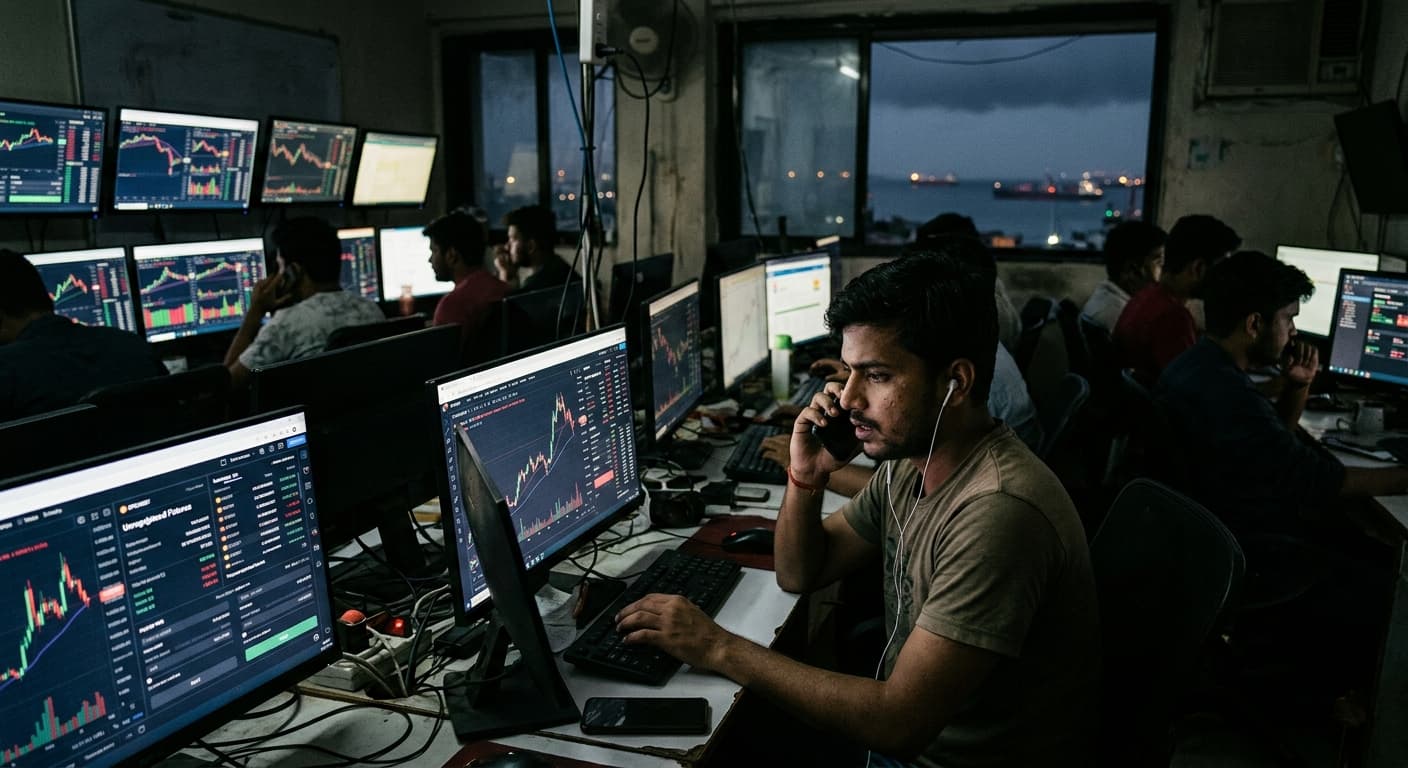
Cryptocurrency trading now accounts for the vast majority of activity in major emerging markets through futures contracts designed to sidestep taxes. In India, roughly 80 percent of crypto volume flows through unregulated derivatives, according to recent analysis. This shift highlights a broader move away from traditional financial rails, including the decades-old petrodollar system that has anchored global oil trade in U.S. dollars.
The incentive is clear. Spot crypto trades face a 30 percent tax plus 1 percent TDS in India. Futures contracts on offshore exchanges often escape these rules, driving users toward platforms that offer leveraged perpetual contracts. The result is a parallel financial ecosystem that bypasses both domestic regulation and the dollar-based settlement layers that have dominated energy markets since the 1970s.
Key Takeaways
- Tax arbitrage pushes 80% of India's crypto trading volume into futures rather than spot markets.
- Blockchain-based settlement reduces reliance on correspondent banking and dollar clearing systems.
- Middle East oil producers explore crypto payments amid ongoing tensions over sanctions and energy chokepoints.
- Institutional adoption of Bitcoin lending accelerates as banks treat crypto as collateral.
- Geopolitical flashpoints, including conflicts that threaten the Strait of Hormuz, increase demand for neutral settlement assets.
- Central banks in BRICS nations study digital alternatives to reduce petrodollar exposure.
How Tax Rules Created a Futures Boom in India
India's 2022 crypto tax regime imposed a flat 30 percent rate on gains and a 1 percent tax deducted at source on transfers. The rules apply to spot transactions but leave significant gaps for offshore derivatives. Traders quickly moved to international exchanges offering perpetual futures with no expiry and high leverage.
Data shows derivatives now represent about 80 percent of total reported Indian crypto volume. Many participants use VPNs and offshore accounts to avoid TDS triggers. This pattern echoes earlier capital flight during high-tax periods in other asset classes.
The shift carries risks. Unregulated futures amplify losses during sharp drawdowns. Yet the tax savings outweigh perceived dangers for many retail traders. Similar dynamics appear in other jurisdictions where transaction taxes or capital controls exist. Nigeria, Turkey, and Argentina have seen comparable migration to offshore crypto derivatives.
The Petrodollar System Under Pressure
The petrodollar arrangement dates to the 1970s when Saudi Arabia agreed to price oil in dollars and recycle surplus revenue into U.S. Treasuries. This created constant global demand for dollars and reinforced America's ability to run large deficits.
Today that system shows cracks. Russia sells oil to India and China in rupees and yuan. Saudi Arabia has conducted yuan-denominated test sales. Iran and Venezuela have used gold and crypto barter to evade sanctions. These workarounds erode the exclusivity of dollar oil settlement.
Cryptocurrency trading and the erosion of the petrodollar intersect when oil buyers and sellers settle invoices using stablecoins or tokenized commodities. The process skips SWIFT messaging and U.S. correspondent banks. Settlement times drop from days to minutes. Costs fall. Traceability increases for compliant parties while offering plausible deniability for others.
Blockchain's Role in Global Settlement
Stablecoins such as USDT and USDC already handle hundreds of billions in monthly volume. Much of this activity settles trade between emerging-market businesses that previously relied on dollar wires. The dollar remains the unit of account, but the rails change.
More advanced experiments tokenize real-world assets on public blockchains. Oil cargoes, gold bars, and currency baskets appear as digital tokens that trade 24/7 without traditional custodians. These instruments appeal to nations seeking to diversify away from single-currency risk.
Bitcoin itself functions as a neutral reserve asset in this environment. Countries facing inflation or sanctions accumulate BTC through mining or trading. El Salvador's experiment, though small, demonstrated the mechanics. Larger players watch quietly.
Geopolitical Drivers Accelerating Change
Ongoing conflicts in the Middle East highlight the vulnerabilities of traditional energy routes. Threats to maritime chokepoints increase insurance costs and push buyers toward alternative payment methods that reduce exposure to Western financial sanctions.
Nations targeted by secondary sanctions increasingly accept crypto for exports. This creates a feedback loop. More crypto acceptance leads to better liquidity, which in turn encourages further adoption. The cycle weakens the effectiveness of dollar-based enforcement tools.
Central bank digital currency projects add another layer. China's digital yuan already facilitates cross-border trade with Belt and Road partners. Several Gulf states explore similar platforms. The goal is not to replace the dollar overnight but to create credible alternatives that dilute its monopoly.
Institutional Money Enters the Crypto Arena
Banks and hedge funds have shifted from skepticism to participation. Bitcoin lending markets have rebounded as institutions accept crypto collateral for loans. This development provides liquidity without forcing sales during volatility.
Spot Bitcoin ETFs in the United States and similar products elsewhere brought billions in regulated inflows. While these vehicles keep assets off direct balance sheets for many institutions, they normalize exposure. Corporate treasuries now allocate small percentages to digital assets as inflation hedges.
Private equity and venture capital continue funding blockchain infrastructure. Focus has moved from retail speculation to enterprise use cases such as supply-chain finance, cross-border remittances, and tokenized deposits.
Real-World Examples of Crypto in Energy Trade
Russian oil traders have used USDT to settle deals with buyers in Asia when traditional banking channels froze. The process involves converting rubles to stablecoins, transferring them, then converting to local currency on the receiving end. Each leg happens outside conventional SWIFT rails.
Venezuelan state oil company PDVSA reportedly accepted crypto payments for crude during periods of tight sanctions. Iranian petrochemical exporters have explored similar channels. These cases remain limited but prove the technical feasibility.
Gold-producing nations have tokenized gold on blockchain ledgers and traded it against oil shipments. The arrangement creates a neutral medium of exchange that neither side fully controls. Such barter-on-chain arrangements could expand if geopolitical tensions persist.
Common Mistakes in Assessing Crypto's Geopolitical Impact
- Assuming volatility equals irrelevance. Bitcoin's price swings often mask steady growth in hash rate, node count, and real-world settlement volume.
- Overestimating near-term replacement of the dollar. The petrodollar's decline will likely unfold over decades, not months.
- Ignoring regulatory pushback. Governments can slow adoption through taxation, licensing, and enforcement even if they cannot stop decentralized networks entirely.
- Underestimating network effects. Once critical trade corridors adopt blockchain rails, switching costs rise sharply for late adopters.
Best Practices for Navigating This Transition
- Diversify currency exposure. Businesses with significant emerging-market revenue should maintain wallets in multiple stablecoins and native cryptocurrencies.
- Understand counterparty risk on unregulated exchanges. Use platforms with proven liquidity and insurance funds when volume matters.
- Track on-chain metrics rather than just price. Active address counts, stablecoin transfer volume, and hash rate provide better signals of adoption than headlines.
- Prepare for regulatory fragmentation. Rules differ sharply between jurisdictions. Compliance teams must map requirements by geography and product type.
- Consider energy exposure. Blockchain networks that rely on proof-of-work remain tied to electricity markets, which intersect with global oil and gas dynamics.
Comparison of Settlement Systems
| System | Settlement Time | Cost per Transaction | Geopolitical Neutrality | Primary Risk |
|---|---|---|---|---|
| Traditional SWIFT / Correspondent Banking | 1-5 days | $15-50 + FX spread | Low (U.S. influence high) | Sanctions blocking |
| Stablecoin Transfers | Minutes | $0.10-5 | Medium | Issuer counterparty risk |
| Bitcoin Lightning / Liquid | Seconds to minutes | Negligible | High | Volatility if not hedged |
| Central Bank Digital Currencies (select pairs) | Real-time | Very low | Variable by issuer | Government control |
The table shows why hybrid approaches are emerging. Many traders keep core holdings in dollars for stability while using blockchain for speed and censorship resistance on the margins.
Future Scenarios for 2026 and Beyond
Three plausible paths exist. In the first, coordinated regulation brings much of the offshore futures volume onshore, slowing but not reversing petrodollar erosion. In the second, escalating geopolitical conflict accelerates adoption of neutral digital assets as nations seek to protect trade from weaponized finance. The third path involves technological convergence where tokenized commodities and CBDCs create a multi-polar reserve system that gradually displaces the single-currency dominance of the past 50 years.
India's experience offers a preview. When taxes made spot trading unattractive, volume migrated rather than disappeared. The same logic applies globally. When access to dollar clearing becomes politically expensive, alternatives gain traction regardless of official preference.
Investors and policymakers should monitor several indicators: stablecoin issuance growth in emerging markets, Bitcoin reserve announcements by central banks or sovereign wealth funds, and any measurable decline in the dollar's share of global oil invoices. Each signal points to the same underlying trend.
FAQ
Why has cryptocurrency trading volume shifted so heavily to futures in India?
The 30 percent flat tax and 1 percent TDS on spot transactions create strong incentives to use offshore perpetual futures contracts that currently fall outside those rules. This tax arbitrage accounts for the 80 percent derivatives dominance.
Does crypto really threaten the petrodollar system?
It contributes to erosion rather than sudden collapse. By offering faster, cheaper, and less traceable settlement rails, blockchain reduces the necessity of holding and transacting primarily in dollars for energy trade. Cumulative effects matter more than any single transaction.
Which countries are most active in using crypto for energy deals?
Russia, Iran, Venezuela, and certain Chinese trading entities have experimented with stablecoins and tokenized commodities. The pattern appears where sanctions limit traditional banking channels.
How are banks responding to institutional crypto demand?
Leading institutions now offer Bitcoin lending, custody, and structured products. The rebound in crypto-backed lending reflects comfort with digital assets as collateral when proper risk controls exist.
What should businesses do to prepare for these changes?
Build familiarity with on-chain tools, maintain multi-currency reserves, and monitor regulatory developments in key trading partner countries. Understanding both the technology and the geopolitical incentives driving adoption is essential.
The transition from petrodollar hegemony to a more fragmented financial landscape is underway. Cryptocurrency trading serves as both symptom and accelerant. Those who study the mechanics now will be better positioned as blockchain rails become standard infrastructure for global commerce.
Explore related analysis on Bitcoin, gold, and silver in the current geopolitical environment to understand how traditional safe-haven assets interact with these new digital channels. Retail trading trends are further illuminated in Robinhood Q2 2026 earnings on prediction markets and crypto slowdown.
Sources
Share This Article