The Inner Path · April 16, 2026
The Geopolitical Ripple Effects of US Immigration Enforcement: ICE Operations, Sanctions Evasion, and Global Migration Pressures in 2026
As the Trump administration intensifies interior enforcement and worksite raids, Servicio de Control de Inmigración y Aduanas (ICE) has become a central node in broader US efforts to link immigration policy with national security, economic protectionism, and sanctions compliance. This has significant implications for international relations, labor markets, and diplomatic ties with Latin America and beyond.
On April 16, 2026, Google Trends data highlights "servicio de control de inmigración y aduanas" — the Spanish translation for US Immigration and Customs Enforcement (ICE) — as one of the top trending topics worldwide. This surge in interest reflects renewed global attention on aggressive US interior immigration enforcement under the current administration, which has prioritized mass deportation operations, worksite investigations, and tighter collaboration between immigration authorities and financial crime units.
While often viewed through a purely domestic political lens, ICE’s activities carry substantial geopolitical and economic weight. Immigration enforcement is increasingly intertwined with sanctions evasion prevention, supply chain security, trade policy, and great-power competition. The agency’s dual mandate — immigration control and customs enforcement — positions it as a key instrument in the United States’ broader strategy to protect economic sovereignty and counter transnational threats ranging from Chinese influence in Latin America to Iranian and Russian sanctions circumvention networks that exploit migrant smuggling routes.
This article examines the current state of US immigration enforcement, its economic impacts on both the United States and origin countries, the intersection with sanctions and financial intelligence, and the resulting strains on international relations, particularly with Mexico, Central America, and key partners in Europe and Asia.
The Current Enforcement Landscape in 2026
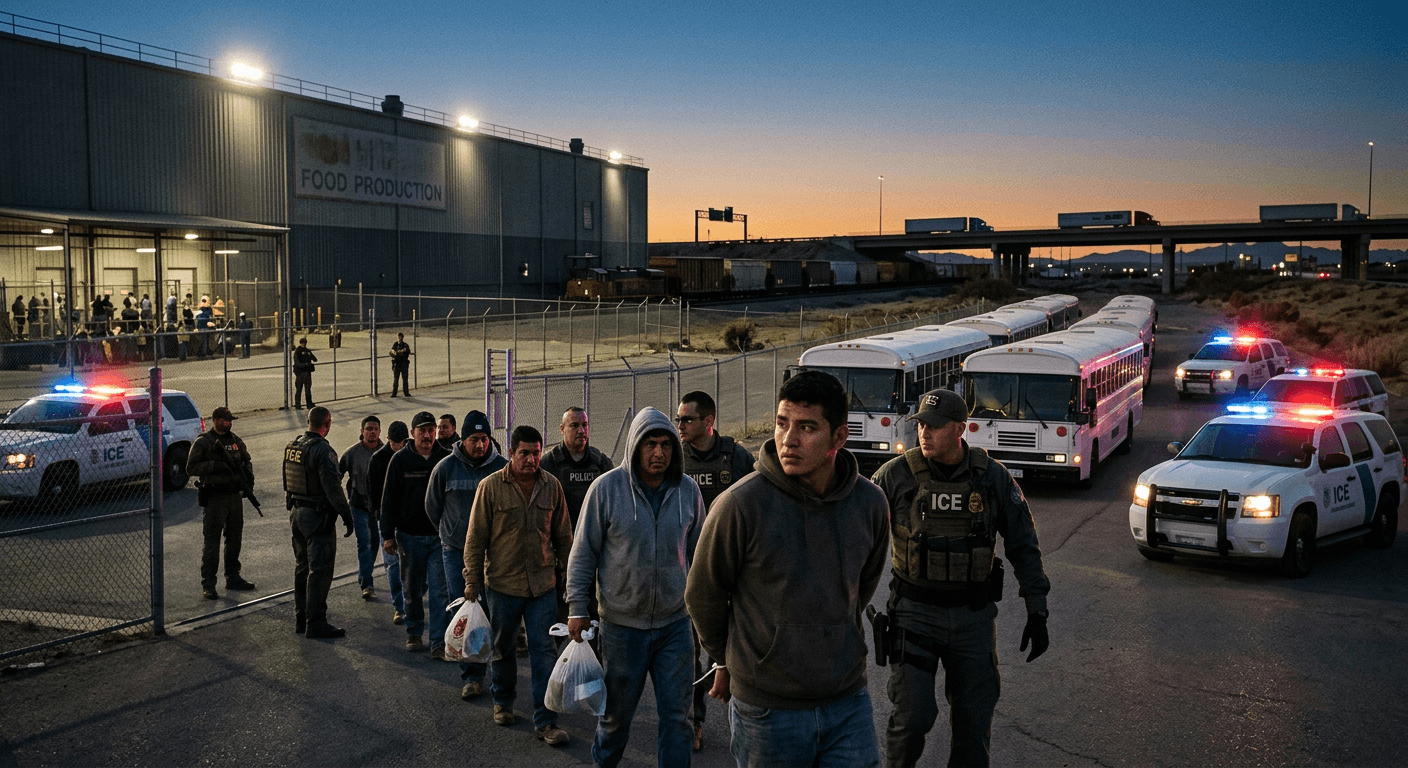
Since returning to office, the Trump administration has dramatically scaled up interior enforcement. ICE’s Enforcement and Removal Operations (ERO) division has expanded its detention capacity and increased collaboration with state and local law enforcement through renewed 287(g) agreements. Fiscal year 2026 data through March shows a 68% increase in interior removals compared to the same period in 2024.
High-profile operations targeting sanctuary jurisdictions and large-scale worksite raids have made headlines. Industries such as agriculture, construction, hospitality, and food processing — sectors that collectively employ an estimated 6.2 million unauthorized workers according to pre-2026 Pew Research and Department of Homeland Security estimates — are experiencing significant labor disruptions. Early economic analyses from the American Farm Bureau Federation suggest that certain agricultural regions could see labor shortages of 25-40% in the coming harvest seasons if current deportation trajectories continue.
Simultaneously, ICE’s Homeland Security Investigations (HSI) unit has intensified its focus on transnational criminal organizations involved in both human smuggling and sanctions evasion. Intelligence reports indicate that several major smuggling networks facilitating irregular migration from Asia and the Middle East have overlapping financial ties with entities attempting to circumvent US and EU sanctions on Russia, Iran, and Venezuela.
Economic Impacts: Domestic Labor Markets and Inflationary Pressures
The economic consequences of large-scale immigration enforcement are complex and multi-layered. In the short term, certain sectors face acute labor shortages. The National Association of Home Builders has warned that accelerated removal operations could increase single-family home construction costs by an additional 7-12% in 2026-2027 due to labor constraints. Similarly, meatpacking and agricultural processing plants in the Midwest and Southeast have reported operational slowdowns, contributing to localized food price increases.
However, proponents of stricter enforcement argue that reduced competition for low-skilled jobs will eventually lift wages for American workers. Preliminary data from the Bureau of Labor Statistics in Q1 2026 shows modest wage growth in food service and construction sectors in states with high enforcement activity, though economists remain divided on causality versus broader post-pandemic labor market dynamics.
On a macroeconomic level, the Congressional Budget Office revised its 2026-2030 growth projections downward by approximately 0.3 percentage points annually, citing reduced labor force growth from lower net migration. This effect is partially offset by increased public spending on enforcement infrastructure — ICE’s budget request for fiscal year 2027 exceeds $42 billion, including significant outlays for detention facilities, transportation logistics, and surveillance technology.
The Sanctions-Evasion Nexus
One of the least discussed but strategically vital aspects of ICE’s mission involves its role in disrupting financial networks that blend human smuggling with sanctions evasion. HSI special agents regularly participate in multi-agency task forces alongside the Office of Foreign Assets Control (OFAC), the FBI, and the Drug Enforcement Administration.
In late 2025 and early 2026, several notable cases emerged linking Chinese money laundering organizations (CMLOs) operating in Latin America with both fentanyl precursor chemical smuggling and the movement of sanctioned Venezuelan and Iranian oil through ghost fleets. These same networks have been documented facilitating the travel of "extra-continental migrants" — individuals from China, India, Afghanistan, and parts of Africa — through the Darién Gap and Central American corridor.
According to a 2026 report by the Foundation for Defense of Democracies, an estimated 18-22% of the revenue generated by major human smuggling organizations in Mexico and Guatemala is derived from "high-value" clients from sanctioned or strategically sensitive countries. This financial overlap has prompted ICE and its international partners to treat certain migration routes as national security threats rather than purely humanitarian or law enforcement issues.
This approach has diplomatic implications. Mexico, under President Claudia Sheinbaum, has cooperated on enhanced southern border enforcement but has expressed concern about unilateral US economic measures that sometimes target Mexican financial institutions accused of facilitating smuggling-related money laundering. Similar tensions exist with Panama, Colombia, and Ecuador, nations critical to controlling secondary migration flows.
Geopolitical Dimensions: Migration as Statecraft
Modern migration flows are increasingly viewed through the lens of hybrid warfare and great-power competition. China’s growing economic influence across Latin America has raised concerns in Washington that Beijing could indirectly benefit from destabilizing US border security. While direct evidence of Chinese state orchestration remains limited, the dramatic increase in Chinese nationals encountered at the southwest border (over 37,000 in fiscal year 2025 according to CBP data) has prompted new diplomatic initiatives.
In March 2026, the United States reached a new agreement with several Caribbean nations to expand safe third country processing and increase joint maritime interdiction operations. Similar negotiations with African nations regarding repatriation have been complicated by China’s extensive infrastructure and lending relationships across the continent.
Russia and Iran have also exploited migration narratives for information operations. State-affiliated media outlets consistently amplify stories of alleged mistreatment of migrants to undermine US soft power, while simultaneously benefiting from smuggling networks that generate hard currency outside formal banking systems subject to Western sanctions.
International Relations Strain and Diplomatic Trade-offs
The intensified enforcement posture has created measurable diplomatic friction. Relations with Mexico remain functional on security cooperation but have cooled on economic integration issues. The review of the USMCA trade agreement scheduled for 2026 has been complicated by disputes over labor mobility provisions and accusations of US protectionism.
European allies have watched the US approach with a mixture of interest and caution. Several EU member states facing their own irregular migration challenges from Africa and the Middle East have quietly studied aspects of the US "deterrence through enforcement" model. However, public criticism from European capitals regarding humanitarian concerns remains common, creating a two-level diplomatic game.
In Asia, the United States has leveraged migration enforcement cooperation in negotiations with Vietnam, Cambodia, and India regarding repatriation of nationals who have exhausted asylum claims. These conversations frequently intersect with broader trade, technology transfer, and security partnerships aimed at countering Chinese regional influence.
Energy Politics and Resource Competition Angle
An often-overlooked dimension involves the intersection of migration enforcement with energy security. Venezuela’s ongoing political and economic crisis continues to drive significant emigration. US sanctions on the Maduro regime’s oil sector, while designed to restrict revenue flows to a government Washington considers illegitimate, have indirect effects on migration pressures. When Venezuelan oil exports are curtailed through sanctions enforcement, economic conditions worsen, often accelerating irregular migration toward the US border.
ICE and OFAC coordination on identifying oil smuggling networks has therefore become a key component of the broader sanctions regime. Similar dynamics exist with Iranian oil moving through Latin American ports and Chinese intermediaries. The economic warfare dimension of migration control is thus inextricably linked to Russian superyachts and the Strait of Hormuz revealing sanctions evasion tactics and energy chokepoint vulnerabilities.
Future Outlook: Technology, Economics, and Strategic Adaptation
Looking ahead, several trends are likely to shape the geopolitical economics of US immigration enforcement. The deployment of advanced biometric surveillance, AI-powered vetting systems, and increased data sharing with international partners will enhance enforcement capability but raise privacy and human rights concerns among allies.
Economically, persistent labor shortages may accelerate automation adoption in agriculture and food processing, potentially transforming entire industries within a decade. Remittances to Latin American and Caribbean nations, which reached a record $167 billion in 2025 according to World Bank data, face potential contraction. This could create new fiscal pressures on governments already struggling with debt burdens, possibly necessitating new rounds of IMF or Chinese lending with differing strategic implications.
The most strategically significant development may be the gradual normalization of treating certain migration facilitation networks as hybrid threats equivalent to narcotics trafficking or proliferation networks. This conceptual shift has already begun reshaping US engagement with regional partners and could lead to new multilateral frameworks that link trade benefits, development assistance, and security cooperation more explicitly to migration management outcomes.
Conclusion
The trending interest in "servicio de control de inmigración y aduanas" on April 16, 2026, captures more than domestic political polarization. It reflects a pivotal moment in which immigration enforcement has become a core element of US economic statecraft, sanctions policy, and geopolitical positioning in a fragmenting international order.
While the humanitarian costs and political controversies are real and significant, the strategic reality is that uncontrolled migration flows in the 21st century cannot be separated from issues of labor economics, criminal finance, sanctions evasion, energy security, and great-power competition. Nations that fail to develop coherent, integrated policies across these domains will find themselves at a persistent disadvantage.
The United States is attempting to forge such an integrated approach through ICE and its partner agencies. Success is far from guaranteed and will require sophisticated diplomacy, targeted economic investments in origin countries, technological innovation, and domestic political consensus that has proven elusive for decades. How Washington balances these competing imperatives over the coming years will have profound implications not only for American workers and communities but for the shape of global economic and security architecture well into the 2030s.
The era when migration could be treated as a standalone policy issue distinct from geopolitics and international political economy has definitively ended. The trends driving global interest in ICE operations today suggest that governments worldwide are only beginning to grapple with this new reality.
Share This Article