The Inner Path · April 13, 2026
Mehmet Oz's Senate Confirmation and the Shifting Landscape of U.S. Health Policy in a Multipolar World
As Dr. Mehmet Oz assumes a leading role in the Trump administration's health apparatus amid 2026 global tensions, his confirmation reveals deeper intersections between domestic policy, pharmaceutical supply chains, and great-power competition with China.
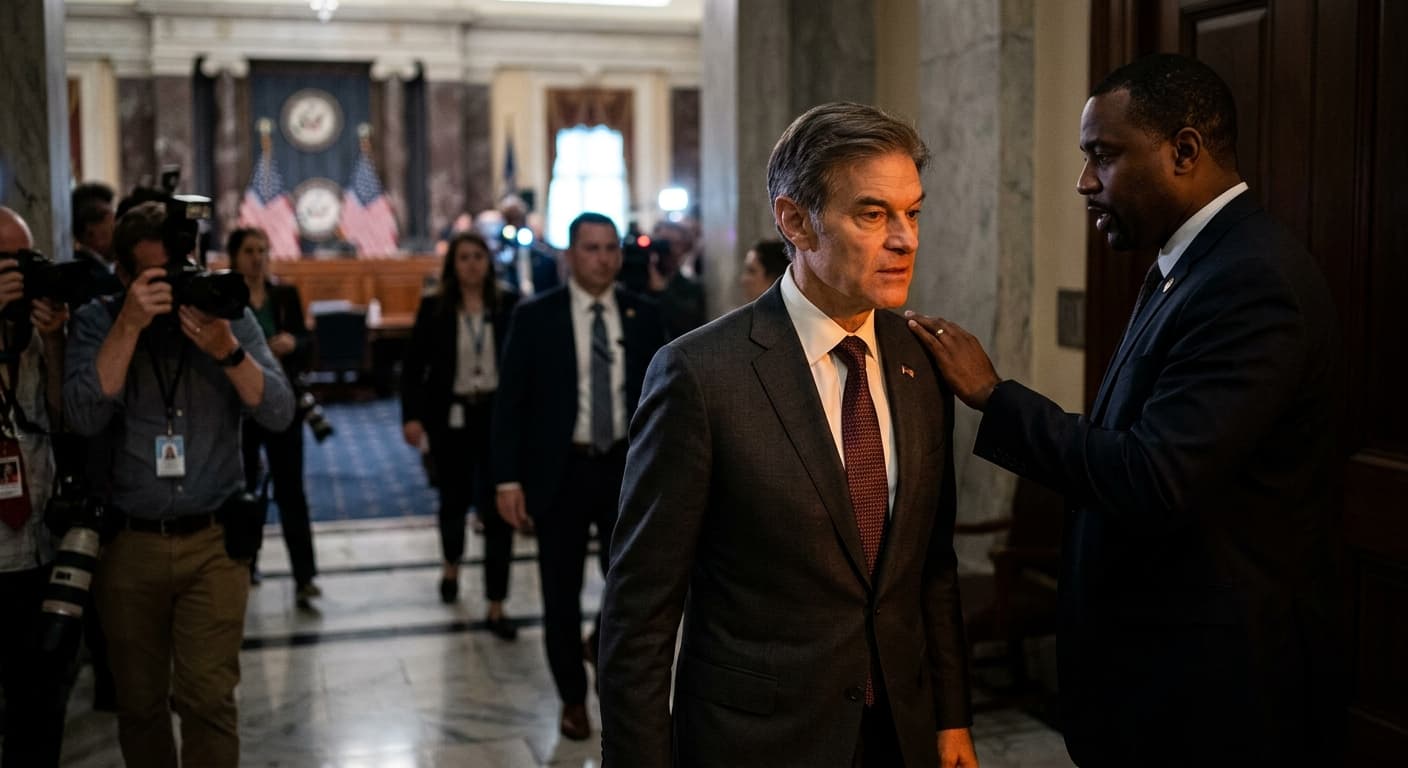
On April 13, 2026, the confirmation of Dr. Mehmet Oz to a senior health policy position within the second Trump administration has emerged as one of the most closely watched political developments in Washington. While trending primarily due to domestic cultural and medical debates, Oz's elevation carries significant geopolitical and economic implications that extend far beyond American shores. In an era defined by strategic competition with China, vulnerabilities in pharmaceutical supply chains, energy-driven inflation affecting healthcare costs, and the weaponization of biotechnology, the United States' approach to health policy has become an overlooked but critical domain of great-power rivalry.
Oz, the Turkish-American cardiothoracic surgeon, television personality, and former Senate candidate, brings a unique blend of medical expertise, media influence, and international background to his new role. His family's roots in Turkey — a NATO ally situated at the crossroads of Europe, the Middle East, and Central Asia — add another layer of geopolitical nuance. This article examines how Oz's confirmation and the broader health policy agenda of 2026 intersect with international relations, economic security, and global power dynamics.
The Confirmation Battle and Its Political Context
Mehmet Oz's path to confirmation has been contentious, reflecting the polarized nature of American politics in the mid-2020s. Critics highlighted his past promotion of alternative medicine and dietary supplements on television, while supporters praised his medical credentials from the University of Pennsylvania and his ability to communicate complex health issues to millions of Americans.
His confirmation hearings revealed deeper fault lines. Senators pressed Oz on America's dangerous dependence on Chinese active pharmaceutical ingredients (APIs), which constitute approximately 40-45% of generic drugs and over 80% of certain critical antibiotics and heparin precursors used in the United States. This reliance has been flagged repeatedly by the Department of Defense and the Intelligence Community as a national security vulnerability, particularly as tensions over Taiwan, the South China Sea, and semiconductor dominance intensify.
Oz's responses during confirmation signaled alignment with the administration's "America First" approach to health security. He reportedly advocated for accelerated onshoring of pharmaceutical manufacturing, strategic stockpiling of critical medicines, and greater scrutiny of foreign biotech investments — positions that mirror growing bipartisan concern about economic coercion and supply-chain weaponization by Beijing.
Pharmaceutical Supply Chains as a Geopolitical Battlefield
The COVID-19 pandemic exposed the fragility of globalized pharmaceutical supply chains. By 2026, this vulnerability has only grown more acute. China dominates the global supply of key starting materials for drug synthesis. India, while a major generic drug producer, sources approximately 70% of its APIs from China, creating a concentrated risk that policymakers in Washington, Brussels, and New Delhi can no longer ignore.
Recent developments illustrate the stakes. In late 2025, Chinese export restrictions on certain pharmaceutical intermediates — framed as responses to U.S. semiconductor sanctions — sent shockwaves through global markets. Prices for several critical medicines spiked by 25-40% in affected markets. The episode served as a wake-up call, demonstrating how health policy has become intertwined with trade policy, technology competition, and traditional security concerns.
The Oz-led health apparatus is expected to coordinate closely with the Department of Commerce, U.S. Trade Representative, and National Security Council on these issues. This represents a significant evolution: health policy is no longer solely the domain of HHS but has become a strategic pillar of economic statecraft. Analysts at the Council on Foreign Relations have described this as the "securitization of healthcare," a trend likely to accelerate under the current administration.
Turkey, NATO, and Oz's Personal Geopolitical Footprint
Mehmet Oz's Turkish heritage introduces additional international dimensions. Turkey remains a pivotal yet complicated NATO ally. Under President Erdogan and his successors, Ankara has pursued a multi-vector foreign policy — balancing relations with Russia, China, and the West while asserting greater autonomy in the Black Sea, Eastern Mediterranean, and Middle East.
Turkey's growing defense cooperation with China, including potential purchases of dual-use biotechnology equipment, has raised quiet concerns in Washington. Simultaneously, Turkey's pharmaceutical sector has expanded significantly, with Turkish firms becoming important suppliers of certain generics to Europe and Eurasia. Oz's personal connections could potentially facilitate public-private partnerships that diversify supply chains away from East Asia, though any such efforts would face intense scrutiny regarding technology transfer and intellectual property.
His confirmation also occurs against the backdrop of renewed tensions in the Eastern Mediterranean. Energy politics — particularly natural gas discoveries off Cyprus and Israel — continue to influence regional alliances. Healthcare and pharmaceutical cooperation have occasionally served as soft-power tools in these complex diplomatic environments. The administration may leverage Oz's profile to strengthen medical diplomacy with key partners in the Middle East and Turkic states.
Energy Politics, Inflation, and Healthcare Economics
The intersection of energy markets and healthcare costs represents another critical economic dimension. Global energy prices remain volatile in 2026 despite increased U.S. production. The Russia-Ukraine conflict, OPEC+ decisions, and the slow transition to renewables continue to influence inflation trajectories worldwide.
Healthcare represents nearly 18.5% of U.S. GDP. Energy-intensive sectors within healthcare — including hospital operations, pharmaceutical manufacturing, and medical device sterilization — are highly sensitive to oil, natural gas, and electricity prices. The administration's energy dominance agenda is therefore directly linked to efforts to control long-term healthcare costs and maintain the competitiveness of domestic biomanufacturing.
Oz has been tasked with finding efficiencies within the Medicare and Medicaid systems that do not compromise care quality. This includes accelerating the adoption of precision medicine, digital health technologies, and artificial intelligence tools — many of which are themselves subject to intense U.S.-China competition. The CHIPS and Science Act extensions and proposed BIOSECURE Act provisions are expected to feature prominently in upcoming policy debates.
Biotechnology Competition and National Security
Beyond traditional pharmaceuticals lies the rapidly advancing biotechnology sector. China's aggressive pursuit of dominance in synthetic biology, gene editing, and mRNA technology has alarmed Western security analysts. The convergence of biotech with artificial intelligence creates unprecedented dual-use possibilities in both defensive and offensive applications.
Recent reports from the National Academies of Sciences, Engineering, and Medicine highlight concerning gaps in U.S. biomanufacturing capacity. While America maintains leadership in innovative drug discovery, its manufacturing base for both small-molecule drugs and advanced biologics has eroded. The Oz confirmation is seen by many as an opportunity to bridge the gap between cutting-edge medical research and strategic industrial policy.
His emphasis on preventive medicine and wellness — themes from his television career — may translate into policies promoting domestic nutritional supplement manufacturing and reducing dependence on imported vitamins and minerals, another sector dominated by Asian supply chains.
Global Health Diplomacy in an Era of Strategic Competition
The COVID-19 pandemic transformed global health into a domain of geopolitical competition. Vaccine diplomacy became a battleground between the United States, China, and Russia. By 2026, this competition has evolved into a broader struggle over standards, data governance, regulatory harmonization, and control of international health organizations.
The World Health Organization faces ongoing criticism and reform pressures. The United States, as the largest funder, continues to debate the appropriate level of engagement versus the risk of politicization. Oz's role may include shaping America's position on pandemic treaty negotiations, biosecurity agreements, and technology transfer disputes.
Meanwhile, China's Belt and Road Initiative has expanded into "Health Silk Road" projects across Africa, Latin America, and Central Asia. These medical infrastructure investments serve both commercial and strategic purposes. The United States, through a combination of USAID, PEPFAR renewal debates, and new initiatives, is attempting to offer competitive alternatives. Oz's media-savvy approach could prove valuable in communicating these efforts both domestically and internationally.
Financial Markets and the Healthcare Economy
Wall Street has responded with cautious optimism to Oz's confirmation. Pharmaceutical stocks with significant U.S. manufacturing footprints rose in the days following the announcement, while companies heavily reliant on Asian supply chains saw increased volatility. The broader economic context includes Federal Reserve decisions on interest rates, ongoing debates about debt ceiling dynamics, and the implementation of new tariffs that could affect medical device and pharmaceutical trade.
The administration's economic team views a resilient healthcare sector as essential to sustained American prosperity. With an aging population and rising chronic disease burden, healthcare represents both a massive economic burden and a potential growth engine if innovation policies are calibrated correctly. Oz's challenge will be balancing cost containment with strategic investment in technologies that maintain America's technological edge.
Conclusion
Mehmet Oz's confirmation, while rooted in domestic political and cultural debates, illuminates the profound ways in which health policy has become intertwined with geopolitics and economic security in 2026. The era of treating healthcare as a purely domestic policy domain has ended. Supply chain resilience, biotechnology competition with China, energy-health linkages, and medical diplomacy are now central considerations for policymakers.
As a Turkish-American physician with global reach and media influence, Oz occupies a unique position at this intersection. His success or failure will not be measured solely by domestic health metrics but also by whether America reduces its strategic vulnerabilities in critical medicines, maintains leadership in biotechnology, and effectively deploys health cooperation as a tool of statecraft.
The coming years will test whether the securitization of healthcare strengthens American resilience or merely accelerates fragmentation of global health systems along geopolitical fault lines. What remains clear is that Dr. Oz's new responsibilities extend far beyond American hospitals and television studios — they reach into the heart of 21st-century great power competition.
In this context, his confirmation represents more than a political victory or cultural statement. It signals a recognition, however belated, that in the modern world, the health of a nation cannot be separated from its economic security, technological competitiveness, and position in the international order.
Share This Article