AI Infrastructure · Jonathan van den Berg · August 30, 2026
How SpaceX Turbine Blade Factory Solves AI Data Center Power Crunch and Grid Constraints
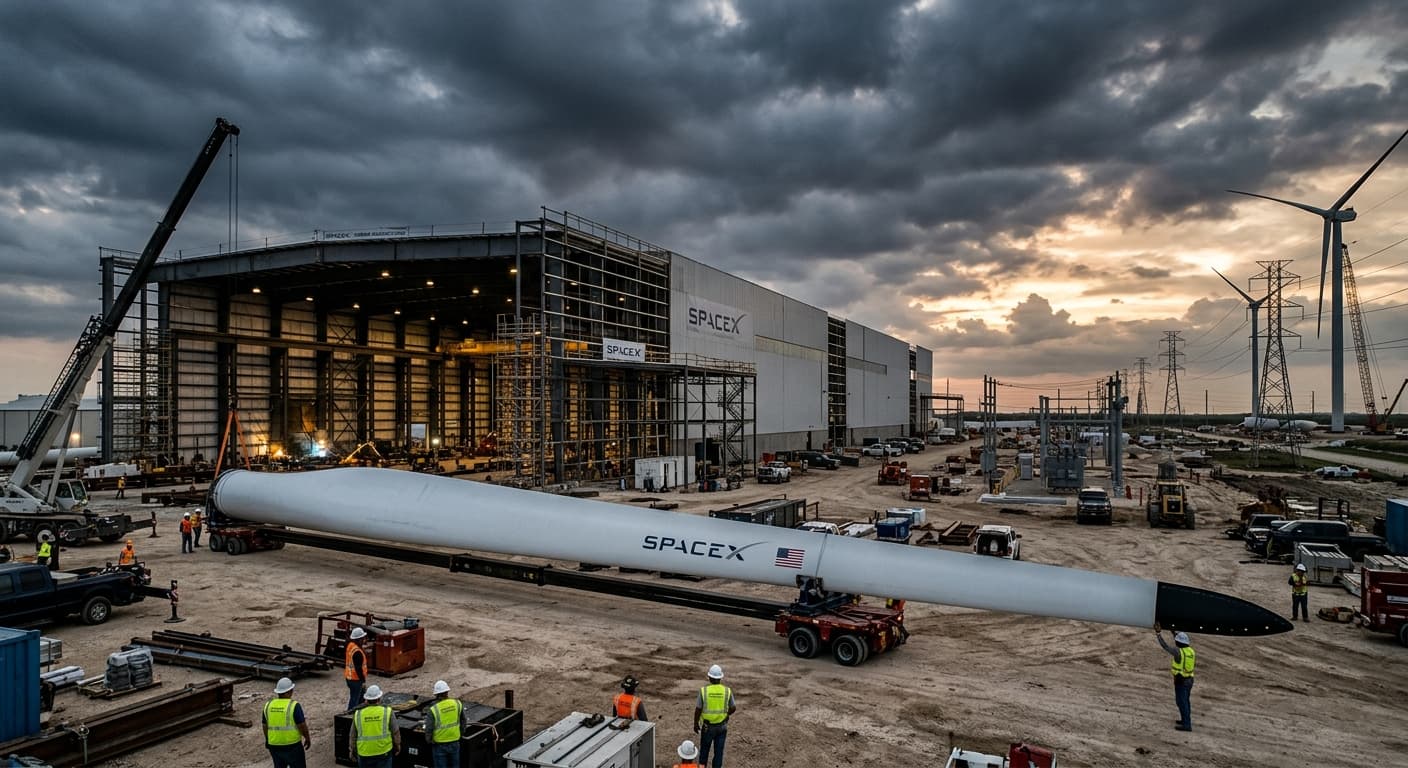
SpaceX is building its own turbine blade factory to overcome manufacturing bottlenecks that threaten wind power expansion needed for AI data centers. The move directly addresses surging electricity demand in key hubs like Northern Virginia while exposing vulnerabilities in global supply chains for energy infrastructure.
SpaceX is building a dedicated turbine blade factory to break through manufacturing bottlenecks that have slowed wind power deployment exactly when AI data centers need massive new electricity supplies. The factory targets a specific pain point: the specialized blades required for the largest offshore and onshore turbines that utilities want to install to feed hyperscale facilities.
This move comes as data center operators face power shortages across key regions. Northern Virginia alone accounts for over 20% of global data center capacity and struggles to secure enough electricity for planned expansions. Tech companies have turned to every available source — natural gas, nuclear restarts, solar, and wind — yet supply chain limits on components like turbine blades create real delays.
Why AI Data Centers Face a Power Crisis
AI training and inference clusters consume electricity at unprecedented scale. A single large GPU cluster can draw as much power as a small city. Projections show U.S. data center electricity demand could double by 2030, with much of that growth concentrated in Virginia, Texas, and the Midwest.
Utilities cannot build new generation fast enough. Transmission lines take years to approve. Natural gas plants face their own fuel constraints in some markets. Renewables offer speed but depend on physical components that few manufacturers produce at the necessary scale and quality.
Wind energy represents one of the faster options for new clean gigawatts. Yet the largest turbines — those with blades over 100 meters long — require specialized manufacturing facilities, rare materials, and skilled labor. Global capacity for these blades remains limited, creating a chokepoint that SpaceX now aims to address directly.
NVIDIA Supply Chain Gamble highlighted how critical minerals shortages already threaten semiconductor production for AI chips. The same pattern now appears in the energy layer that powers those chips.
The Turbine Blade Manufacturing Bottleneck
Turbine blades represent one of the most complex composite structures in industrial manufacturing. They must survive decades of extreme weather, fatigue loads, and lightning strikes while maintaining aerodynamic efficiency. Larger blades for 15+ MW turbines require massive molds, precise resin infusion, and quality control that few facilities worldwide can deliver.
Current global production capacity falls short of demand forecasts driven by both onshore wind repowering and new offshore projects. Lead times for certain blade models stretch beyond 18 months. Transportation alone creates problems — blades over 80 meters long require specialized trucks, permits, and routes that limit delivery windows.
SpaceX's decision to manufacture its own blades suggests the company sees this as a strategic vulnerability rather than a simple procurement issue. By controlling production, it can accelerate deployment timelines for projects tied to its own facilities or power purchase agreements with data center operators.
SpaceX's Strategic Shift
Elon Musk has publicly discussed power generation constraints as a limiting factor for AI progress. The turbine blade factory represents a vertical integration move similar to Tesla's battery cell production strategy. Instead of waiting for suppliers, SpaceX invests in the precise manufacturing step that creates the biggest delay.
The factory will likely focus on advanced composite materials and automated production methods that reduce cycle times. SpaceX's experience with carbon fiber in rockets and Starship gives it technical advantages in lightweight, high-strength materials that could translate to more efficient blade designs.
This approach also reduces exposure to global supply chain risks. Many current blade manufacturers operate in Europe or Asia, exposing buyers to currency fluctuations, shipping disruptions, and potential trade restrictions. Domestic or controlled production mitigates those variables.
How This Connects to AI Data Center Expansion
Data center developers sign power purchase agreements years before facilities come online. When wind projects face blade shortages, those agreements slip, forcing operators to rely on more expensive or dirtier backup power.
Major tech companies have announced massive renewable energy deals. Microsoft, Google, and Amazon collectively contracted over 10 GW of new clean power in recent years. Many of those deals include wind components that now face production constraints.
- Northern Virginia data center campuses compete for the same limited pool of new generation capacity
- Texas wind resources remain strong but face transmission constraints and component availability issues
- Offshore wind projects along the East Coast represent significant potential but require the largest blades currently in shortest supply
SpaceX's factory could unlock faster deployment for projects serving these markets. Even if the blades primarily support SpaceX's own Starlink or computing facilities, the increased manufacturing capacity creates spillover benefits across the industry.
Related analysis in GLM 5.3 Release shows how open-source AI models drive additional data center demand, further intensifying pressure on power infrastructure.
Geopolitical and Supply Chain Implications
Wind turbine components have become part of broader technology competition. Export controls on rare earth magnets, carbon fiber, and advanced composites affect multiple supply chains. China's dominance in rare earth processing and solar manufacturing already influences clean technology costs and availability.
By building domestic blade manufacturing, SpaceX reduces reliance on potentially vulnerable international links. This mirrors moves in semiconductor production and critical minerals processing where governments and companies seek to localize strategic supply chains.
US Space Force orbital weapons deployment further illustrates how space control is now reshaping AI data center power strategies, critical minerals demand, and geopolitical supply chains.
Iceland's recent referendum on resuming EU membership talks highlights how even small nations reassess energy and trade relationships amid shifting global power dynamics. Reliable, expandable power sources become strategic assets in this environment.
Impact on Tech Giants and Energy Markets
Companies racing to build AI infrastructure face different power strategies:
| Company | Power Strategy | Key Risk |
|---|---|---|
| Microsoft | Nuclear restarts + wind PPAs | Blade availability for wind portion |
| Geothermal pilots + solar + wind | Transmission and component delays | |
| Amazon | Hydro, wind, and small modular reactors | Regulatory approval timelines |
| Oracle | Gas + renewable matching | Fuel price volatility |
SpaceX's factory could shorten lead times for wind projects in these portfolios. Faster renewable deployment helps meet both corporate sustainability targets and grid reliability needs during peak AI computing loads.
Common Mistakes in Assessing Data Center Power Constraints
- Assuming all megawatts are equal — location, timing, and dispatchability matter more than total capacity numbers
- Underestimating physical supply chain limits on components like blades, transformers, and high-voltage cables
- Over-relying on natural gas as a bridge fuel without accounting for pipeline and LNG export competition
- Ignoring transmission bottlenecks that prevent remote wind and solar from reaching data center load centers
Investors who focus only on chip demand while ignoring the electricity layer miss the bigger constraint on AI growth rates.
Best Practices for Energy Infrastructure Planning
- Secure component supply chains early through vertical integration or long-term offtake agreements with manufacturers
- Co-locate data centers with new generation assets rather than depending on strained regional grids
- Combine multiple technologies — wind, solar, storage, and firm resources like nuclear or geothermal — for true reliability
- Factor in extreme weather risks that affect both generation and transmission infrastructure
- Build in redundancy for critical manufacturing steps like turbine blade production
SpaceX's approach demonstrates one path: direct investment in the specific manufacturing bottleneck that threatens deployment timelines.
What This Means for Grid Operators and Utilities
Utilities serving data center-heavy regions report record interconnection queues. Many proposed projects never reach commercial operation due to supply chain, regulatory, or economic issues. Increased blade manufacturing capacity could help clear part of that backlog.
However, the factory alone does not solve transmission constraints or permitting delays. Real progress requires coordination across manufacturing, regulation, and grid planning. SpaceX's move may encourage other tech companies to make similar targeted investments in energy infrastructure.
FAQ
Why is SpaceX building a turbine blade factory?
SpaceX faces the same power constraints as other AI and computing companies. By manufacturing its own blades, it can accelerate wind power projects needed to supply reliable electricity without depending on external suppliers with long lead times.
How do turbine blades affect AI data center growth?
Wind power forms a major part of many corporate renewable energy contracts. Delays in blade availability push back project timelines, forcing data centers to rely on more expensive or carbon-intensive power sources during critical expansion phases.
Will this factory solve Northern Virginia's power shortage?
It contributes by increasing overall manufacturing capacity for wind components. However, transmission limitations and the sheer scale of demand mean multiple solutions — including nuclear, gas, and other renewables — remain necessary.
What materials go into modern turbine blades?
Most use fiberglass and carbon fiber composites with epoxy resins. Larger blades require advanced manufacturing techniques to maintain structural integrity while reducing weight. SpaceX's rocket materials expertise could improve these composites.
Are other tech companies making similar moves?
Several have invested in energy projects or partnered with developers, but few have moved into component manufacturing. SpaceX's vertical integration approach stands out as more aggressive and could set a precedent.
Conclusion
SpaceX's turbine blade factory highlights how AI growth now depends on solving industrial manufacturing problems as much as advancing chip technology. The data center power crunch will not resolve through software improvements alone. Physical infrastructure — from blades to transformers to transmission lines — determines real-world scaling speed. Unauthorized drone incidents over DCA have further exposed AI data center grid constraints and critical minerals supply chain risks.
Companies that control their energy supply chains will hold advantages in the coming years. As demand for computing power continues rising, expect more direct investment in the energy layer that makes it possible. The turbine blade factory represents an early example of this shift from pure technology competition to integrated energy-technology strategy.
Track how this capacity comes online and which projects benefit first. Those timelines will signal which operators gain real advantages in the AI infrastructure race.
Sources
Share This Article